Dubai Airshow 2025 – EDGE Advanced Concepts: Nasef cruise missile family adds an air-to-air member to the air-to-ground couple
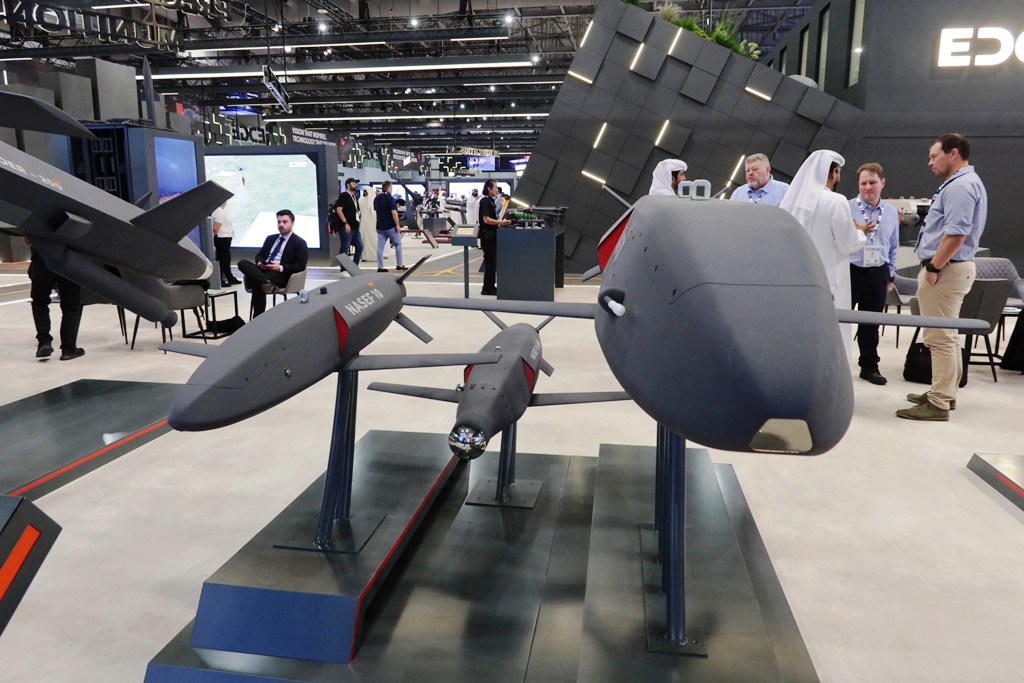
The two Nasef cruise missiles in advance development at EDGE Advanced Concepts are being joined by an air-to-air version of the smaller one, the Nasef 10, which was unveiled at the Dubai event
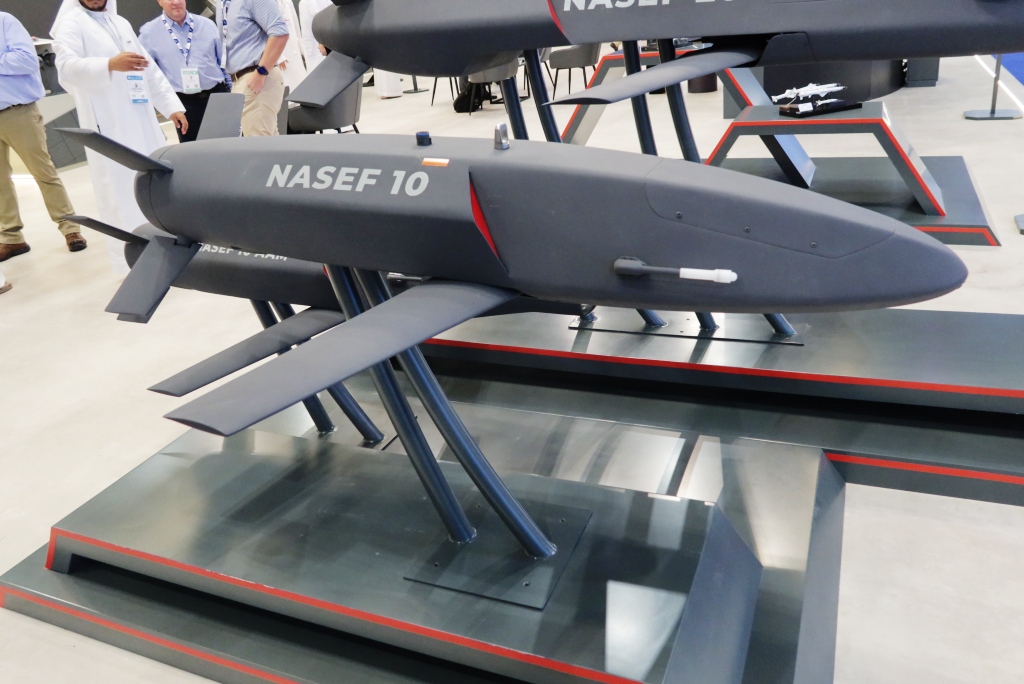
All Nasef missiles, thanks to their dimensions and their mass at launch can be easily integrated on Group 3 unmanned platforms. The Nasef 10 air-to-ground cruise missile has a launch mass of 35 kg and carries a 10 kg payload at a range of 150 km, endurance being 30 minutes, data-link range being 100 km. Its folding wings have a span once deployed of 1.1 metres, the missile being 1.4 metres long. The considerable wingspan helps the system gliding towards its target and remaining in the air as long as possible, increasing the range. The Nasef 10 is powered by a 340 N thrust turbofan engine, currently provided by a third party but in the future, this might possibly be replaced by the same type of engine provided by EDGE’s Powertech. Cruise speed is Mach 0.3, while maximum speed is Mach 0.7. The navigation system allows the cruise missile to fly at low altitudes contouring to ground features, avoiding most radars, while maximum flight altitude is 18,000 ft. Although not mentioned, mid course should be based on GNSS/INS, with waypoint capability, the datalink allowing reprogramming until a certain distance, its range being shorter than that of the missiles. Once in the target area the final guidance is provided by a seeker than can be either a semi-active laser (SAL), the target being illuminated by an external designator land based or airborne, or an optical day/night sensor, last adjustments being made by an operator from a ground control station, the type of warhead requiring a direct hit; while mostly aimed at static targets, both options would eventually allow targeting also moving targets.
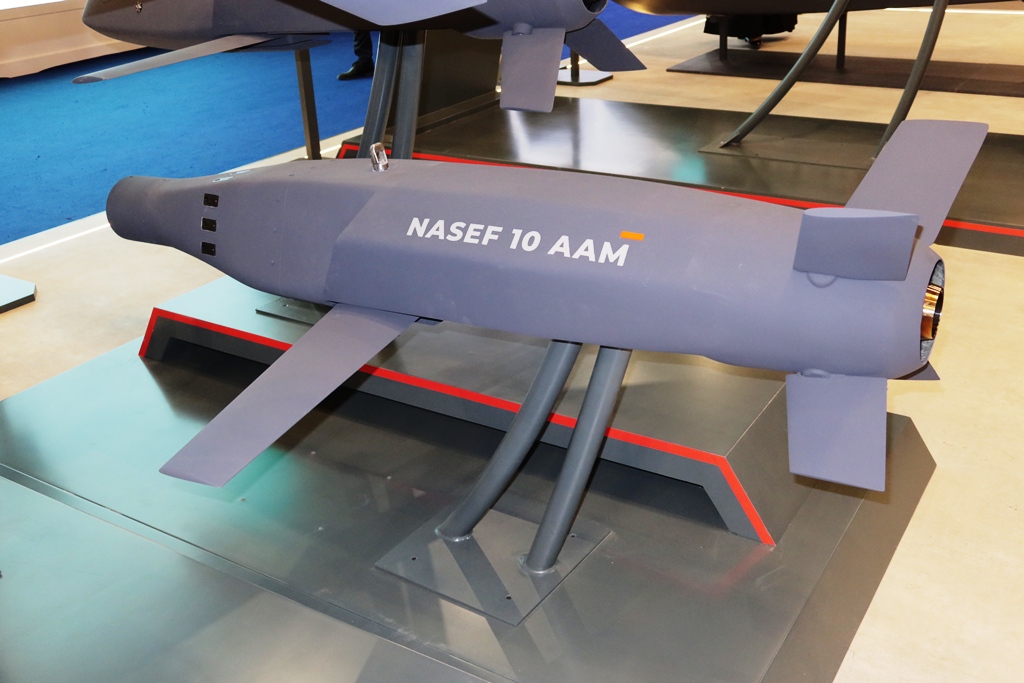
Derived from the previous missile, the Nasef 10 AAM maintains most of the above characteristics and look, however the forward part is completely different, the limit being clearly marked by a set of rivets that keep together the new front element and the rear element taken from the air-to-ground system. The nose features a large transparent dome allowing the terminal phase seeker suite to operate, EDR On-Line understanding this is made of an optronic day/night system and an imaging infrared sensor. This is followed by the electronics and by the proximity sensors, which openings are clearly visible, and then by the high-explosive fragmentation warhead; this is slightly lighter than that of the air-to-ground missile, 7 kg, and is derived from counter-UAS warheads, its lethal range being around 10 metres. The Nasef 10 AAM is obviously not considered for engaging high-speed targets, but rather for dealing with those platforms flying in the lower part of the subsonic spectrum.
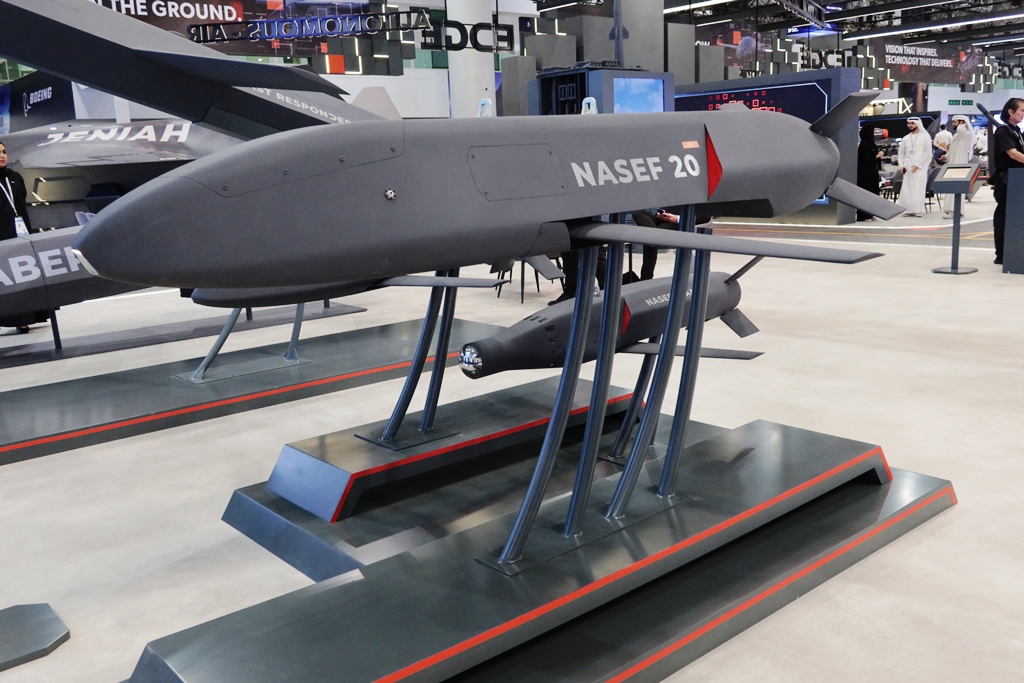
For reference we mention here the data of the Nasef 20, which has a launch mass of 70 kg while carrying the same 10 kg payload, but has a greater maximum altitude, 27,000 ft, the 440 N thrust engine and the higher launch altitude allowing it to reach targets at 200 km distance, cruise and maximum speed remaining the same of the smaller model. Wingspan is 1.4 metres while the Nasef 20 is 2.4 metres long.
According to information acquired at the Dubai Airshow, there are no plans for an air-to-air version of the Nasef 20. EDR On-Line understood that the two air-to-ground Nasef cruise missiles reached a TRL 7 status, as the two systems were fully tested including payload, which means they should be handed over to one of the EDGE manufacturing companies, possibly Halcon as soon as qualification will be finished. As for the Nasef 10 AAM, this is at a lower development stage.
Photos by P. Valpolini