The delivery of four Lynx “as-is” marks the real start of the Italian Army A2CS programme
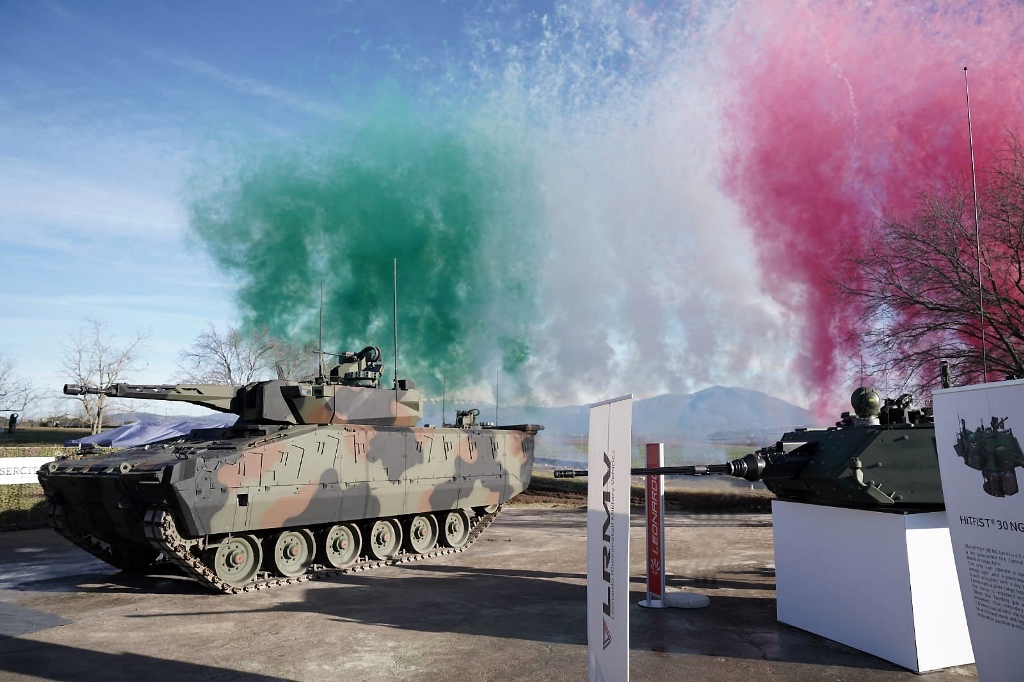
The first four Lynx KF41 Combat “as is”, in the original version currently in service with the Hungarian Army, fitted with Rheinmetall’s Lance turret, were delivered to the Italian Army, during a ceremony that took place at Montelibretti, home of the Italian Army Multifunctional Experimentation Centre (Ce.Poli.Spe)
On 27 January 2026 the first four Lynx KF41 Combat “as is” AIFVs part of the A2CS programme were officially delivered to the Italian Army. The event was attended by the Minister of Defence Guido Crosetto, the Chief of the Defence Gen. Luciano Portolano, the Army Chief of Staff Lt.Gen. Carmine Masiello, military and civilian authorities, the Leonardo CEO, Roberto Cingolani, and the Head of Rheinmetall’s Vehicle System Division, Björn Bernhard.
A first Lynx KF41 was already presented in Italy in early February 2025, when the joint venture between Leonardo and Rheinmetall was officially announced, together with the programme that will modernise the Italian Army heavy brigades, which includes both the Army Armoured Combat Systems, A2CS in short, based on the Lynx KF41, and the main battle tank, based on the Panther.
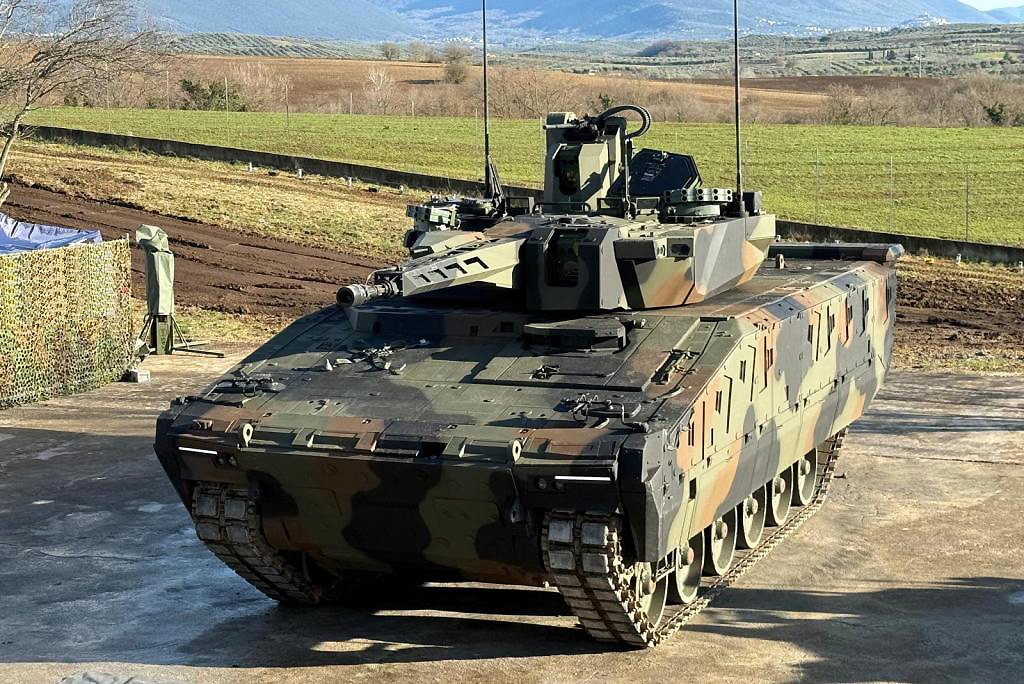
In November 2025 LRMV signed the first contract with the Land Armaments Directorate (TERRARM) of the National Armaments Directorate (DNA) for the production and delivery of 21 A2CS Combat “as is” vehicles. The first four vehicles, configured in the configuration chosen by the Hungarian Army, are those being delivered, the fifth to follow in the coming weeks. These are fitted with the Rheinmetall Lance turret, in service with Hungary, but are painted in the Italian Army three-colour camouflage scheme. The Italian Army decided to anticipate as much as possible the delivery of such systems; “These vehicles enable immediate training, system familiarisation, and technical-tactical experimentation, drastically reducing the gap between conceptual design and real employment,” the Italian Army speaker at the International Armoured Vehicles conference, the annual meeting that took place last week in Farnborough, UK, organised by Defence IQ. At that event EDR On-Line understood that once the Ce.Poli.Spe. will finalise the safety qualification process, quite probably a shortened one due to the experience already acquired by the Hungarian Army, and the training of a reduced number of drivers, one vehicle will remain in Montelibretti while the other will be transferred to one of the three armoured infantry regiments, allowing operational crews to have a first direct contact with what will become their future working tool, albeit in a different configuration.
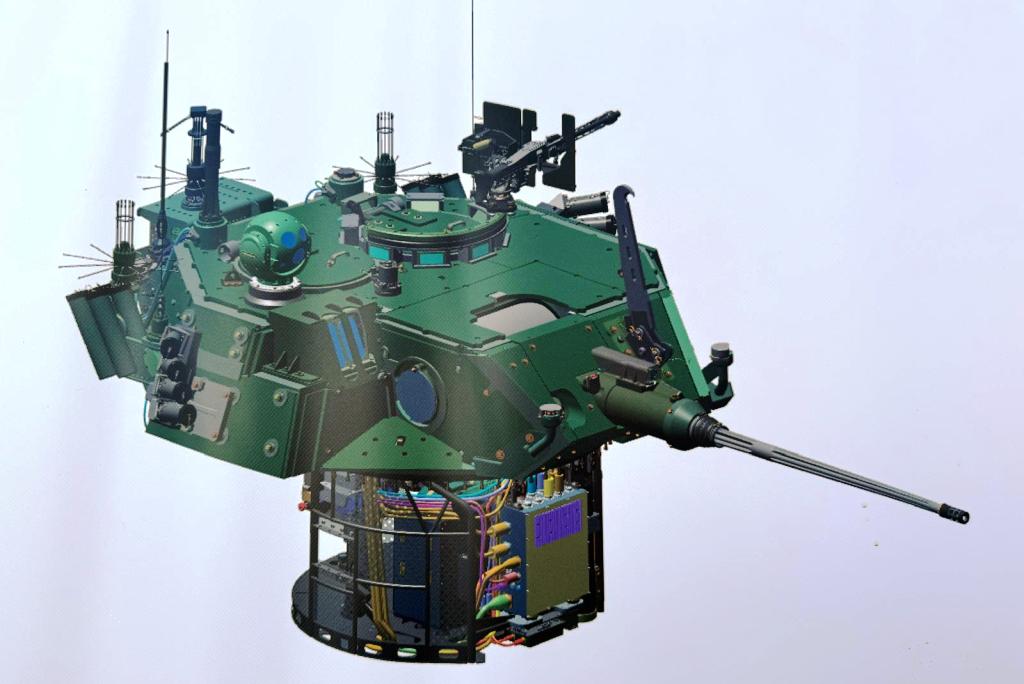
The next 16 vehicles, defined as A2CS UOR vehicles, will be fitted with the HITFIST 30 NG two-man turret, unveiled at Montelibretti, armed with Leonardo’s 30×173 mm X-Gun, which will then be retrofitted on the first five vehicles. LRMV awaits a decision on an option for further 30 vehicles that should be fitted with that same turret; if this will be exercised it will bring the total to 51, which should be sufficient to equip a full battalion, minus specialised variants, allowing thorough tactical evaluation, performances optimisation, the identification of possible modifications, most probably in ergonomics, and the development of new TTPs coherent with the much-increased capabilities of the new AIFV. A decision on the option is awaited within late March 2026.
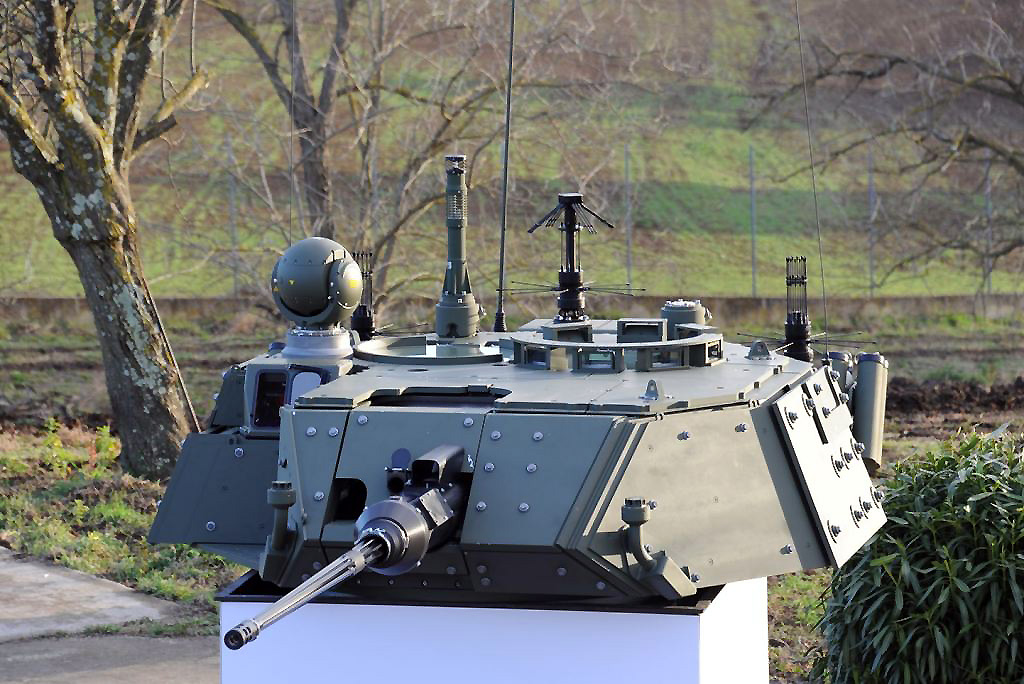
The turret unveiled at Montelibretti is the one that will also be fitted to the VBM 30 NG, the next generation version of the current 8×8 Freccia in service with infantry battalions belonging to the two Italian Army medium brigades, the “Pinerolo” and the “Aosta”. EDR On-Line widely reported on that turret in an article on the VBM 30NG last year. Most details can be found in that article, the prototype exhibited in Montelibretti allowing however a better description of the turret.
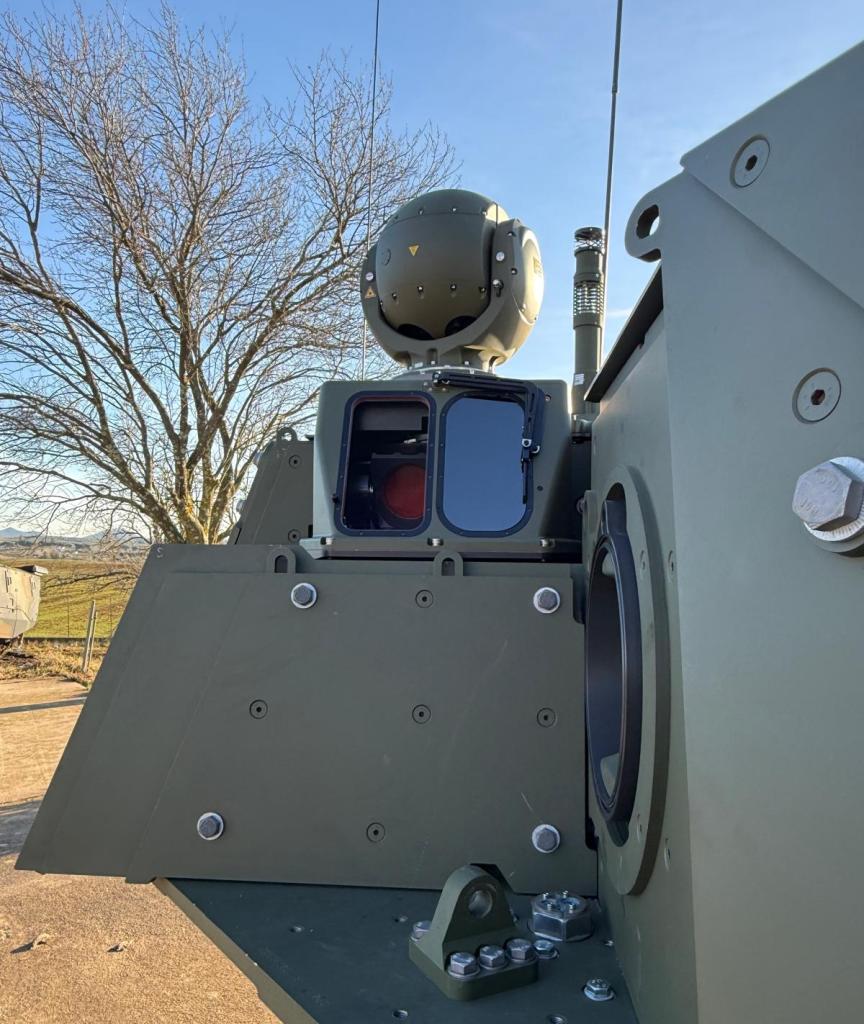
Both main sensors, the LOTHAR SD gunner sight and the Janus D-L commander’s panoramic sight, are located on the right side of the turret, the coaxial machine gun being installed on the right of the main 30 mm X-Gun. The sensors of the laser warning receiver are located at the four corners of the turret, the rear ones mounted on top of the turret while the two covering the front 180° sector are installed on tubular structures to ensure the best possible coverage. A pintle mount machine gun should be installed on the right of the turret roof, according to renderings, but was not present on the prototype; this would be manned by the commander, who sits on the left side in the turret, the gunner seat being on the right. He enjoys a 360° direct view thanks to eight episcopes located around his hatch, a second hatch on the right being reserved to the gunner. Four Galix tubes aiming backwards are fitted on each side of the turret, at the rear, 0n the right-rear of the turret roof we find the weather sensor, installed on a mount, a second similar mount being visible on the left side, without any sensor installed.
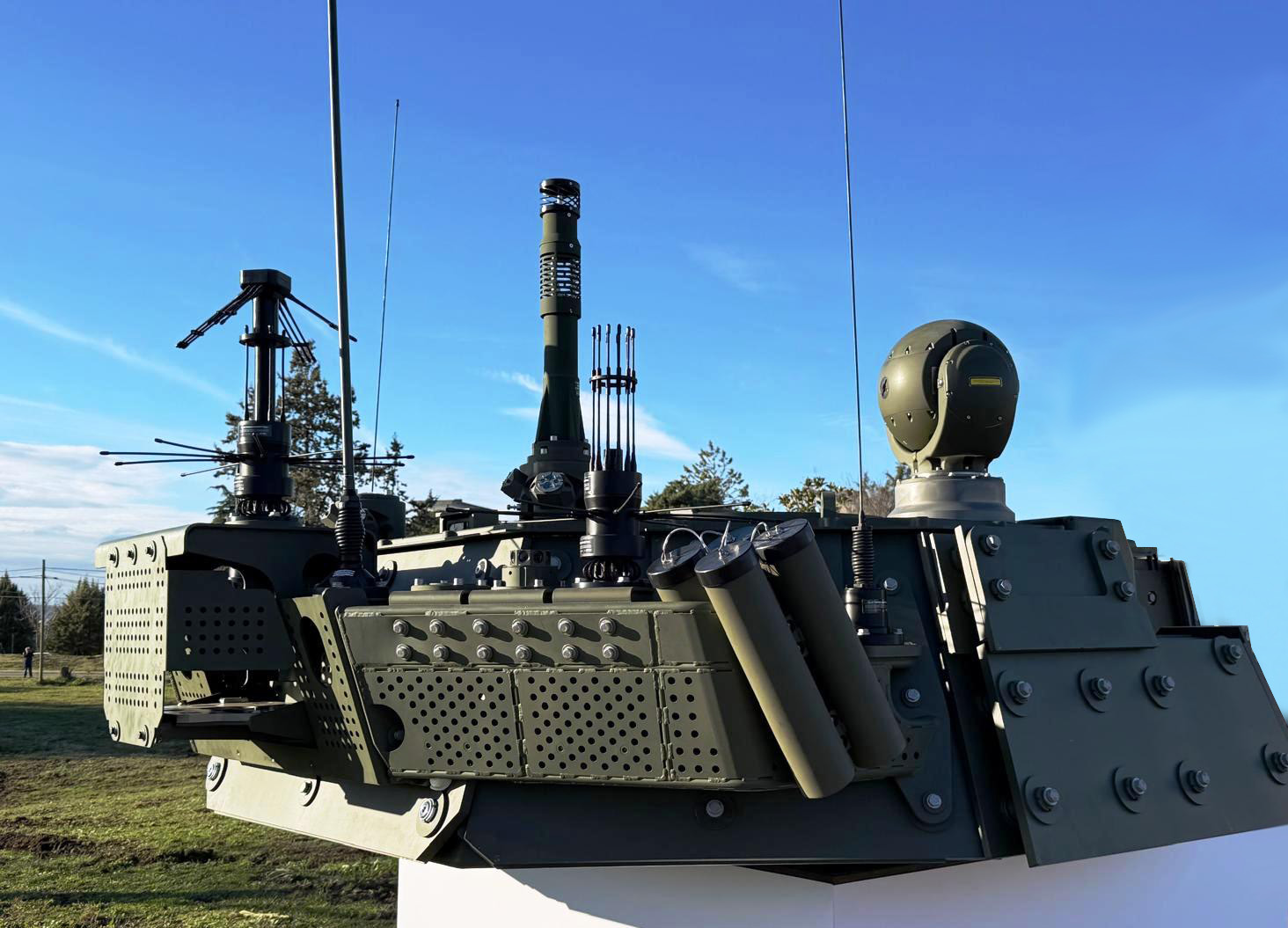
Several antennas are mounted on the top of the turret: in the configuration seen at Montelibretti a VHF whip antenna was fitted at the rear, while five more antennas, all provided by Elettronica Marittima, were installed on a sponson, at the rear of the turret, we could find an EVO-A-TACSAT, capable to operate in the SATCOM and UHF bands. On the turret roof, right and left, we could find an EVO-A-UTAC Shadow, a compact UHF antenna, and an EVO-A-V-WHIP, a high efficiency VHF antenna with minimal diameter and length. This set of six antennas is the same installed on the Ariete C2 MBT and on the new versions of the Freccia 8×8 infantry combat vehicle, the communication and command-and-control suites ensuring full data exchange to ensure achieving multi-domain effects. “It’s not simply the replacement of the Dardo with another vehicle, it’s a system entering service that will radically change the Army’s way of fighting,” Lt.Gen. Carmine Masiello, the Italian Army Chief, underlined. The turret comes with a basic protection, probably Level 2, bolts for add-on armour being visible all around.
The next step for Leonardo is the development of the unmanned version of the turret, which has already started, prototypes being expected in 2027. According to Army requirements, the series production A2CS will be fitted with the unmanned turret, a lighter version being aimed at the VBA, the 8×8 amphibious vehicle on order for the Navy amphibious force, and in perspective also for the Army amphibious regiment.
The full prototype of the A2CS, powered by an Italian engine, an upgraded version of the Vector V8 engine powering the Centauro II, should be ready by 2028, for initial deliveries of the vehicle designed according to Italian Army requirements starting in 2029. The plan is to acquire over 1,000 platforms in 16 different variants. Within the first phase of the programme the LRMV joint venture will develop the prototypes of the combat, mortar carrier (with the Patria Nemo 120 mm turret), CASEVAC, scout (with the HITFACT Mk2 120/45 mm turret), ammunition carrier, air defence (quite probably with a Rheinmetall Skyranger 30 turret), and command post, the remaining versions being all derivatives of the aforementioned ones. Within 2029 all prototypes of the A2CS variants will have to be available and certified, serial production being due to start in 2030. The delivery of the Lynx “as-is” being just a first, small, step that marks the real beginning of the A2CS programme, as underlined by the Army Chief.
A new contract should be signed by the end of this year to complete the development and industrialization phase, for which the Ministry of Defence has already allocated over € 8 billion within a program with an overall total spending cap of over € 18 billion, including MBTs.
Photos courtesy Leonardo, E. Magnani and L. Peruzzi