Thales Storm 2: from countering land IEDs to neutralising “flying IEDs”
At the beginning of this millennium western armies found themselves dealing with improvised explosive devices, IEDs, planted along lines of communication, first in Iraq and then on a much wider scale, in Afghanistan. The Russia-Ukraine war confirmed a trend already seen in the 2020 Nagorno-Karabakh War, the increase in the use of drones, which in the Ukrainian regions saw the advent of FPVs and suicidal drones, defined by many “flying IEDs”, as one of the main threats. To answer the IED threat at personal level in 2012 Thales UK launched the Storm-H, an individual protection against radio-controlled IEDs. The need to adapt quickly to the changing battlefield environment led Thales UK to develop a new individual protective system against the new threat, which is a wholly new product while maintaining the name of its C-IED predecessor, the Storm 2
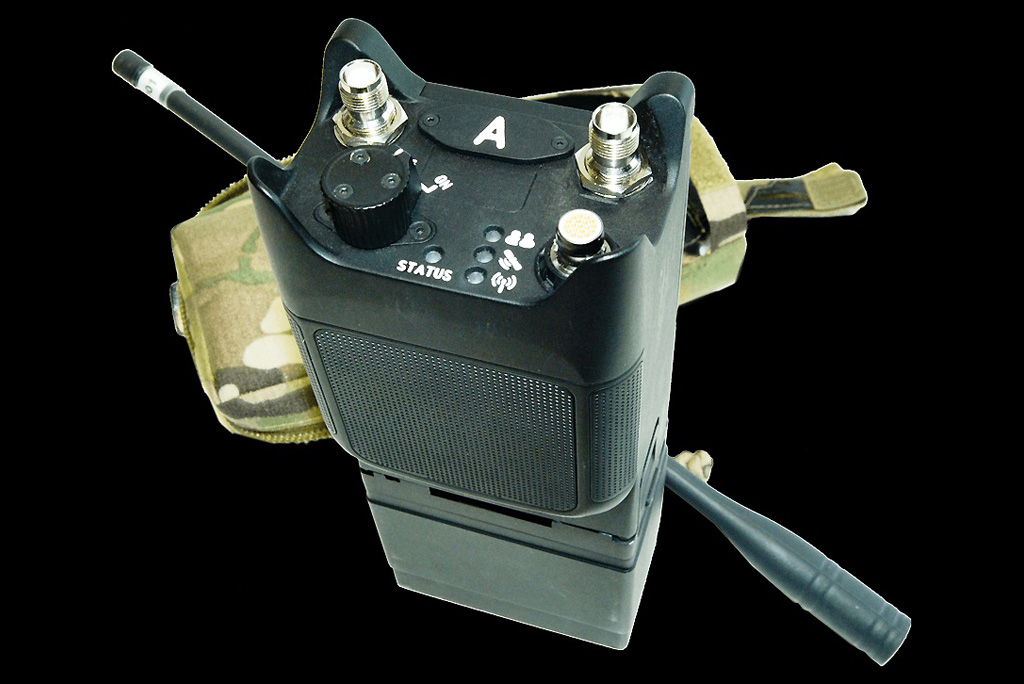
Following a soft launch at DSEI 2025, Thales UK will officially launch its new Storm 2 individual C-UAS system at Future Soldier 2026 taking place March 09-11, 2026, in London. “Storm 2 is an individual cyber and electromagnetic activities node, a CEMA node in short, what used to be more commonly known in the past as electronic countermeasures,” the Thales UK Product Line Manager told EDR On-Line.
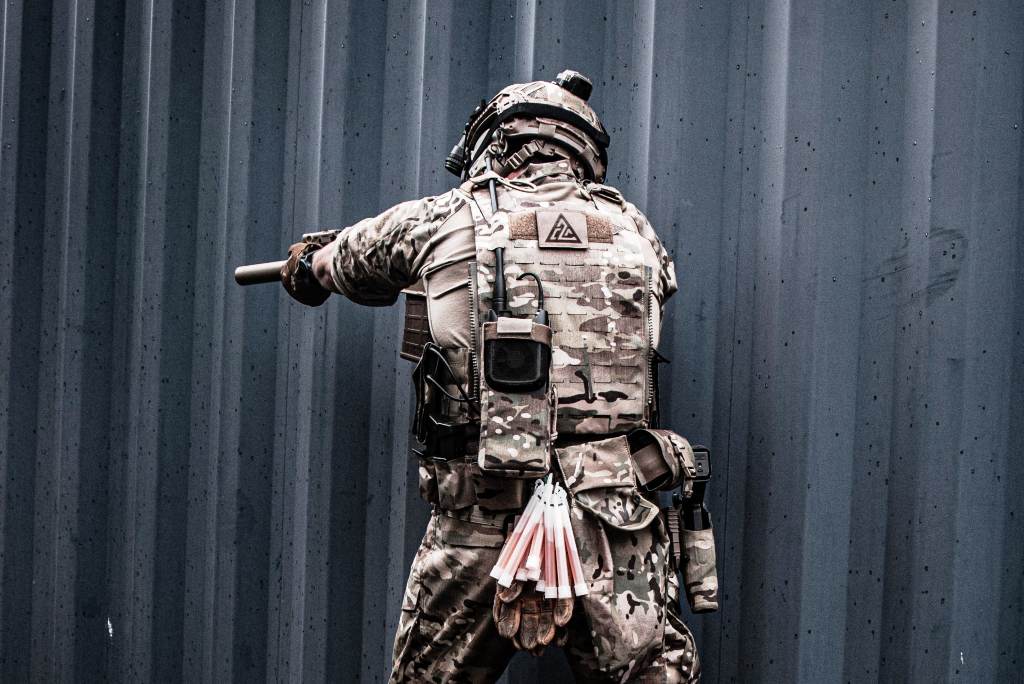
A CEMA system can obviously neutralise only drones and FPVs operating through a radiofrequency datalink, those controlled by fibreoptic cables being immune to jamming. However, according to Thales experts, what is being seen in Ukraine is that fibreoptic controlled FPVs are often used to disrupt major electronic warfare equipment that might interfere with RF-controlled FPVs operations, the latter being more effective as the fibreoptic reel adds mass, hence reduces lethal payload, reduces manoeuvrability, and can get snagged in obstacles. Therefore, this CEMA-democratisation approach, allowing distributing the Storm 2 among troops, is relevant in reducing the risks, as there is no more a single point of failure, but a distributed jamming capability capable to disrupt the follow-up attacks using RF-controlled drones.
Compared to the Storm-H the Storm 2 is heavier, around 2 kg versus 1,110 grams, more power being needed to disrupt UAV communications at greater range compared to that used to block telephone-based commands, a relatively short range.
The Storm 2 operates in two bands, a low band going from 20 to 500 MHz, and a high band from 500 MHZ up to 6 GHz. As it was the case with the Storm-H, intelligence is a key factor; knowing with good approximation frequencies used by the opponent allows focusing on those frequencies, maximising the energy, while broadband jamming would dissipate power. The same was true also for Storm-H, which could jam three frequency ranges, adapting the antenna to the threat to maximise performances. Being a software defined system, the Storm 2 can be quickly adapted to the changing situation on the battlefield. “Most commercial drones have the control link in the ISM bands, usually 2.4 GHz and 5.8 GHz, therefore it is fairly straightforward to understand which bands you need to focus upon if you’re thinking about an unmodified commercial drone, but what we see in conflict zones is that operators will shift the frequencies that they use. This leads to a cat versus mouse fight, as it was against IEDs in Afghanistan,” the Thales UK representative explained, adding that one of the new system benefits is the wideband coverage that does not limit it to ISM bands. To underline the company capacity to quickly adapt to changing environments, the Thales UK representative explained that “we had a request from a customer to be able to demonstrate a counter-UAS capability, which we were able to turn around in a matter of weeks.”
Usually UAVs have two RF links, one being the command link that allows the operator to control the drone from his ground control station (GCS), and one being the link allowing the video stream to be seen on the operator’s display. From the flying platform standpoint, the first one requires an on-board receiver, while the latter uses an on-board transmitter. This one is therefore often the signal which is picked up revealing the presence of the drone, acting as a sort of tripwire that is picked up by the Storm 2 receiver and triggers the system reaction, jamming the command frequencies, the drone receiver being at a much closer distance compared to the GCS.
As said earlier, the Storm 2 has a much greater output power than its C-IED predecessor. Overall, this is 10 W, equally split between the low- and the high-band; in a CEMA system like the one we are considering, a compromise must be found between range, power, endurance, and mass, the latter being a key issue especially when dealing with an individual system to be carried by a soldier on foot.
The Storm 2 is a reactive system, selective jamming being triggered once the receiver gets a signal unveiling the presence of a threat, which allows considerable power saving and a reduced RF signature. Thales is monitoring the advances in the battery domain, however power remains a major issue in all electronic devices, the Storm 2 ensuring a four-hour continuous use, depending of course on the number of activations and on external temperature, which has a considerable impact on battery life. While the battery is key in ensuring sufficient operating time, the antenna is what brings to bear the “electronic projectile”, the radiofrequency jamming signal, the higher the gain the better the performance, although mass and dimensions must always be considered, always following the SWAP (Size, Weight And Power) concept. EDR On-Line understood that Thales will provide customers with a choice of omnidirectional antennas in different sizes. A major difference exists between Storm-H and Storm 2 antennas: “typically in counter-IED, you’re more interested in horizontal propagation around the soldier, while for counter-UAS, the threat is coming from above, so you want something that’s going to propagate effectively upwards, so an omnidirectional antenna on the shoulder is preferable,” the Product Line Manager explained.
Currently Storm 2 is considered at TRL 7/8. Thales is in discussions with a number of potential clients and is ready to accept orders, production being ready to start as soon as a launch customer will materialise.
Photos courtesy Thales UK