Eurosatory 2026 – First European appearance for ST Engineering Counter-Drone Laser Effector
Unveiled at the Singapore Air Show earlier this year, the Paris exhibition marked the first international appearance of the Counter-Drone Laser Effector developed by ST Engineering
An all-in-one system, the Counter-Drone Laser Effector, CDLE in short, is made of a 1.4 x 1.0 metres temperature regulated unit containing the high energy laser source, the cooling system, the electric energy storage, and system electronics.
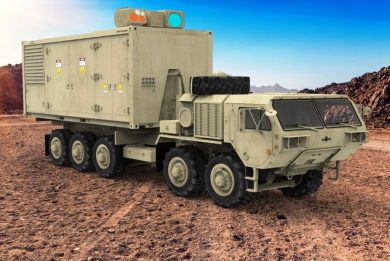
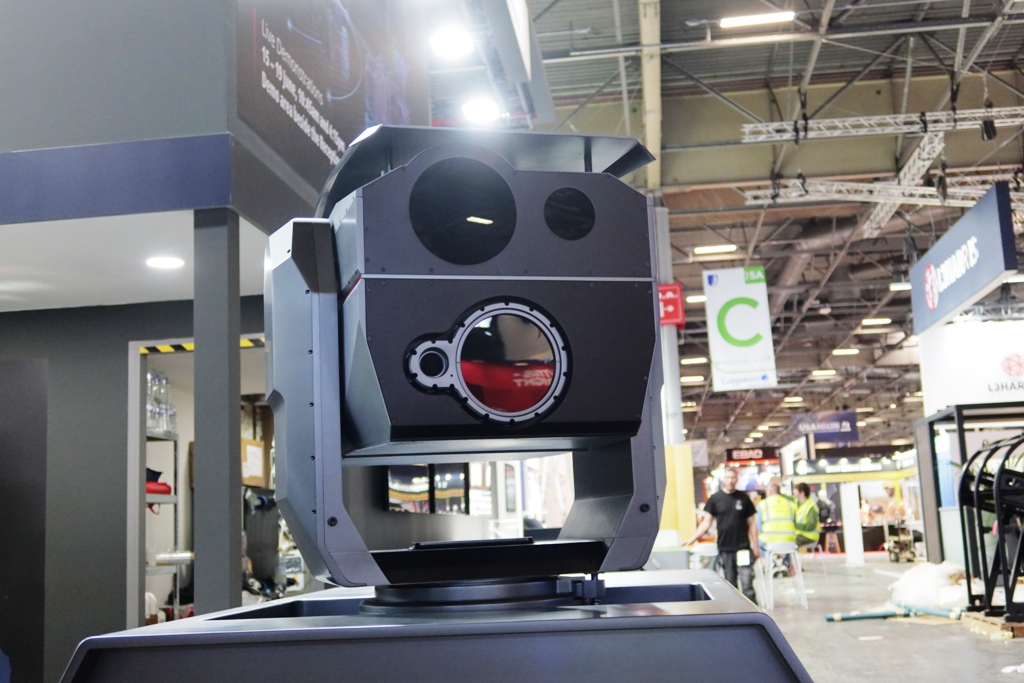
On top of it we find the laser head, which brings the system height to 1.8 metres, the mass of the overall system being 500 kg. Dimensions and mass allow to install the system on the flatbed of a commercial pick-up as well, of course, on military high mobility vehicles.
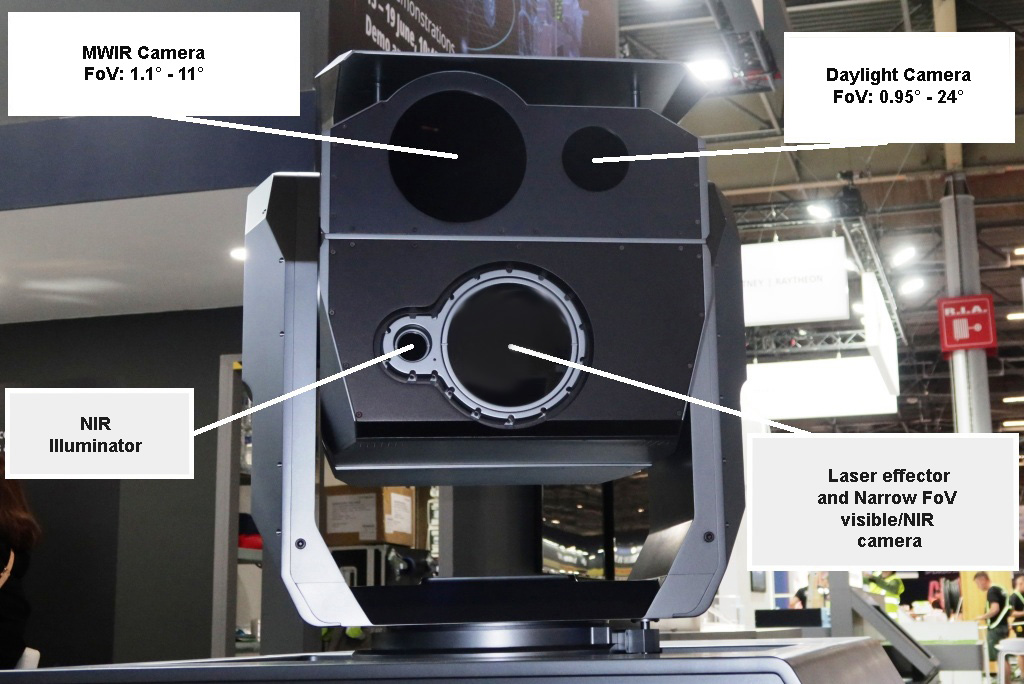
The CDLE is used only when the platform is static, the current version of the laser having an output power of 3 kW. Considering the power involved, this cannot be fed to the rotating head containing the optics via a slip-ring, cables being needed, therefore the head azimuth movement is ±270°. The head has four apertures. Top right we find an aperture which is that of the daylight camera providing situational awareness and allows target detection and tracking; it is fitted with a zoom lens providing a Field of View (FoV) of 0.95° to 24°. Based on the image acquired the algorithm takes over the target, tracks it, and confirm it is a drone. Top letf we find a bigger aperture which hides the mid-wave cooled thermal camera, used when operating at night; it has a 1.1° to 11° FoV and its images are fed to the algorithm carrying out the same functions mentioned earlier. Once the target has been confirmed, it is passed to the narrow FoV camera which is bore sighted with the laser beam emitter, this allowing the complex bore sighting operation typical of decoupled camera and laser architectures, the CDLE allowing the operator to see exactly where it will shoot. Both the laser emitter and the narrow FoV visible/near infrared camera are located behind the main lower aperture. The small aperture on the left of the main lens hides the near infrared illuminator used in night operations.
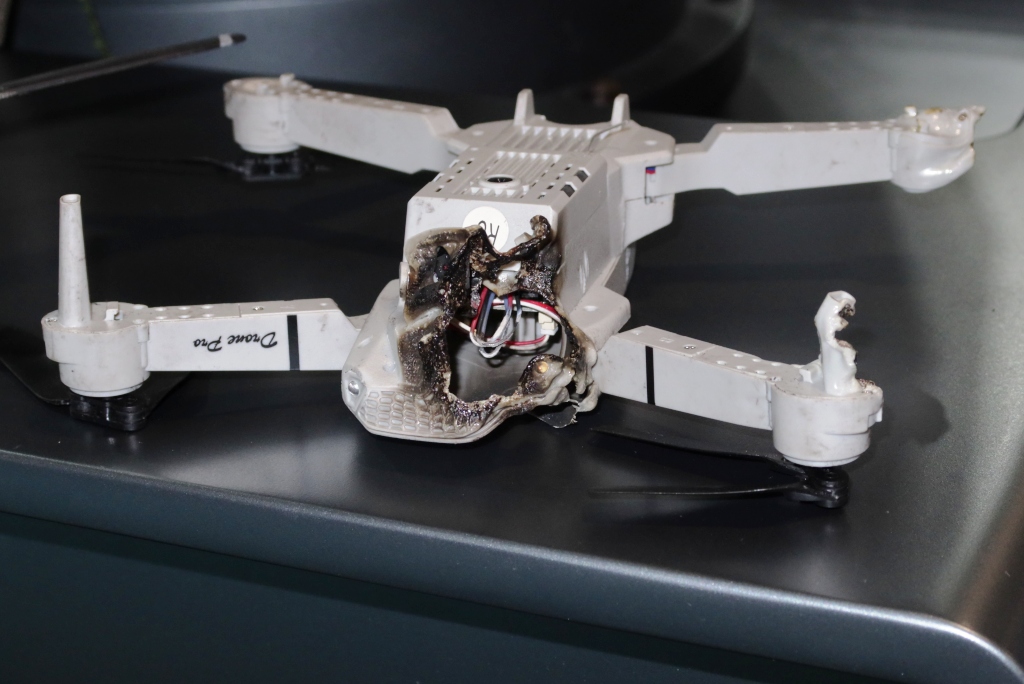
Once the target has been confirmed the CDLE continues tracking it and when in range, maximum effective range is around 1 km, the laser emits its beam burning through the incoming drone; to do this a certain amount of energy must be delivered, the amount depending on the type of drone, usually 5 to 8 seconds being needed to kill a big Class 1 drone at 1 km range, while for smaller drones at around 600 metres distance 2 to 4 seconds are sufficient. Leveraging precision beam control and accurate tracking, the CDLE can concentrate energy on mission-critical components of hostile drones – including propellers, motors, flight control surfaces and payload sections. This enables the system to address a broad range of hostile targets ranging from small commercial quadcopters and improvised UAVs to potential larger threats such as Shahed type drones. Time on target needed to deliver the needed energy obviously depends pretty much on atmospheric conditions, humidity and rain reducing the laser performances.
EDR On-Line understood that to optimise performances ST Engineering is working on algorithms capable to adapt the laser beam to the situation, exploiting reflecting techniques to adjust focusing and therefore maximising the power density on the target, to compensate attenuation. This is not yet available, but working is in progress at the R&D department.
The CDLE maintains the man on the loop, the operator having only to press the fire button once the target has been confirmed, however ST Engineering experts confirmed that should a customer require it the system can operate in full automatic mode.
The current version of the CDLE is considered TRL 9, and ST Engineering is in discussion with a customer, which remains obviously unnamed.
The company is already developing a more powerful version of the system, which output will augment to 5 kW, increasing maximum range at 1.5 km. Company experts told EDR On-Line that the form factor will remain the same, no timeline for that new product being provided.
Photos by P. Valpolini