Italian MoD launches activities for the international F-35 training centre at Trapani-Birgi
The project for the creation of the new international training hub – the first outside the United States – for pilots of the fifth-generation Lockheed Martin F-35 Lightning II fighter aircraft at the Trapani military airport open to civilian traffic in Eastern Sicily, is about to enter the implementation phase
The Italian MoD tight schedule envisages achieving an initial training capability by no later than December 2028, with completion of the training centre by early July 2029, together with the establishment of an international training flying squadron.
First unveiled as a plan by Italy’s Defence Minister Guido Crosetto during the celebrations of the 102nd anniversary of the Italian Air Force in late March 2025, it was subsequently confirmed – most recently at the International Fighter Conference 2025. The project is intended to enhance F-35 training capabilities at the NATO and European level, and to consolidate Italy’s role as an international training hub. The synergy between the Italian Air Force and the national industry led by Leonardo already demonstrated its capacity with the International Fighter Training School (IFTS) based on the Leonardo M-346 platform, as well as with the Italian Air Force Flight School, the latter introducing the new Leonardo M-345 trainer to replace the same company’s MB-339.
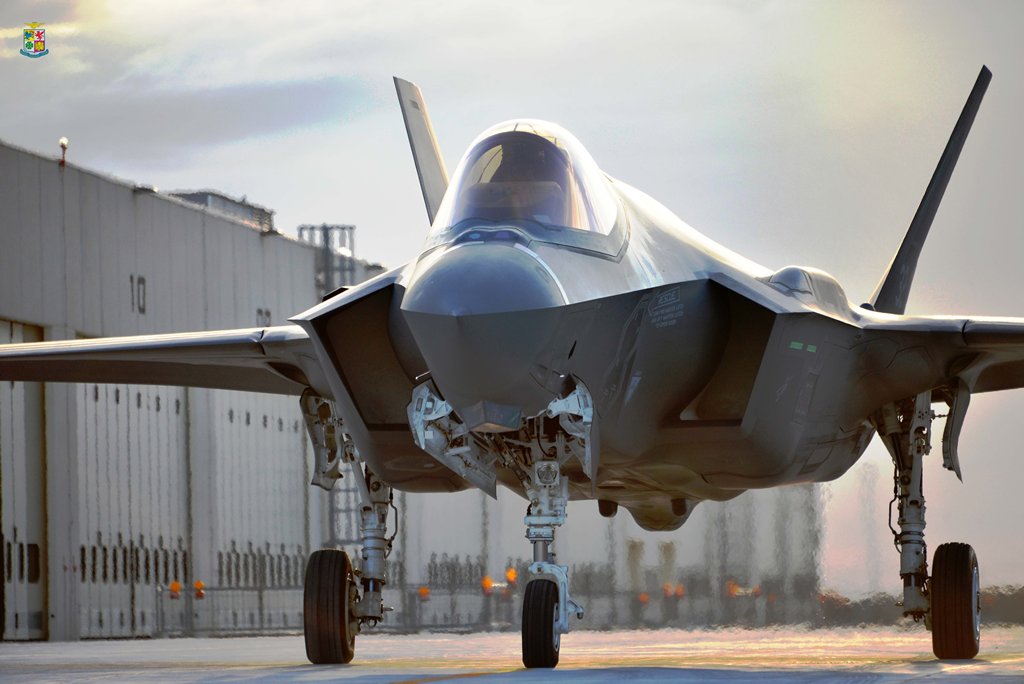
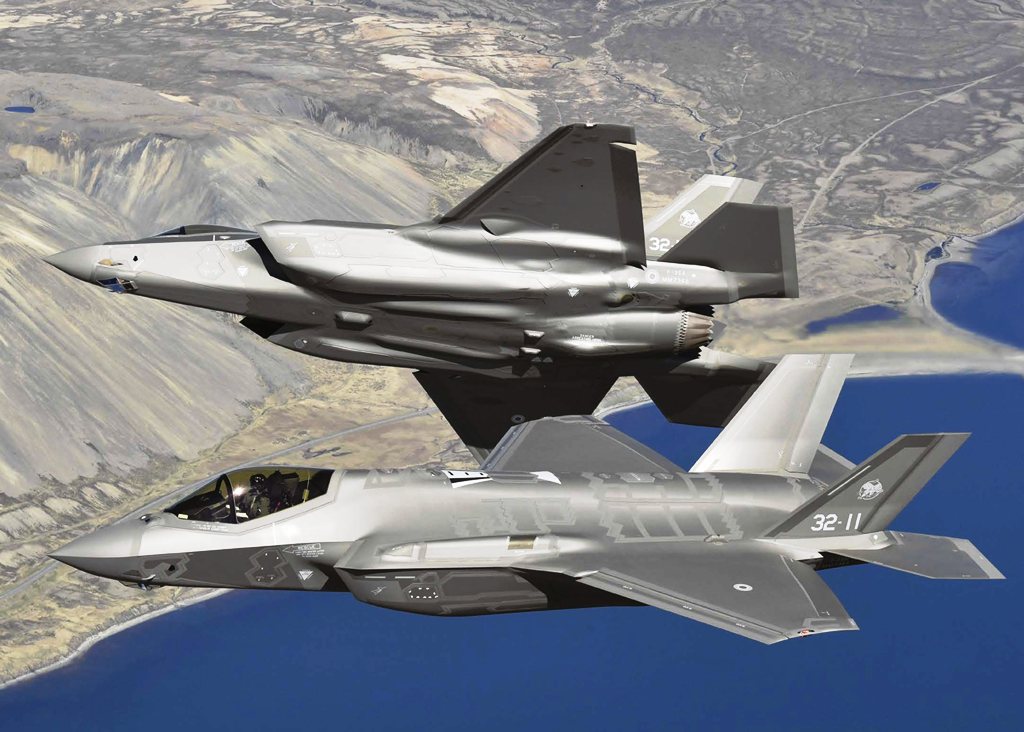
A preliminary report and determination to contract (DAC) dated October 14, 2025, was made public on December 30 by the National Armaments Directorate, via Armaereo, the Air Armaments and Airworthiness Directorate. The document confirms that the Italian Air Force has designated the Trapani base as the third Main Operating Base (MOB) for the F-35, initiating the related activation process. Currently, Trapani-Birgi hosts the 37th Wing equipped with the Eurofighter Typhoon, which be replaced. But the Birgi AFB will also have a wider role: “In order to respond to the growing demand for training linked to the expanding participation of NATO and European countries in the programme, the opportunity has been identified to increase the training offer through the establishment of a European Pilot Training Centre (PTC) for the F-35A,” the document states, “open to the participation of nations adhering to the programme,” outlining a plan centred on the construction of the PTC infrastructures, to be completed by July 1st, 2029, with an initial training capacity to be achieved no later than December 2028. This will be the first F-35 pilot training centre outside the United States and the second overall after the U.S. centre at Luke Air Force Base in Arizona.
In fact, the plan has a broader scope, involving the establishment at Trapani of two flying squadrons equipped with the F-35A aircraft – specifically, the Italian Air Force Operational Squadron (ITAF OPS Squadron) and an International Training Flying Squadron (PTC Squadron) – as well as the international training centre called the Lightning Training Centre (LTC). The document, however, focuses primarily on the construction of the infrastructure and capabilities of the latter initiative.
The plan outlined in the document identifies three phases. The first, considered a priority, provides for the activation of a partial training capability based on the Lightning Training Center, followed by the other two phases that will complete both the PTC Squadron and the Italian Air Force Operational Squadron.
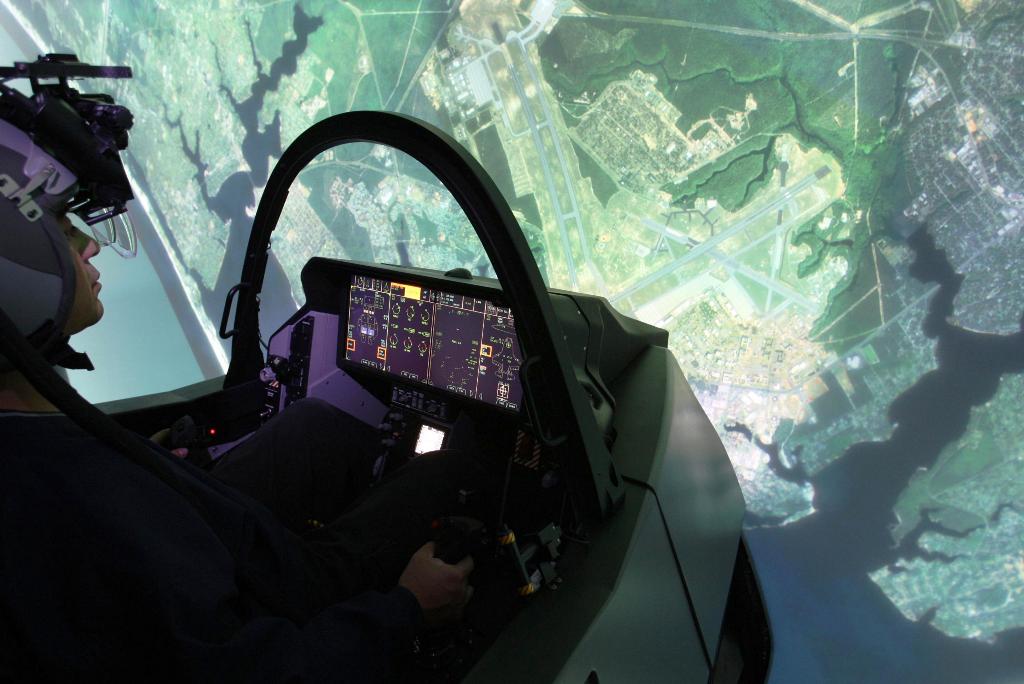
The first phase concerning the LTC involves the construction of a building required for ground training, which, according to the document, will include – among other – a Special Access Programmer Facility (SAPF) , two Full Mission Simulators (FMS), and spaces for installing other types of systems and equipment for F-35 pilot training, or Pilot Training Devices (PTD).
In this regard, the document specifies that “compliance with these timelines, in addition to the shortage of training capacity affecting the programme and the training needs of international partners, both current and future, also stems from the clear and strong political will to strengthen Italy’s strategic position within the programme itself through the establishment of the first Pilot Training Centre for the F-35 outside the United States; failure to achieve the objective within the expected timeframe would undermine the entire strategic significance of the undertaking.” This highlights the urgency of the project, linked to the need to meet the training requirements of NATO and European air forces that are introducing into service, have acquired, or are planning to adopt the F-35.
The Italian JSF Programme Directorate (DPJSF) has tasked Armaereo with initiating the technical-administrative procedure aimed at achieving the objectives set for the first phase of the project, deferring the achievement of the subsequent phases of the programme to other preliminary reports and determinations to contract.
To meet the requirements of this project, the DPJSF invited Leonardo and Lockheed Martin “characterized by widely proven experience and credibility in the sector concerned, and in particular in the provision of integrated capabilities in the field of military industry, weapons system maintenance, and international training” – to assess the possibility of forming a Temporary Industrial Consortium (RTI) for the construction of the LTC infrastructure. Both companies responded positively. Based on it, Armaereo specified that all the conditions are in place to consider, as the most suitable solution, the use of a “mixed contract concerning defence and security aspects,” in accordance to related legislation. This contract will be awarded through a negotiated procedure, without prior publication of a call for tenders, to the consortium to be formed between Leonardo and Lockheed Martin, based on a technical and economic evaluation of the adequacy of the offer, as prescribed by related legislation.
With priority code A and feasibility level 1, ARMAEREO envisages activities with an estimated value (net of VAT) of € 122.6 million, including incentives for technical functions and multi-year funding for fiscal years 2025–2029. Contractual activities are expected to begin in January 2026, activities to be started during the same year.
The choice of Leonardo and Lockheed Martin is linked, as stated in the document itself, to the constraints in terms of security and sensitive data associated with the F-35 programme.
In particular, first and foremost, the simulators and all technological material for pilot training (F-35 Pilot Training Devices) can be procured exclusively from Lockheed Martin, which is the only company authorized to distribute them within the programme.
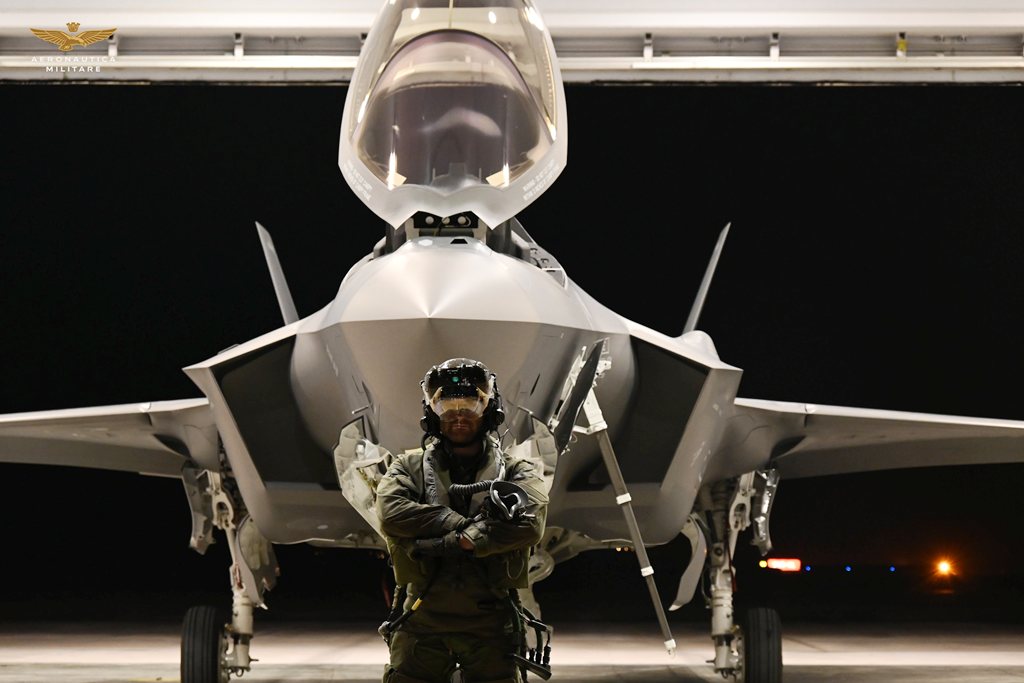
The infrastructure component of the project is inseparable from the simulators and the related technological equipment that enables their operation, as these cannot be defined or installed without an integrated design of the entire training system, consisting precisely of the aforementioned simulators, systems, and infrastructure elements that allow their use.
The same document further specifies that the LTC building must meet precise requirements set by the F-35 Joint Program Office (JPO) which, for project approval (the so-called Design Review according to the JPO document “Facilities Requirements Design”), relies on subject matter expert (SME) personnel from both government and Lockheed Martin itself before issuing a specific Authorization to Build. This authorization is contingent upon compliance with the design and construction requirements to which all infrastructures within the F-35 program must adhere, as set out in the “F-35 Lightning II Facilities Requirements Document” (FRD), a document prepared by Lockheed Martin Aeronautics containing technical information subject to export control and authorization by the U.S. Department of Defense (DoD) in accordance with the International Traffic in Arms Regulations (ITAR).
Lockheed Martin has identified, for each type of project that may involve the sharing of relevant engineering data, a precise and restricted set of industrial entities. Among these, the only one identified and possessing the specific national-level expertise for this project is Leonardo.
Furthermore, Lockheed Martin and Leonardo – whose roles and mutual relationship are governed by specific Technical Assistance Agreements (TAA) and Manufacturing License Agreements (MLA) authorized by the U.S. Government – are the only companies capable of ensuring the stringent security requirements imposed by the programme and of achieving the qualification and certification of the site by both the U.S. Government and the National Security Authority, in full analogy with what occurred under contract for the establishment of the Final Assembly and Check Out/Maintenance, Repair, Overhaul & Upgrade facilities in Cameri, Northern Italy.
Photos courtesy Italian Air Force and USAF/Lockheed Martin