Leonardo Hystrix 40 ADS, the Marlin 40 moves on land to counter UAS
The increasing importance of air defence assets led Leonardo to launch the Michelangelo Dome modular, open, scalable and multidomain advanced integrated defence system, which was unveiled in late January 2026. Based on a strong C5 system and multiple sensors and effectors, creating a first modular defensive barrier defined as the “Dead Zone” where the enemy threat is neutralised by point defence effectors. During a presentation at its facility in Brescia, northern Italy, Leonardo unveiled how it intends exploiting its naval artillery systems to generate land-based effectors, which can be static, relocatable, or mobile, this new family of systems being named Hystrix, hedgehog in Latin language. The mid layer of the land artillery component derived from naval guns is the Hystrix 40 ADS, for air defence system, based on the Marlin 40 turret
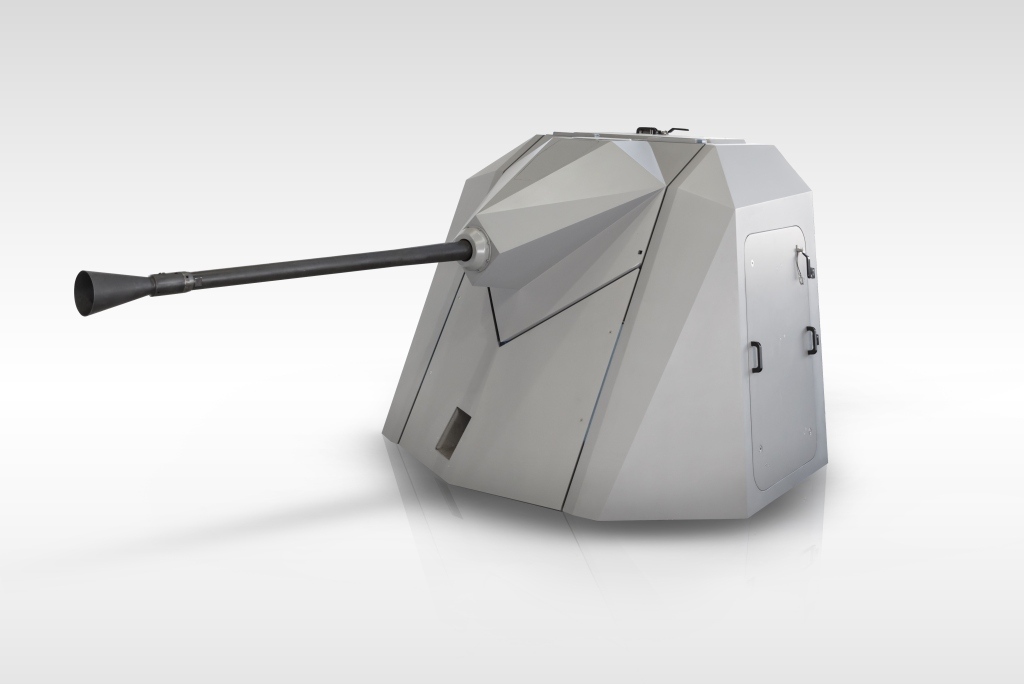
The Hystrix 40 ADS is based on the Marlin 40 naval mount, which origins trace back to the 40 mm systems developed since the 1950s by then Oto Melara. More than 850 being in service with 30 navies all over the world. The Marlin 40 is available in two versions, the Marlin 40 ILOS (Independent Line Of Sight), fitted with an electro-optical gimbal on the right side of the turret, and the Marlin 40 RC (Remotely Controlled) where the gun operations are led by external target acquisition and tracking sensors.
Beside the Hystrix 76 ADS Leonardo the new family will also include a system based on the Marlin 40 naval mount, the Hystrix 40 ADS. The latter is still in development, however in the past few years Leonardo won a contract for an unnamed Far East country, which acquired significant numbers of the Marlin 40 ILOS turrets mounted on a trailer for air defence purposes destined to the Air Force, a sort of anticipation of the current Hystrix programme; according to information gathered at the presentation, Leonardo is bidding for a second order from the same country, this time for the Army, for a comparable number of systems. Leonardo delivered the first systems directly from Italy, and is now providing core components, the local assembler getting other parts from the national supply chain.
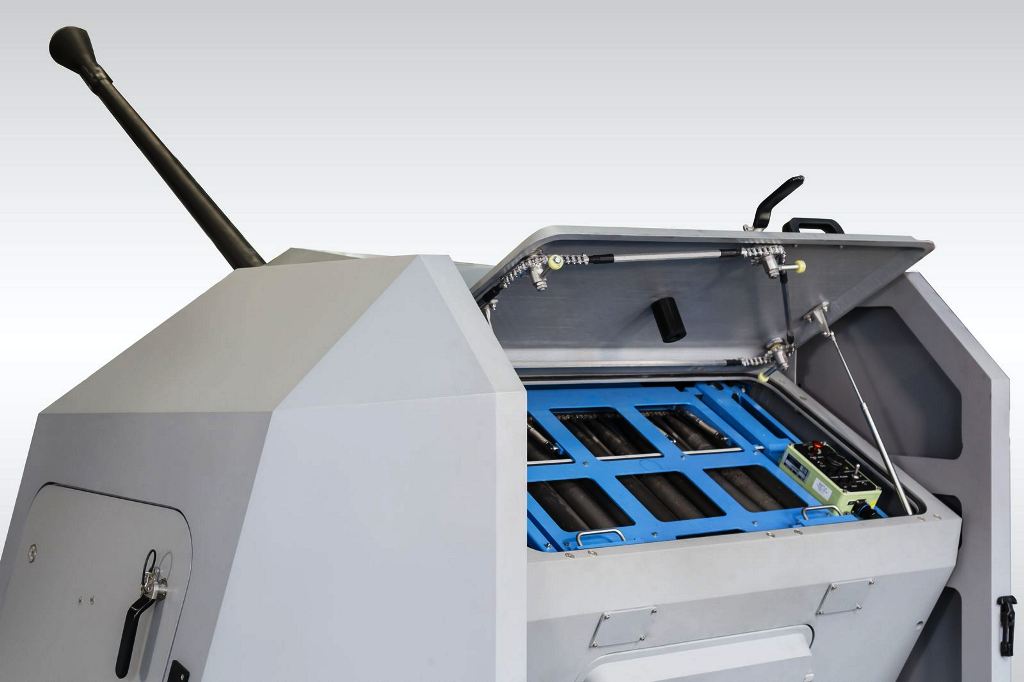
The Marlin 40 mount can be trained over 360°, its elevation range being -20°/+85°. To cope with the needs of short-range air defence angular speed and acceleration must be high, respectively 120°/s and 200°/s2 for training and 75°/s and 200°/s2 for elevation. In the naval version its rate of fire can be selected between single shot, 100 or 300 rounds per minute; the Hystrix 40 ADS shoots only at maximum rate of fire, due to the need to put a certain number of rounds close to the target in the shortest possible time, 72 ready to fire rounds being hosted in the turret. These can be quickly loaded opening a hatch at the top back of the turret, the full reloading taking less than five minutes. For the land version Leonardo declares a dry mass of 2,100 kg, 100 kg less than the naval mount, to which we must add around 180 kg of ammunition, a 40 mm round mass being around 2.5 kg.
The Hystrix 40 ADS adopts the ILOS configuration; the electro-optical system currently integrated into the gun was provided by INSIS, now part of Fincantieri, and makes it an independent system, capable of detection, tracking, ballistic calculation, target engagement, and engagement termination, all this completely autonomously. Sensors hosted in the gimbal include a 6.5 km range laser rangefinder, a thermal camera ensuring D/R/I [1] ranges respectively of 15, 6.8 and 3.5 km, and a day camera that provides 20, 9 and 4.5 km DRI ranges. EDR On-Line understood that the final configuration of the Hystrix 40 ADS will be fitted with Leonardo Janus D, the latest development of the Janus which is now fully digital and has been optimised also for the C-UAS role.
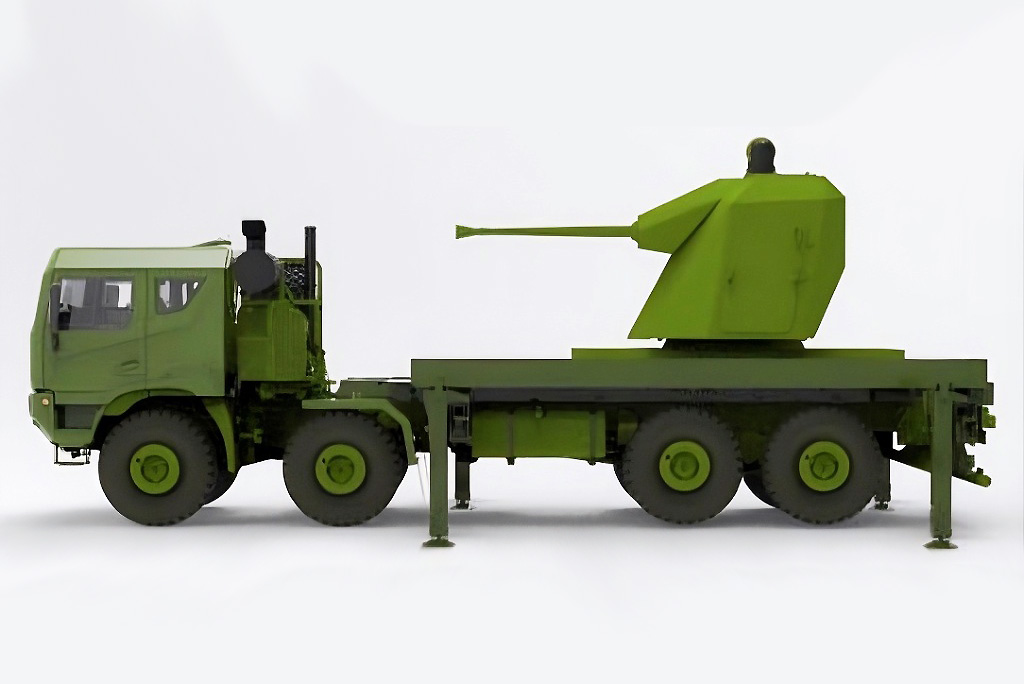
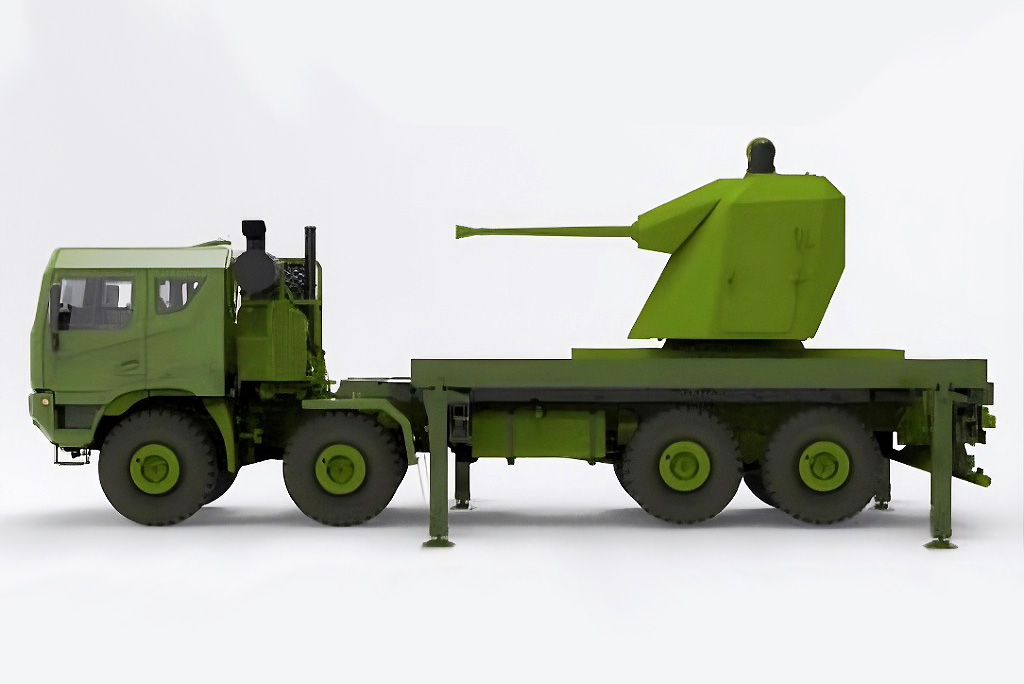
In the system relocatable configuration, the naval turret will be mounted on a flatbed; this will be fitted with hydraulic jacks that allow to rapidly and autonomously unload it from the truck, Leonardo considering the same IDV/Astra 8×8 trucks that are used in the SAMP/T and SAMP/T NG air defence systems, to reduce the logistic and training footprint. It can also be mounted on the same semitrailer used for the bigger calibre Hystrix, should a service intends maintaining the same type of configuration. Although it was not visible on renderings, here too a container hosting electronics, communications and power generation will be installed on the platforms.
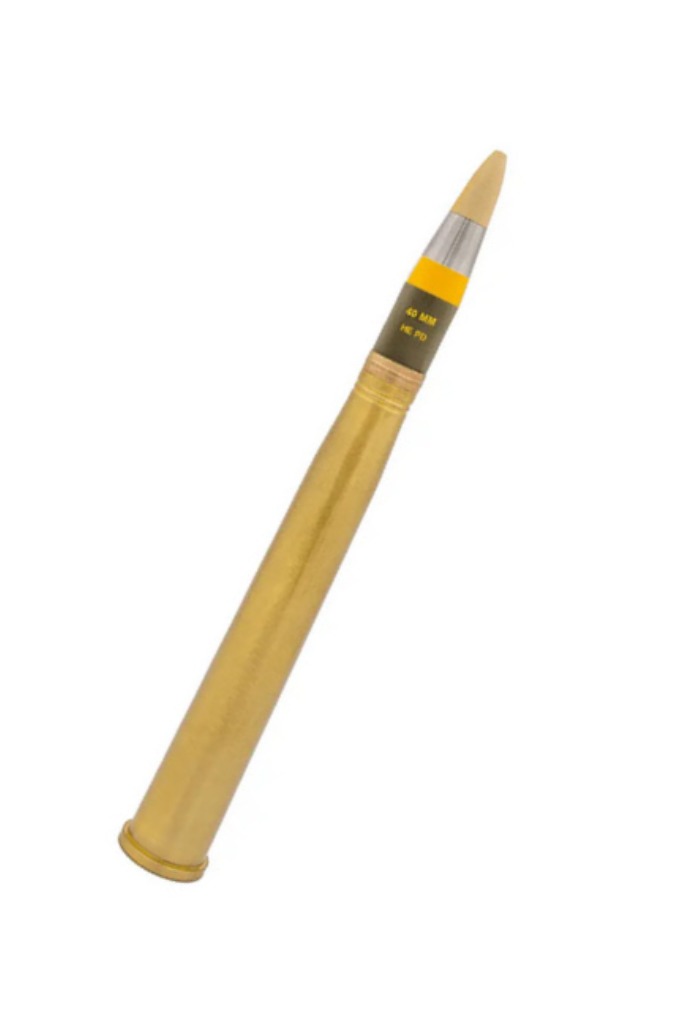
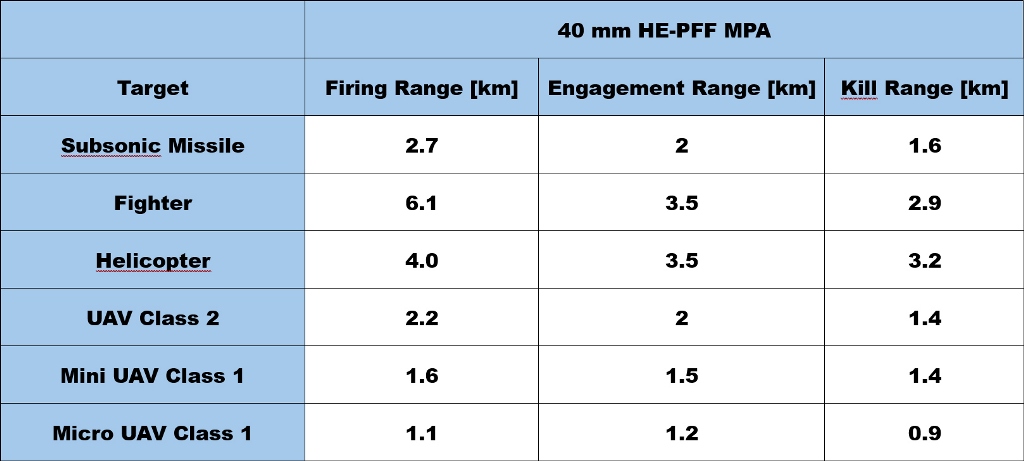
Leonardo is planning to have a prototype ready before year end, in order to integrate both the 76 and the 40 mm systems with the command-and-control elements of the Michelangelo Dome; the smaller calibre system will constitute the second layer of its land-based artillery component, the operational reach being shorter. Beside training practice round, the 40 mm gun can fire high explosive incendiary tracer rounds (HE/HEI-T/HE-T), high explosive pre-forged fragments rounds with proximity programmed fuse (HE-PFF), and multifunction programmable ammunition (MPA) fitted with a programmable fuse with five modes: proximity, gated proximity, airburst, point detonating and gated proximity plus airburst. During the presentation range data for the 40 HE-PFF MPA against various types of targets were provided (click on link to see table). These are of course shorter than the 76 mm, however they are considerably superior to 30/35 mm, while according to Leonardo the cost of a 40 mm round is 35-50% that of a 35 mm one.
Leonardo is already cooperating with MBDA Italy to possibly integrate the Fulgur VSHORAD missile under development to increase the range of the Hystrix 40 ADS, maxing it potentially a stand-alone solution for certain operational scenarios.
Graphics courtesy Leonardo, photos courtesy Leonardo and KNDS Ammo Italy
[1] D/R/I for Detection, Recognition, Identification