Enforce Tac 2026 – TDW details its Lion Strike family of warheads aimed at loitering munitions
At the Nurnberg exhibition TDW, the MBDA company specialised in warheads, detailed the status of the Lion Strike family of warheads, which were specifically developed for providing loitering munitions with highly effective lethal packages
Designing a warhead for a loitering munition is different from doing it for antitank missiles, as all loitering munitions hit from the top, while only a few missiles have this capability. This does not mean that a warhead developed for a loitering munition cannot be used in an infantry missile. Another difference exists between the two types of weapons; when you fire an antitank missile, the target is 100% clear, and the missile is typically a one-shot weapon, while when talking about a loitering munition the target area is known but targets may be of different types. Typically, the munition can loiter over an area where an armoured formation is located, therefore it can be assigned at least two different types of targets, main battle tanks or infantry fighting vehicles. A reconnaissance drone or a precursor loitering munition can find the target area and call-in further munitions to destroy targets; the sensor-to-shooter chain must be short and effective, while effectors must be fitted with an effective warhead, which allows them to neutralise the main target.
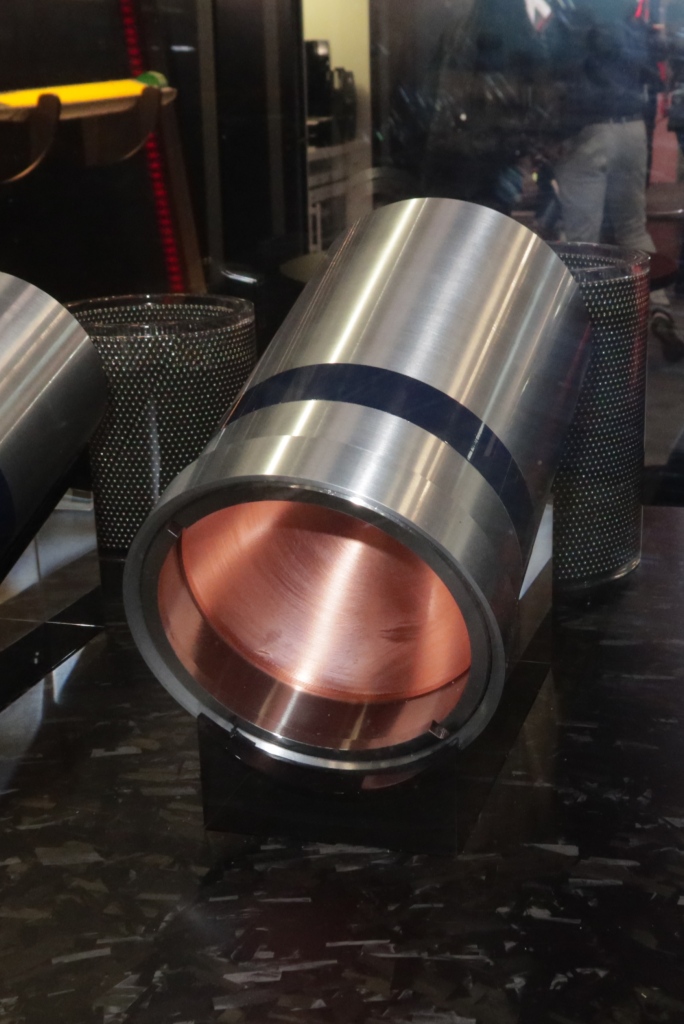
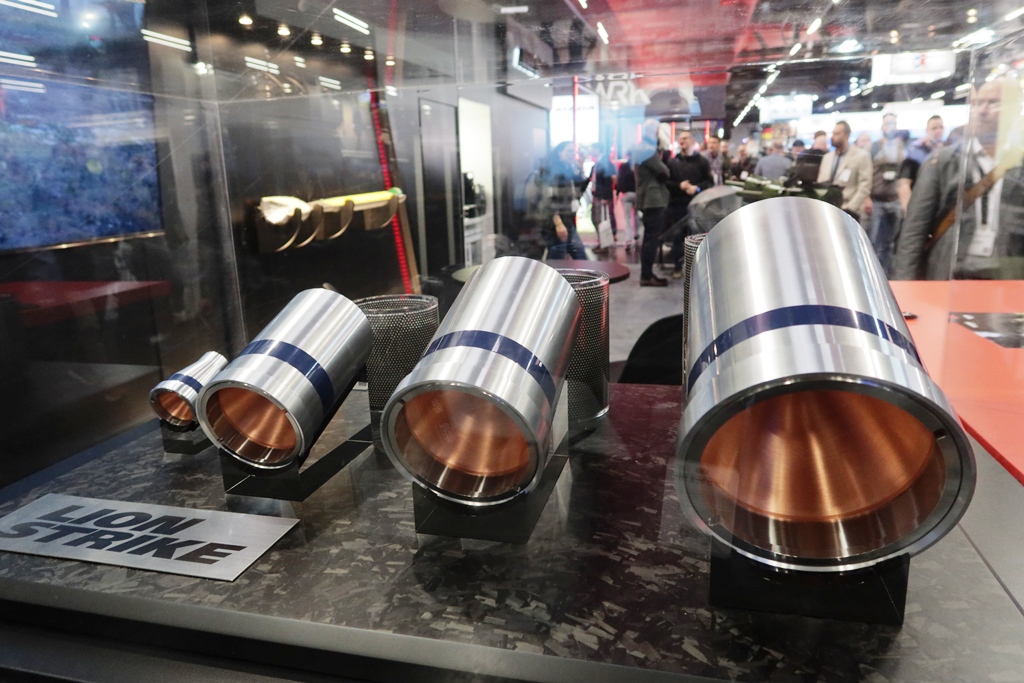
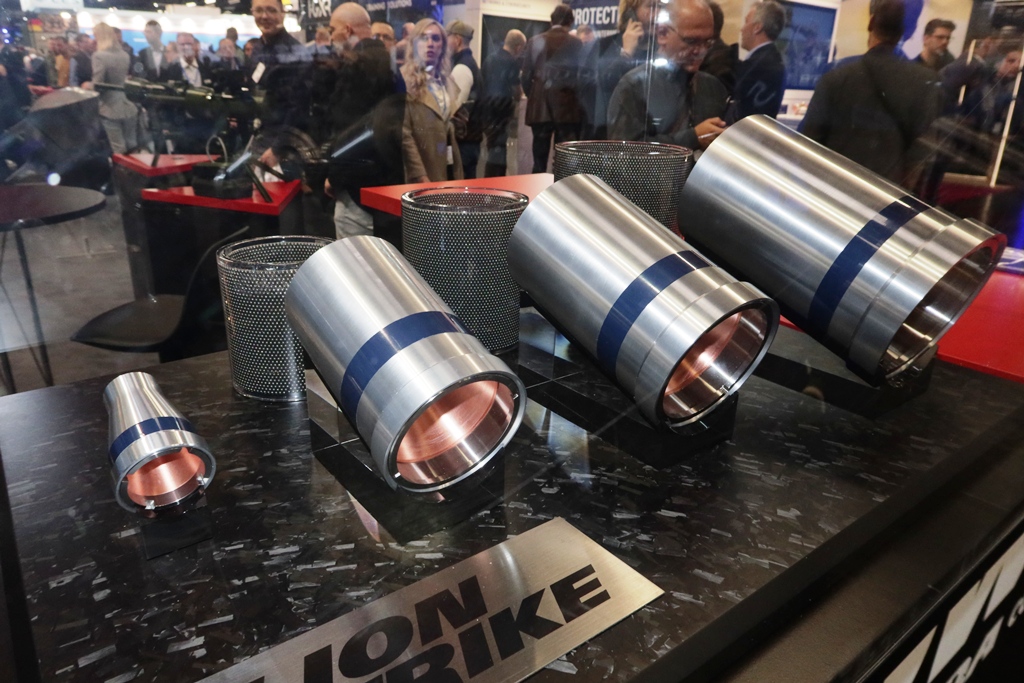
On the other hand, when talking about flying objects, mass is always an issue, loitering munitions ranging from infantry-type weapons to much bigger, vehicle-launched systems. This is the reason that led TDW to develop its Lion Strike family, which includes three warheads with different diameters, 90 mm, 110 mm, and 140 mm. All warheads are single shaped charge, the diameter being the critical measure in terms of armour penetration capability. New technologies in the shaped charges world have emerged, EDR On-Line understanding that TDW Lion Strike charges are all using copper liner in the charge, possibly with uneven thickness, which should improve performances. As said all warheads are based on a single shaped charge, however a small precursor charge was developed by TDW should a customer require a tandem charge warhead for destroying armoured vehicles fitted with explosive reactive armour.
Among the three warheads, the one which was developed first is the Lion Strike 110; on July 30, 2025, TDW and Stark, a company funded slightly more than one year ago with headquarters in Germany and operations in Ukraine, the United Kingdom, Greece, and Sweden, specialised in unmanned offensive systems, signed a cooperation agreement. This led to the first tests of the of the Lion Strike 110 fitted to the Virtus loitering munition, carried out in December 2025; an X-wing VTOL munition, the Virtus can carry a payload up to 5 kg, has a cruising speed of over 120 km/h, an attack speed of over 250 km/h and a range of more than 130 km. Fitted with the Lion Strike 110, it can penetrate 800 mm of rolled homogeneous armour; the warhead has a total mass of less than 3 kg, and explosive mass of around 1.5 kg, and is 190 mm long, diameter being obviously 110 mm. According to TDW representatives, this warhead, which was developed in less than six months, is undergoing final qualification phase, this step to be concluded in two-month time, then production will start as TDW already bagged a contract from a NATO country.
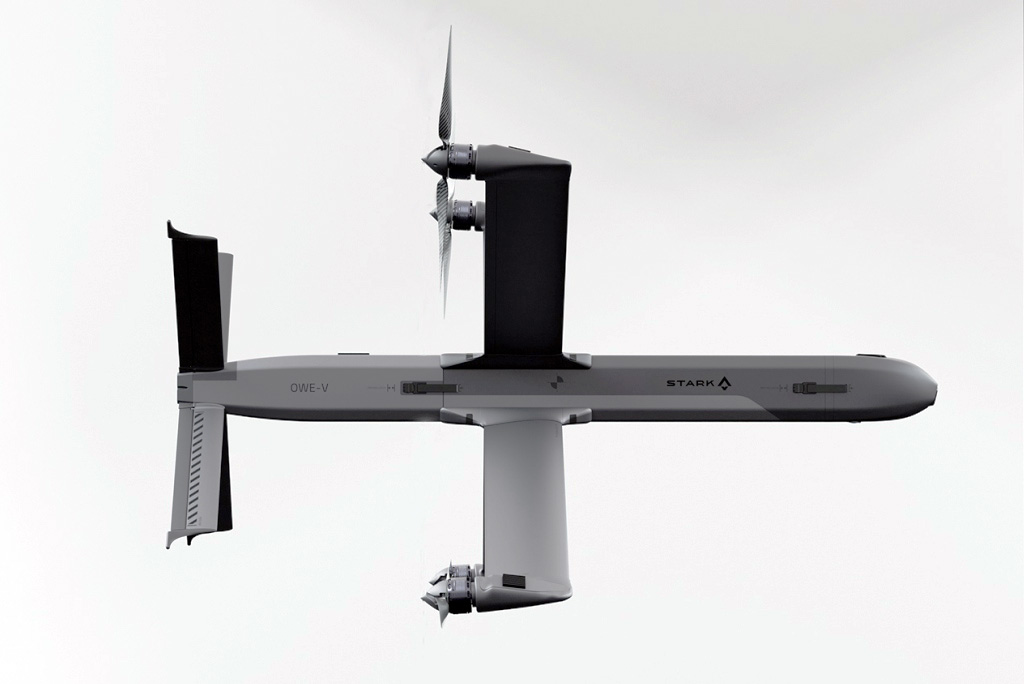
EDR On-Line understood that TDW receives a lot of interest for the Lion Strike 90, which might therefore be the second on the list to be fully developed, as some industry tests were already performed while qualification tests did not yet start. This will be ideal for smaller loitering munitions and FPVs, as its overall mass is around 1.5 kg, with a 0.7 kg mass of explosive. As for the bigger warhead, the Lion Strike 140, this is the one in the least advanced development stage, the company awaiting demand to grow before launching full development, EDR On-Line understood.
Of course, TDW also developed the electronic safe-arm device, which is fitted behind the warhead and which mass ranges between 100 and 300 grams, as well as a fragment jacket with steel balls, the choice of steel as it was for copper for the shaped charge being dictated by the will of maintaining cost under control, material being also more available, a key issue when thinking in terms of mass production, in a scenario were raw material is often becoming rare.
Photos courtesy Stark and P. Valpolini