Cambridge Pixel advances field-proven radar tracking software
Cambridge, United Kingdom, April 30, 2026 – Cambridge Pixel, a specialist developer of radar processing software and hardware, today announced SPx Server V2, a major update to its field-proven radar processing software. The release introduces proximity detection for collision avoidance and autonomous navigation, adds support for the HPx-700 embedded processing platform and supports track outputs in the TAK and SAPIENT formats used by modern situational awareness and command systems.
Key new features in SPx Server V2 include:
- Proximity detection for collision avoidance and autonomous navigation
- Support for the HPx-700 embedded radar input and processing platform
- Output to TAK and SAPIENT track formats, supporting interoperability with modern Command and Control (C2) systems
- AI-assisted system configuration using Machine Learning to streamline setup and optimise processing parameters
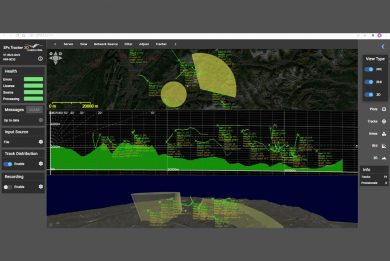
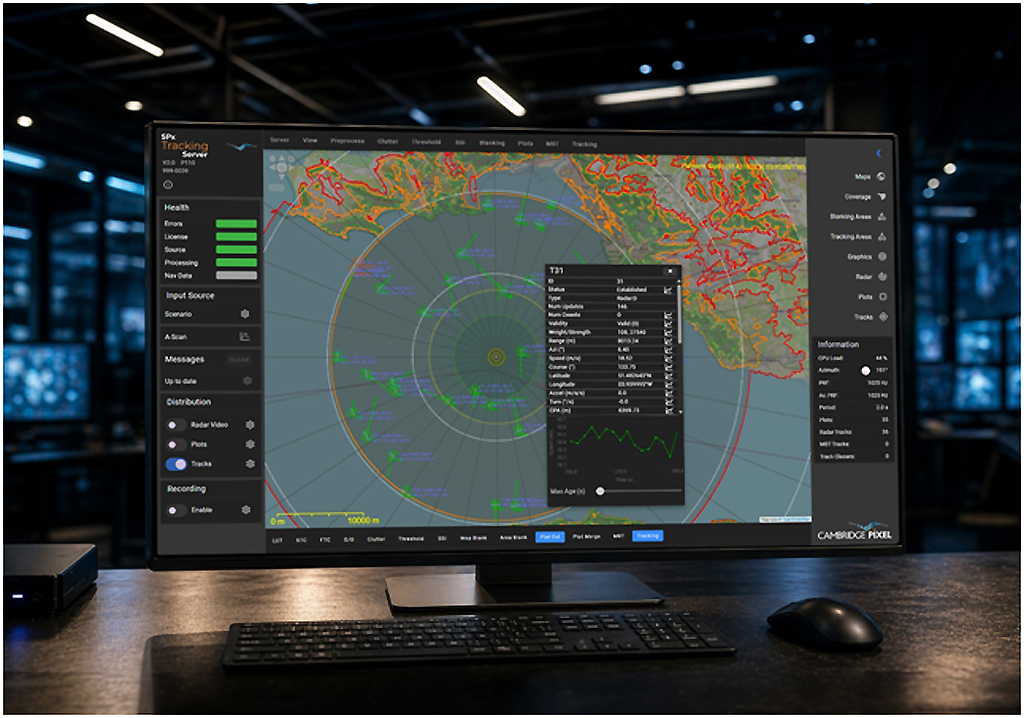
- Integrated radar coverage display for visibility validation
- Enhanced track reporting and plot history visualisation
- Configurable track labelling for clearer displays
- ARM platform support
Available for Linux and Windows, SPx Server V2 supports configurations for radar video distribution, detection processing, and target tracking. The release retains full compatibility with the thousands of systems already deployed in the field, allowing existing users to upgrade without disruption.
SPx Server V2 complements the recent release of the HPx-700 Radar Input & Processing Unit, forming a complete embedded solution for developers of autonomous and unmanned systems that require reliable detection and tracking capabilities. The combined solution can be further enhanced with additional capabilities from the SPx software range.
Commenting on the release, Cambridge Pixel’s Managing Director, Martin Hoather, said: “SPx Server is a key product at the heart of many radar processing applications in maritime and naval platforms, including numerous USV designs. This new release retains full compatibility with the many thousands of deployed systems, whilst expanding the capabilities for emerging applications.”
Photo courtesy Cambridge Pixel