DSA 2026 – Feilong‑60A, China’s rocket‑launched ‘Thinking Swarm’ for deep precision fires
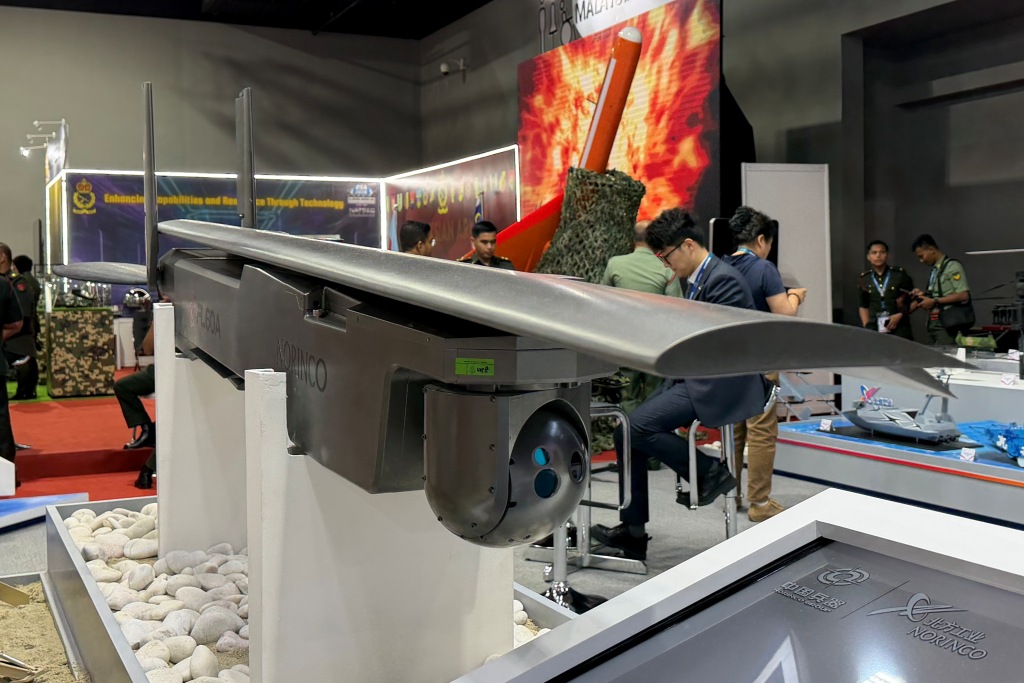
Unveiled to an international audience at the Defence Services Asia (DSA) exhibition in Malaysia, China’s Feilong‑60A (FL‑60A) loitering munition marks a decisive evolution in how rocket artillery can sense, decide, and strike, turning a traditional multiple rocket launcher into a networked, semi‑autonomous precision‑fires system. Developed by Norinco and paired with the SR‑5 multiple launch rocket system, the Feilong‑60A is designed to bridge the gap between classic tube or rocket artillery and high‑end unmanned combat air systems, by embedding reconnaissance, target discrimination and terminal attack into a single missile‑like air vehicle. For experts following the global diffusion of loitering munitions, it is arguably the first mature example of a rocket‑artillery‑based “intelligent loitering swarm system” fielded at scale by a major land power
At system level, Feilong‑60A, the name standing for Flying Dragon, is not just a new round; it is an upgrade kit for the entire SR‑5 ecosystem. Each SR‑5 launcher carries two six‑tube canisters, allowing up to twelve Feilong‑60A rounds to be fired in quick succession, interspersed or mixed with conventional guided rockets within the same battery. Upon launch, the Feilong‑60A transitions from a high‑energy rocket boost phase to an efficient loitering profile, then automatically joins a networked combat architecture linking rocket batteries, higher‑echelon command posts and other unmanned assets.
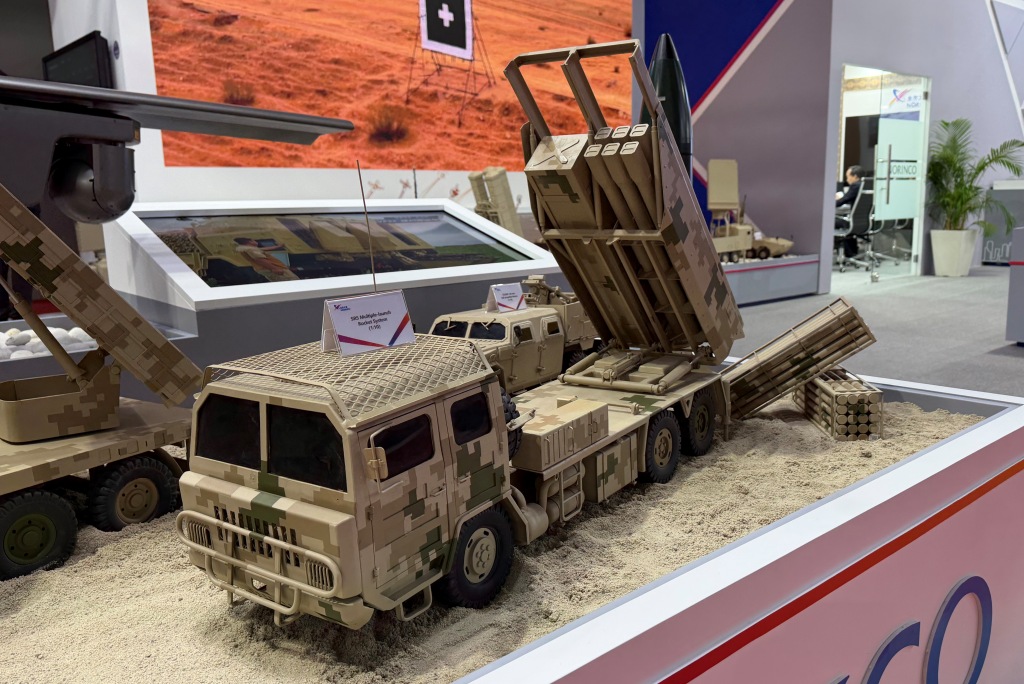
Chinese media and industry sources emphasise that the munition does not rely on continuous external cueing once in flight: after launch, thanks to its millimetre wave radar, it conducts autonomous battlefield surveillance, target detection, recognition, and strike planning in coordination with the rocket artillery network. This architecture allows SR‑5 formations to operate beyond the classical “shoot‑on‑grid” model; batteries can saturate a suspected area with Feilong‑60A rounds that subsequently fan out, search for emissions or signatures, then dynamically re‑task themselves based on updated situational awareness.
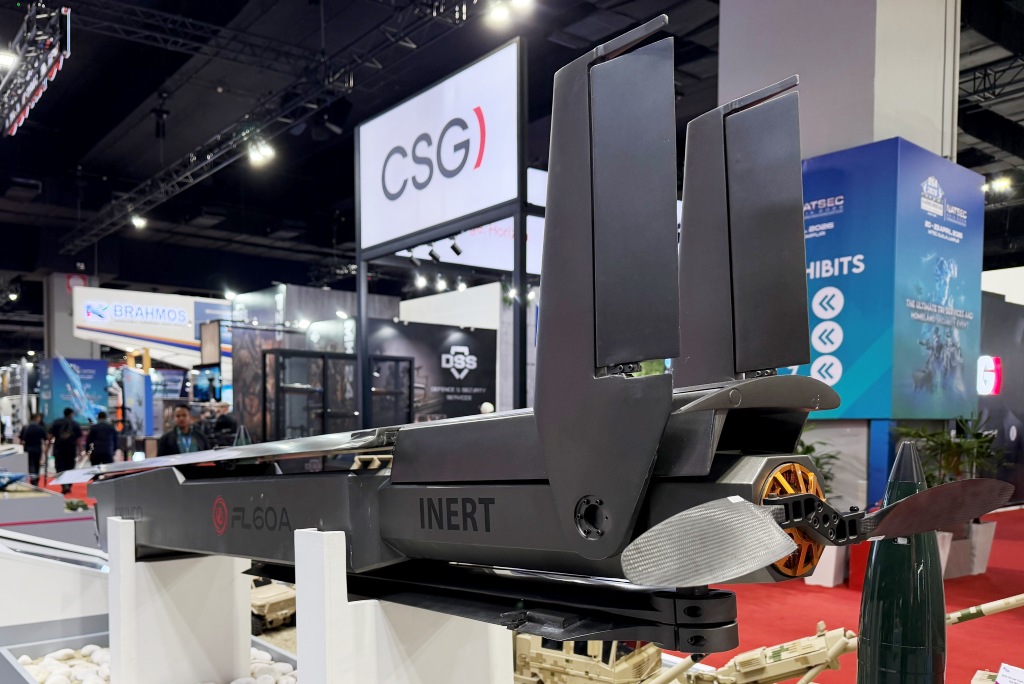
In profile, Feilong‑60A resembles a compact cruise missile optimised for modular canister launch. It uses a rectangular fuselage, less than 3 metres long, to maximise volumetric efficiency inside standard SR‑5 launch pods, combined with an interlocking, twin‑panel wing arrangement that folds for storage and deploys in fractions of a second after launch. Open reporting indicates a dual‑wingspan in the order of 2.1 metres once deployed, giving sufficient lifting area for extended loiter at subsonic speed once the boost phase is complete, the range being of around 100 km.
Propulsion is hybrid: a solid‑fuel booster provides initial acceleration, with sources mentioning boost speeds approaching high subsonic to supersonic regimes, followed by cruise on a quieter, long‑endurance propulsive stage based on an electric motor operating a two-blade propeller. This two‑stage approach allows the round to clear the launcher, rapidly reach its patrol box, then switch to a low‑signature loiter mode better suited to ISR and terminal guidance.
Feilong‑60A combines multiple guidance layers: an inertial/GNSS navigation core for mid‑course, fused with electro‑optical sensors and on‑board processing for target detection and discrimination in the terminal phase. Compared with improvised FPV drones, this profile offers both greater stand‑off range and much higher resistance to direct radio‑frequency jamming. Chinese outlets stress the ability to operate without permanent uplink to a man‑in‑the‑loop operator, pointing instead to “intelligent networking” with the rocket battery and automatic target assignment inside mixed salvos.
The “swarm” aspect lies less in spectacular hundreds‑strong drone clouds than in tightly integrated, heterogeneous salvos. Feilong‑60A rounds can be launched alongside conventional guided rockets; once in flight, the loiterers function as forward scouts, locating and classifying targets, while the pure rockets deliver follow‑on mass fires, or vice versa depending on target value and threat level. Within the Feilong‑60A subset itself, onboard algorithms reportedly allocate targets between individual munitions based on proximity, weapon‑target pairing rules and remaining endurance, in order to minimise over‑kill and ensure coverage of dispersed, time‑sensitive objectives. According to available information the Feilong-60A warhead is based on a shaped charge with fragments, which allows engaging armoured targets as well as softer objectives. The Feilong-60A level of autonomy is particularly relevant in a heavily contested electromagnetic environment, where continuous datalinks may be degraded. By embedding perception, navigation and decision‑making in the munition, the system is designed to preserve mission effectiveness even when external command and control becomes intermittent or delayed.
Feilong‑60A is built from the ground up as part of a system‑of‑systems approach. Integrated into the SR‑5 rocket launcher, it turns a conventional MLRS battery into a networked reconnaissance‑strike asset that can fire mixed salvos of guided rockets and loitering munitions. The aim is to push sensing, decision‑making and effects down to each individual projectile and then coordinate them at salvo level.
Comparing it to foreign solutions, Russian Lancet is much more of a “striker of opportunity”. It is optimised for relatively low‑cost production, simple launch hardware and aggressive battlefield use against exposed, high‑value assets. Rather than deeply reshaping artillery doctrine, it gives Russian forces a flexible tool to harass enemy systems in tactical depth and generate media‑visible effects. US Switchblade focuses on empowering small units. Both Switchblade 300 and 600 are designed to be carried by dismounted troops or light vehicles and to be employed under strict man‑in‑the‑loop control. The priority is responsive, precise firepower under tight rules of engagement, rather than maximum autonomy or deep integration with heavy artillery.
For modern air‑defence and EW planners, these three systems pose very different problems. Feilong‑60A combines long stand‑off (thanks to its rocket launch), a low‑signature loitering phase and a high degree of onboard decision‑making. That makes it harder to disrupt with jamming alone, especially when several rounds work together and share tasks inside a salvo.
Lancet’s combat record shows that even relatively slow, propeller‑driven loitering munitions can be highly effective against unprepared or thinly defended targets. However, as layered SHORAD, camouflage and decoys are widely adopted, its margin of success depends heavily on how quickly both sides adapt.
Switchblade trades reach and survivability for portability and controllability. Its shorter range makes it more vulnerable to local air defences, but that same limitation reduces collateral‑damage risks and makes it well‑suited to complex terrain, urban operations, and close support where larger systems would be overkill.
Photos by J. Roukoz