Joint Navy-Marine Corps Osprey Test Advances Future Fleet Anti-Submarine Capability

Sept. 23, 2026 – A joint test team successfully executed the first lot acceptance test of sonobuoys from an MV-22B Osprey tiltrotor aircraft off the coast of San Clemente Island, California, Aug. 19.
The Air Anti-Submarine Warfare Systems Program Office, the Osprey Joint Program Office and Marine Operational Test and Evaluation Squadron 1 conducted the milestone test. The demonstration validated the Osprey as an alternative platform for the Navy’s sonobuoy quality assurance program, boosting operational readiness and laying the groundwork for expanded tactical employment across the fleet.
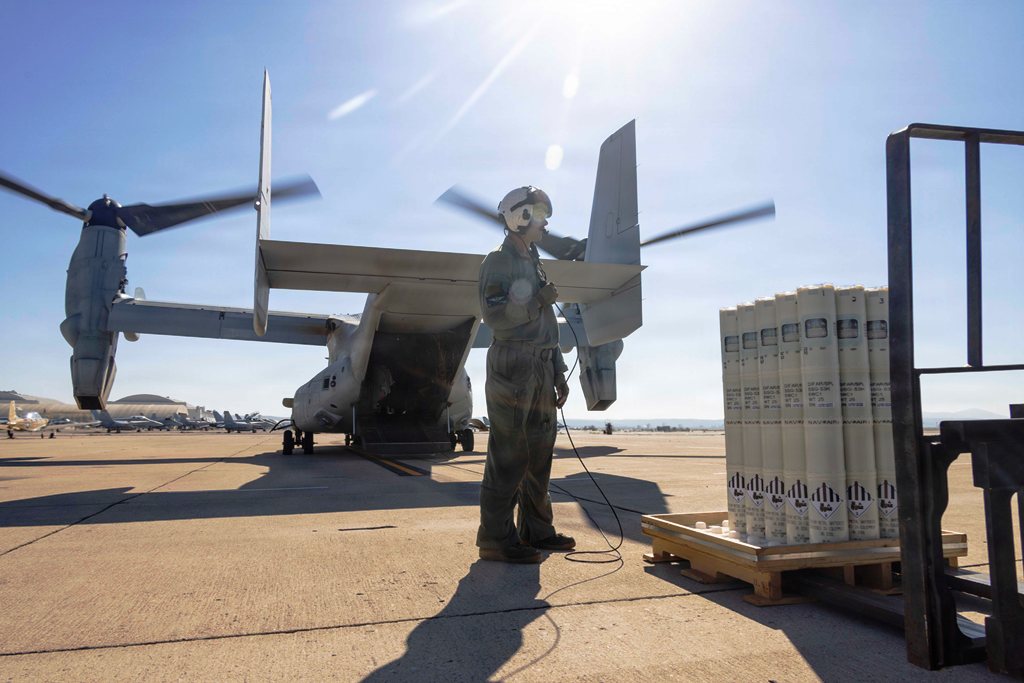
The Air Anti-Submarine Warfare Systems Program Office manages the sonobuoy quality assurance program, which subjects random production samples to over-water testing to evaluate reliability and acoustic performance before delivering vendor inventory to operational squadrons.
“Our primary focus in the quality assurance program is making sure the sonobuoys delivered to the fleet perform exactly as expected,” said Navy Capt. Greg Hinkle, program manager of the Air Anti-Submarine Warfare Systems Program Office.
Historically, the Navy relies on P-3C Orion aircraft assigned to the Air Test and Evaluation Squadron 30 to perform quality assurance drops using automated launchers. The test proves the Osprey aircraft can serve as a dependable substitute if primary test platforms are unavailable, helping prevent testing backlogs and keeping delivery schedules on track.
“By utilizing the [Osprey] for this type of mission, we are reinforcing our supply chain and ensuring front line aircrews have the mission-ready stores they need to detect and track undersea threats,” Hinkle said.
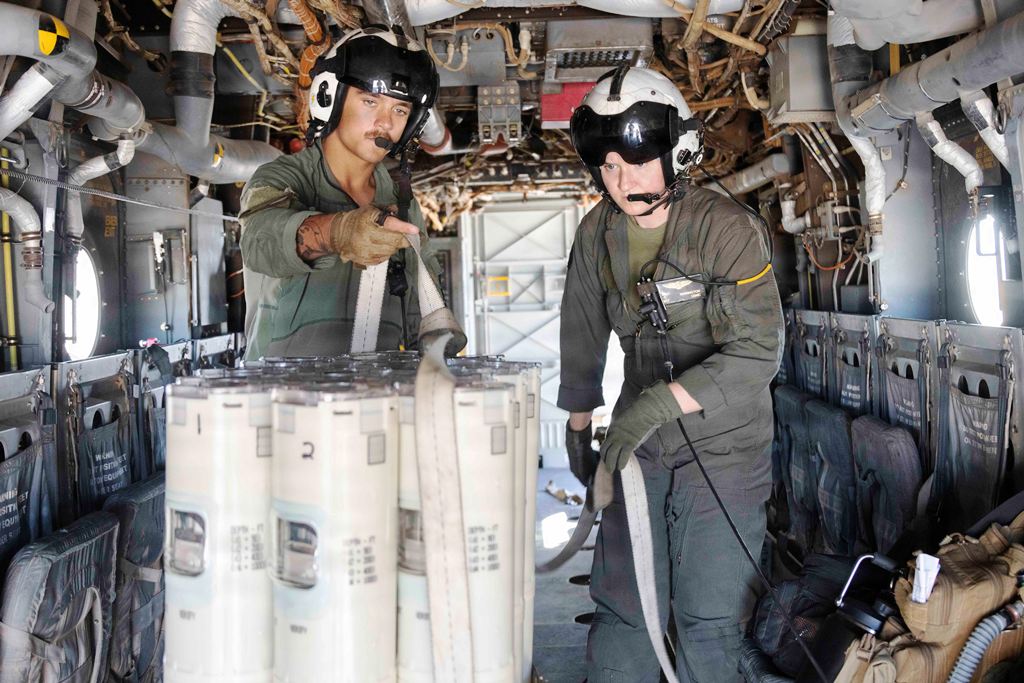
Unlike the Orion that uses automated launch containers triggered from the cockpit, the Osprey requires aircrew to launch the buoys from the open rear cargo ramp manually. Crew chiefs removed container caps and inverted launch tubes to release the stores into the slipstream.
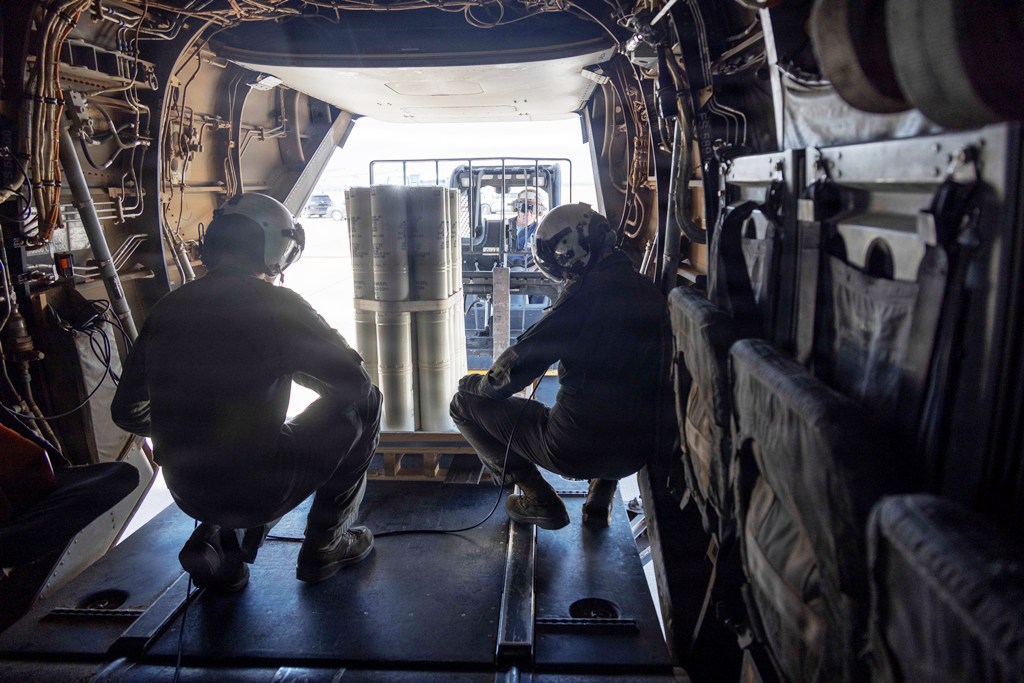
Because manual deployment creates longer gaps between drops than automated launchers, the evaluation squadron aircrew adjusted by reducing flight speed, to match the precise target pattern and spacing needed for acoustic testing.
“From an aircrew standpoint, this event provided an invaluable opportunity for our pilots and crew chiefs to build proficiency working through the mechanics of manual sonobuoy drops in a controlled setting,” said Marine Corps Lt. Col. Brandon Pope, Osprey pilot and advanced projects lead assigned to the Marine Operational Test and Evaluation Squadron 1.
The hand-launch process requires tight coordination. The pilot holds steady flight parameters while the copilot manages navigation, timing and communication, queuing crew chiefs in the cargo bay to program and release the buoys on schedule.
“Hand-launching from an open ramp requires split-second coordination; the crew must be deliberate with timing, airspeed control and internal communication,” Pope said. “This test demonstrated how the [Osprey’s] range, speed and versatility can support broader maritime domain awareness and distributed fleet operations.”
In addition to meeting test criteria, the mission also provided operational experience that will help Marine Operational Test and Evaluation Squadron 1 refine tactics, techniques and procedures for future tiltrotor anti-submarine warfare support. The Air Anti-Submarine Warfare Systems Program Office and Osprey Joint Program Office will analyze acoustic and deployment data from the flights to refine procedures for future quality assurance missions and joint fleet operations.
Souce US DoW – by Katherine Coughlan, Anti-Submarine Warfare Systems Program Office
Photos courtesy USMC © Cpl. A. Vaughn