

MBDA: investing in production capabilities and future effectors
Speaking at the company annual press conference Eric Beranger, who became the MBDA CEO on 1st June 2019, highlighted the group increase in production capability and the growing investments to answer the needs linked to the current geopolitical scenarios, not forgetting the need to be agile, adaptable and innovative, to cope with current and future challenges

The annual press conference by Eric Beranger, the MBDA CEO, was definitely not centred on financial numbers, but much more on capabilities and production increase. That said, as he underlined, revenues are the result of deliveries to customers, and 2025 saw these growing from 4.9 to 5.8 billion Euro, which means a +18% over 2024, while backlog raised from 37 to 44 billion Euro, showing the widening of the demand as a consequence of ongoing conflicts, both highlighting the importance of air defence, which is MBDA core businesses. However, the most striking number is the dramatic growth of the five-years investments forecast; in 2025 Beranger announced a 2.5 billion investment plan, and today he told us that this number has doubled, which underlines the importance of production increase, MBDA being setting up new sites in Europe, as well as increasing manpower, 2,700 people were recruited last year, bringing the company headcount over the 20,000 mark, with a further 2,800 hiring expected in 2026 at group level, show well how much the company is engaged in increasing its capacity to timely answer customers’ needs.
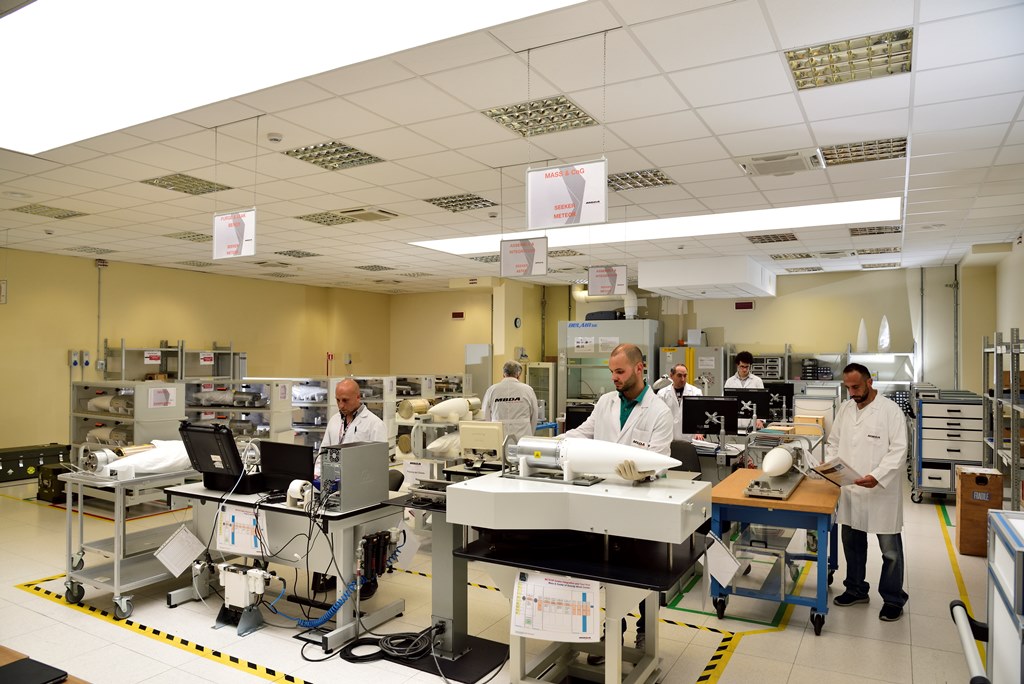
“Let’s be clear, today production volume is one of our main challenges. Producing more and producing faster is absolutely essential,” Eric Beranger stated. “Last year, I told you that in 2025 we would produce twice as many missiles as what we had done in 2023. And we did it.” As an example, he mentioned Aster and Mistral production, of which production was respectively five times the planned one for the long-range and four times the production volume at the beginning of the Russian-Ukraine conflict for the VSHORAD missile.
These results were obtained extending the sites, bounding new infrastructures, acquiring new machines, and as mentioned previously, hiring new personnel. “We have gone to three shifts,” Beranger underlined, which means that at least the most stressed production lines are now working full steam, 24 hours a day.
While in the past some machines were producing elements for different types of missiles, now some of the lines are dedicated to a single product, which allows increasing production and reducing production time, a few machines being still used for multiple products awaiting the delivery of new ones.
Beside MBDA in-house capacity, missiles production relies heavily of subcontractors, the company supply chain counting over 2,000 external suppliers. MBDA worked closely with them to ensure they could follow the production ramp-up while maintaining quality.
As production numbers must increase, delivery time must decrease, and this is not feasible only reducing production time. While the concept of stocks had vanished in the post-Cold War era, countries wanting to cash the so-called “peace dividend”, scarce contracts being filed as basically missiles were used only for training, simulation being used as much as possible to reduce costs, the new scenarios that appeared since February 2022 led many companies to invest in producing ahead of contracts, generating stocks. To do so MBDA invested 1 billion Euro, mostly used to produce air defence missiles.
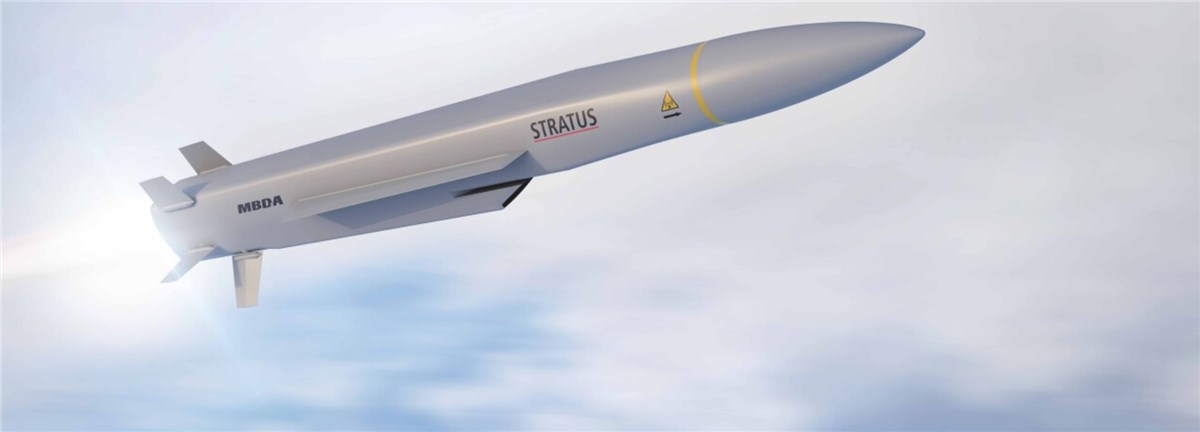
“As discussed last year, not only do we need to provide our armed forces with what they need today, but we need to continue doing the same tomorrow and the day after tomorrow,” Beranger said, mentioning two major programmes, Stratus (formerly known as FC/ASW, aimed at replacing Storm Shadow/Scalp, Exocet and Otomat/Teseo Mk2A), and HYDIS (Hypersonic Defence Interceptor System) meant to become the future interceptor against enemy ballistic and hypersonic missiles.
“Starting from the Stratus, we are now at the end of what we call the assessment phase,” which follows the concept phase and precedes the development phase. The Stratus project is made of two missiles, the Stratus Low Observability and Stratus Rapid Strike, the former subsonic and the latter supersonic.
They will cover four missions, deep strike, anti-ship, SEAD/DEAD (Suppression and Destruction of Enemy Air Defences), and high-value aerial assets neutralisation, such as AWACS for example.
“During the UK-French summit in July 2025, the UK and France did commit to enter the development phase in the framework of the Lancaster 2.0 agreement. This was a very important declaration and step forward. In addition, Italy has now joined Stratus Low Observability alongside the UK and France,” Beranger stated, adding that 2026 will be a crucial year for Stratus, with the expected imminent launch of the development phase.
As for HYDIS, or to better say HYDIS2, the second “S” standing for Study, this is in the concept phase; “We have now down selected two potential concepts and the down selection will continue down to one concept by the end of this year,” the concept phase to be concluded by year end EDR On-Line understood. The HYDIS consortium is led by MBDA and brings together 19 partners and more than 20 subcontractors across 14 European countries.

As for space, MBDA will certainly not enter the satellite world, however it considers this domain relevant to its business under two aspects. The first is connectivity, space-based assets being key in connecting with very long-range, very high-speed effectors, such as those MBDA is developing. The second is the need to protect space-based assets, and here the company might well develop solutions to counter physical threats aimed at friendly satellites. This is the reason why in 2025, MBDA took part for the first time in AsterX, the French Space Command military exercise of the. We are preparing together with our partner U-Space to put in orbit a satellite called SPLINTER [Space Platform for LEO intervention Testing and Evaluation of Response]. EDR On-Line understood that the SPLINTER will be capable to chase potential threats in the low orbit (between 400 and 1,000 km) while the second satellite, named LISA-1, will monitor the orbits.
In March 2025 Eric Beranger insisted on the absolute necessity for MBDA to be agile, to adapt, to innovate. In terms of agility the company is increasingly called to answer UORs (Urgent Operational Requirements), most of which remain confidential. Among those known We find the adaptation of Storm Shadow and Scalp missiles under the Sukhoi 24; “We did that in a few weeks compared to usual year-long programmes, and we also integrated an air-to-air missile on an undisclosed helicopter in only 10 days,” the CEO announced. “In 2025 we performed roughly 25% more UORs than we did in 2024.”
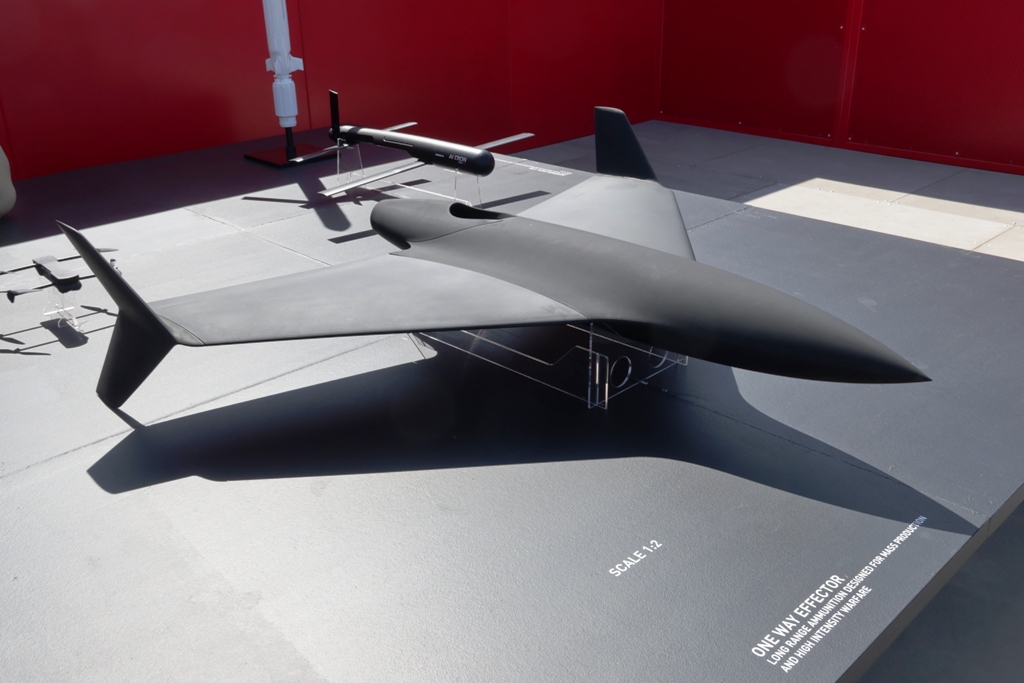
Adapting and innovating to answer the new needs, such as mass production, is another key issue. “In 2025 we have launched a number of innovative initiatives to address these requirements. At the Paris Air Show we announced the One-Way Effector, and three months later at DSEI London we unveiled the One-Way Effector Heavy, also known as Crossbow. Low cost, easily producible, their aim is to saturate enemy air defences. This initiative is totally self-funded and in only 10 months it went from a blank sheet to the first flight. “And then we got our first contract from the French DGA. The system is totally designed to manufacture, so it’s ready for large volume production,” Beranger said.
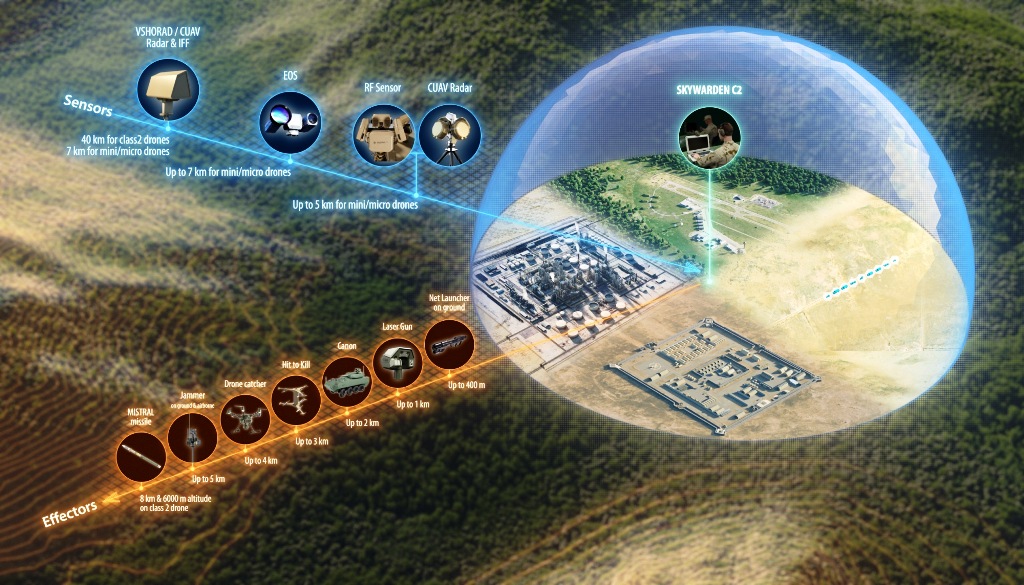
In the defensive domain, MBDA is actively working on C-UAS systems, neutralising drone, FPVs and loitering munitions being considered among priorities by most armies. “Our Sky Warden, another self-investment project, was recently rated by the Frontex Agency as the best solution to protect the EU borders. Beside this MBDA CEO announced that the company bagged the first two export contracts for the Sky Warden.
Still in the C-UAS domain, in 2025 MBDA was contracted by Germany to develop a low-cost anti-drone missile known as DefendAir, which might well be integrated in the Sky Warden once it will be fully developed. Another promising technology to neutralise drones is that of lasers, and here too in December 2025 MBDA was notified a contract by France for a high-power laser demonstrator, while in the UK the Royal Navy required the company to deliver a Dragonfire system within 2027.
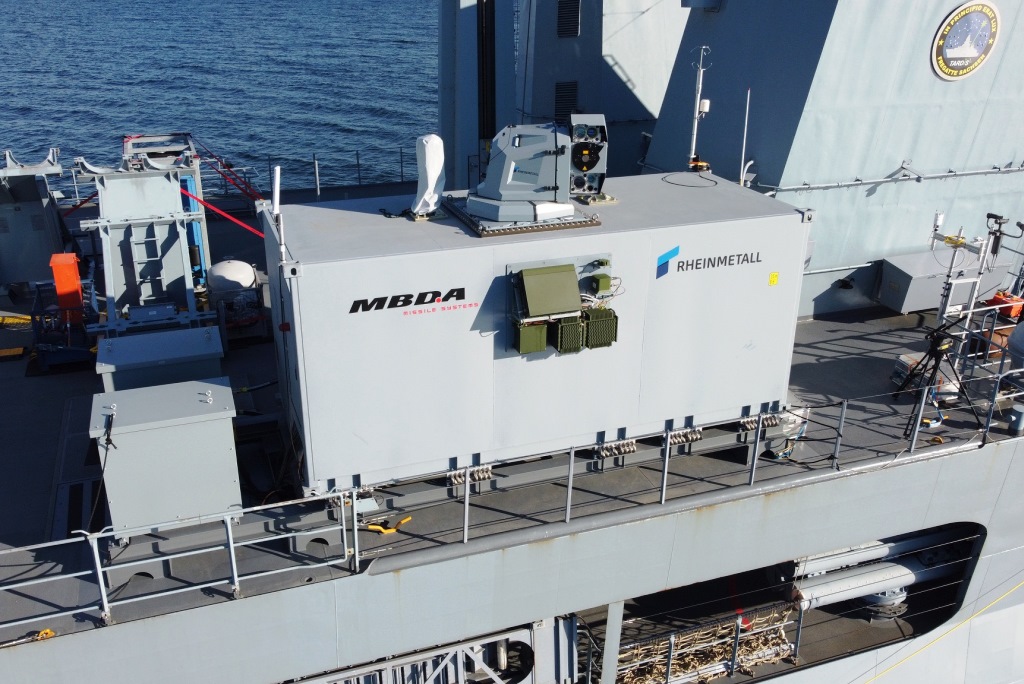
“Considering our positions in Germany and Italy, today MBDA is the champion of laser weapons in each of its core countries, and I think this is a very important position,” Beranger underlined, adding that “With all those initiatives we are demonstrating our ability to innovate, to adapt, and our agility in deployment. Moreover, in the Western world, apart from the Americans, MBDA is the only company that is offering the full range of capabilities in complex weapons.”
On January 1st, 2026, MBDA adopted a new organisation. The key importance of the supply chain was recognised, “and this is the reason why I have elevated the procurement inside MBDA to the Executive Committee. Moreover, to gain efficiency and to strengthen our ability to deliver both for national defence programmes as well as for European cooperative programmes more efficiently, we have now one programme delivery directorate dedicated to each of our national customers,” the CEO explained, adding that a fifth directorate is dedicated to the cooperation programmes.
As for 2026, Eric Beranger told the audience that a further production increase of around 40% is expected. This is the overall data, however in some areas, namely air defence, the increase will be much higher. “For Aster missiles, for instance, we are going to double, which is absolutely massive,” he underlined, no production numbers being mentioned as usual. He also noted that all those decisions were taken before the Iran crisis, which further increased the need for a ramp up in production.
In its conclusion Eric Beranger underlined the importance of Europe, both from a research and development standpoint, to ensure sovereignty to European-made solutions, as well as from a market perspective, consistent orders being possible only when several nations select European products. All this being facilitated by European Union schemes helping industry to offer state-of-the art solutions. “The scale must be European. The point is how to organise this cooperation between nations and at the same time protect the sovereign prerogatives of each of the states. And here, there are basically two solutions: creating joint programmes, especially when big, high-tech programmes are concerned, Storm Shadow, Aster, Meteor, and Stratus being good examples, and having joint procurements between the various nations. All of this is feasible, and I think it is absolutely necessary,” the CEO stated. Some progress in terms of “Europeisation” were made, such as the EU Commission proposal for a 65% ratio for EDIP, aiming to provide longer-term support to the bloc’s defence industry encouraging more European purchases, boosting production, reducing fragmentation, and addressing critical capability gaps. “But I think we need to find ways to go further because what will be necessary, if we want to be absolutely sovereign and master our destinies, will be to have inside Europe what we call the design authority, meaning the real understanding of the products that we are delivering and that we are using.”
Concluding his presentation, Eric Beranger stated that “As I mentioned at the beginning, the company has now taken a new strategic dimension, becoming one of the instrumental pillars of the rearmament at play in Europe, in the European countries and their allies.”
Photos and graphics courtesy MBDA and P. Valpolini


