Rolls-Royce unveils the mtu PowerPack Xelerate:an integrated hybrid propulsion system for land forces
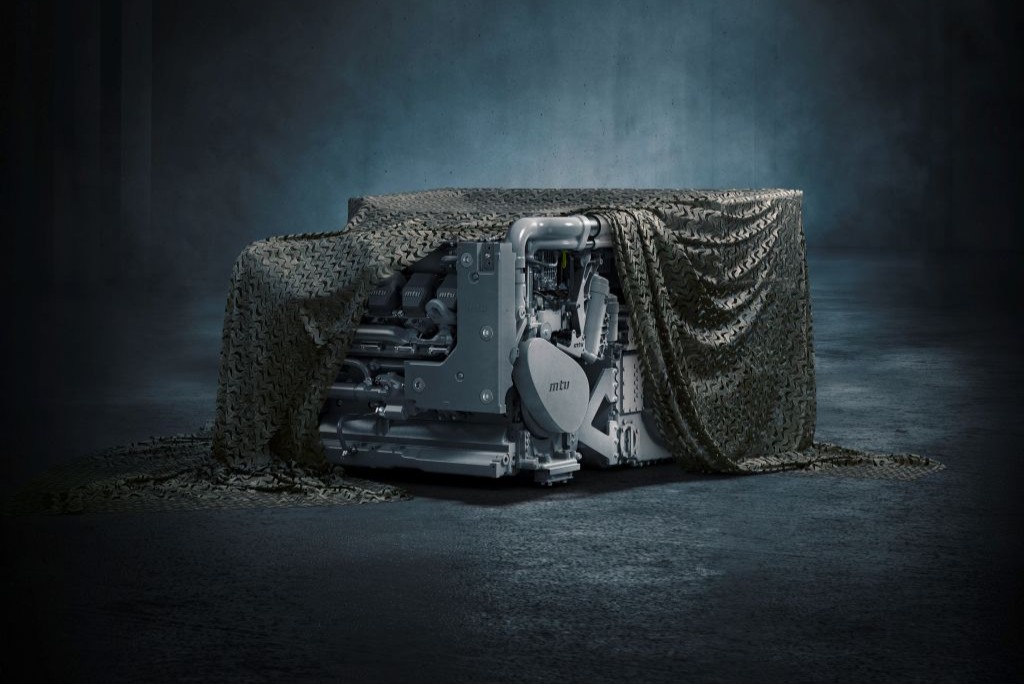
- World premiere: Rolls-Royce Power Systems is exhibiting the hybrid powerpack announced in March for the first time at Eurosatory under the name mtu PowerPack Xelerate
- Over 1,400 kW: integrated hybrid drive based on the mtu 10V 199 engine and the eLSG 5000 electrified transmission from ZF
- Rolls-Royce Power Systems is responsible for the integration, system architecture and overall design of the powertrain
- A step towards an integrated system solution for heavy tracked vehicles with clear operational advantages
- Efficient and robust powertrain architecture with European industrial value creation
Rolls-Royce Power Systems will be showcasing its mtu PowerPack Xelerate parallel hybrid system for the first time at Eurosatory 2026. This brings the system, announced in March, to life: the engine, transmission and electrical power system form a highly integrated complete system. The hybrid powerpack combines the mtu 10V 199 engine with ZF’s eLSG 5000 electrified manual gearbox and achieves a system output of over 1,400 kW. The combination of a high-performance diesel engine, an electrified transmission and a highly integrated system architecture forms the basis for a new generation of powerful and energy-efficient powertrains for military tracked vehicles. This strengthens Rolls-Royce Power Systems’ position as a provider of integrated system solutions and boosts European industrial value creation in the field of military mobility.
The new mtu PowerPack Xelerate significantly expands the vehicle’s capabilities and enhances its operational effectiveness. It makes the vehicle more agile and directs power to where it is needed in any given situation. The high power density and electrified components allow for greater flexibility in vehicle integration. This has a positive effect on the vehicle’s architecture and makes it possible to reduce the total weight of tracked vehicles to the level of the MLC 60 class – which corresponds to around 54 tonnes. At the same time, the drivetrain can be controlled entirely electronically (‘drive-by-wire’) and is thus ready for future vehicle concepts, including unmanned ones.
Andreas Görtz, President of the Mobile & Sustainable Business Unit at Rolls-Royce Power Systems, said at the launch on Monday 15 June at Eurosatory in Paris:“With the mtu PowerPack Xelerate, we are launching an integrated propulsion system that effectively combines the growing demands for energy, power and efficiency. It embodies a clear systems-based approach – featuring intelligent hybridisation, high power density and proven robustness.”
The unveiling of the hybrid powerpack was attended by high-ranking representatives from the worlds of politics and industry. Alongside Andreas Görtz and Dr Andreas Strecker, Chief Financial Officer at Rolls-Royce Power Systems, Jens Lehmann, Member of the German Bundestag, also attended the presentation at Eurosatory.
More power and energy for the battlefield of the future
Modern land forces are undergoing a transformation: alongside conventional propulsion power, there is a growing demand for electrical energy to power sensors, communications and protection systems. At the same time, efficiency, range and signature reduction are becoming increasingly important.
The mtu PowerPack Xelerate addresses these requirements comprehensively: for armed forces, this means greater operational readiness, additional power for complex on-board systems and a propulsion solution that can be flexibly integrated into different vehicle types. At the same time, the systematic approach simplifies operation and maintenance and helps to make logistical processes more efficient.
From innovation to application
With the mtu PowerPack Xelerate, Rolls-Royce Power Systems is taking the next step towards operational readiness. The hybrid powerpack now unveiled builds on current development work (such as the MGCS programme) and takes the technology from the concept phase into a tangible, integrated system solution that will also be of great significance for future programmes. The first prototypes are expected later this decade, with the prospect of series production in future platforms from the 2030s onwards.
photo courtesy Rolls-Royce