Safran Electronics & Defense: AASM LIR close to qualification while Thundart/FLP-T nears first live test
Following the last three live firing tests the latest iteration of the AASM (Armement Air-Sol Modulaire, modular air-to-ground weapon)) fitted with the dual IIR and SAL seeker is getting close to qualification, while the Thundart/FLP-T long-range land strike missile developed together with MBDA is getting close to its first live fire test, Safran Electronics & Defense announced
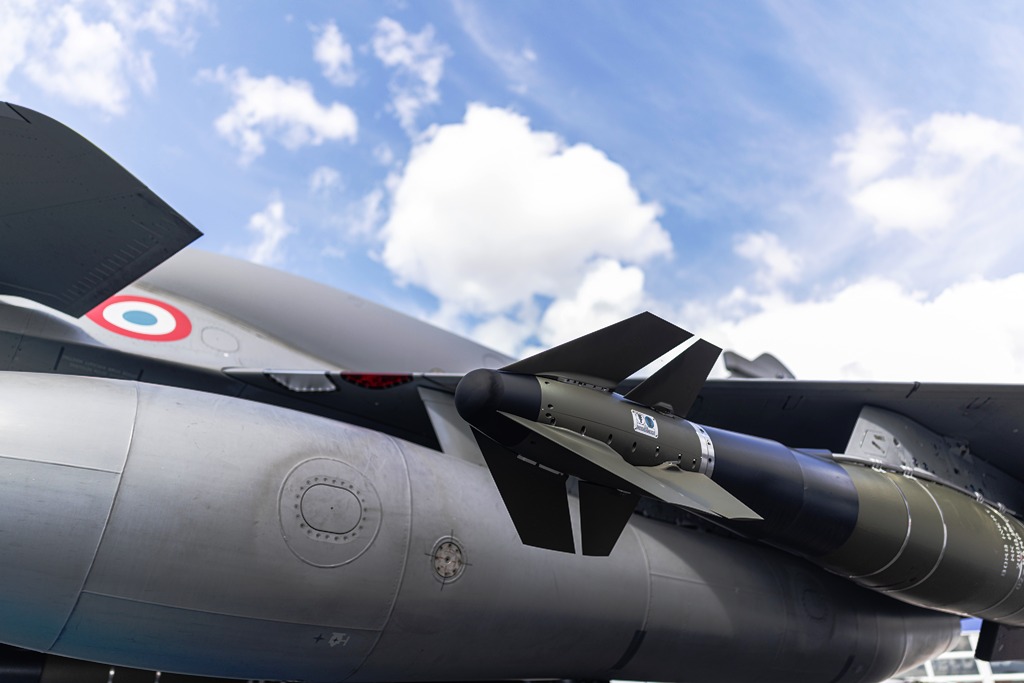
In early March the French General Directorate for Armament (DGA) carried out the last three live-firing tests of the dual-seeker AASM air-to-ground weapon. Tests were conducted at the Biscarosse missile testing facility on the Atlantic coast, south-west of Bordeaux. The three firings were conducted in less than 24 hours and conclude the qualification campaign of the last development of the AASM, known as AASM LIR, for Laser InfraRed, which opens new capabilities to the already deployed deployed AASM, which is also known as HAMMER™, for Highly Agile Modular Munition Extended Range.
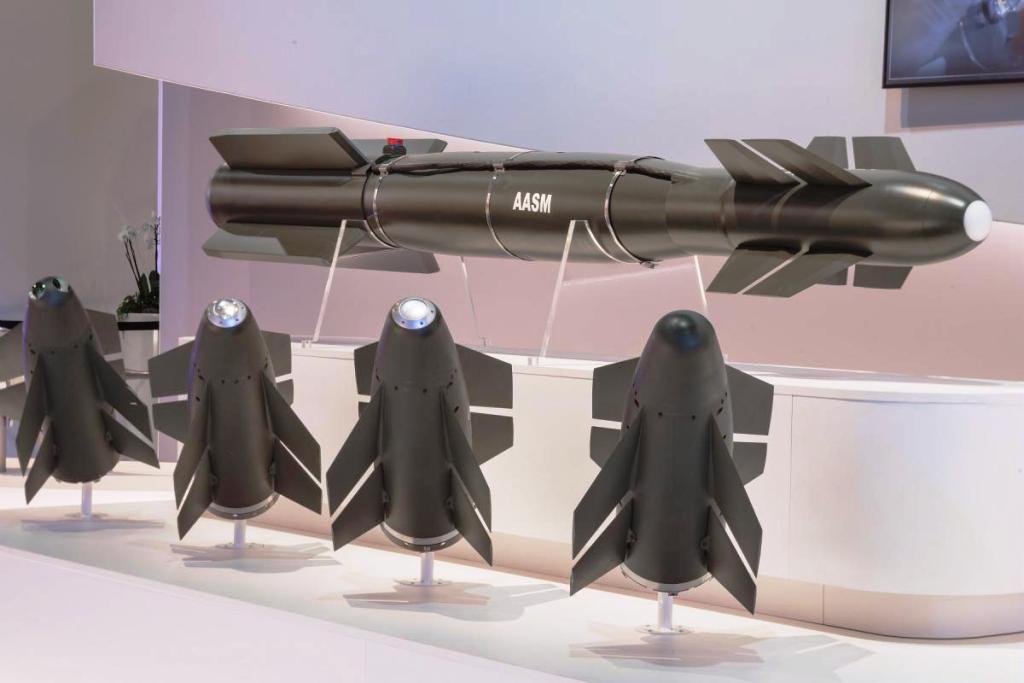
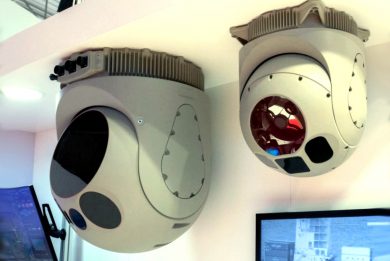
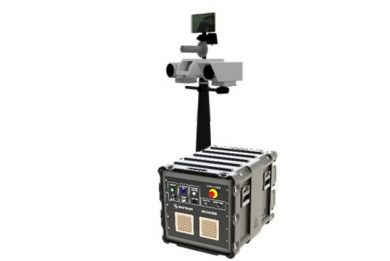
Considering that technological evolution allowed miniaturisation of imaging infrared (IIR) seeker, Safran Electronics & Defense decided to exploit this to further improve the AASM capability. Modularity being part of the AASM design, the adoption of a new IIR seeker allowed to free space in the front guidance element of the kit to host a laser receiver, which allows for semi-active laser (SAL) guidance, the weapon aiming at the target illuminated by an encoded laser beam provided by a ground or airborne laser illuminator.
This was a low-risk operation, considering that the company masters both technologies that were applied on several weapon systems. While no data were provided about the improvements on the IIR channel, it was obvious that the addition of a SAL channel allows to reach metric accuracy and to deal with moving targets. Although neither the company nor the DGA provided details about the three firings, it is safe guessing that these would have tested the AASM LIR with both guidance systems, and possibly at least one test should have involved a moving target.
EDR On-Line understood that although the addition of a second sensor has increased the amount of data to be processed, the AASM was developed with already in mind some evolutions that might require higher computing power, the addition of the new dual seeker requiring minimal hardware adaptation, while obviously the software evolved.
Physically the addition of the SAL module does not alter the centre of gravity, therefore in the qualification process safe separation and other tests purely linked to the physical domain were taken for granted, the same being true for guidance laws. Tests were therefore only aimed at verifying that the signals received by the guidance system were good, that they were properly processed and optimized, and that the correct guidance commands were given to reach the target.
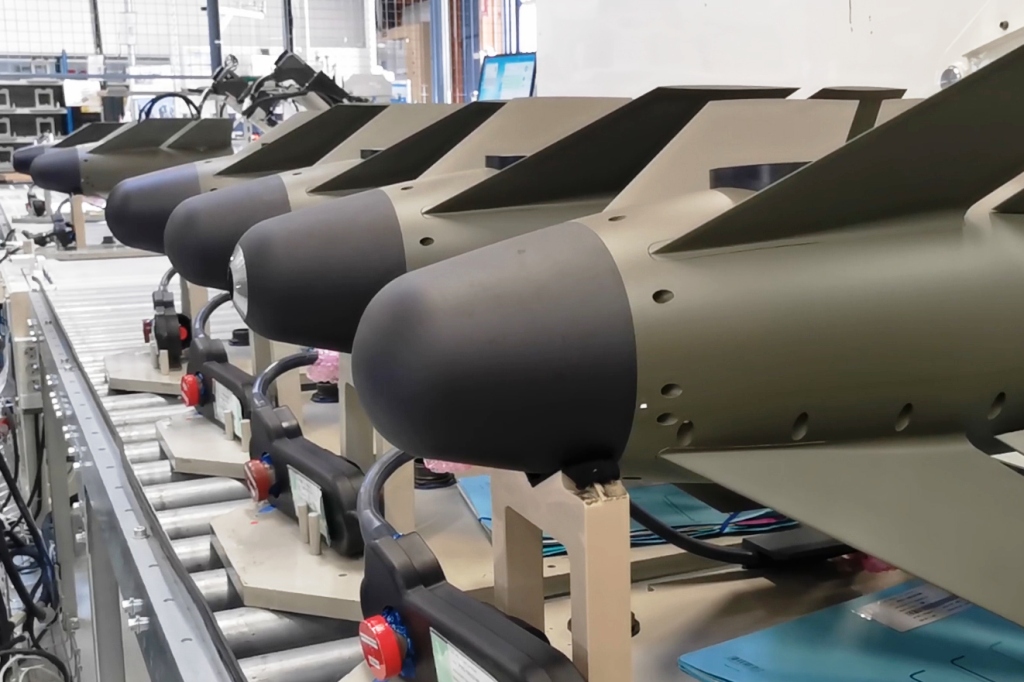
As for most software-based systems, qualification will be only the first step, Safran Electronics & Defense considering evolving algorithms to further improve performances. Artificial intelligence (AI) is already present in the current AASM LIR, at least in the form of some high-level imaging processing techniques, however more and more AI-based software will be present. EDR On-Line understood that the company aims at providing the AASM LIR with the capacity to identify land targets, differentiate them, and follow them should they move on he ground. There will therefore be a spiral evolution, which will leave the hardware untouched but will see new software releases.
Currently the company is completing all the documentation to be provided to the DGA for reaching the proper qualification, the first AASM LIR being scheduled to be delivered to French forces in 2027.
The company has started considering an increase in production capacity for several years and, compared to 2022, Safran Electronics & Defense has increased its AASM production capacity sixfold. EDR On-Line understood that the addition of the LIR version will not alter the production line layout, while it might generate additional demand, which might lead to a further increase in production capacity. Speeding up delivery times may also be required, which might lead to anticipate long-lead items orders should the situation require it.
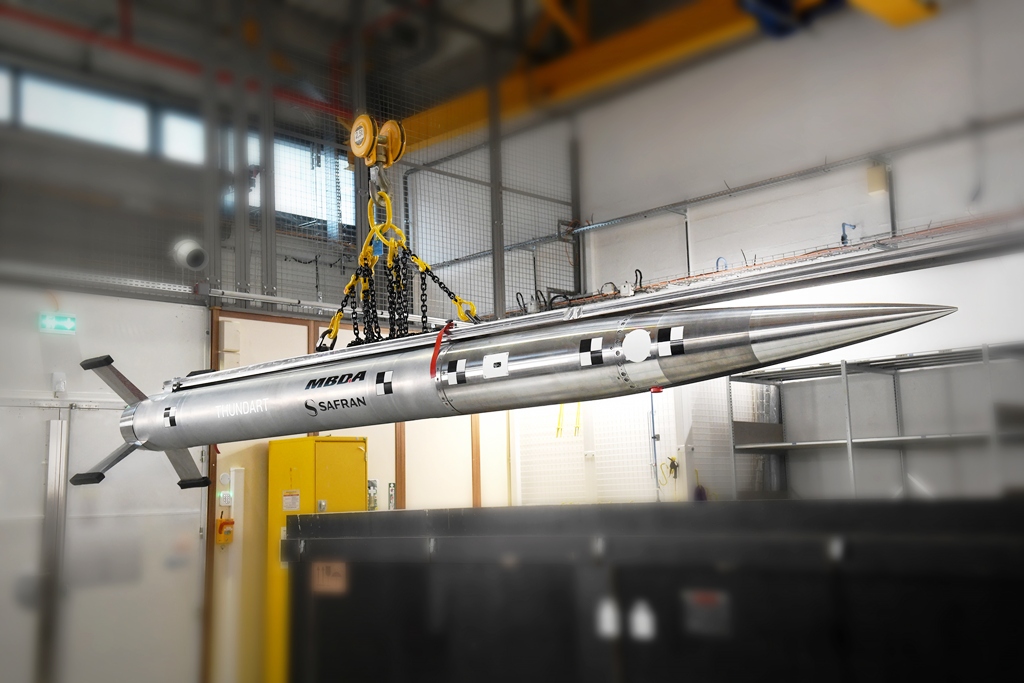
The SAL/IIR seeker used in the AASM LIR is the basis for the development of the seeker adopted on the Thundart, the 150 km range surface to surface missile, announced at the Paris Air Show in 2025. Thundart is being developed in cooperation with MBDA and is the company proposal aiming at providing French forces as part of the FLP-T (Frappe Longue Portée Terrestre, for long range land strike) programme. MBDA is responsible for the warhead, possibly through its TDW subsidiary and, through its Roxel subsidiary, of propulsion, while Safran Electronics & Defense is in charge of the guidance element.
Inertial, IIR and SAL seekers will remain the same, however the missile nose will have an aerodynamical shape, considering the higher speed involved. This will also require reducing the surface of canard canard wings that are used to guide the munition, guidance laws and flight control software also needing to be reworked. What will remain similar is the set of targets as well as the final trajectory of the munition, which will help in capitalising on the work done on the AASM LIR. Fully ISTAR-Free, the Thundart production will be carried out in the same production line of the AASM.
Safran Electronics & Defense is awaiting to know the date for the first live firing test of the Thundart, which should happen within the end of April. This will start the selection process by the DGA, the other competitor being proposed by Thales teamed with ArianeGroup.
Photos courtesy Safran Electronics & Defense