Saha Expo 2026 – Datum ÇAMD, the first Turkish indigenous multi-purpose mini-submarine, opens the way to manned and unmanned underwater boats
The first indigenous submarine project to be certified by Türk Loydu is the ÇAMD (Çok Amaçlı Mini Denizaltı, multi-purpose mini-submarine) successfully completed its initial dive tests on April 14, 2026 off the coast of Karamürsel, some 40 km south-west of Istanbul. It is the precursor of a series of manned and unmanned boats that will give the Turkish Navy the capability to carry out several different missions using indigenous systems, thus freeing it from foreign products, autonomy in defence equipment being one of the targets of the Turkish government
The ÇAMD
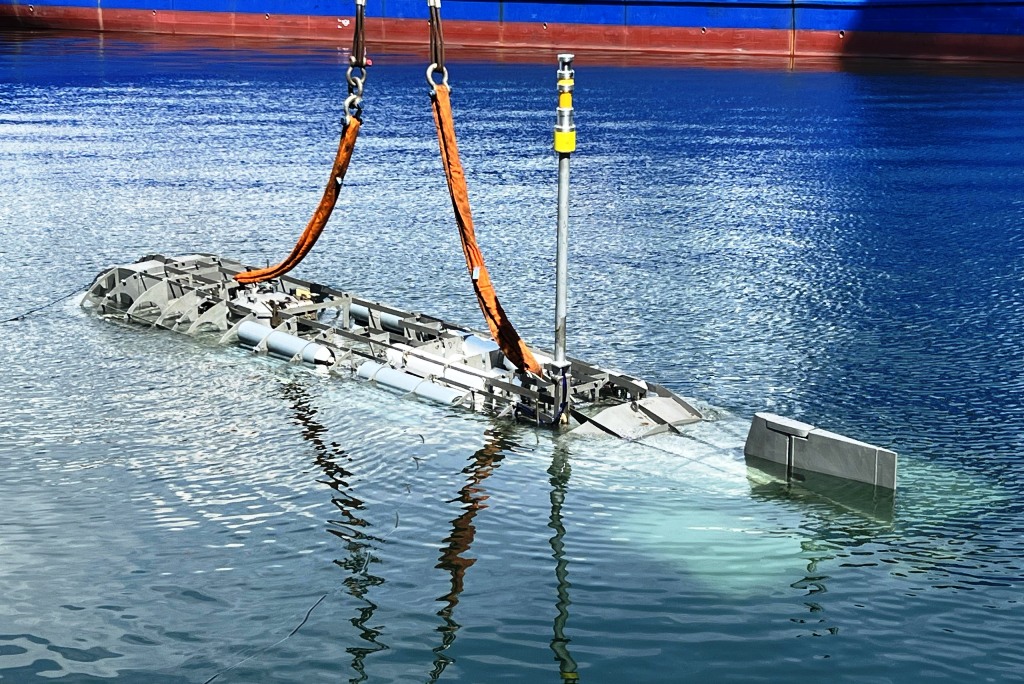
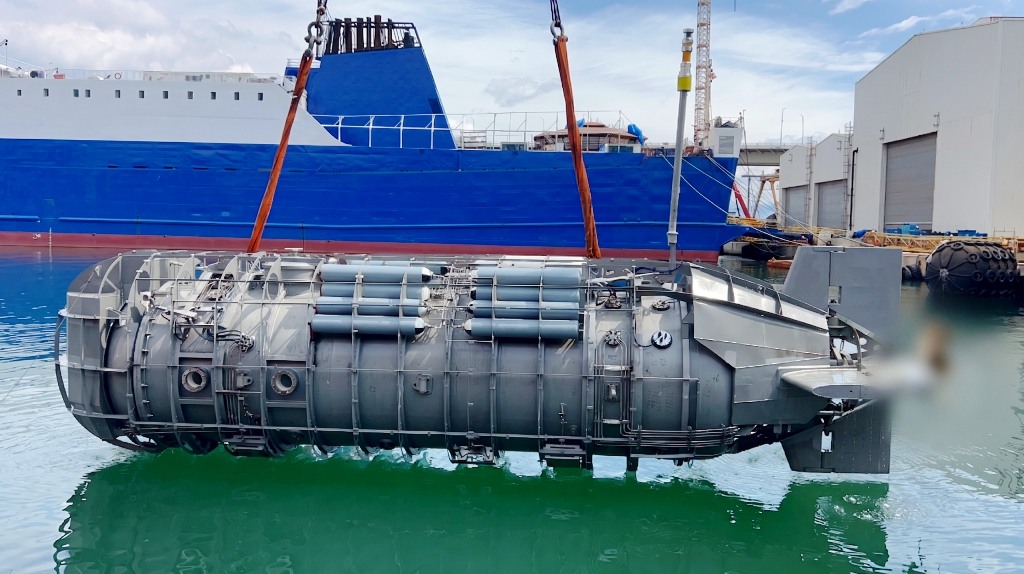
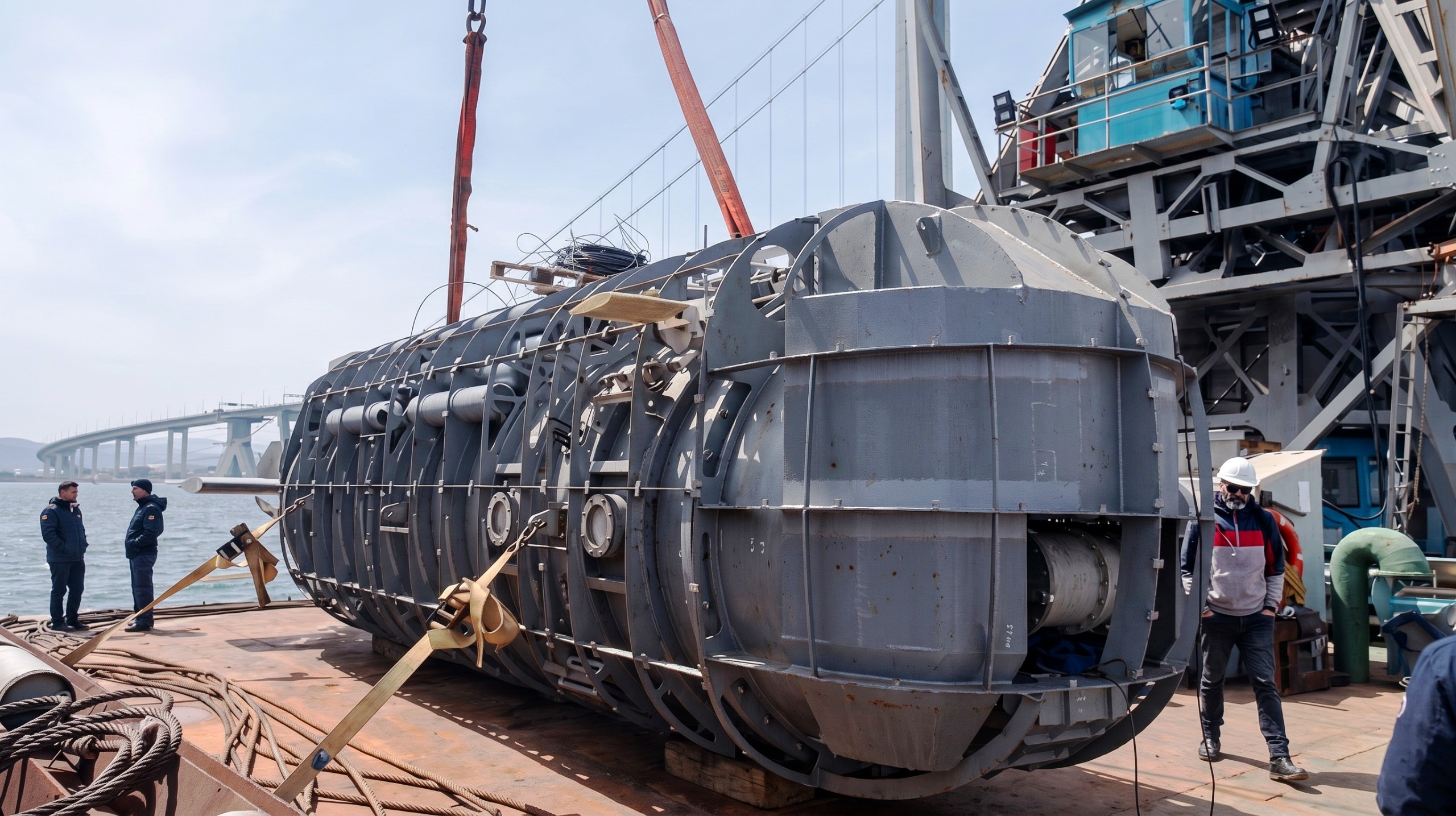
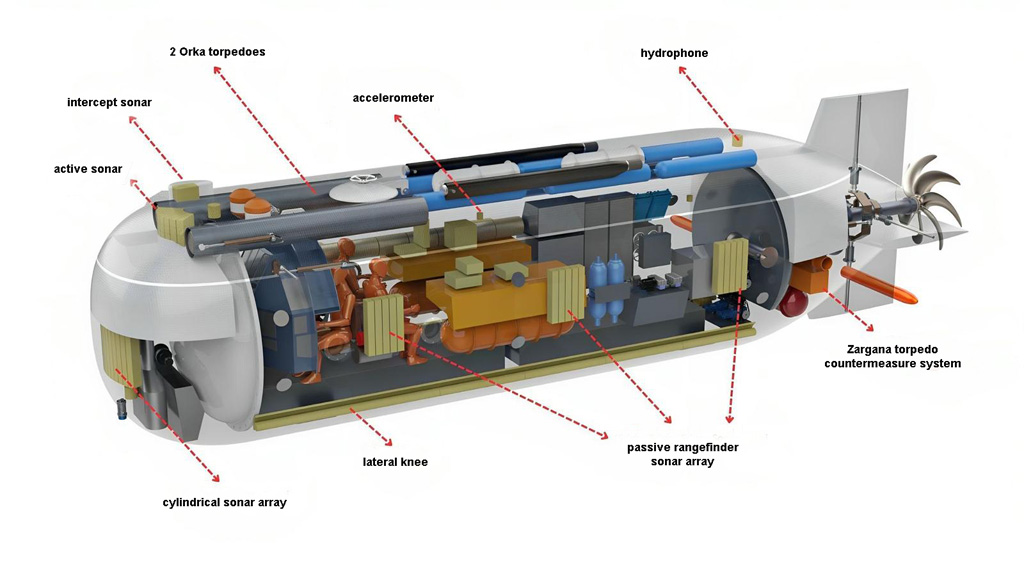
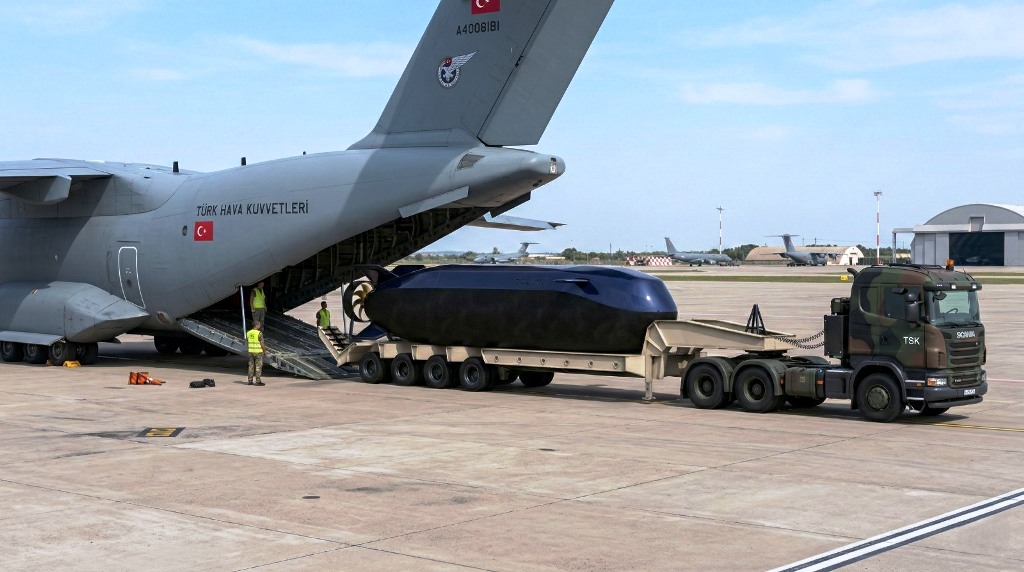
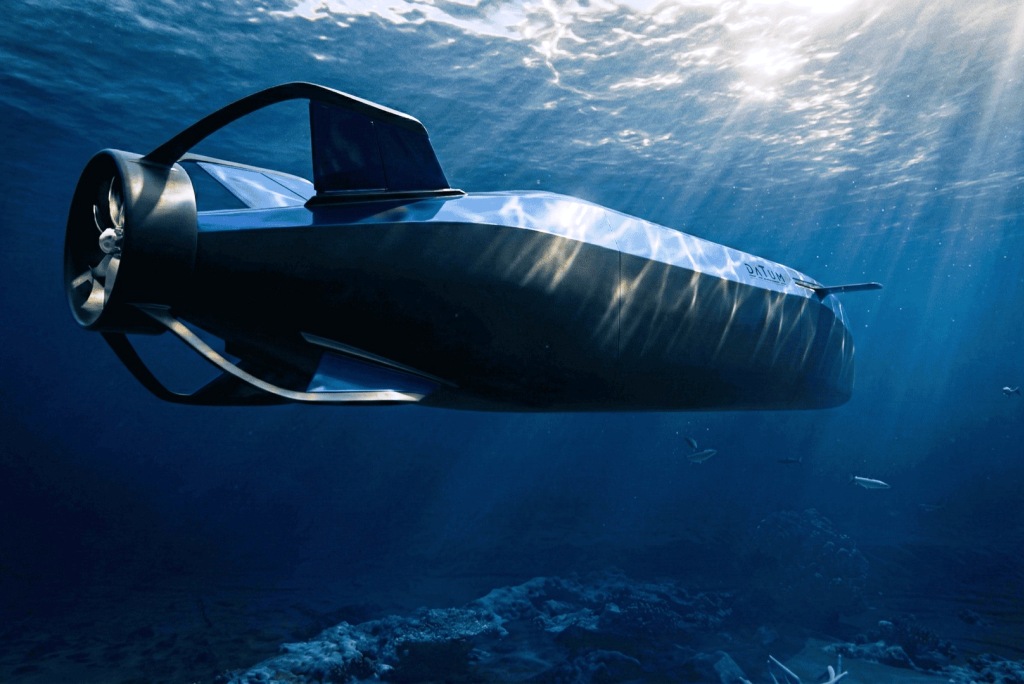
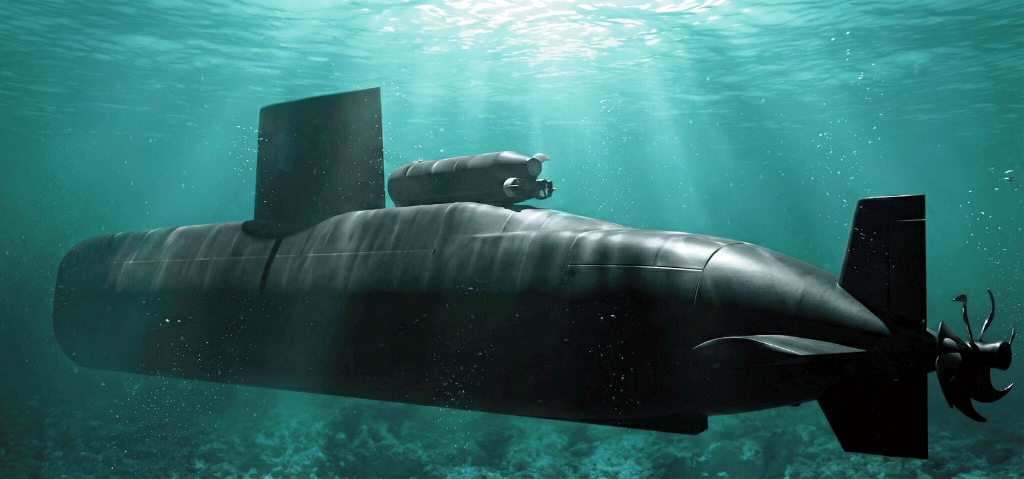
Designing manned and unmanned mini-submarines for military and commercial use has been the scope of Datum since its founding in 2013. In 2018 the partnership with the Istanbul Technical University (ITU) allowed it to gain in financial strength and to leverage the university academic interdisciplinary capabilities. Today the company portfolio includes designs of manned and unmanned systems. ÇAMD project was carried out with the support of SSB (Savunma Sanayii Başkanlığı, the Presidency of Defence Industries), the boat being an underwater testbed developed under the MİLDEN (Milli Denizalti – National submarine) project. This test boat allows national companies involved in the project, localisation exceeding 80%, to test their systems ahead of the production of real prototypes, a considerable risk-reduction solution. The ÇAMD is 12 metres long, has a 2.3 metres beam and is 2.9 metres high, for a displacement of 36 tonnes. It is fitted with a fully electric propulsion system based on a 22-kW motor powered by a lead acid gel battery, which allows a maximum submersed speed of 10 knots and a cruise speed of 4 knots, for a 100 nautical miles range. No indication was provided on the screw, and in all the photos the propeller area was purposely blurred. Maximum diving depth is over 300 metres. The ÇAMD can host two operators and two extra personnel and is equipped with VHF and underwater acoustic communication systems, navigation being ensured by inertial/GNSS and doppler velocity logs (DVL). The next steps will see Aselsan installing its sonar suites on board the boat, followed by the integration of Roketsan Orka torpedoes; two 324 mm launch tubes carrying each one Orka lightweight torpedo are fitted at the top front of the boat. The ÇAMD will be fitted with a cylindrical sonar array in the front lower section, an active sonar and an intercept sonar in the front top section, a series of three passive arrays per side, also working as rangefinders, and a hydrophone top rear. The two boat operators are located in the front section, looking forward, and just behind them, looking backwards, we find the two systems operators.

The Sinarit
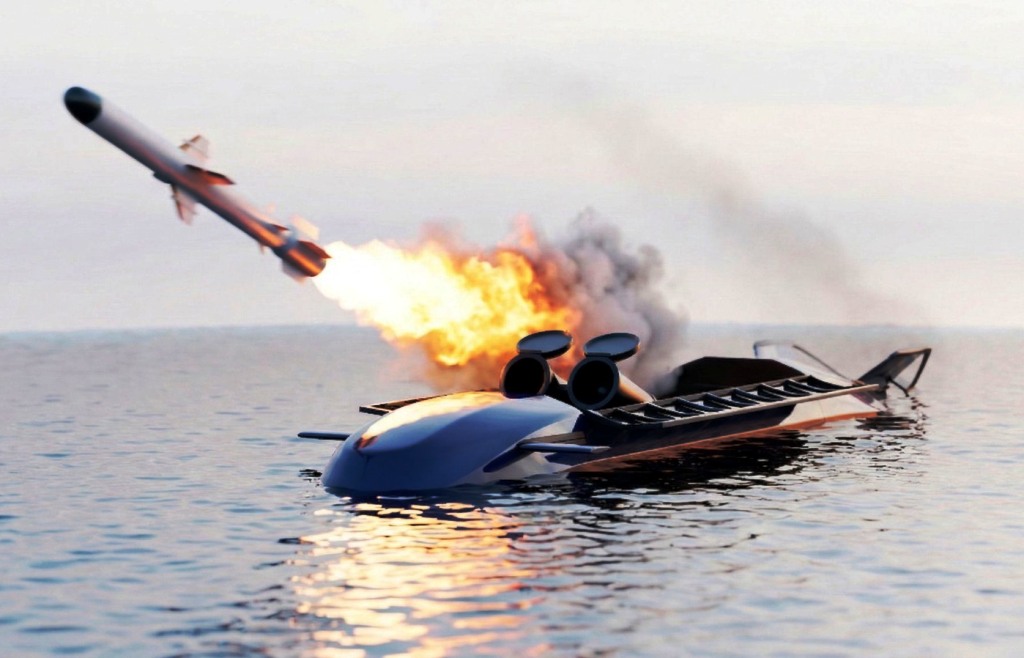
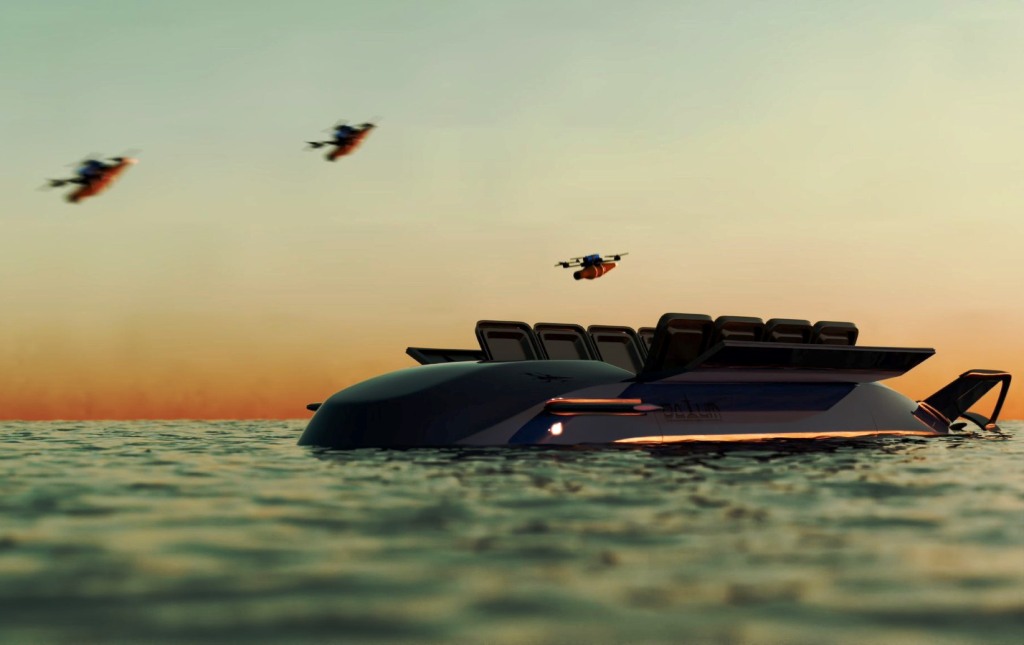
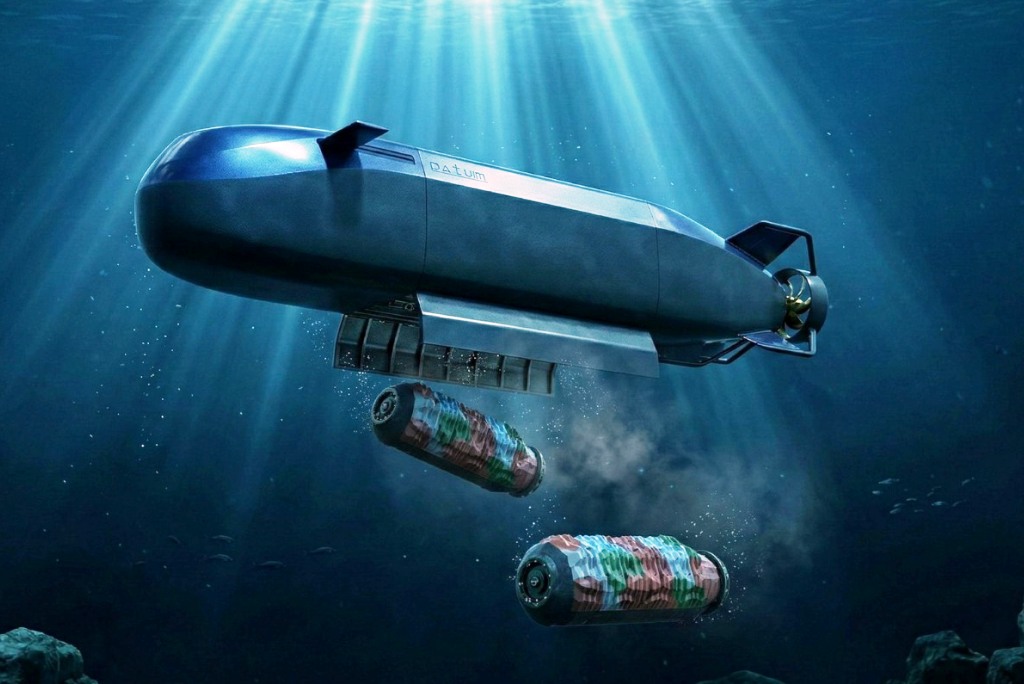
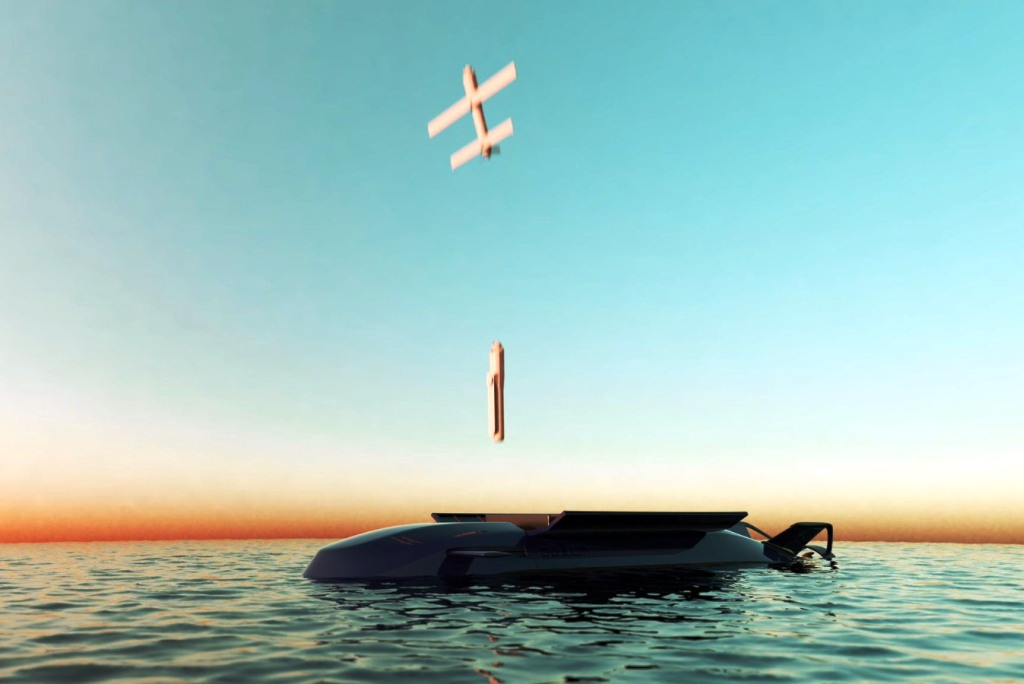
The Sinarit is a nearly direct derivative of the ÇAMD, as it has similar dimensions and architecture, however removing the crew space at the front the whole internal layout was revised to allow freeing a 3.8 metres long section capable to accommodate modular payloads. The Sinarit is 11.5 metres long, has a 2.18 metres beam and a height of 2.21 metres, and an 18 tonnes displacement. It can dive down to 100 metres, a 200 metres option being available. Propulsion is all electric, the drive system provides 30 kW to the single screw, and speed performances are similar to those of the ÇAMD, the range being however 400 nautical miles, with an option for a higher snorkel range adding an internal combustion engine to reload the LiFePO battery pack. Compared to normal Li-Ion batteries these are safer and offer a much higher number of full charge cycles. The comms suite is based on HF, VHF and SATCOM systems, the navigation package being similar to the testbed one. The Sinarit is a multirole XL UUV (extra-large unmanned underwater vessel), which can be deployed using a 40-foot container and is fitted with an advanced mission planning system that provides full autonomy, based on AI algorithms. The main boat elements, guidance systems, main sonars electronics, are located in the bow, while aft we find the propulsion package; in between is volume designed to accept mission-specific payloads. The Sinarit can be fitted with modules containing two Roketsan Atmaca antiship missiles, or two Aika heavy or six Orka lightweight torpedoes both by Roketsan, or 12 Malaman bottom mines, or 40 FPV drones, or 40 fixed wing loitering munitions, or a 30 mm autocannon with 250 HE rounds, or an Aselsan Mercan mast-mounted optoelectronic ISR sensor suite, or a Metaksan synthetic aperture sonar with an ROV mine countermeasure package, or a single Roketsan Çakir 150 km range cruise missile, the under development future Gezgin missile with a much longer range being also mentioned in perspective, or an air defence missile.
The Trança
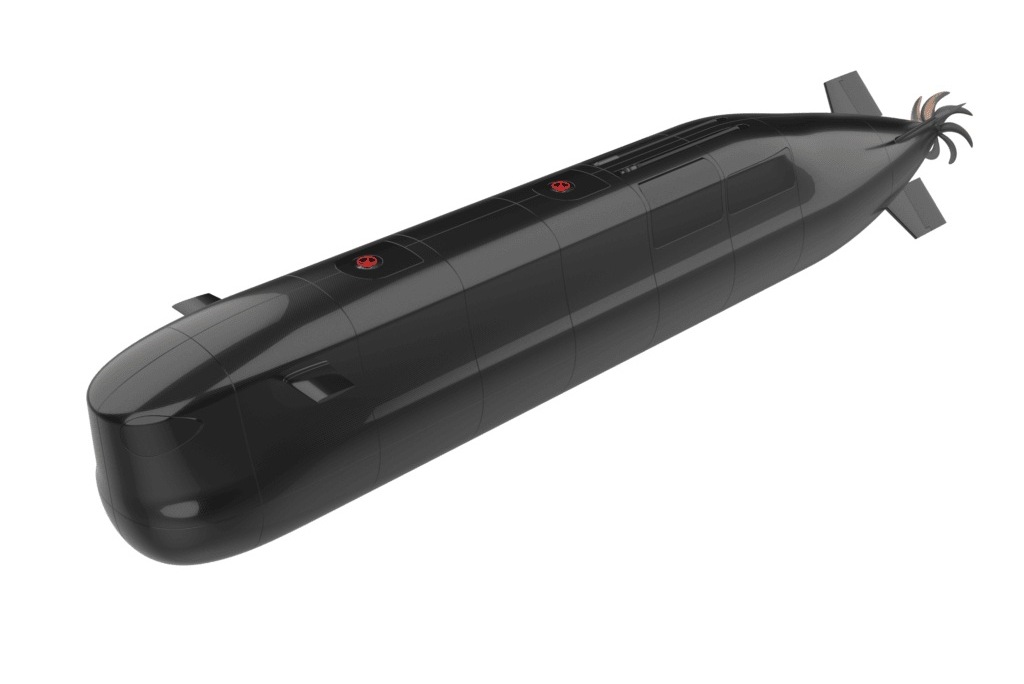
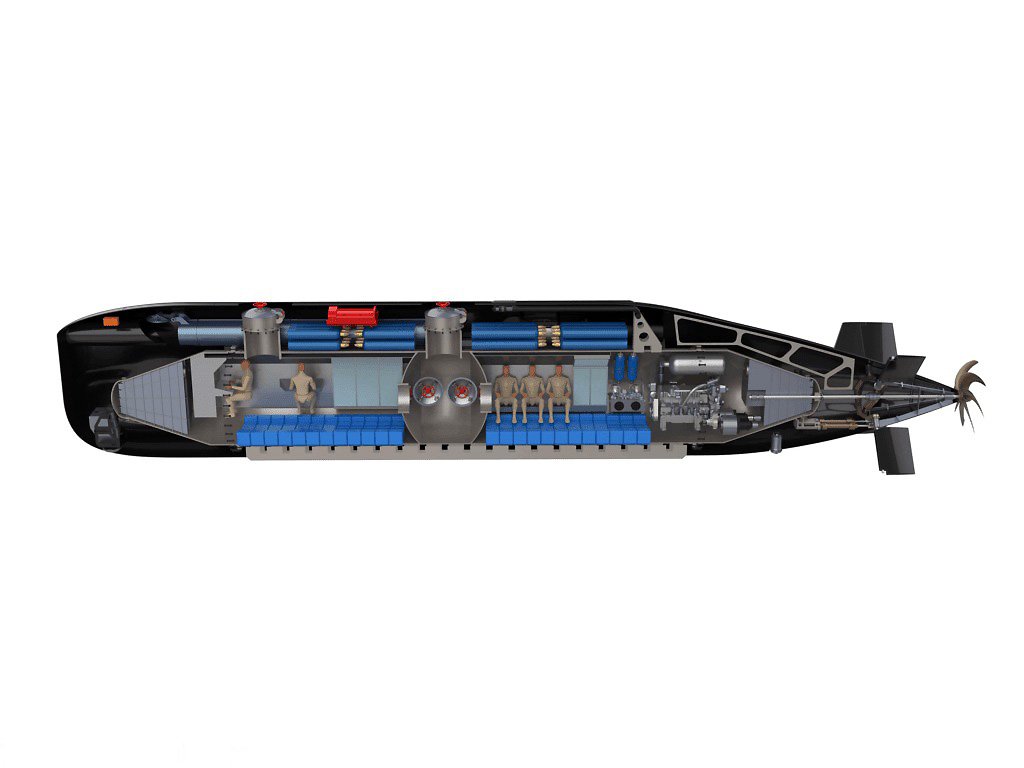
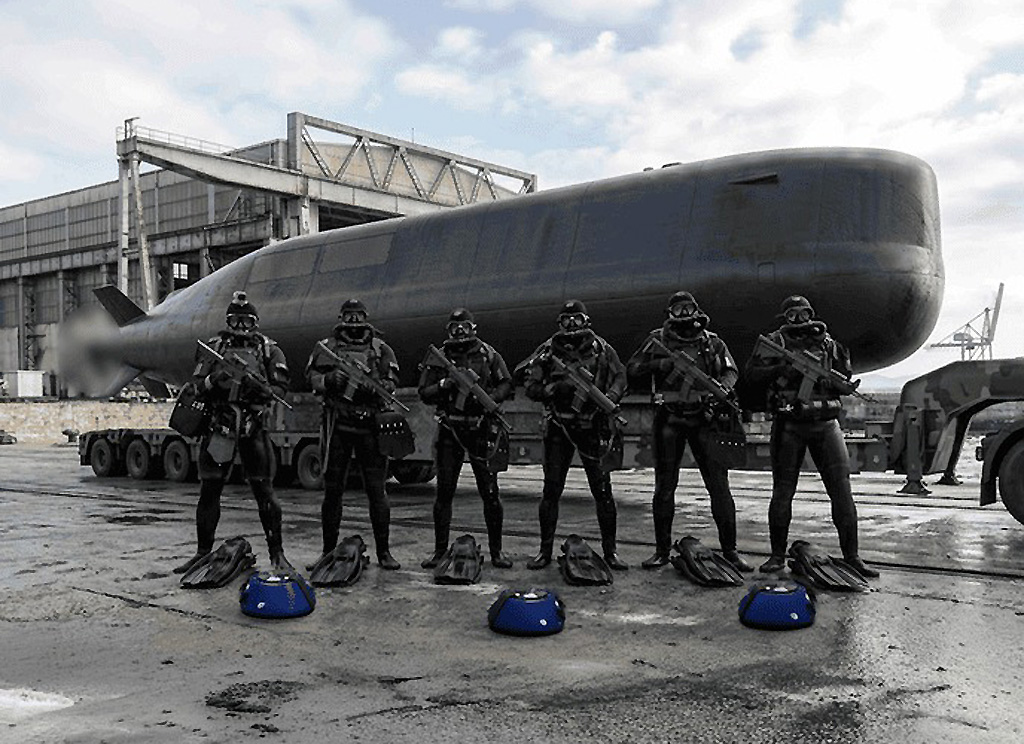
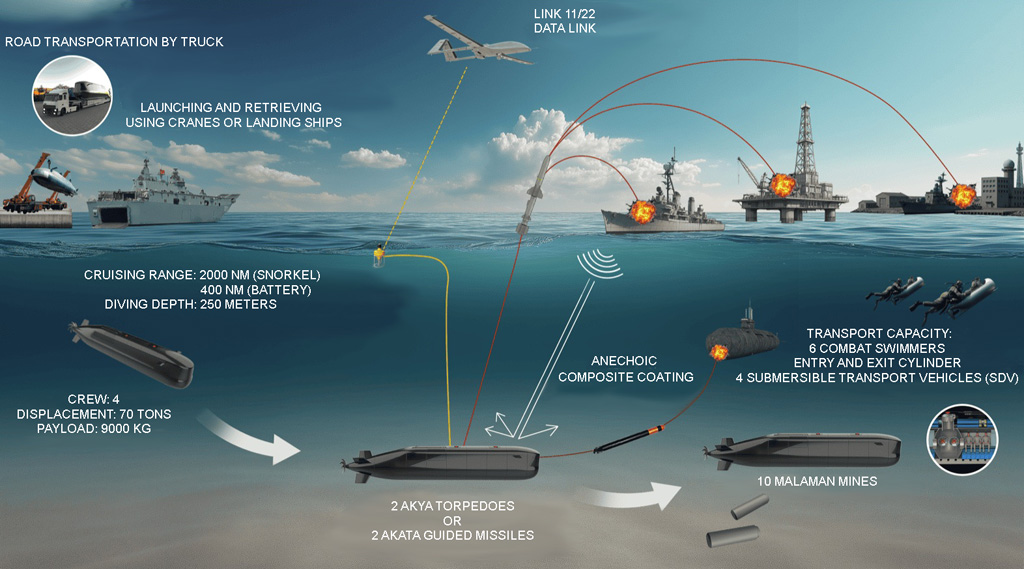
A much bigger boat is the Trança, a true manned mini-submarine capable to conduct Special Forces insertion, mining, and attack operations. It is 20 metres long, 2.8 metres wide and 3.6 metres high, and has a 60 tonnes displacement. It is powered by a 50-kW electric drive system that operates a multiple blade screw; in all photos this is blurred, the number of blades remaining classified. The system allows a maximum speed of 12 knots when submersed, cruise speed being 4 knots, while at snorkel depth speed is 8 knots. Snorkel range is 2,000 nautical miles, while range on batteries is 400 nautical miles; a 400-kW diesel generator ensures battery reloading when sailing at snorkel depth. The Trança can carry a 4-man crew plus six Special Forces operators, in the case of the Turkish Navy these being members of the SAT (Su Altı Taaruz, underwater assault) unit. The crew is located in the forward part of the hull, while at the centre we find the lockout chamber that allows them to enter and exit the boat. The Tranç is fitted with communication and navigation systems similar to those fitted to the Sinarit. It can be armed with either two Aika heavy torpedoes or two Ataka 250-km range antiship missiles, or with 10 Malama bottom mines, or with four divers propulsion devices.
The Gurnard
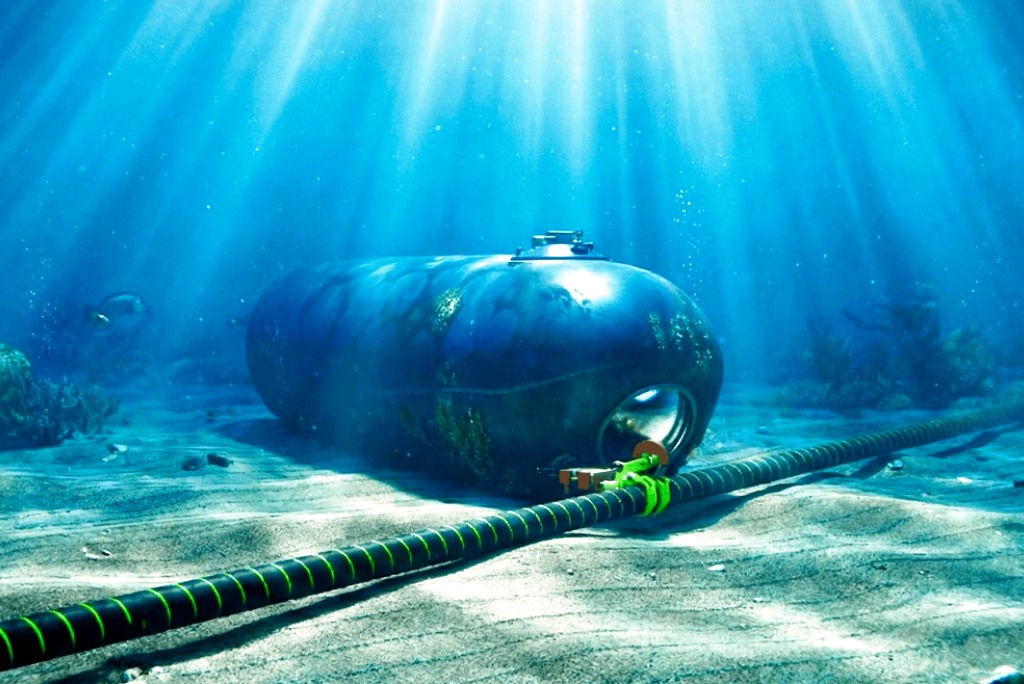
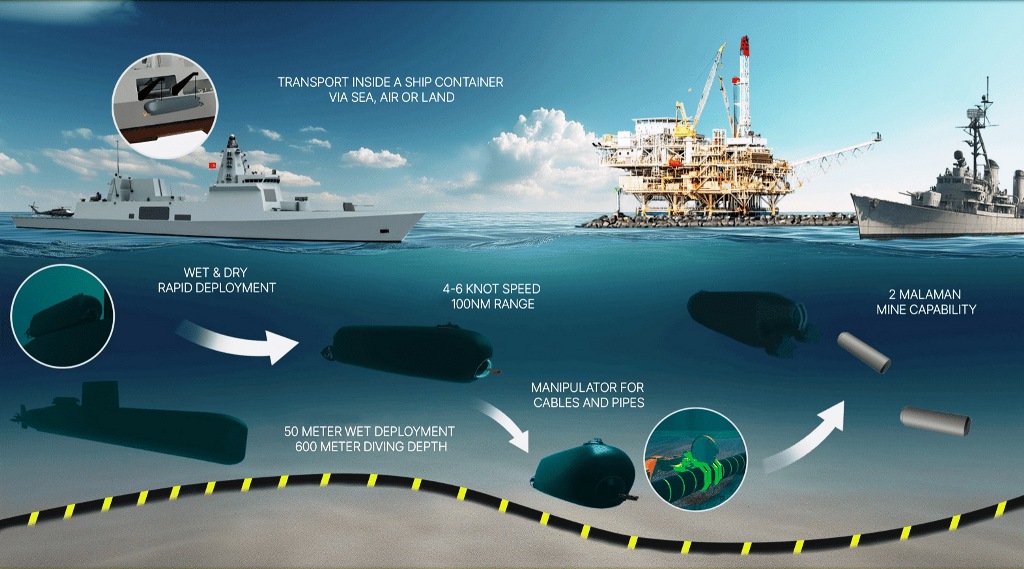
Looking at the seabed warfare, Datum also developed the Gurnard, a specialised boat aimed at protecting critical undersea infrastructures (CUI) and eventually carrying out offensive missions against enemy CUIs. With a 12 tonnes displacement, it is 9 metres long, can reach a maximum speed of 6 knots, has a 100 nautical miles range, and carries a two-man special operations crew. Fitted with side-scan sonar and forward-looking sonar, it is equipped with a three-degrees of freedom manipulator capable to cut an underwater cable and can reach a depth of over 1,000 metres. Transportable in a 40-foot container, it can be deployed from surface ships or submarines.

The SRV
Last but not least, Datum has developed a Submarine Rescue Vehicle (SRV) capable to save the life of submariners should an accident occur. The SRV is 12.5 metres long, with a 3.2 metres beam and height of 3.5 metres, volume is essential to host rescued submariners, it can host up to 17 personnel, for a 34 tonnes displacement. Seven steerable electric thrusters allow it to position itself with utmost accuracy over the submarine hatch to carry out docking and transfer of personnel. A hemispheric glass window allows the two-man crew to observe the scene, the SRV being fitted with a powerful lighting system. The SRV can dive at depths over 650 metres, well above submarine operational depth. The SRV is in the testing phase and should soon be delivered to the Turkish Navy’s Rescue and Underwater Command.
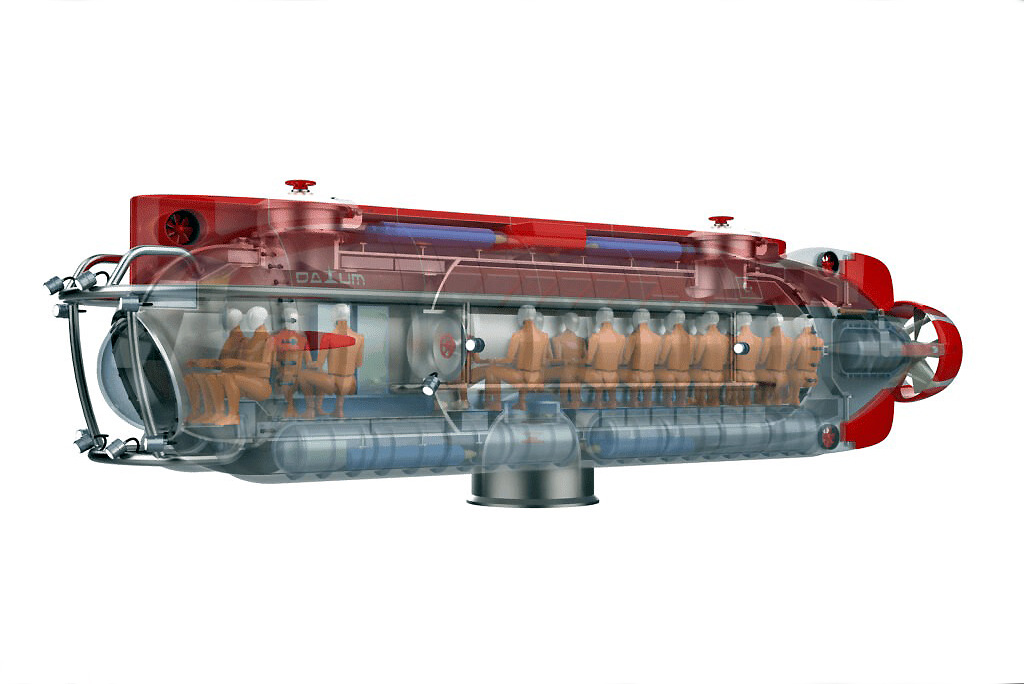
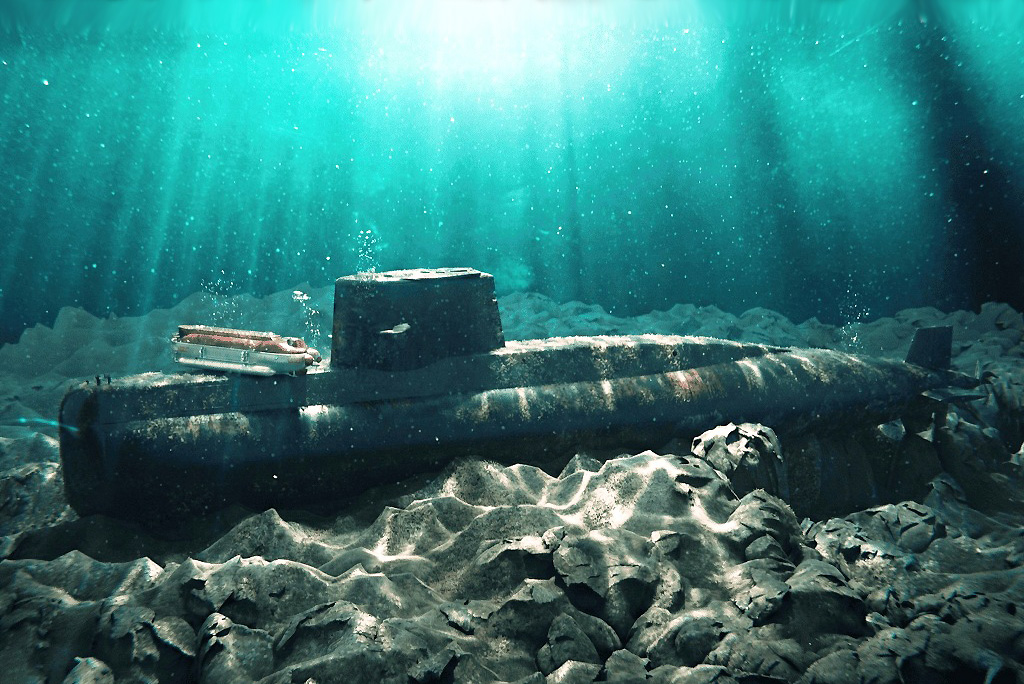
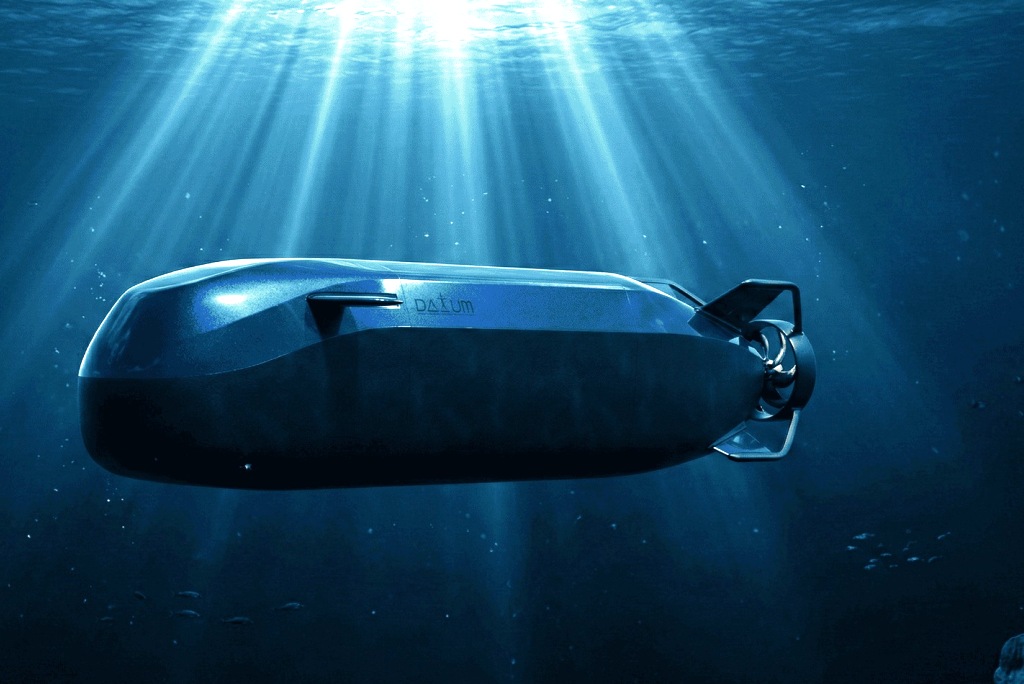
While photos show the ÇAMD and the SRV afloat, the remaining images are all renderings. Some of those systems should start sea trials in the coming summer, however no detailed information was provided.
All photos and graphics by Datum