Sweden selected French frigate proposal for quick delivery, combat system maturity, IAMD tasks
During a press conference held onboard the Visby-class corvette Härnösand in the port of Stockholm, featuring Defence Minister Pål Jonson, Prime Minister Ulf Kristersson and the Defence Chief of Swedish Armed Forces General Michael Claesson, the former provided the key elements behind the decision to task the Defence Materiel Administration (FMV) with the starting of the negotiations for the procurement of four Frégate de Défense et d’Intervention (FDI)-type frigates from the French Naval Group shipbuilder. The new units are expected to be delivered in the 2030-2034 timeframe, with an estimated cost of €4.25 billion
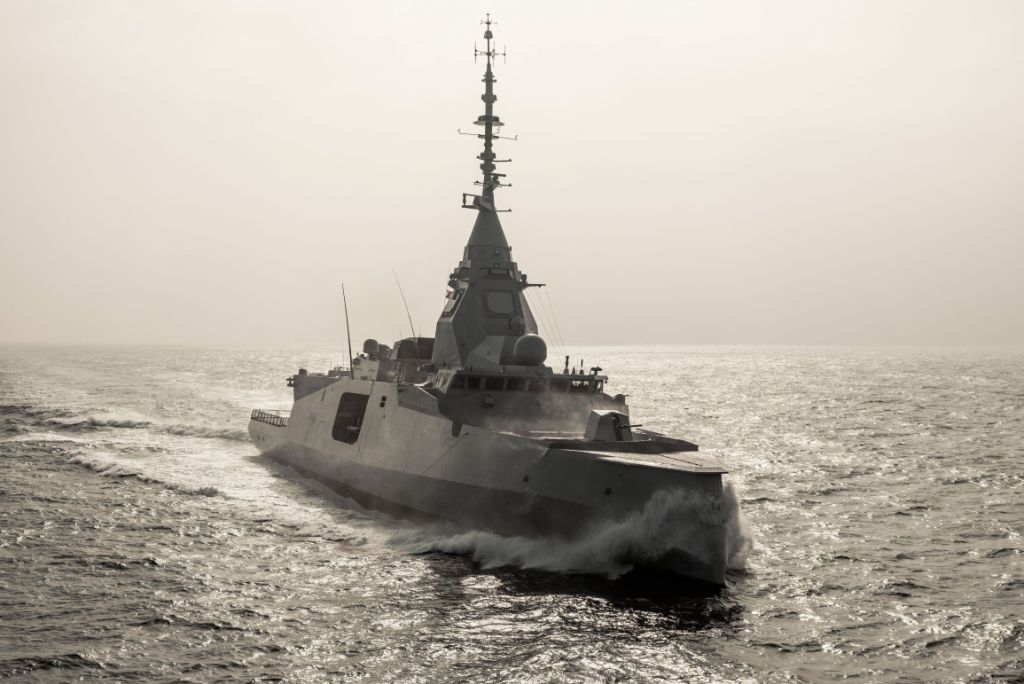
With an unprecedented decision, the Swedish Government has chosen the proposal of French Naval Group, centred on the Frégate de Défense et d’Intervention (FDI) design. These will become the Luleå-class units. They will maintain commonality of systems with the French and Greek units, in addition to locally produced electronic and weapon systems.
The three main reasons for the selection of the French offer indicated by the Swedish Prime Minister and Defence Minister during the press conference were the reduced delivery timeline of the new ships, since it is a platform already under construction (and delivered) by Naval Group shipyards to the French and Greek navies. Secondly, it is a project that already has a maturity linked to the successful integration of onboard systems, and finally, the integrated air and missile defence capabilities offered by the new platform. Additionally, the ability to share costs with two other operators was mentioned.
“This is one of the largest investments in defence since the Gripen in the 1980s. A tripling of the air defence (capabilities) compared to today. This says something about the scale of this decision for Swedish maritime security – but also for the security of all Swedes,” Prime Minister Ulf Kristersson stated. Defence Minister Pål Jonson echoed him: “With the new surface combat units Sweden will obtain a tripling of air defence compared to today, while at the same time the Navy’s capability will be strongly reinforced.”

As highlighted by both ministers, thanks to the programme for the new light frigates and the embarked combat system, the Swedish Armed Forces will see a significant expansion of integrated air-defence capabilities against both conventional and ballistic missile threats and next-generation threats, adding to those currently offered by the Patriot system.
Based on the final results of the negotiations, the first delivery of the new platforms was already offered in 2030, with the subsequent deliveries expected to follow at a rate of one ship per year. In terms of platform configuration, the information that has emerged so far from the press conference and previous statements highlights the fact that Sweden will maintain the integrated air and missile defence (IAMD) and anti-submarine warfare (ASW) capabilities equal to those of the units destined for France and Greece, with the latest-generation SeaFire four-fixed-faces active electronically scanned array radar and the MBDA Aster missile system, including the future capability to employ the Aster 30 Block 1NT version, as well as the MBDA CAMM ER system, to which will be added an anti-submarine suite based on the Thales CAPTAS variable-depth towed sonar system, together with Swedish-supplied electronic and weapon systems, particularly from Saab and BAE Systems Bofors.
Everything will be managed by a command, control and combat system that was not mentioned among the systems supplied by Swedish industry and therefore the latest-generation SETIS system developed and supplied by Naval Group, already fully integrated with onboard electronics and armament, will be retained. In addition to MBDA missile systems, the new units will embark Saab RBS 15 anti-ship missiles, Torped 47 lightweight torpedoes, the Giraffe 1X radar, the Trackfire close-in defence system with a 12.7 mm machine gun, the 57 mm multirole gun and the 40 mm multirole gun from BAE Systems Bofors. In addition to the supply of systems and their integration, the Swedish industry will see significant involvement in the in-service support of the new ships, with long-term maintenance and support to be assigned to a local shipyard.
The programme for the acquisition of new naval units for Sweden has roots going back to the beginning of the present decade and has evolved from a project based on the current Visby-class corvettes into a completely new project for larger naval units, consisting of light frigates to be supplied by foreign manufacturers, following the change in the Swedish security landscape linked to the conflict in Ukraine and Sweden’s accession to NATO. Three serious contenders ultimately emerged in the competition for the new units: the Babcock Arrowhead 120 proposal based on the British shipyard’s experience with the larger AH 140 platform selected for the UK Type 31 light frigates, Naval Group’s FDI, and Navantia’s ALFA 4000. Of the three projects, the FDI was the only already existing one, with the AH 120 deriving much of its design from a downsized but not yet existing AH 140, and the ALFA 4000 consisting largely of a completely new project for the export market, also offered to Australia, but again existing only as a design.
Photos courtesy Naval Group