
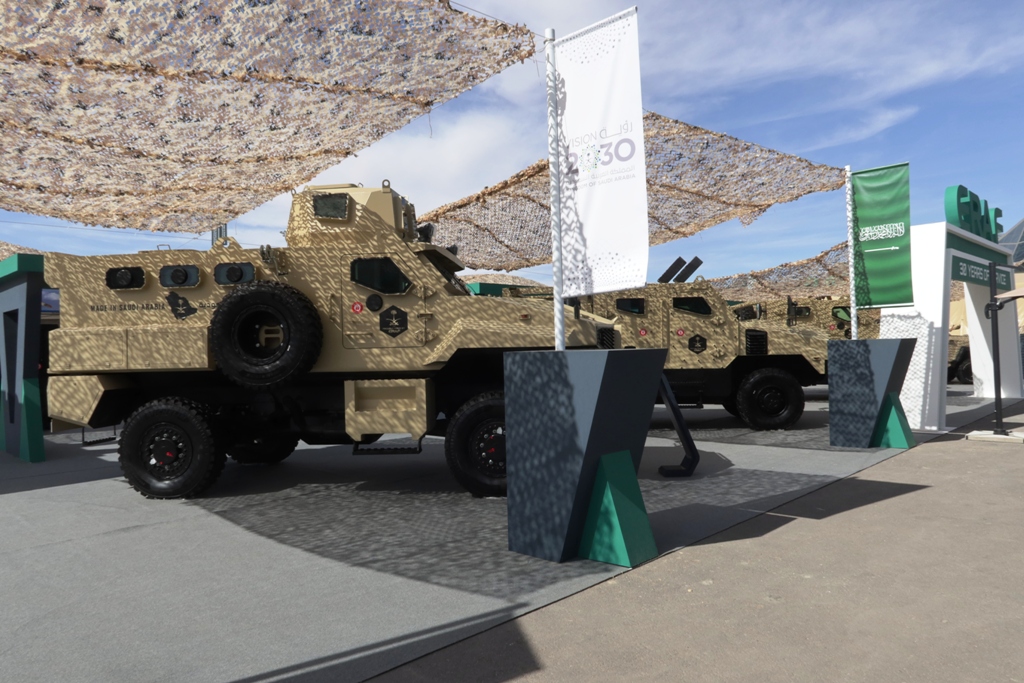
WDS 2026 – ERAF unveils the Tares III family of 4×4 wheeled armoured vehicles
At the World Defense Show the Saudi Eraf Industrial company has shown for the first time in public the third iteration of its Tares armoured vehicles, named Tares III of which three models could be seen at the exhibition, the Tares III-19TC1 MRAP, the Tares III-16TC1 MRAP, and the Tares III-10TC1, all available in the 4×4 configuration
Created 30 years ago as a mechanical company, which main role was remanufacturing components for defence, mostly for land systems, as many other companies ERAF went through the typical learning processing, from reverse engineering to rebuild and upgrade, and finally in 2016 to original products design and development.
The first contracts started to be signed in 2020, and four years later the original Tares, now known as Tares I, was exported to Nigeria and Tunisia. A STANAG Level 2 protected vehicle, it was based on a Ford 550 chassis. The Tares MkII followed, based on a Toyota 79 chassis, which was also mass produced.
At the third edition of the World Defense Show the Saudi company unveils the new generation Tares, the Tares III, which has already be submitted to tests and is now ready for production.
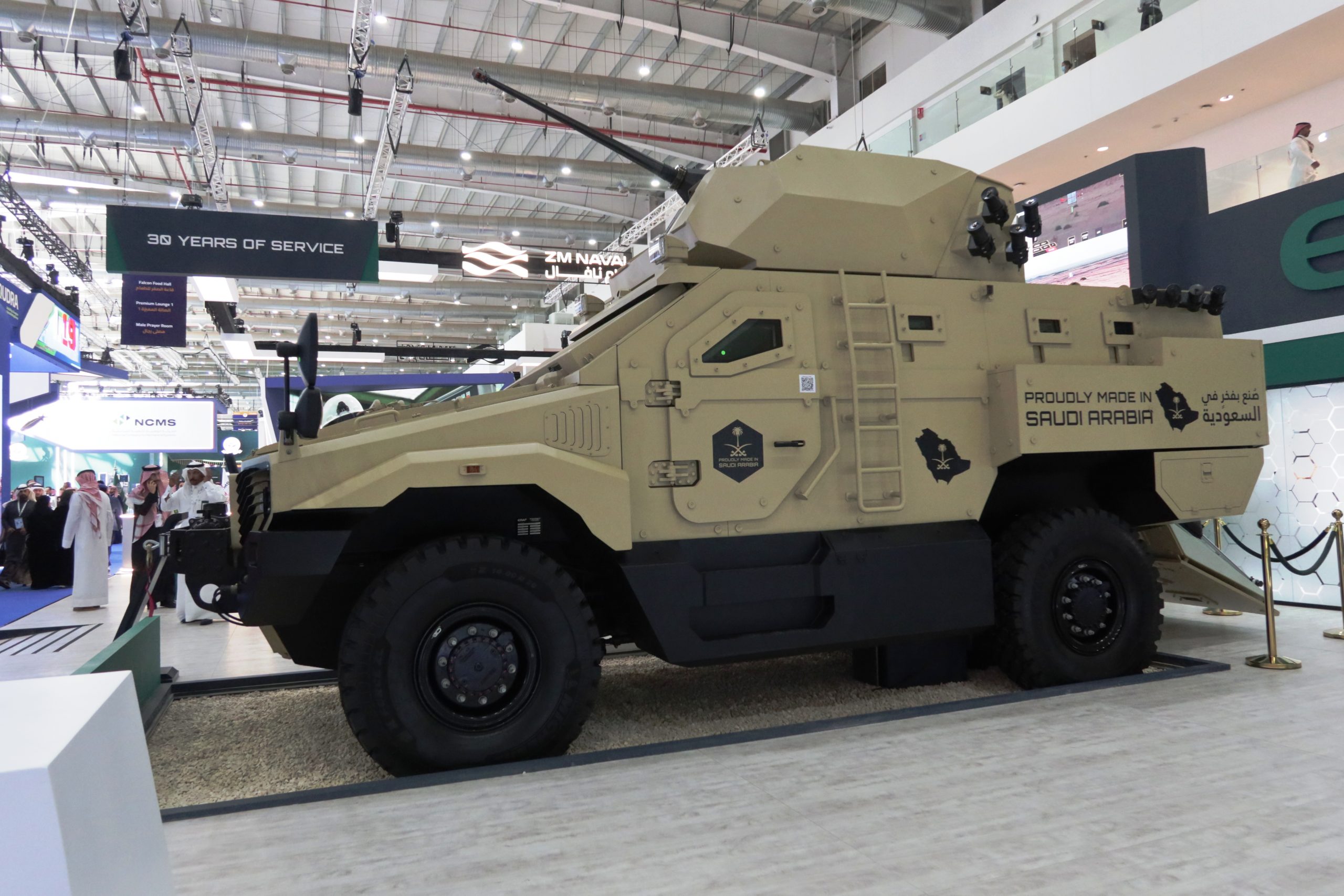
At the inside stand the heavier member of the new family was exhibited, the Tares III-19TC1, which has a kerb mass of 16,500 kg and a payload capacity of 2,500 kg. This might look limited, but the reason is that the vehicle has Level 4 protection according to STANAG 4569. A monocoque V-hull design, the MRAP-type vehicle is powered by a Cummins ISLe-400 Euro 3 diesel engine, the number showing the power in bhp, with a maximum torque of 1,500 Nm; it is couples to an Allison SP series fully automatic transmission. The 300 litres fuel tank ensures a 700 km endurance; maximum speed is 105 km/h, the vehicle being capable to cope with 60% gradients and 30% side slope, the two latter performances being common to all three versions. The axles are provided by Texelis of France, the front one with a 9,000 kg load, the rear one 10,000 kg. Fitted with independent suspensions to ensure smooth cross country ride, it is fitted with 14.00R20 tires. The Tares III-19TC1 is 6,300 mm long, has a 3,800 mm wheelbase, is 2,700 mm high and has a 413 mm ground clearance. The prototype seen at the Saudi exhibition was fitted with a 25 mm turret of South African origin, where it was designed and produced by Comenius, ERAF being now producing it in the KSA following a transfer of technology.
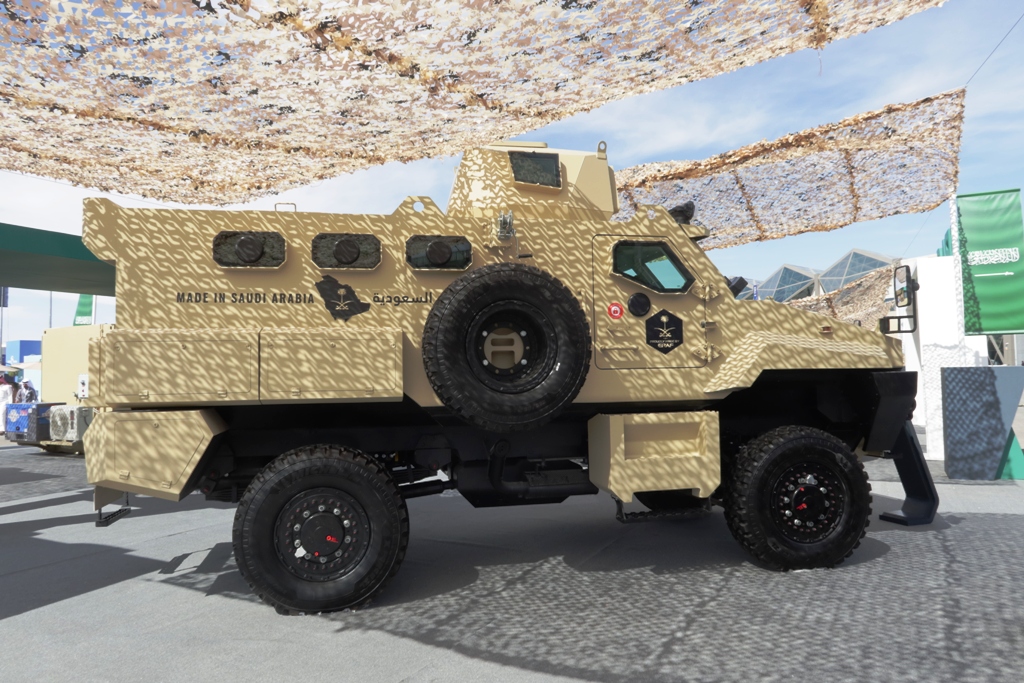
At 16,000 kg gross vehicle mass, versus the 19,000 of the previous vehicle, the Tares III-16TC1 is also considered part of the MRAP category, but its protection is one level lower and is a chassis based vehicle with rigid axles, all this allowing a considerably reduced kerb mass, around 8,000 kg, which leaves space for a comparable for the payload. The version seen at WDS was very much an armoured personnel carrier, 6,910 mm long and 2,820 mm wide, with a height of 2,635 without turret, which increases to 3,625 mm when fitted with a turret. It is powered by a Cummins ISB .7 litres 360 hp, which gives a power to mass ratio of 22.5 hp/t (compared to the 21 hp/t of its bigger brother). It can reach a top speed of 110 km/h, the 265 litres tank ensuring a 600 km range. Rigid steering axles are provided by AWR, front load being 8,000 kg while the rear is 8,500 kg. Suspensions are of the parabolic leaf spring with shock absorbers and antiroll bar, hence cross country mobility should not match that of the 19TC1.
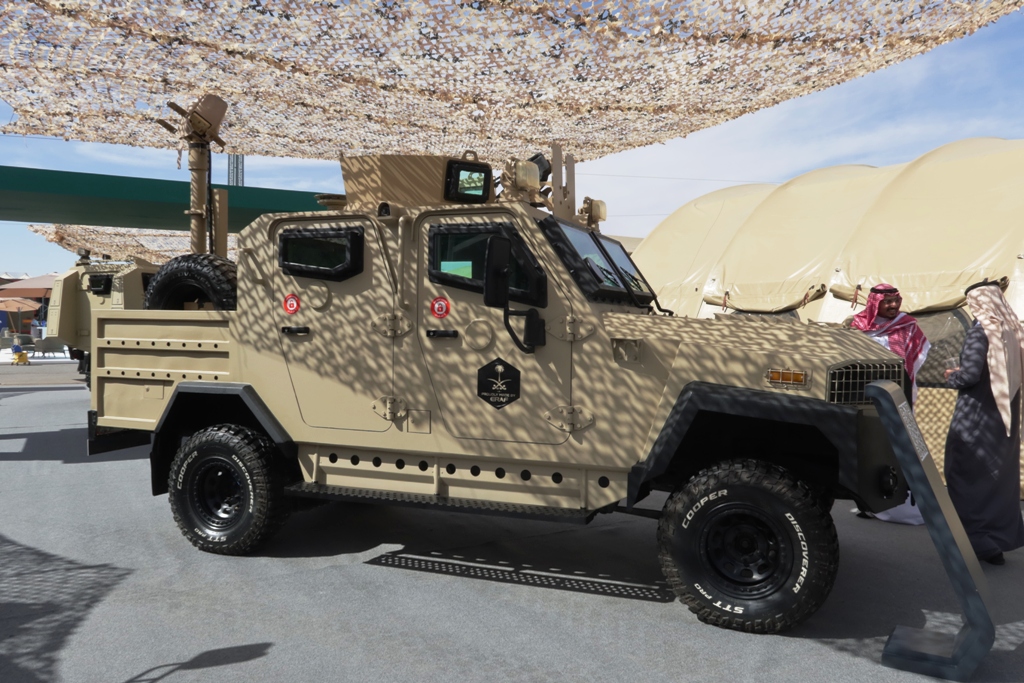
The lighter member of the family is the Tares III 10TC1, which is a scaled down 19TC1 as it also features independent suspensions and a monocoque V-hull, its protection being Level II upgradable. The vehicle length is the same of big brother, 6,300 mm, but wheelbase is shorter, 3,300 mm, this giving departure/approach angles of 36°/40°, versus the 45°/45° of the 19TC1. While gradeability remains 60%, side slope is increased to 40%, water fording being 600-700 mm, the bigger vehicle being able to cross 900 mm deep water obstacles.
With a kerb mass of 8,500 kg, it can carry a 2,000 kg payload, the gross vehicle mass being in fact 10,500 kg, the Axletech axles being able to carry 5,500 kg at the front and 5,700 kg at the rear, which gives a further 200 kg margin, bringing the Tares III 10TC1 towards the 11,000 kg mark, which was mentioned to EDR On-Line at the beginning of the presentation.
In an area where border and territory control are key issues, the new generation of Tares III should find interesting use both in the Army, the National Guard and in paramilitary formations.
Photos by P. Valpolini