Leonardo 30 mm new C-UAS systems: Lionfish 30-based Hystrix 30 ADS and Blaze-based HITROLE 30
The increasing importance of air defence assets led Leonardo to launch the Michelangelo Dome modular, open, scalable and multidomain advanced integrated defence system, which was unveiled in late January 2026. Based on a strong C5 system and multiple sensors and effectors, creating a first modular defensive barrier defined as the “Dead Zone” where the enemy threat is neutralised by point defence effectors. During a presentation at its facility in Brescia, northern Italy, Leonardo unveiled how it intends exploiting its naval artillery systems to generate land-based effectors, which can be static, relocatable, or mobile, this new family of systems being named Hystrix, hedgehog in Latin language. The shorter-range layer of the land artillery component derived from naval guns is the Hystrix 30 ADS, for air defence system. Armed with the company newly developed X-Gun, another 30 mm solution, an RCWS armed with the Blaze 30×113 mm gun was also unveiled
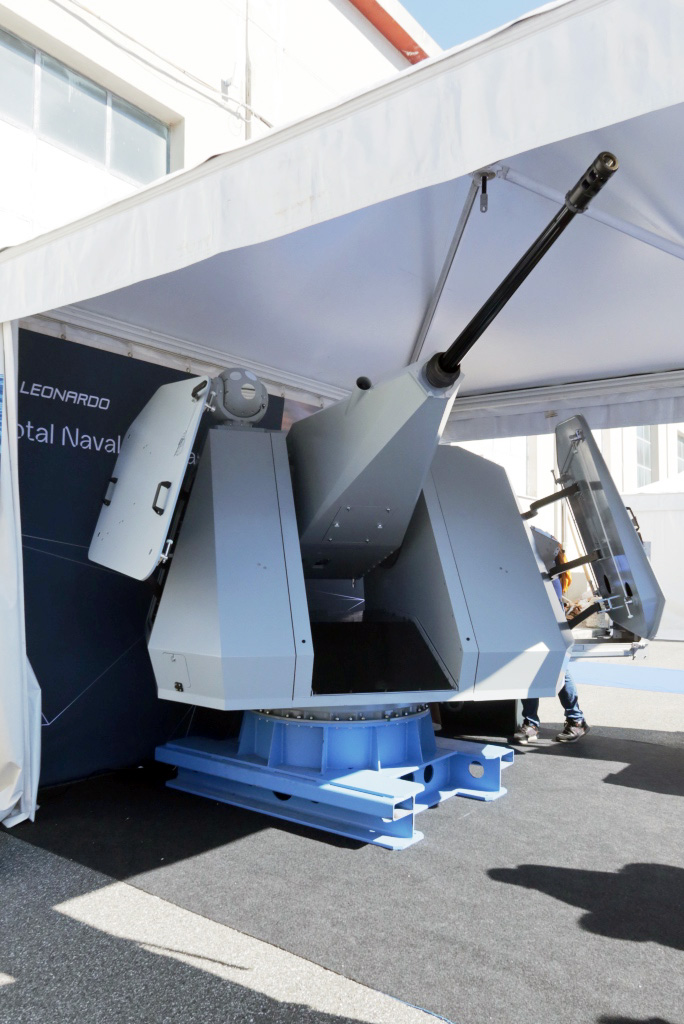
The 30 mm world is based on two distinct ammunition, the 30×173 mm one, born for longer range engagements, and the 30×113 mm one, with a much lower recoil impulse, which was developed initially for air-to-air and air-to-ground applications. In recent times Leonardo developed two 30 mm guns, one for each type of ammunition, the X-Gun for the full size NATO round, and the Blaze30, also dubbed the “mini X-Gun”, for the 30×113.
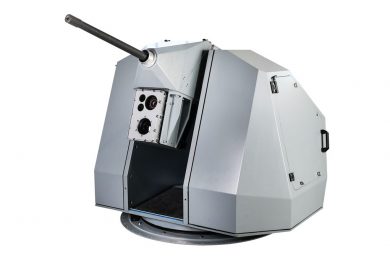
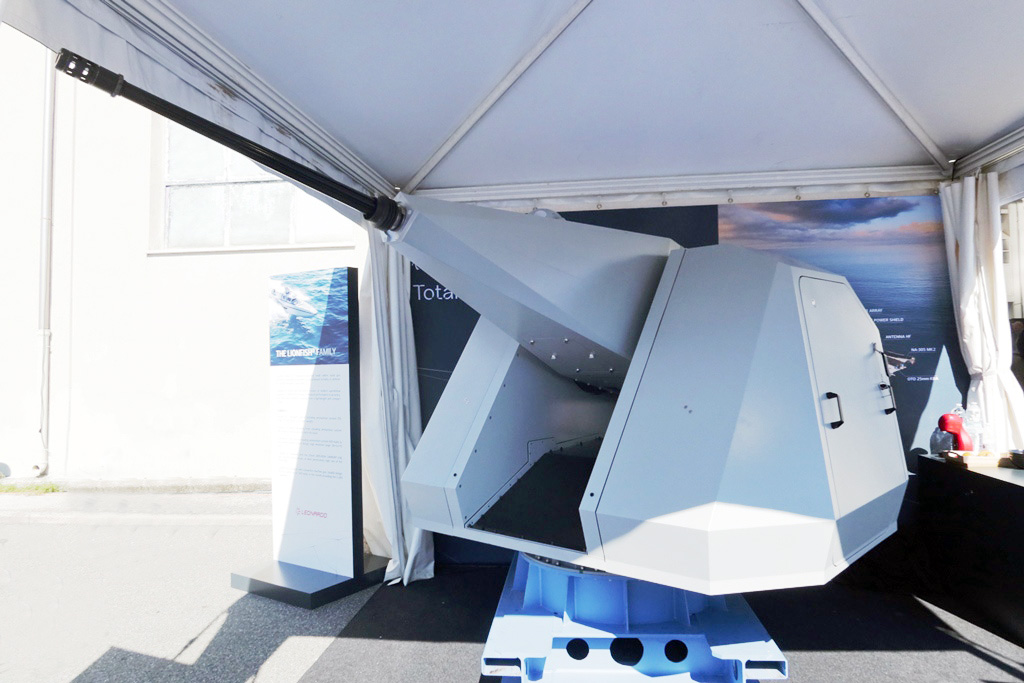
Starting from the 30×173, the new gun is being used for land and naval applications. The HITFIST 30 NG was recently unveiled at the delivery ceremony of the first Lynx fighting vehicles to the Italian Army; a two-man turret, it will be installed on the VBM 30 NG 8×8 and to the first Lynx tracked IFVs, which in the final configuration will be fitted with the unmanned version. On the naval side, at Seafuture 2025 Leonardo unveiled the prototype of its Lionfish 30, which mock-up was shown at the 2023 edition of the same exhibition. Having dedicated solutions for armoured vehicles, Leonardo is considering the Lionfish 30 as the base for its Hystrix 30 ADS which is being developed only in the static and relocatable configurations, 6×6 trucks being sufficient considering size and mass.

In fact, at MSPO 2025, the Polish exhibition taking place in Kielce, a Lionfish 30 could be seen installed on the flatbed of a 4×4 Zakłady Mechaniczne Tarnów (ZMT), part of the Polish Armaments Group (PGZ), presented the Lionfish 30 installed on a Jelcz 442.32 truck, which was previously used fitted with a ZSU-23-2 SP twin barrel 23 mm air defence gun of Soviet origin.
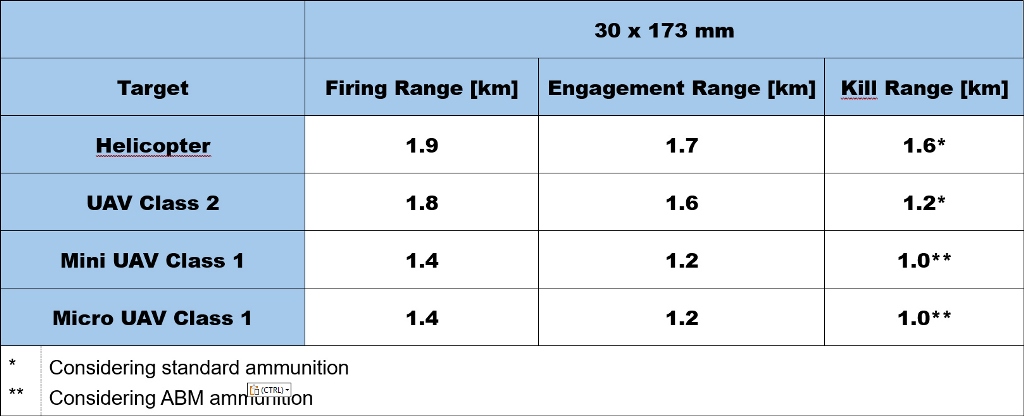
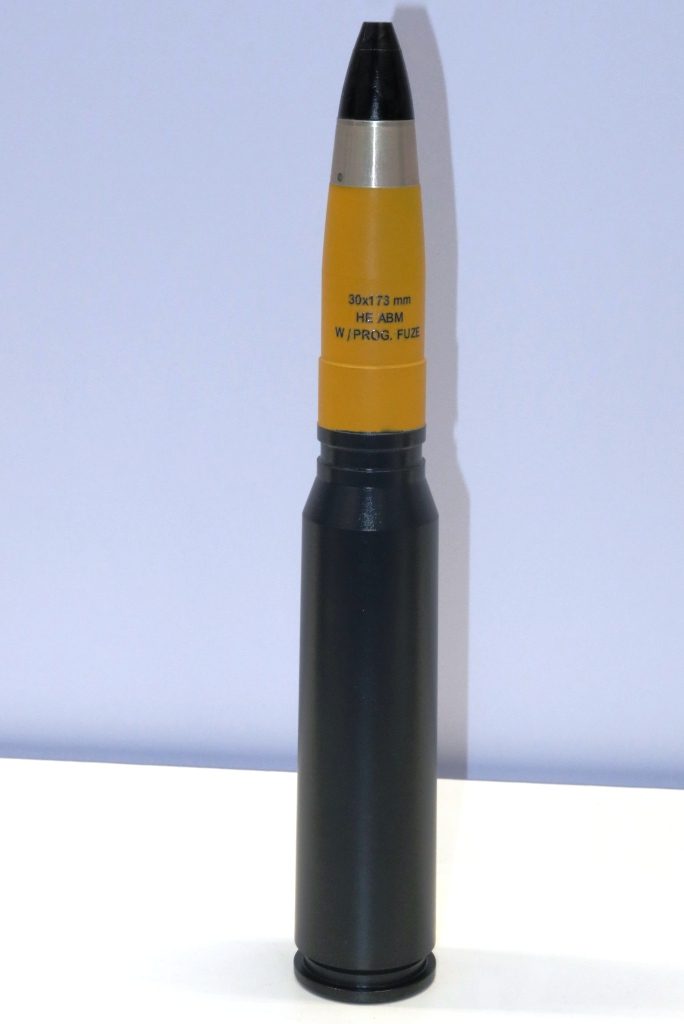
The turret training arc is ± 155°, the elevation arc being -20°/+70°, the rate of fire is 200 rounds per minute, the turret hosting over 220 ready-to-fire rounds. The dry mass, without rounds, is under 1,400 kg, to which we must add around 150 kg for the full load of ammunition. The Janus-D optronic system adopted on both turrets, a full digital system with improved performances over the previous analog Janus, hosts a high repetition frequency pulse laser rangefinder which allows to perform tracking and targeting. The company tested the Janus-D capabilities in the C-UAS role in a series of trials conducted with a HITFIST NG turret that was however armed with the Northrop Grumman Mk44 Bushmaster 30 mm gun using Mk310 programmable air burst munition, which are however not specifically designed for the C-UAS role as fragments are ejected sideways. In mid-2026 Leonardo plans to test its turrets armed with the X-Gun, employing the 30×173 HE ABM round under development by KNDS Ammo Italy. The gun adopts inductive gates in the muzzle brake that allow measuring the effective muzzle velocity of each round, refining the time-of-flight data that are input by the fuse setter antenna at breech level, further increasing lethality. During the presentation Leonardo provided a table with firing ranges of standard and ABM 30×173 mm rounds against different types of targets (click on link to see table).
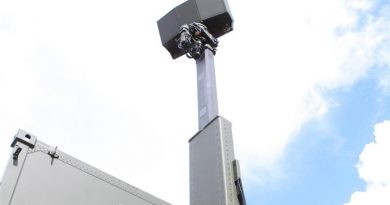
As anticipated, Leonardo is developing an X-gun type chambered for 30×113 mm rounds, known as Blaze. Although his system is outside the general discussion regarding the reuse of naval artillery in the land-based C-UAS context, it makes sense discussing it in the 30 mm calibre article. The company is developing a remotely controlled weapon station (RCWS) that can be armed with the Blaze, providing a light self-defence system against UAS also for light vehicles. The weapon is available both in single- or dual-feed versions, it has no penetration below armour, and has a 360° continuous training range, and a -20°/+85° elevation arc. The rate of fire is 250 rounds per minute, the turret will carry over 150 ready to fire rounds and will have a dry mass under 300 kg with the weapon, around 71 kg to be added for ammunition.
To provide D/R/I [1] ranges compatible with 30×113 mm effective ranges, that are much higher than those of 12.7×99 mm rounds, Leonardo is evolving its Mini Colibri-D replacing the uncooled LWIR thermal channel with a cooled MWIR sensor, also improving day and laser rangefinder performances. EDR On-Line understood that Leonardo proposed this RCWS to the Italian Army, to be installed over the turret of the future National Main Battle Tank. It is to note that also all HITFIST 30 NG turrets aimed at the A2CS contract will adopt a turret-on-turret configuration, although it is doubtful these will add a 30×113 gun to the main 30×173 gun; the light RCWS armed with the Blaze gun might however be of interest to provide some C-UAS self-protection capability to all those specialist versions of the A2CS that will not be fitted with the HITFIST turret.
Leonardo representatives made it clear that when dealing with UAVs, both blast and fragments count. Airburst munitions will soon be available in the 30×173 mm calibre, however HE-FRAG rounds fitted with proximity fuses might also be of use. By the way to our knowledge no 30×113 mm airburst munition is available or in development, hence weapons chambered for those rounds, as the Blaze, will definitely use proxy rounds in the C-UAS role. This is why Leonardo is currently developing a multirole programmable proximity fuse suitable for both the 30×173 mm and 30×113 mm ammunition. Three different modes will be selectable: proximity with time gate and self-destruction options; time/airburst mode, and instant impact.
Photos by P. Valpolini
[1] D/R/I for Detection, Recognition, Identification