IAV 2026 – Hanwha provides its view on the future of ROK Army heavy formations
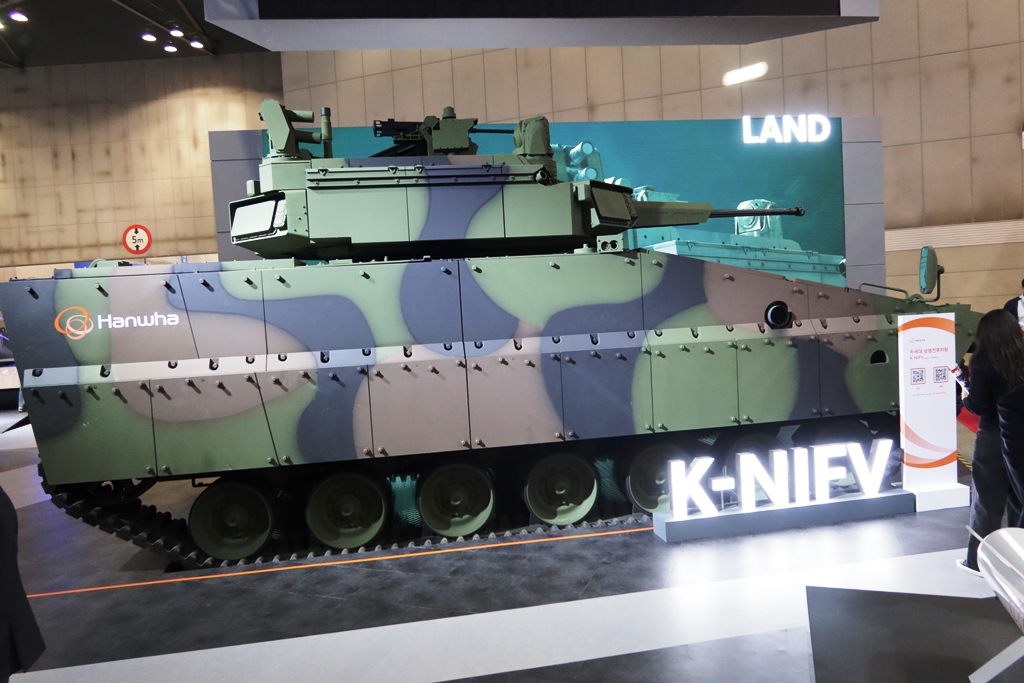
Speaking at the International Armoured Vehicles at Farnborough, the yearly conference organised by Defence IQ, a Hanwha representative illustrated the company view on what should become the heavy formations of the Republic of Korea (ROK) Army. Hanwha may well be at the core of its transformation, the company proposing its K-NIFV, for Korean New Infantry Fighting Vehicle
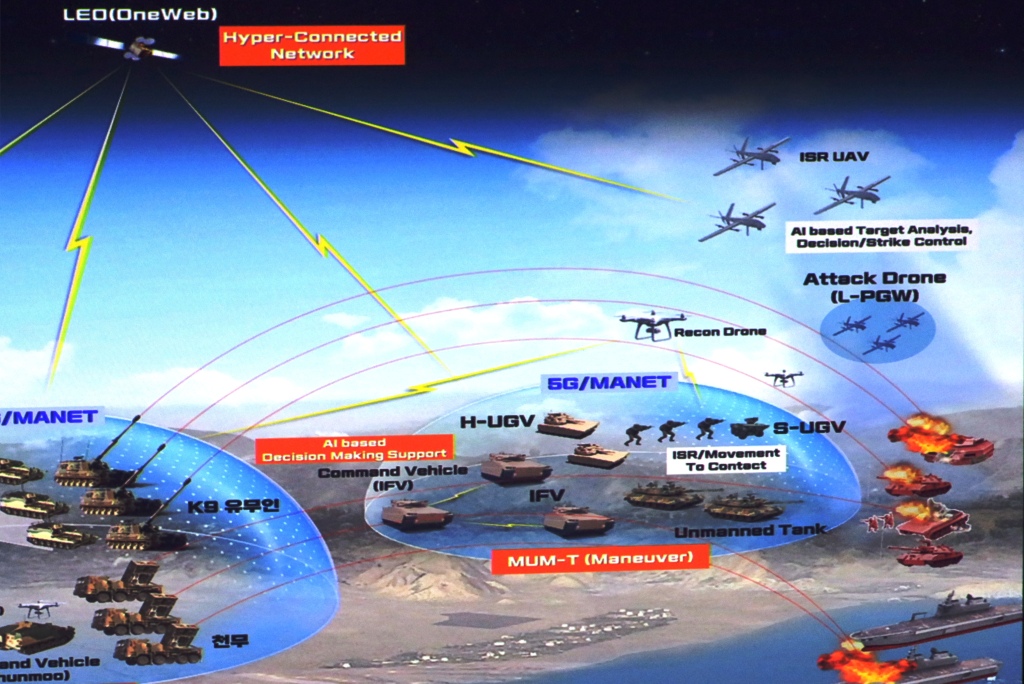
Facing increased threats, coming from UAVs and loitering munitions, better protected armoured vehicles and improved antitank missiles, armoured units must transform, increasing their lethality, which must enable them to defend against cross-domain threats, distributing lethality among platforms. This means pushing the combined arms concept to a lower level than usual, also exploiting the capabilities of unmanned vehicles, thus leveraging the manned-unmanned teaming concept. Assigning high risk missions to unmanned platforms will allow reducing casualties, a key issue considering the declining natality in most countries. In the future ROK Army heavy formations equipment will include the NIFV and a series of manned and unmanned combat vehicles, which will be based on an improved version of the K21 IFV. EDR On-Line reported on these vehicles in 2023, when the first models were shown at the ADEX exhibition in Seoul, however at the International Armoured Vehicles Conference 2026, which took place in Farnborough last January organised by Defence IQ, the Hanwha speaker provided additional details on equipment and timing.
The speaker illustrated the tentative organisation of the future Army MUM-T Infantry Division, which main components will be two MUM-T Infantry Brigades, one MUM-T Mechanized Infantry Brigade and one MUM-T Mechanised Artillery Brigade. Combat supports include antitank, air defence and engineer formations, all battalion level units mixing manned and unmanned systems, as well as other battalions such as CBRN and Logistic, also manned-unmanned, and Military Intelligence, Signals, Military Police and Medical battalions, these with only manned assets.
The ROK Army is planning to deploy, starting around 2026, light Unmanned Ground Vehicles (UGVs) for infantry and logistic units. Phase I will be followed by Phase II, starting around 2028, deploying medium UGVs destined to Cavalry formations as well as to Combat Support units. Phase III will start around 2030 and will see the deployment of heavy UGVs in mechanised units.
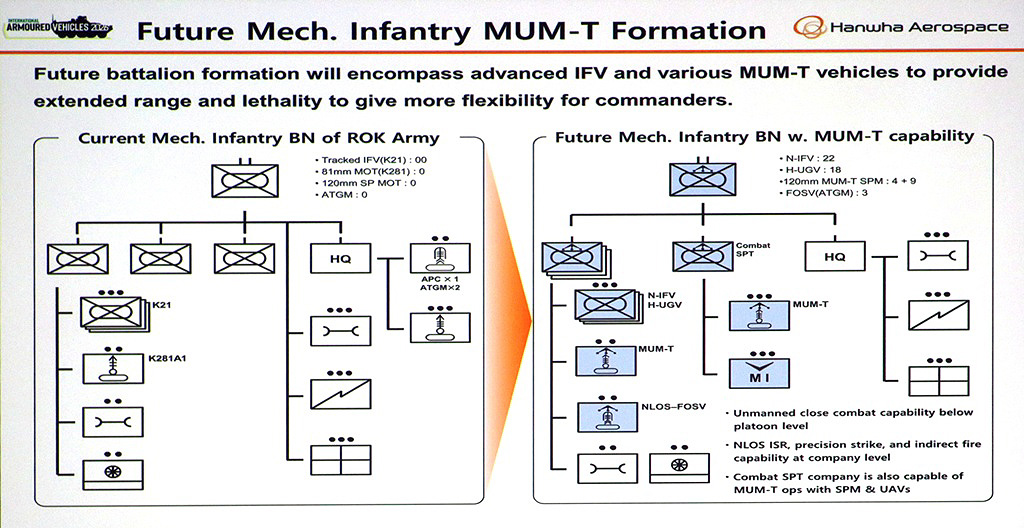
The ROK mechanised battalion TOE will change radically. Today the mechanised infantry battalion follows the classic organisation; three mechanised infantry companies, each on three platoons, equipped with the K21 IFV, one HQ Coy with one antitank missile section and one heavy mortar platoon, plus supports in the form of a repair, a signal and a medical platoon. In each mechanised infantry company, we find also an 81 mm mortar section equipped with the K281A1 tracked mortar carrier, a repair section and a supply section.
The future mechanised infantry battalion with MUM-T capability will field an additional company, the Combat Support Coy, made of a heavy mortar platoon with four UGVs armed with a 120 mm mortar, and a Military Intelligence platoon equipped with UAVs. The three support platoons, repair, signal and medical, will fall under the HQ Coy. As for the three mechanised infantry coys, they will field three manoeuvre platoons, one heavy mortar team with three self-propelled unmanned 120 mm mortars, and one antitank team with one non line of sight/forward observer and fire support (NLOS-FOSV) unmanned vehicle armed with NLOS antitank missiles, this ensuring precision strike at company level. A repair and a supply platoon will complete the company organisation. Each mechanised infantry platoon will field two NIFV combat vehicles and two Heavy UGVs, which means that even at team level MUM-T operations will be possible.
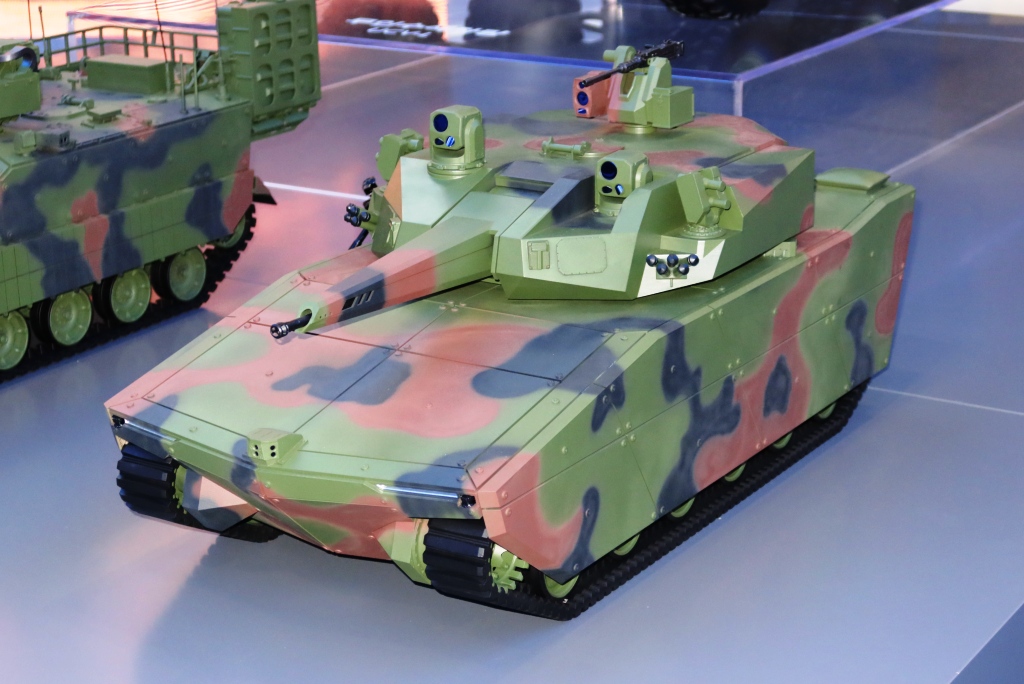
Heavy UGVs will be available in two types; Type I, also dubbed H-UGV 30, the number showing the calibre of the weapon installed to which antitank missiles will be added, will be an IFV-like vehicle with a combat mass of 30 tonnes, while the Type II, or H-UGV 105, which role is to operate as Mobile Protected Firepower will have a combat mass around 35 tonnes and will be armed with a 105 mm gun with autoloader. The development programme started in November 2025 and will run until October 2029, Hanwha planning delivering two Type I vehicles in late 2029, the Type II development being due to start in early 2027. Although unmanned, they will be heavily protected, with ballistic Level 6 and antimine Level 2a/b. Overall Hanwha considers that the requirement of the ROK Army should be for at least 150 H-UGVs. The NIFV commander and gunner will have a four-screen station that will allow them to monitor the activities of H-UGVs, as in the end it will always be a human that will allow the fire mission, EDR On-Line understanding that each manned vehicle can monitor two unmanned ones. The availability of two types of UGVs means that even at company level it will be possible to have integral direct fire support. This can be exploited in the various missions that might be assigned at lower echelons, such as movement to contact, screening or guarding to protect friendly forces, carrying out mobile defence, or fixing and attacking by fire. H-UGVs core technologies will include diesel-hybrid propulsion, composite rubber tracks, remote and autonomous control, and automated engagement.
Indirect fire at company and battalion level will be provided by the MUM-T Self-Propelled Mortar, which will be based on the H-UGV chassis. Its development timeline goes from 2027 to 2031, fire missions being provided and controlled by a Fire Direction Control Vehicle (FDCV) operated by a two to three people crew; a single FDCV can operate up to four self-propelled mortars. The breech-loaded 120 mm turreted mortar will have an automatic loading system, the ammunition carousel hosting some 30 rounds and will be capable to fire the first round within one minute from receiving the order, and provide sustained fire at an 8 rounds per minute rate, maximum range being 15 km. The mortar turret can be fitted with a remotely controlled weapon station for self-defence purposes, the FDCV having a combat mass of around 35 tonnes, considering it will have a Level 4 ballistic and Level 2a/b mine protection levels.
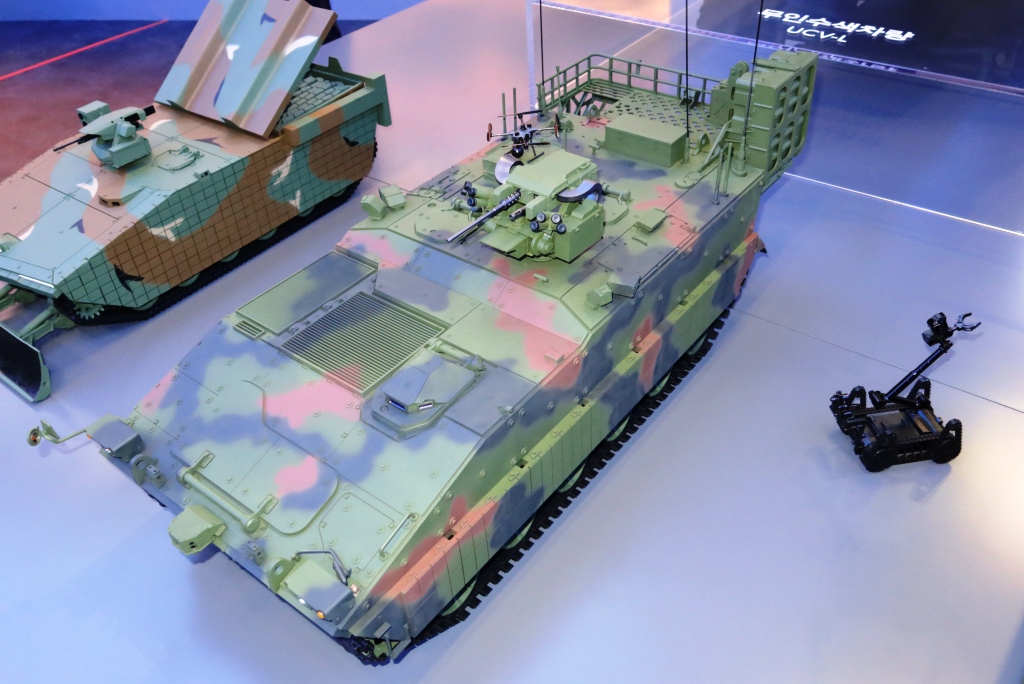
Beside the NIFV and the NG-MBT, four more manned vehicles will equip heavy formations, all based on the upgraded K21 chassis. The Korea-Combat Engineering Vehicle (K-CEV) will be the first one to be fielded, field testing being planned to start in July 2026. Three such vehicles are being produced, over a requirement of around 150 K-CEVs. With a three-man crew, driver, commander and gunner, the latter manning the dual-weapon RCWS armed with a 12.7 mm machine gun and a 40 mm automatic grenade launcher, it also hosts four combat engineers in the rear compartment. For increasing its situational awareness, it is equipped with a VTOL UAV which takes-off from a launch pad at the rear right of the vehicle, its ISR payload allowing engineers to carry out visual route reconnaissance before moving forward. Another unmanned tool is the BREVIS EOD Robot, developed by the ROK Agency for Defense Development, which can carry out different missions, including detecting mines and IEDs using a 3D ground penetrating radar, neutralising or marking land mines, and when needed opening breaches in walls. As it will operate in potentially dangerous areas, the K-CEV protection against that threat is Level 3 a/b, while that against ballistic threats is Level 6, the K-CEV being fitted for add-on ERA (Explosive Reactive Armour).
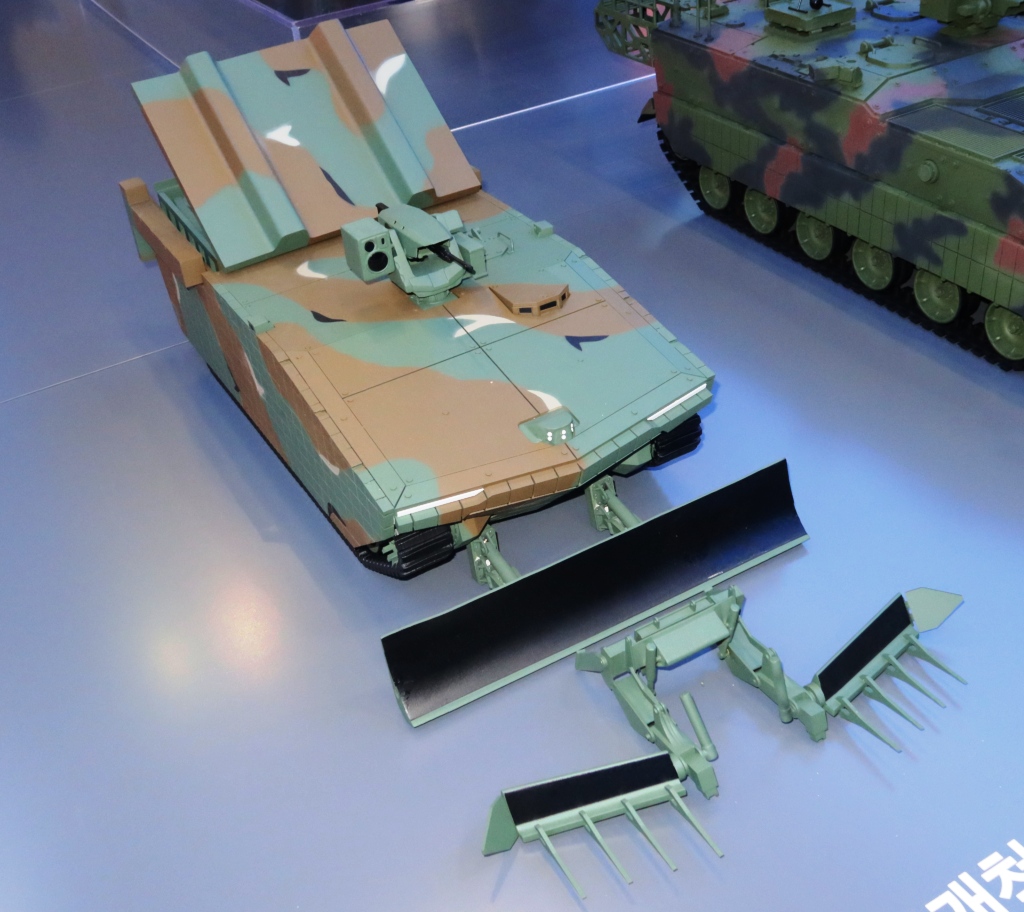
The BREVIS will not be the only unmanned asset in the Combat Engineers units; another much bigger unmanned vehicle, based on the same chassis of the K-CEV, will also be deployed; known as N-MBV, for Next – Minefield Breach Vehicle, it is designed to breach minefields, marking safe lanes for friendly formations. It is fitted with the typical systems used on this type of vehicle, a track width mine plough, which can be replaced by a dozer blade when not engaged in mineclearing, an anti-magnetic mines actuating device, capable to trigger magnetic mines, its main clearing asset being the MICLIC (Mine Clearing Line Charge), two of them being fired to open the lane, which is subsequently marked thanks to the lane marking devices installed at the rear of the chassis. An RCWS ensures a degree of self defence capability. The timeline for the N-MBV is 2027-29, at which point Block I vehicles should be delivered; a Block II programme is scheduled, which will see the N-MBVs receiving a Carpet-type mineclearing charge in place of the MICLIC. The N-MBV will operate alongside the manned K-CEV, the latter ensuring reconnaissance ahead of the combat engineers team, as well as remote control over the UAV, the BREVIS and the N-MBV.
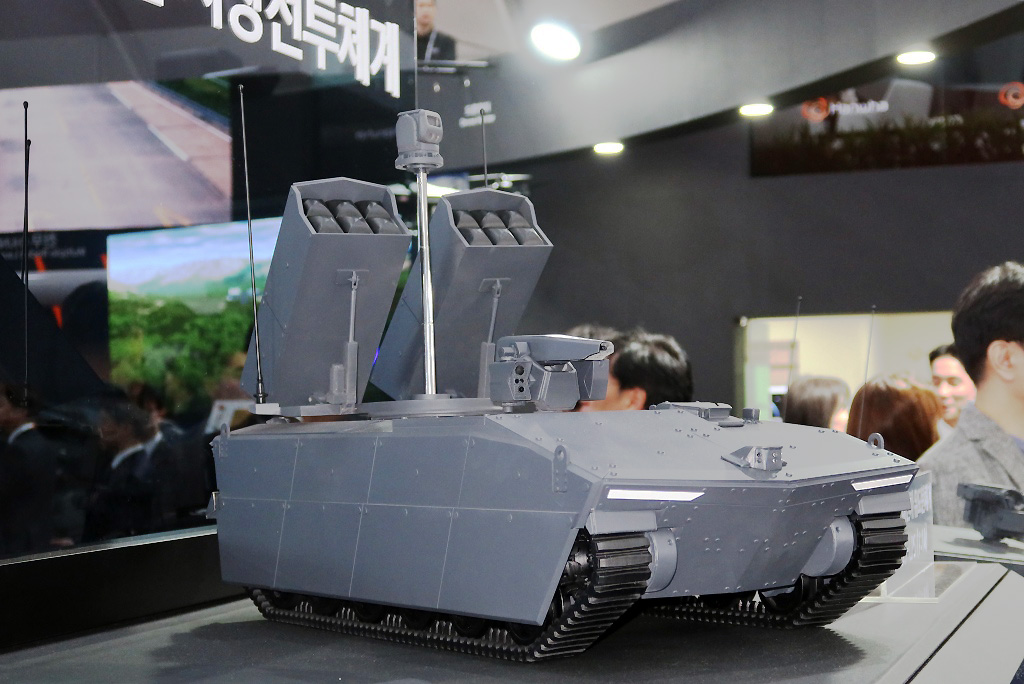
The NLOS-FOSV will probably be the next manned vehicle to come into service, its timeline being 2026-28, as most of its building blocks are already available. EDR On-Line understands that the NLOS-FOSV platform will be fitted with a telescopic mast carrying the TADS (Target acquisition and Designation Sight) capable of providing designation for laser guided munitions, as well as target acquisition and surveillance functions, the latter missions being also conducted by consumable ISR drones that will be launched from within the hull thanks to an air compressed system. Two missile container-launchers are fitted at the rear of the vehicle, each hosting six missiles, which should be 10 km range Hanwha TAipers, featuring a dual IR/visible seeker, the same missile that will equip the NIFV. Its combat mass will be around 35 tonnes and it will host a two-man crew and a four-man fire support team. Ballistic protection will be Level 4-6 while mine protection will be Level 2-3. While its main role remains antitank, however being an NLOS missile the TAipers allows the NLOS-FOSV to operate alongside the MUM-T SP Mortar in providing indirect fire support, however with less than metric accuracy. Self-protection will be provided by a RCWS installed front right, beside the driver’s position on the left.
In a highly networked force, a key role will be that of the N-MCV, the Next-Mission Command Vehicle. Another support vehicle based on the upgraded K21 chassis, it should be available in the same timeframe of the NLOS-FOSV, both being the subject of a fast R&D programme. It will deploy an advanced C4I system, which will include the KVMF data link and Low Earth Orbit SATCOM On-the-Move and will host a two-man crew plus six staff personnel. Due to its role the 35 tonnes vehicle is not equipped with offensive weapon systems, however being a potential priority target for the enemy it will have a layered defensive suite, which will increase the survivability already provided by the Level 4-6 ballistic and Level 2-3 antimine protection resulting from passive armour. Beside the typical laser warning system, it will be fitted with an active protection system with radar sensors, providing a layer of C-UAS protection, which adds to the anti-drone capability of the RCWS. However, the main defensive system is the quadruple canister launcher, located rear-right, which uses the Mark 1 C-UAS missile provided by Frankenburg Technology from Estonia. Although no precise data are available its range should be around 2 km, the company claiming that its AI-based missile is one order of magnitude less expensive that other missile-based C-UAS solutions.
Graphics courtesy Hanwha, photos by P. Valpolini