WDS 2026 – A Sphere™ protection against drones by AirShields, based on soft/hard kill effectors
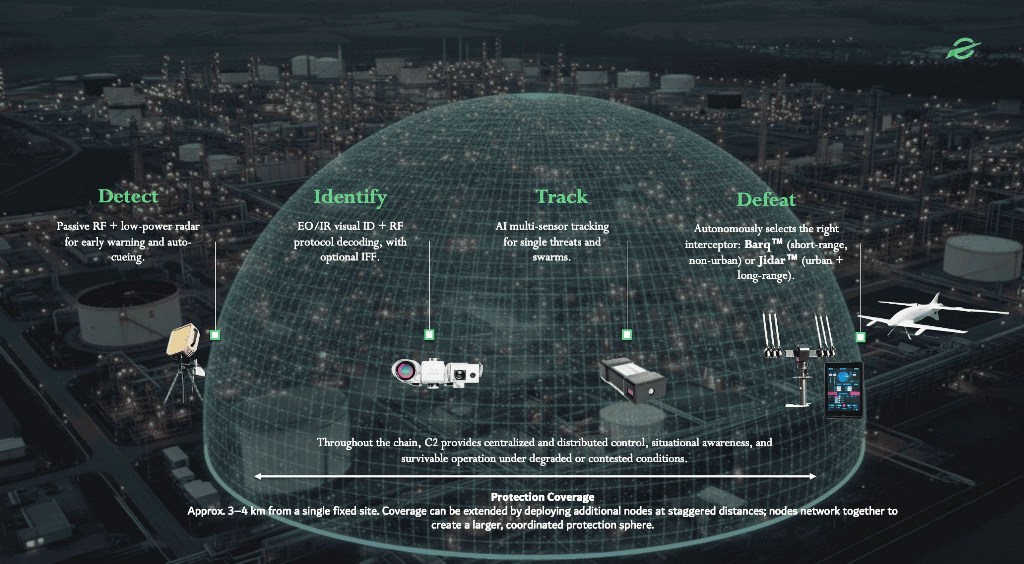
At the World Defense Show Airshields was showcasing its latest developments in C-UAS effectors, which are part of the wider Sphere AI-based counter drone solution which includes sensors, command-and-control systems, and effectors. The latter are based on a patented soft/hard kill solution capable to disrupt drones’ lift
The fight between drones and loitering munitions and counter-drone systems was one of the highlights of the third edition of the World Defense Show. Among the many defensive solutions, one was exhibited in Hall 2, the one that hosted Saudi companies. AirShields is a Saudi-based AI defence company specialized in next-generation counter-UAV and autonomous air defence systems. Its systems could be seen in the Qudra holding stand, the company being backed by the Saudi group as well as by Stallion AI Defense of Canada, the latter having decades of experience in air defence issues.
While we will mostly focus on effectors, these are part of a complete system, known as Sphere, a system capable to handle the whole sequence of a counter drone mission, detect, identify, track and defeat. Sphere is a platform architecture which includes systems from several third parties to cope with the various tasks. Passive and low power emitting radars are used for early warning, passing targets to optronic and EW systems which provide visual and protocol signature identification. These tracks are then provided to a ballistic solution server, which converts tracks into real-time engagement solutions and tasks interceptors. It is capable to deal with single tracks as well as swarms and based exploiting artificial intelligence protocols it autonomously selects the right interceptor. And here the systems exhibited at WDS come into play.
All effectors are based on the patented AirShields’ countermeasure cloud, which employs aerodynamic latex-like strips; these are released by the effector at the right place, in front of the incoming threat, and manage to entangle and disable propellers, control surfaces, and sensors. This will definitely disrupt the drone flight, often generating a hard kill issue if the enemy UAV is not able anymore to sustain itself, a softer issue being that the threat becomes unable to continue its mission. As no explosions or electronic jamming is involved, the AirShields solution is free from collateral damages.
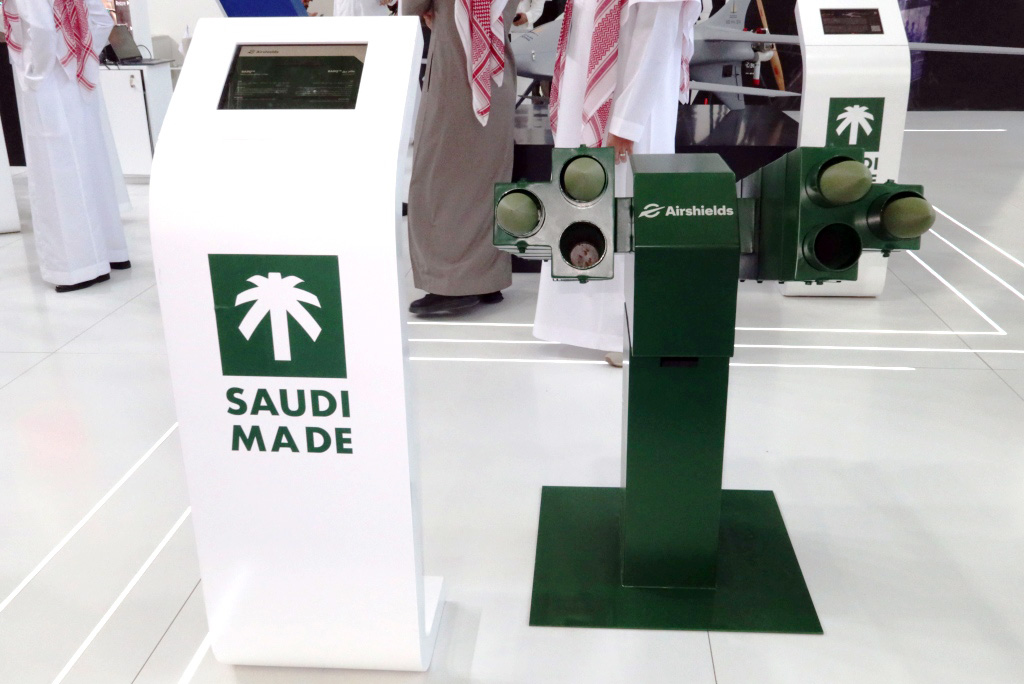
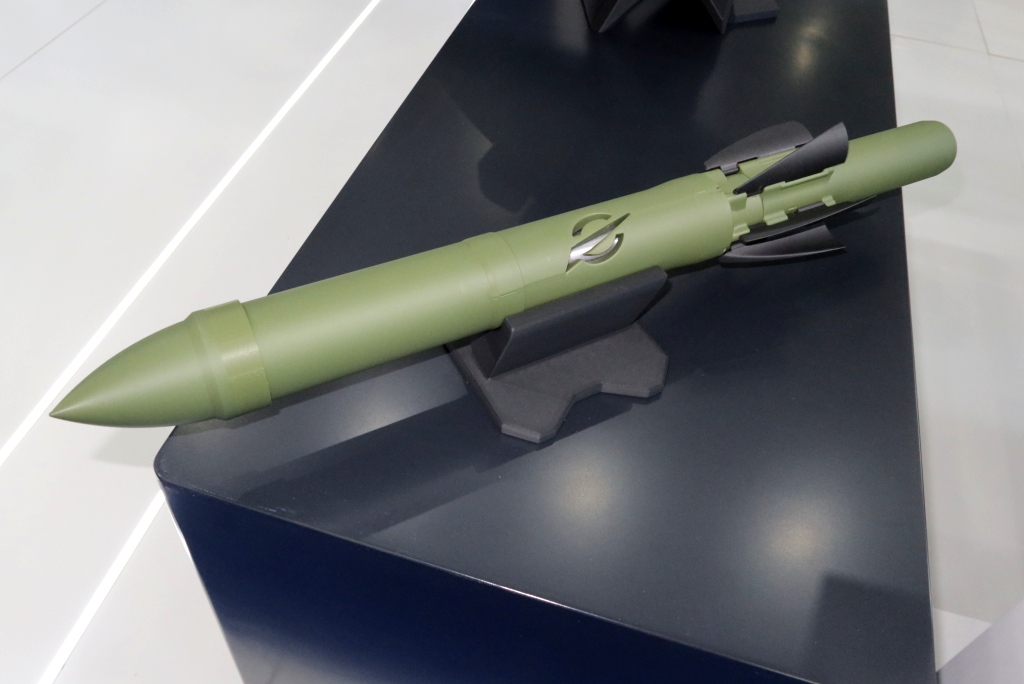
EDR On-Line understood that the technology development started in Canada, however in the last years this has been fully developed in Saudi Arabia, becoming now a product. According to company representatives, this technology is extremely low cost, and can be packed in different forms, giving considerable flexibility in terms of type of effector. The first effector is known as Barq™ and comes in the form of a mini missile which at WDS was seen with a pedestal mounted launcher, armed with one pod with three missiles on each side. No metrics were provided, but the missile is really small probably around 600 mm, and is powered by a rocket motor that gives a range of around 2 km, the Sphere protection dome diameter being considered between 3 and 4 km. The missile is produced using 3D printing technology, which reduces cost and ensures easy production scalability. The Barq is in full production at the company Saudi Arabian facility, and according to company sources AirShields is delivering one 40 ft container with 25 missile systems, each system being made of a turret with six launch pods and 18 missiles.
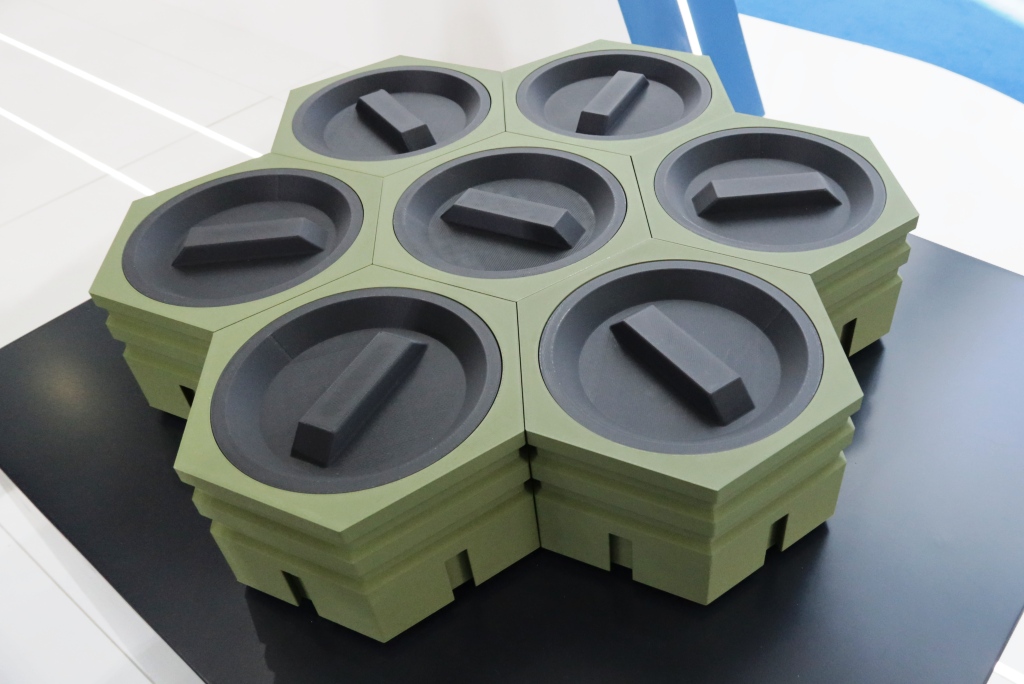
Two more effectors could be seen at WDS, under the name Jidar™, wall in Arabic. The Jidar M, the letter standing for Modular, is made of a series of hexagons; it can be fixed under a flying platform and can generate a countermeasure cloud when required. Fully modular, the number of modules being function of the aircraft payload capacity, each module can be triggered individually, allowing to reiterate the action.
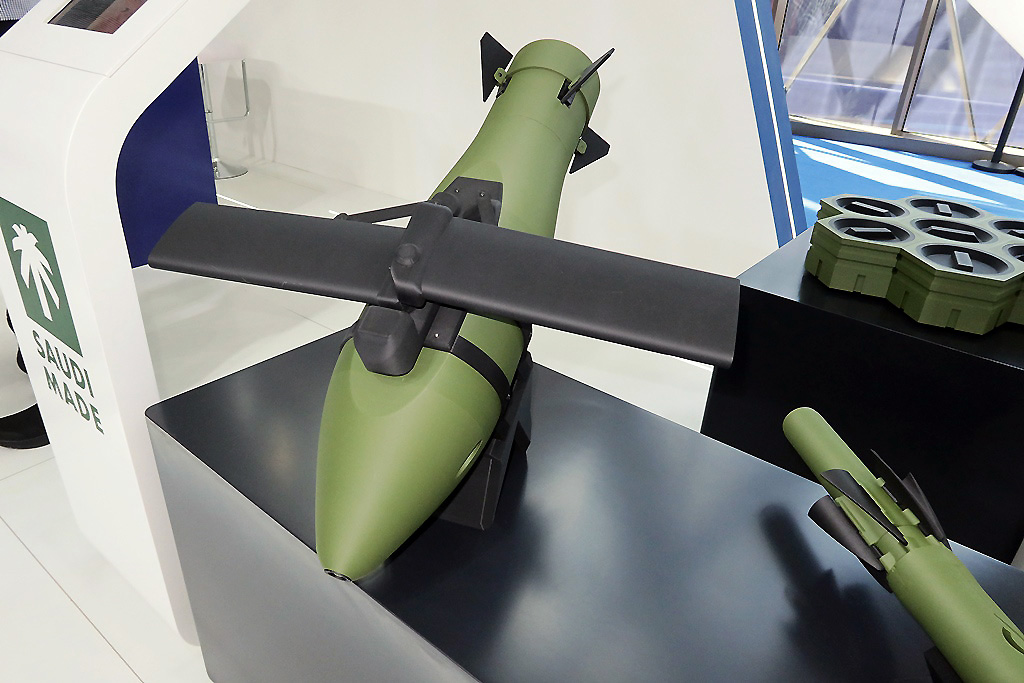
The second option is the Jidar B, for Bomb; it comes in the form of a bomb, which volume is around five times that of the Barq, fitted with two short wings to increase its glide range; here too no detailed metrics were provided, but a 10-12 kg mass should be realistic. This allows the Jidar B to host a much bigger quantity of latex-like strips, making it suited for neutralising bigger drones as well as swarms. Although no details were provided, the Jidar B model seen at WDS was showing an optical window at the front of the ordnance, which may well be that of an optical guidance system, installed to bring the bomb close to the target at the end of its glide path.
EDR On-Line understood that the Jidar in both configurations is not yet in full production but is not far from it.
AirShields considers its Sphere, and more specifically its effectors, capable to neutralise Class 1, Class 2 and Class 3 drones, which means the latter having a maximum take-off mass of 600 kg. The production method as well as the flexibility of the countermeasure system used should allow AirShields to answer requests from customer that need specific adaptation of its effectors.
Photos by P. Valpolini