WDS 2026 – KSA GADD unveils new LTM 10 loitering munition and ARB free-fall ordnance for UAVs
At the World Defense Show the Saudi General Authority for Defense Development, unveiled two systems aimed at neutralising enemy land assets from the third dimension. The first was the LTM 10, a manportable loitering munition, while the second was the ARB free-fall projectile to be launched from UAVs
With the crosshair set on the 2030 target, the Kingdom of Saudi Arabia (KSA) is developing its defence capabilities to reach the 50% localisation target. One of the actors is the General Authority for Defense Development,GADD in short, a government entity responsible for defining the objectives of research, development, and innovation activities in the fields of defence technology and systems.
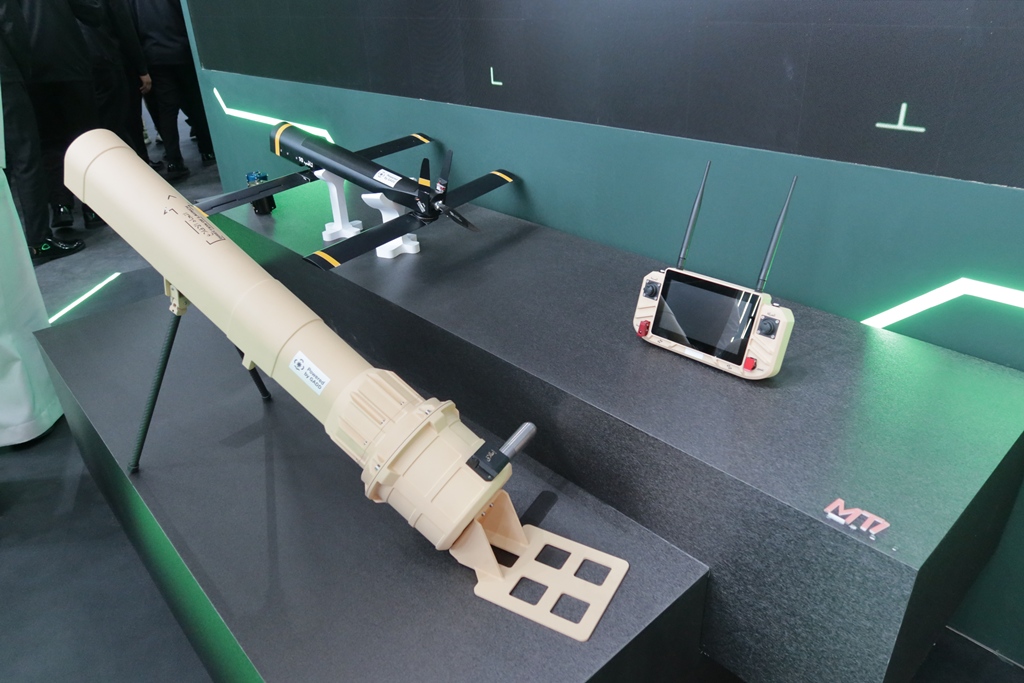
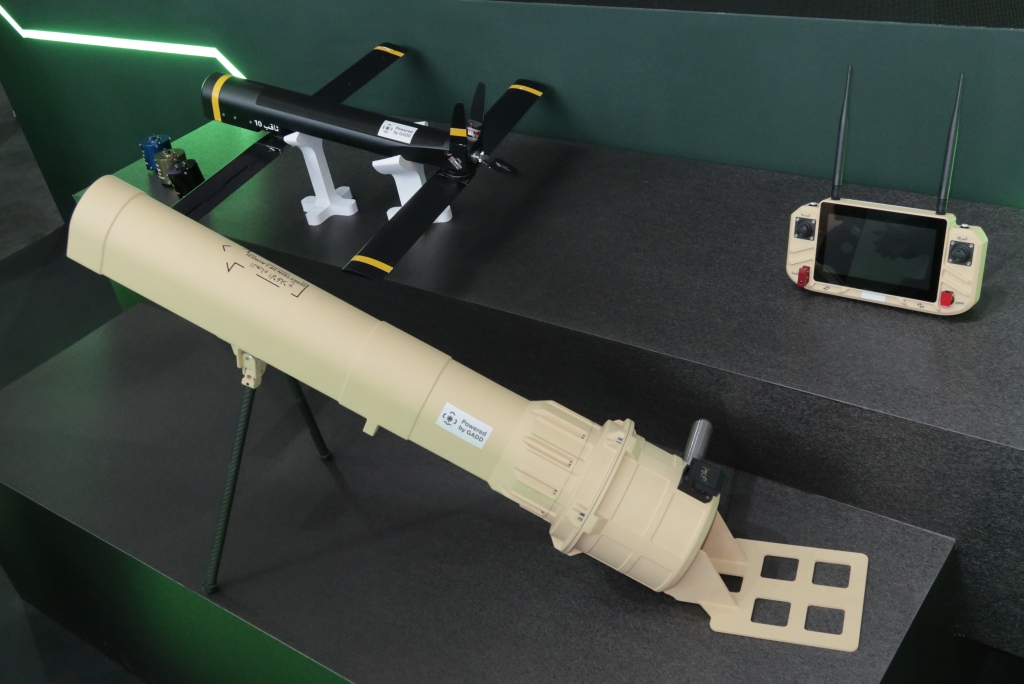
At the Riyadh exhibition GADD exhibited two brand new products the first one being a loitering munition wholly developed in the KSA. The LTM 10 is a canister-launched munition that can be easily carried by an infantryman; the munition itself has a mass of 2.5 kg, the standard kit including three munitions and the launcher, the overall mass being under 20 kg. The airframe is similar to that of many canister-launched systems, main semi-wings being folded backward, tail planes folding forward, the same being true for the two vertical rudders, the propeller blades also folding towards the back. The reusable launcher is fitted with a light bipod and a rear support, which allow obtaining the right launch elevation, around 30°. The launch system is based on compressed gas, which mass is included in that of the kit.
No precise measures were provided, an estimated length for the canister is slightly more than 1 metre, wingspan being slightly more.
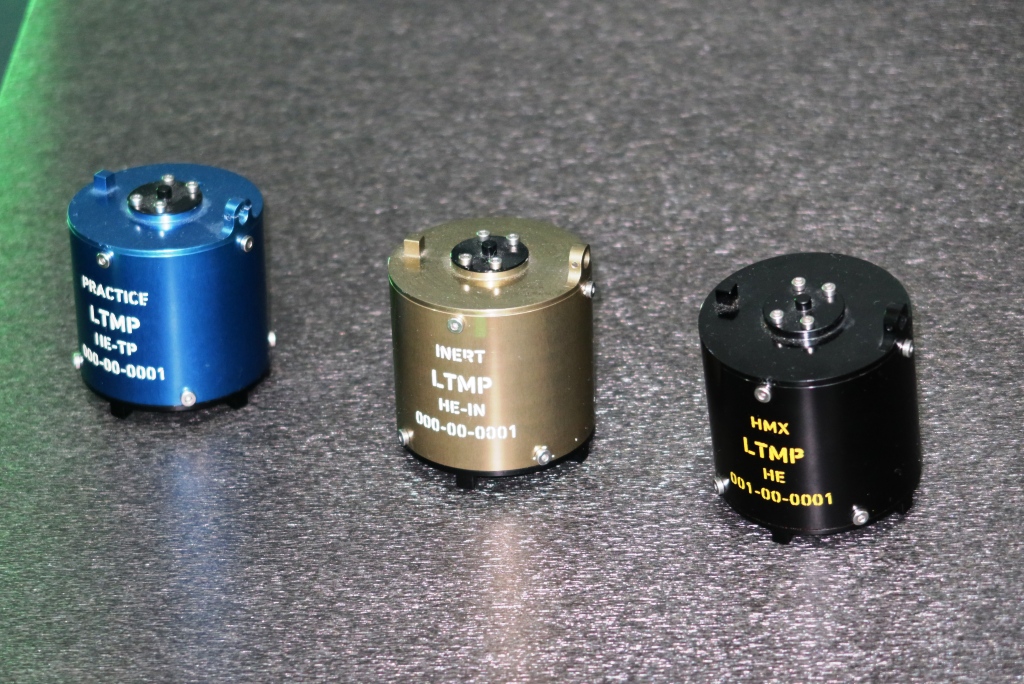
The LTM 10 carries a 650 grams high explosive fragmentation warhead, which has a 5 metres effective radius against personnel. After take-off the munition flies at a 100 km/h cruise speed; it has a 15-minute endurance and a 15 km range, which ensures more than 5 minutes loitering time over the target area. Navigation is done by waypoints, the mission being planned before take-off using the game-like ground control station. The LTM 10 is fitted with a daylight TV camera, real-time video feed allowing the operator to confirm the target and to refine targeting until the hit. The warhead is detonated by a proximity fuse exploiting a LIDAR sensor. Three different warheads were visible at WDS; the HE-TP (Training Practice) for training, the HE-IN (Inert) which is used in the testing phase and is not a commercial item, and the HE, which is the real warhead, filled with HMX explosive.
Currently the LTM 10 can be used only in daylight, but GADD is already planning the adoption of an IIR (imaging infrared) seeker to allow its use also at night and in difficult visibility conditions. EDR On-Line understood that GADD is very close to finalise the LTM 10 development, the system being considered TRL 7, and will then pass the project to manufacturing entities in KSA.
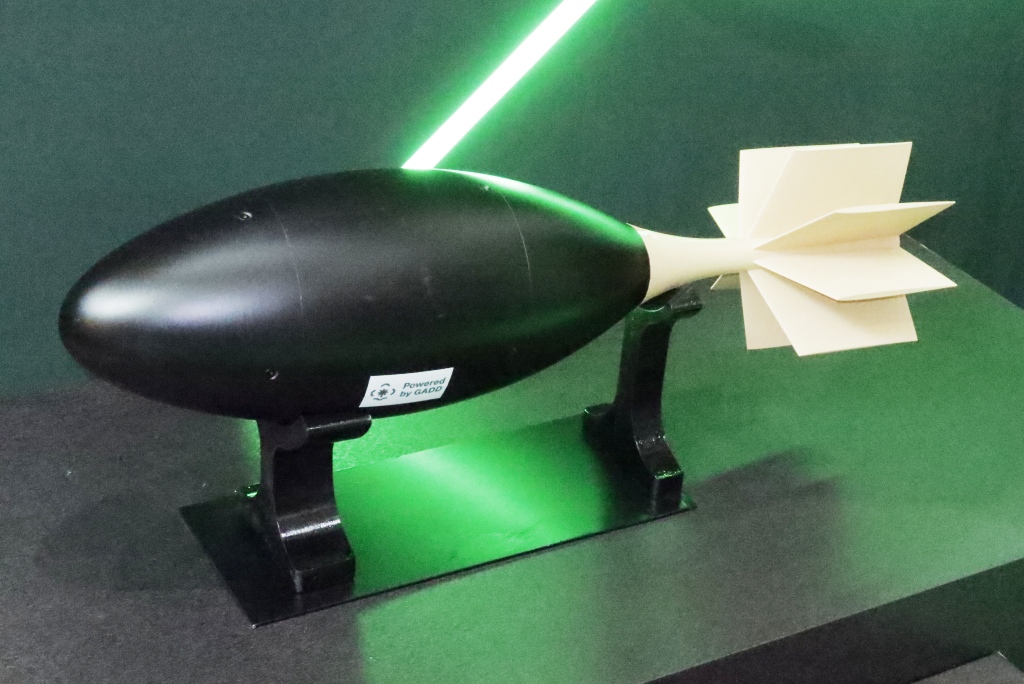
The second new item visible at the GADD booth was the ARB, a free-fall projectile designed to be used by UAVs. It has the typical aspect of a mortar bomb, the tail being provided with eight fins, GADD also providing the release mechanism. The overall mass does not exceed 10 kg, the ARB being designed to cope with armoured vehicles, reinforced buildings, and personnel. Three different configurations are available, fragmentation warhead with impact fuse, penetration warhead, to be used against armour and fortifications, and fragmentation warhead with proximity fuse, giving a heigh-of-burst capability. According to GADD representatives the ARB can be dropped at altitudes between 150 and 500 metres, CEP being around 2 metres. This bigger ordnance will joint previously developed ones, providing a bigger kill area; according to a scheme shown at the exhibition, in the antipersonnel role the ARB has a 100% effectiveness within 30 metres and a 75% one at 50 metres. Here too GADD is ready to pass over the project to production entities.
Photos by P. Valpolini