WDS 2026 – Nemosys on the tarmac, Exavision’s high-end eye for Saudi security
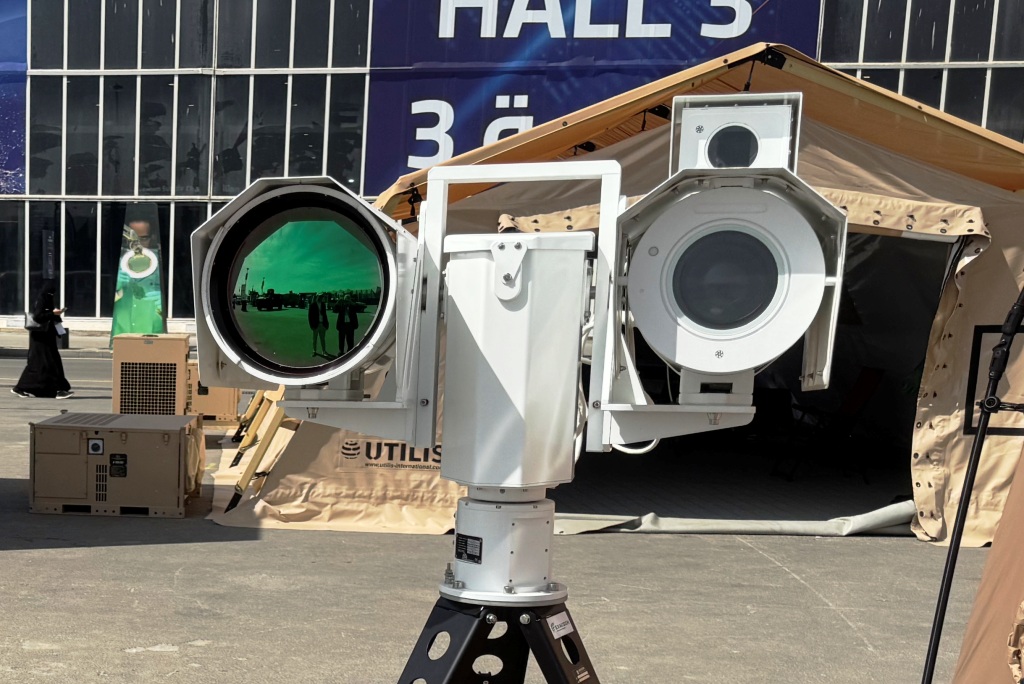
Displayed on the tarmac at WDS within the Saudi company TET’s dedicated area, Exavision’s Nemosys stands out as a premium long‑range electro‑optical solution tailored to modern surveillance and protection needs. Designed and manufactured in France, it combines sovereign technology, high‑end sensors and advanced processing to deliver continuous day‑night coverage for land borders, coastal approaches, critical infrastructure and counter‑UAS missions
At its core, Nemosys is a modular, two‑axis pan‑and‑tilt optronic turret hosting a suite of complementary sensors optimised for long‑range observation. Depending on the configuration, the payload typically combines a full‑HD daylight camera with powerful continuous optical zoom, a cooled MWIR thermal imager for night and adverse‑weather detection, and an optional eye‑safe laser rangefinder. The design allows Exavision to tailor each system to the end‑user’s operational profile, from medium‑range perimeter surveillance to extra‑long‑range coastal and border surveillance.
The turret is gyro‑stabilised, allowing the sensors to maintain a stable line of sight even when the mast, vehicle or structure is subject to vibration or movement. This stabilisation, coupled with precision drives on both azimuth and elevation axes, provides smooth panning for wide‑area search and fast slewing for target hand‑off and tracking. The result is a system able to transition rapidly from search to identification, while keeping the image stable at very high zoom levels.
The visible‑band camera offers a continuous optical zoom spanning from a wide field of view for situational awareness to a very narrow field for detailed recognition at long distance. In practical terms, this allows operators to scan a sector, detect a contact, then progressively zoom in to read fine details such as vehicle features or individual behaviour, all within the same sensor channel. The optical path is engineered to preserve image quality across the zoom range, avoiding the degradation associated with heavy reliance on digital zoom alone.
The MWIR cooled thermal channel provides the core of the system’s night and poor‑visibility performance. Thanks to its cooled focal plane array, the thermal imager delivers high sensitivity and contrast, enabling detection of human and vehicle‑sized targets at very long ranges, even in conditions of haze, light fog or high ambient temperature. When paired with its own continuous optical zoom, the thermal channel not only detects but also contributes to recognition and, in some scenarios, identification by revealing thermal signatures and contours invisible in the visible spectrum.
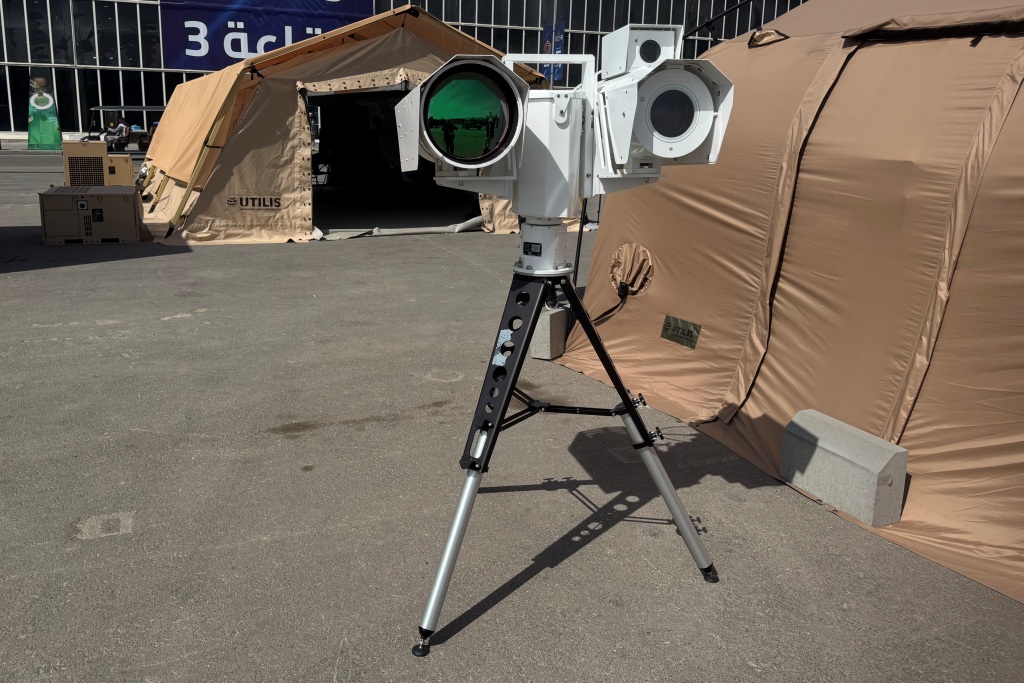
An optional integrated laser rangefinder, bore-sighted with the electro‑optical axis, allows precise measurement of target distance at the push of a button. Combined with the turret’s own position and orientation data, this enables rapid geo‑referencing of points of interest and the production of accurate target coordinates for command‑and‑control systems or fire‑control chains. This is particularly valuable in joint surveillance networks where radars, optronics and effectors must exchange consistent, high‑precision data.
Beyond the hardware, Nemosys is built around an open electronic and software architecture designed for easy integration into modern command‑and‑control and security management systems. Standard IP and video streaming protocols allow the system to be networked over existing infrastructures, while control interfaces enable remote operation from control rooms, mobile command posts or integrated security platforms.
Exavision’s software environment provides advanced video management, recording, replay and multi‑sensor fusion functions. Operators can configure patrol patterns, alarm zones and automatic slews to cue sensors to events detected by other systems, such as ground surveillance radars, fence sensors or coastal radars. In its latest iterations, Nemosys also leverages embedded processing and artificial‑intelligence‑based video analytics, allowing automatic detection, classification and tracking of targets such as vehicles, small boats and drones. This reduces operator workload, enhances responsiveness and supports decision‑making by highlighting genuinely suspicious activity amid routine clutter.
Compared with many existing long‑range camera systems, Nemosys offers several clear operational advantages. Its fully continuous optical zoom on both visible and thermal channels, coupled with robust stabilisation, produces high‑quality imagery at ranges where other solutions are forced to rely on aggressive digital magnification. This translates into better recognition and identification at the distances that matter for border, coastal and critical infrastructure protection.
The system’s modularity and family approach also differentiate it from single‑model competitors. Users can select medium‑ or extra‑long‑range variants, tailor the sensor mix and specify options such as laser rangefinder, embedded analytics or specific communication interfaces, while retaining a common logistics and training base across the fleet. For operators and maintainers, this commonality reduces life‑cycle cost and simplifies upgrades, as sensors and processing modules can be evolved without redesigning the whole system.
A further advantage is the emphasis on technological sovereignty. Being developed and produced in France with a controlled supply chain, Nemosys avoids many of the export restrictions and political constraints associated with certain foreign technologies. For customers such as Saudi Arabia, which seek both top‑tier performance and freedom of use within national and regional security architectures, this combination of capability and independence is particularly attractive.
Its presence on the WDS tarmac in TET’s area underlines how well Nemosys aligns with Saudi security and defence priorities. The Kingdom’s vast borders, extensive coastline and numerous high‑value energy and industrial sites require reliable, long‑range, 24/7 surveillance solutions capable of detecting threats early and supporting rapid response. Mounted on fixed masts, towers, coastal sites or mobile platforms, Nemosys can form the electro‑optical backbone of layered surveillance networks covering land approaches, maritime traffic and low‑altitude airspace.
In the context of counter‑UAS and hybrid threats, the combination of high‑definition EO/IR imaging, long‑range detection and AI‑assisted tracking makes Nemosys a powerful complement to sensors such as radar and RF detectors. It can visually confirm and classify small, fast or low‑signature targets that other sensors detect but cannot fully characterise, thereby helping decision‑makers discriminate between genuine threats and benign activity before committing scarce effectors.
By offering a sovereign, modular and technologically advanced long‑range optronic solution, Exavision’s Nemosys provides TET and its Saudi customers with a credible, exportable and future‑proof tool to secure borders, coasts and critical infrastructure in an increasingly complex threat environment.
Photos by J. Roukoz