DIMDEX 2026 – Cockerill 1030 and Hornet, a dual‑layer punch for modern battlefields
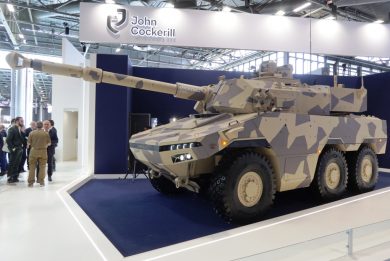
The John Cockerill 1030 turret fitted with a Hornet remote controlled weapon station (RCWS) embodies the convergence of medium‑calibre firepower and lightweight remote weapon technology in a single, highly modular combat system. Based on a 30×173 mm unmanned turret architecture already proven in service, this configuration is aimed at delivering a flexible response to threats ranging from dismounted infantry to UAVs, while preserving the mobility and survivability of the host vehicle
The Cockerill 1030 is a compact, remotely operated turret designed from the outset for 6×6 and 8×8 armoured vehicles, including amphibious platforms where weight and centre of gravity are critical. With a combat mass kept below roughly 1.5 tonnes at STANAG 4569 Level 2 protection and a turret ring diameter of about 1.5 metres, it can be integrated on a wide variety of chassis without excessive impact on internal volume or stability.
Its structure is based on a welded ballistic aluminium shell that can be upgraded by add‑on armour kits up to higher protection levels, allowing forces to tune the protection–mass balance according to mission profiles. The turret follows the same open digital vetronics approach as John Cockerill’s latest families, with fully digital electronics and an architecture that is agnostic to sensors, counter‑UAS modules, active protection systems or acoustic detectors.
At the heart of the system, the Cockerill 1030 mounts a 30×173 mm cannon of the Northrop Grumman Mk44 family, widely fielded across Western armies for its reliability and growth potential. Fed by a dual‑feed mechanism, the weapon can carry up to around 200 ready‑to‑fire rounds, typically mixing armour‑piercing and high‑explosive types and enabling the use of airburst munitions for counter‑drone engagements.
The main gun is complemented by a coaxial 7.62 mm machine gun mounted alongside the cannon to deal with soft targets and conserve 30 mm ammunition. Banks of grenade launchers, generally grouped at the rear of the turret, provide multi‑spectral smoke screening to break enemy visual and infrared line of sight and support rapid repositioning of the vehicle.
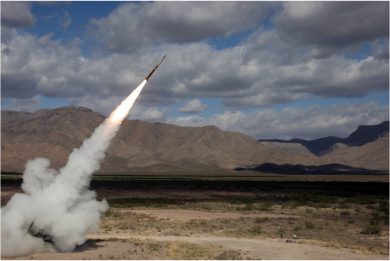
Beyond its gun, the Cockerill 1030 has been conceived as a versatile missile carrier, able to operate a wide spectrum of guided weapons simply by changing the launcher rails and applying minor adaptations to the vehicle’s control interface. In this approach, the turret structure and roof‑mounted hardpoints act as a common missile backbone, while the rails and associated umbilicals are tailored to the specific family of anti‑armour, anti‑structure or even surface‑to‑air missiles selected by the user.
Reconfiguration from one missile type to another is designed to be carried out rapidly at unit level, with armament teams swapping launcher rails and loading the appropriate fire‑control profiles, telemetry parameters and safety interlocks via a software update on the vehicle’s dashboard and fire‑control consoles. This modular concept allows armed forces to adapt the same turreted vehicle fleet to different theatres or rules of engagement, switching from pure direct‑fire support to long‑range anti‑tank or point air‑defence roles without structural modification of the turret.
The Cockerill 1030 is fitted with a dual optronic suite, comprising a gunner’s sight embedded in the turret flank for maximum protection and an independent 360° panoramic sight for the vehicle commander. These multi‑sensor blocks combine day channels, thermal imagers and laser rangefinders to deliver long‑range detection, recognition and identification capabilities, day and night.
One of the defining features of the turret is its generous elevation range, typically from −10° depression up to +70° elevation, significantly exceeding that of earlier 30 mm John Cockerill designs. This wide envelope, coupled with gyrostabilised drives and a fully digital fire‑control system, supports accurate firing on the move and enables engagement of aerial threats such as small UAVs operating above the vehicle or targets on upper floors in complex urban terrain.
Building on extensive test campaigns, the 1030 architecture is optimised for integration of counter‑UAS modules that bridge detection, tracking and kinetic interception. Airburst ammunition, automatic target tracking and, where fitted, artificial‑intelligence‑based target recognition tools enable the turret to engage fast‑moving drones within the effective envelope of the 30 mm cannon.
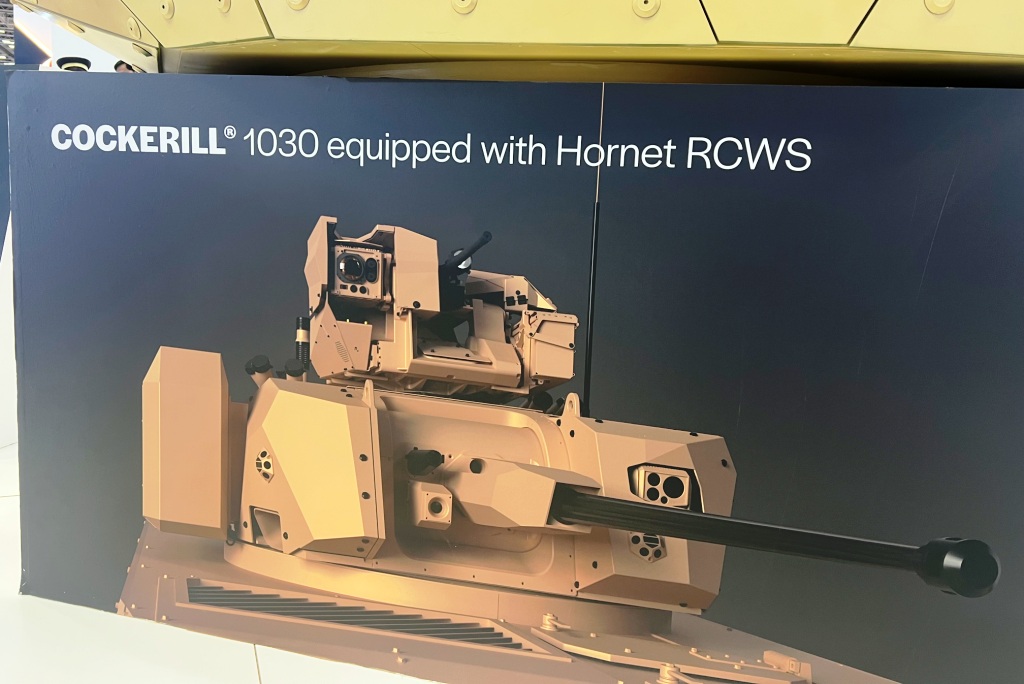
In the configuration highlighted on the DIMDEX poster, the addition of a Hornet RCWS provides a second, lighter remotely controlled layer armed with 7.62 mm or 12.7 mm machine guns and potentially a 40 mm automatic grenade launcher. Mounted over the main turret or offset according to the vehicle layout, the Hornet is fully stabilised on two axes and fitted with its own optronic package and fire‑control algorithms, allowing the commander to prosecute close‑range or time‑sensitive targets independently of the main gun.
Thanks to its relatively low mass, compact ring and fully unmanned configuration, the Cockerill 1030 is particularly well suited to modern 6×6 and 8×8 armoured vehicles, including those with amphibious capabilities and strict axle‑load limits. On such carriers, the combined 1030 plus Hornet fit merges the reach and lethality of a 30 mm turret with the responsiveness and high angle‑of‑fire flexibility of a lightweight RCWS, without imposing prohibitive penalties on stability or payload.
From a doctrinal perspective, this dual‑layer system covers a broad mission spectrum, from mechanised infantry combat and direct‑fire support to close‑in counter‑UAV defence, convoy security and static site protection. The open digital backbone also leaves room for future upgrades such as anti‑tank guided missiles, soft‑ or hard‑kill active protection, acoustic gunshot detection and panoramic 360° situational awareness suites, offering armed forces a clear growth path without redesigning the core turret.
Photo by J. Roukoz