EDEX 2025 – Egyptian chassis + Chinese weapon system = Raad 300
At EDEX 2023 the Egyptian National Organisation for Military Production (NOMP), which is now known as National Authority for Military Production (NAMP), unveiled the Raad 200, wholly made in Egypt, based on the chassis of the Sena 200 infantry fighting vehicle. Two years later a new multiple rocket launcher is unveiled, the Raad 300, which is based on a chassis designed and produced in Egypt, and on a multiple rocket launcher system coming from China, the SR5
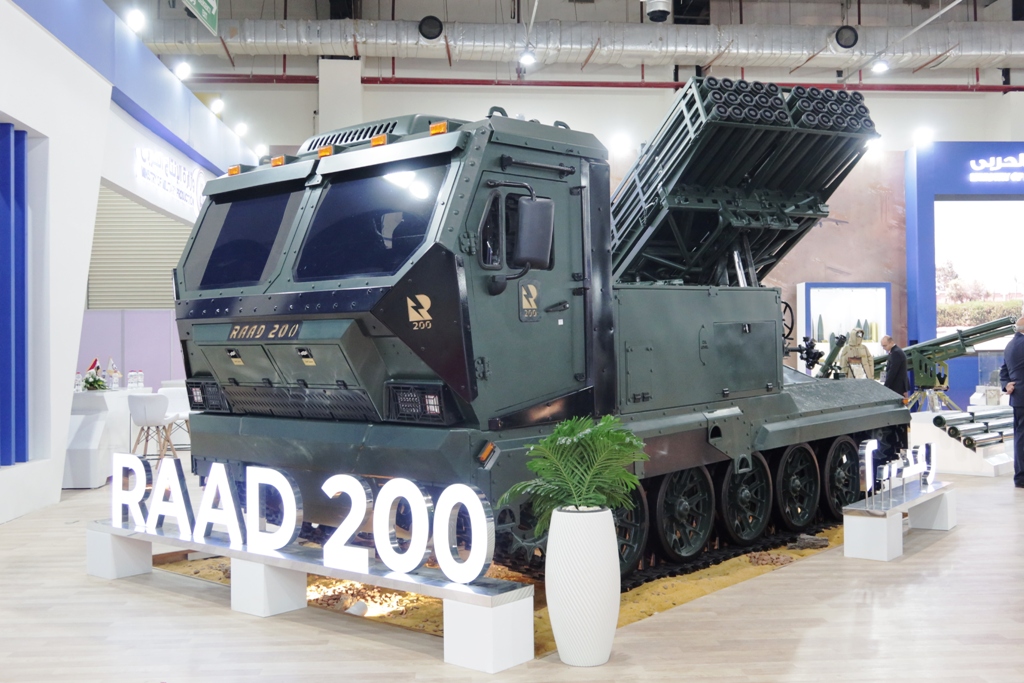
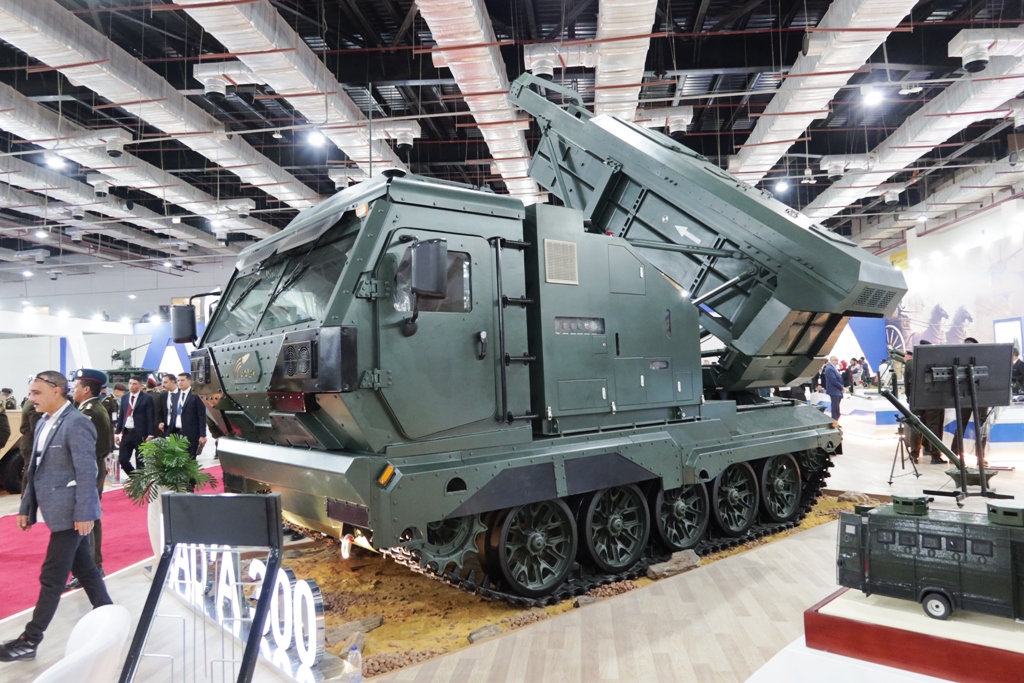
The NAMP stand was guarded on the left by the Raad 200 and on the right by the Raad 300, which could not be missed considering its dimensions. According to company representatives, the tracked chassis is a new design, although it presents many similarities with that of the Raad 200. The engine output is 385 hp, and is the same HD12ZLG-M 6-cylinder in line turbocharged diesel engine produced in China that powers the Raad 200 as well as the Sena 200 family of tracked vehicles, the last member, the recovery vehicle, being also exhibited at the Cairo event.
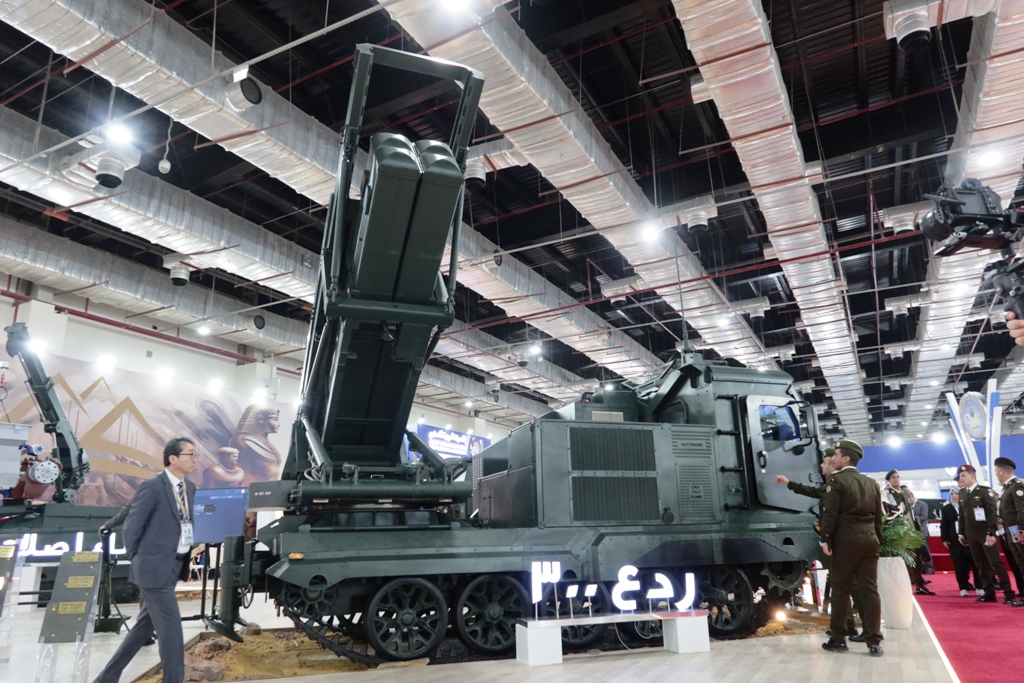
Also other automotive elements seems to be maintained, as the suspensions are based on 10 torsion bars with four shock absorbers, the chassis being fitted with steel tracks with tension adjustment mechanism, the same data of the previous chassis. The cabin is also very similar, can be tilted with the assistance of an hydraulic system, and hosts the crew that operates under armour during the entire firing mission. What is definitely different is the layout of the upper part of the system, the heavier launcher and missiles requiring more powerful electric and hydraulic ancillaries.
The system has a mass of 20 tonnes, which gives a power-to-mass ratio of over 19 hp/t. The Raad 300 is 7 metres long, 2.85 metres wide and 4.5 metres tall, can reach a maximum speed of 40 km/h, climb a 60% vertical slope, deal with a 30% side slope and ford a water obstacle 0.7 metres deep, its range being 450 km.
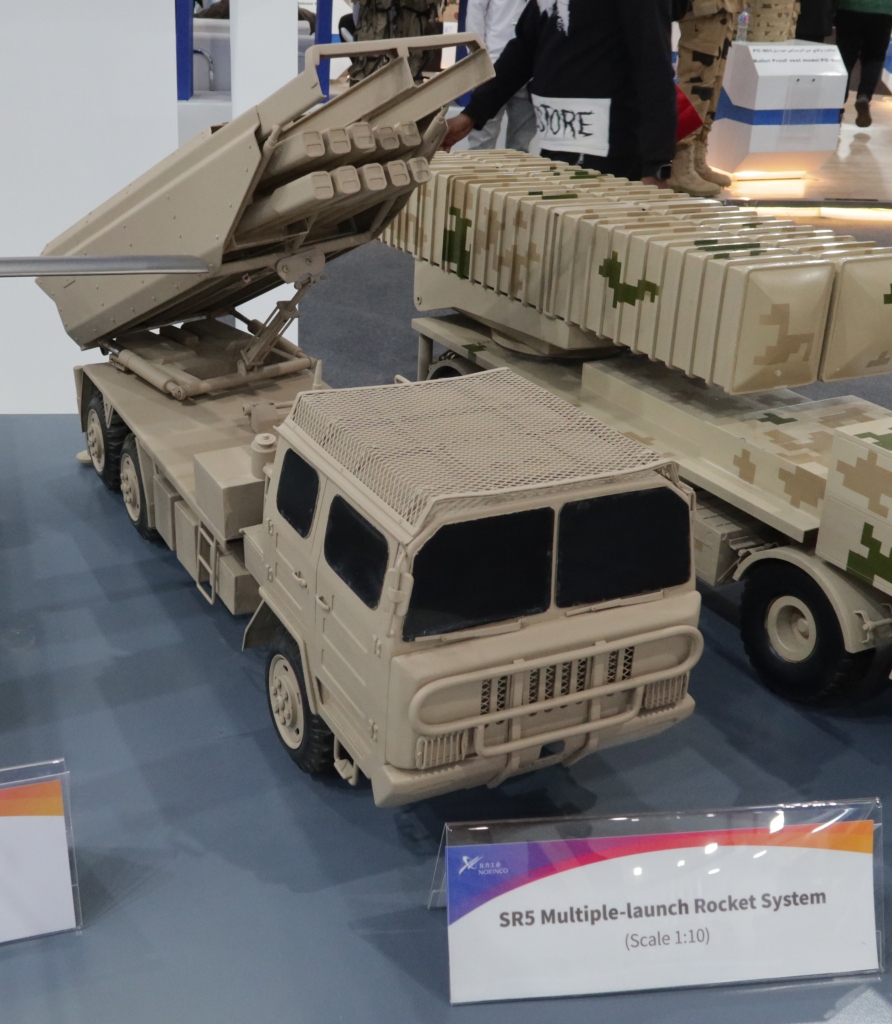
The SR5 multiple rocket launcher system, produced by Norinco of China, carries a single missile module which can host 20 122 mm rockets, six 220 mm rockets, four 300 mm rockets or a single 610 mm rocket, all guided. The 122 mm has a mass of 78 kg, 18 kg being the warhead, and a range of 20-45 km; the 200 mm mass is 300 kg, 70 kg being the warhead, with a range of 25-70 km; the 300 mm rocket mass is 400 kg, with a 100 kg warhead and a 30-15 km range; and finally the 610 mm rocket has a mass of 1,500 kg, with a 200 kg warhead and a 100-290 km range. This will give an increased flexibility to the Egyptian Army artillery, as even within the same battery different launchers will be able to use different rockets, allowing to answer fire missions at different ranges with different effects.
Not only, while China’s SR5 MLRS is based on a wheeled chassis, the choice of using a tracked platform will certainly increase cross-country mobility, at the cost of a reduced speed on road. The prototype seen at EDEX was fitted with a four 300 mm missiles module.
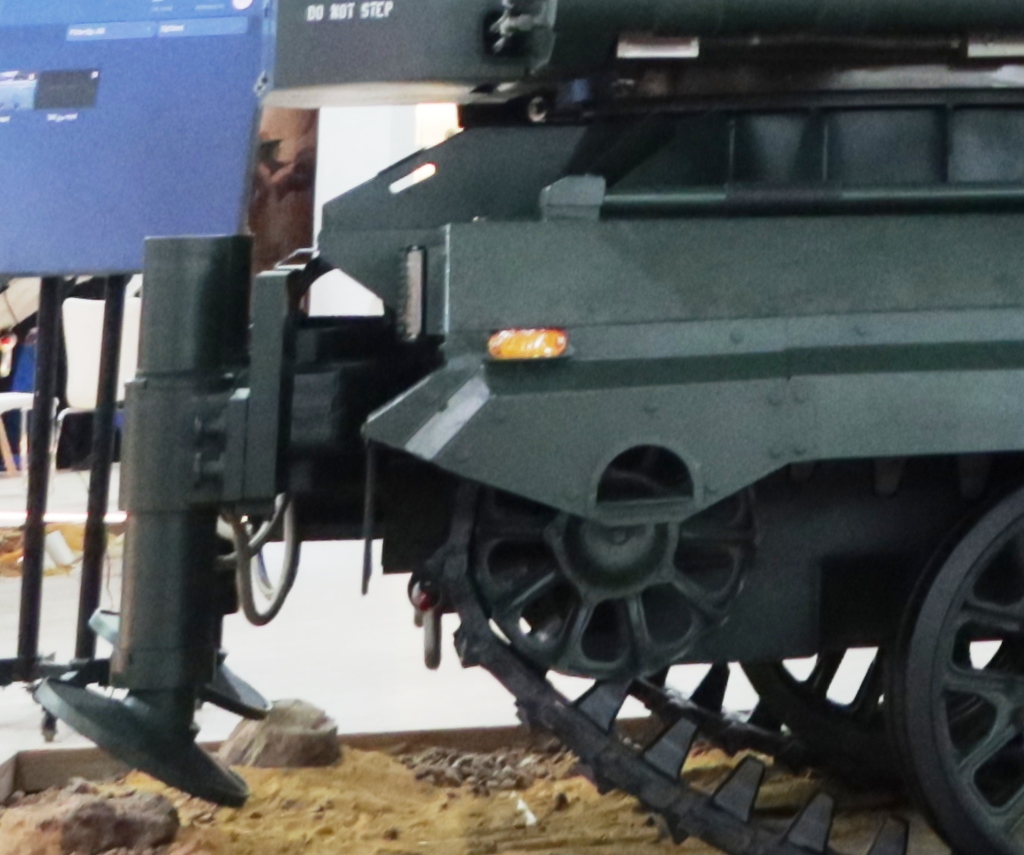
The launcher movements are controlled by hydraulic motors, aiming being fully automatic and requiring 30 to 35 seconds since the vehicle is stopped, two hydraulic jacks being lowered at the rear before firing. Maximum elevation is 60°; as for azimuth, the two smaller calibre rockets can be fired in a ± 70° arc, while the two bigger calibre munitions can be fired in a ± 15° arc. Rates of fire are respectively 10, 25 and 15 seconds for the multiple barrel modules.
The vehicle exhibited at EDEX was the Raad 300 prototype, which according to company representatives has already undergone firing trials and was approved by Army officials, NAMP being now in negotiations with Defence authorities to reach contract signature.
Photos by P. Valpolini