
EFES-2026, Turkey shows its will to be a key player leveraging its military power, its diplomatic skills, and its rising defence industry
With the biggest non-US military force since its accession to NATO in 1952, next year will mark the 75th anniversary of its participation to the Atlantic Alliance, in the 2026 edition of the EFES exercise, the most important training event organised every two years, Turkey has shown how much its diplomacy created strong ties with several nations, which joined Ankara’s NATO partners in the exercise. On the other hand, defence industry was at the forefront of the event, with an exhibition area but, even more importantly, with its weapon systems and platforms operating in front of VIPs from all the participating nations, showing in real their performances, something impossible to be seen on a static display
The exercise taking the name from the ancient city of Ephesus, which archeologic site stands not far from the range area.
Describing an exercise that spans on over one month and has three distinct phases is not easy task. Planning, training, and demonstrating, these were the three moments that saw over 10,000 military, including some 1,300 personnel from 50 different participating nations, operating in the Aegean.
Efes-2026 highlighted the constant modernisation process of the Türk Silahlı Kuvvetleri (TSK), the Turkish armed forces, on land, in the air and at sea, as several systems that entered service in recent years were used for the first time in what is considered the main exercise, which is run every two years with the demonstration phase taking place in the Gulf of İzmir and the Doğanbey live-fire training area.
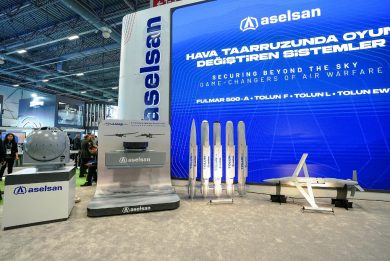
EFES-2026 is however not only a military exercise: it clearly shows the close connection between the military and the defence industry, an exhibition area hosting 55 Turkish companies showcasing the newest products of the public and private companies, some of them also unveiling new systems 10 days only after the end of SAHA Expo, the defence exhibition that took place in Istanbul May 5-9.
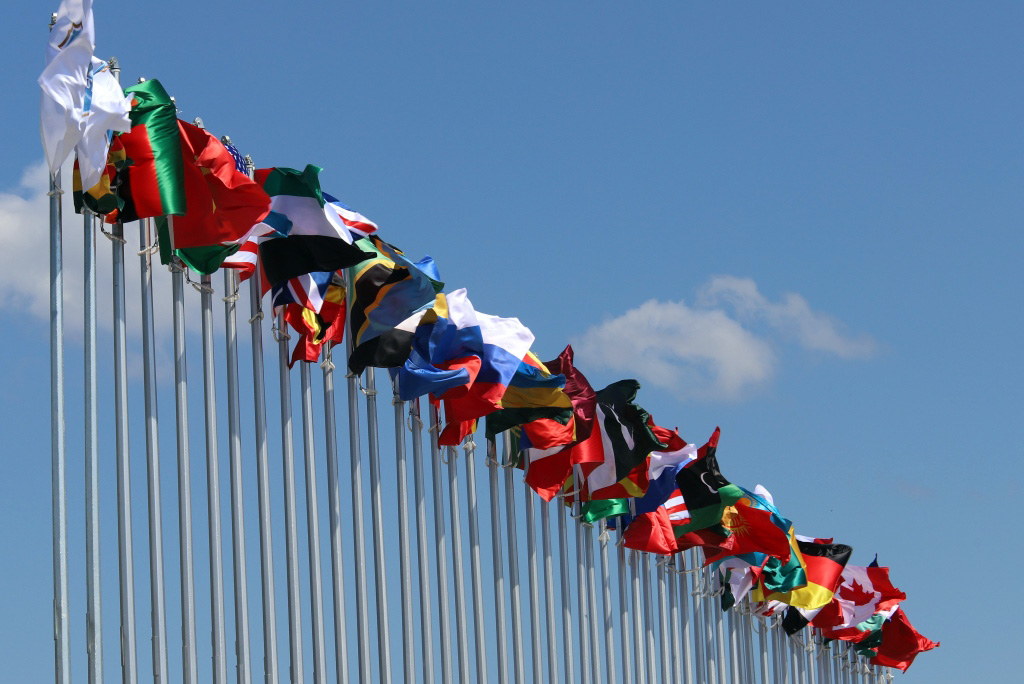
It was also an act of military diplomacy, made visible by the flags of 50 nations fluttering in the Aegean wind; apart from the obvious presence of many NATO partners, the 2026 edition of EFES saw the presence of South Mediterranean regional actors such as Syria, a first, and Libya, with nations as far as Vietnam, Mongolia, Bangladesh, and Brazil, among the many. In a moment of great international tension seeing the flags of one fourth of the nations represented at the United Nations is definitely an encouraging sign.

click on image to enlarge
Not much was said about the first phase of EFES-2026, the Command Post Exercise – Computer Assisted Exercise (CPX/CAX), which details remain obviously classified. The exercise was conducted by the Aegean Army, headquartered in Izmir, but it was played at joint level, as it included several Air Force and Navy units, which were seen operating on the firing range in the two days live firing exercise. Tasked to protect the western coast of Turkey, the Aegean Army main formations are two mechanised infantry divisions and one armoured brigade. In İzmir we also find the Turkish Navy Southern Sea Area Command HQ, which has under its orders the Amphibious Task Group Command, which includes the Amphibious Marine Brigade Command and the Amphibious Ships Command, both being among the main actors during the active phase of EFES-2026.
The CPX/CAX was played in a multi-domain environment, artificial intelligence (AI) based systems being used in the military decision-making process (MDMP) to compare courses of action through the Joint Theatre Level Simulation-Global Operation. The outputs of the AI-based system permitted to simulate several solutions, compare the different courses of action in a short time, and allowed commanders to take decisions, shortening the decision cycle. Compared to previous exercises of the same series, the 2026 edition saw the MDMP conducted on two weeks rather than one, which means that command and control issues should have been played more extensively. According to the documents available the purpose of EFES 2026 was:
- To improve the planning and execution principles of logistic support for combined and joint operations;
- To train personnel in the planning, coordination and execution of combined and joint operations and to enhance interoperability;
- To test and improve the command-and-control procedures, electronic tactics and techniques and airspace control and management procedures of combined and joint operations and to ensure the effective employment of Tactical Data Link systems;
- To test the tactics, techniques and procedures for the joint employment of weapon systems and equipment in the inventories of the Land, Naval and Air Forces of the participating nations;
- To enhance cyber defence awareness, test cyber incident response procedures, and foster a common understanding of cyber security;
- To improve the ability of participating units to counter asymmetric threats and conduct hybrid operations in a joint operational environment;
- To enhance cooperation and coordination with public institutions/agencies and non-governmental organizations.

click on image to enlarge
The field training phase saw Turkish and international personnel taking part in 28 different training subjects, allowing an exchange of knowledge and experience in several specific skills.
As anticipated, EFES-2026 highlighted the close links between the Turkish military and the national defence industry, specific articles on new items seen at the exhibition located not far from the main observation point, which on the last day hosted President Recep Tayyip Erdoğan, being available in this site.
EFES-2026 also hosted the Defence Science and Technology Project Competition, a challenge based on a protocol signed with the Dokuz Eylül University, a public research university based in İzmir; the competition saw the participation of 69 universities which submitted 292 applications.
The live fire exercise saw the participation of Army, Navy and Air Force units. Several weapon systems were employed for the first time in an EFES-series exercise, all of them being in service with the TSK.

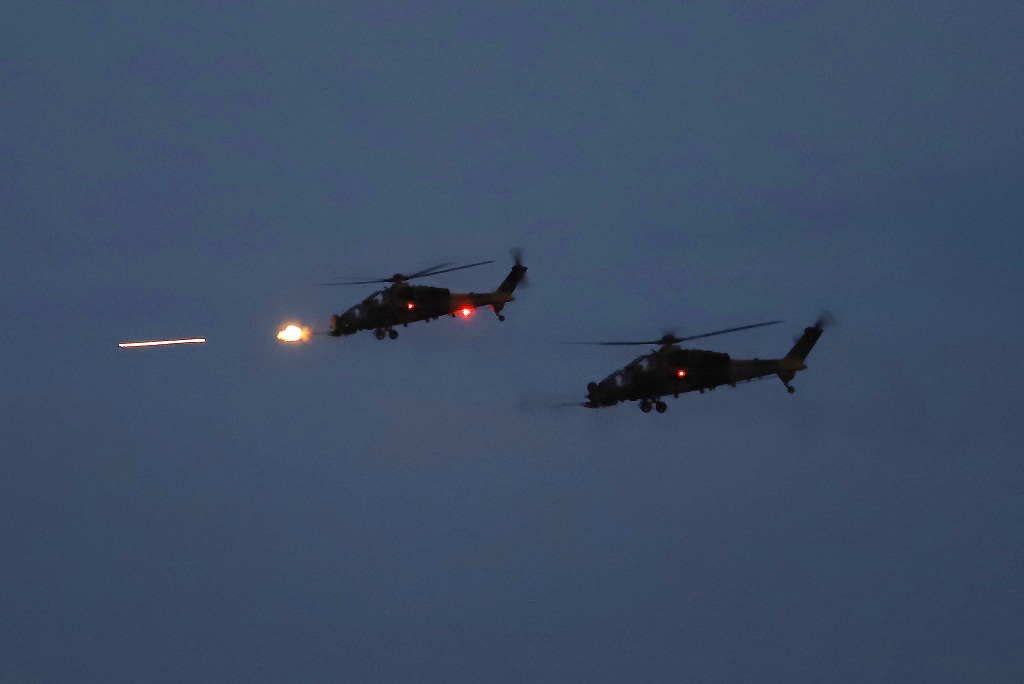
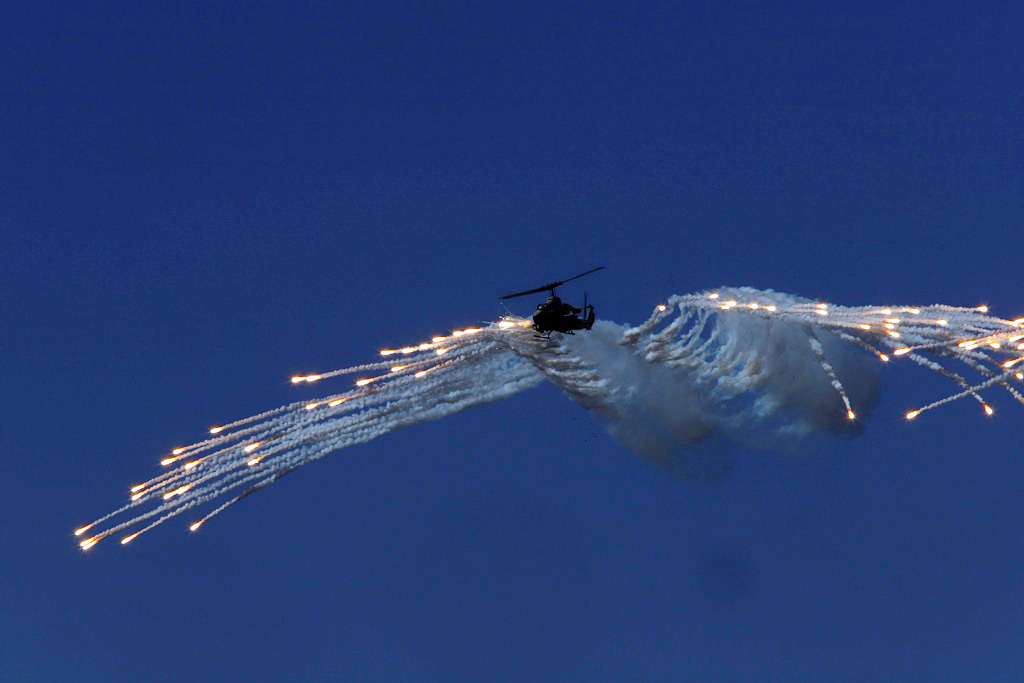
The most visible one, all its elements being on active display in front of the main stand, was the Çelik Kubbe, the Steel Dome, under spiral development by Aselsan, which Gökberk directed energy weapon, İhtar UAV jamming system and Korkut twin-35 mm GBAD system were used, the string of 35 tracer rounds fired by the latter in the C-UAS role being well visible in the
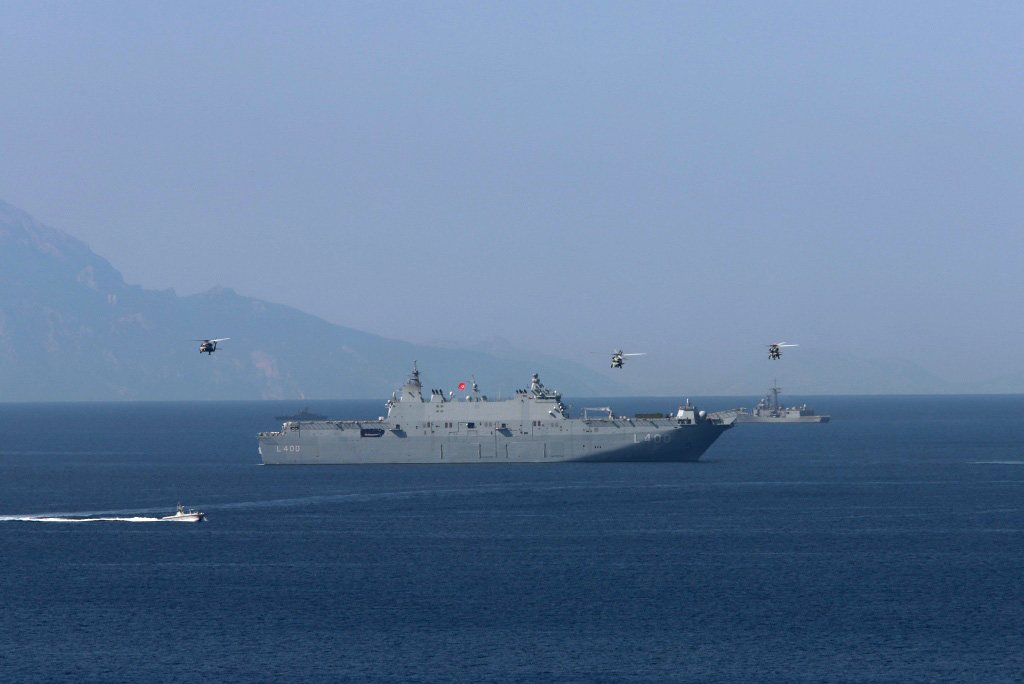
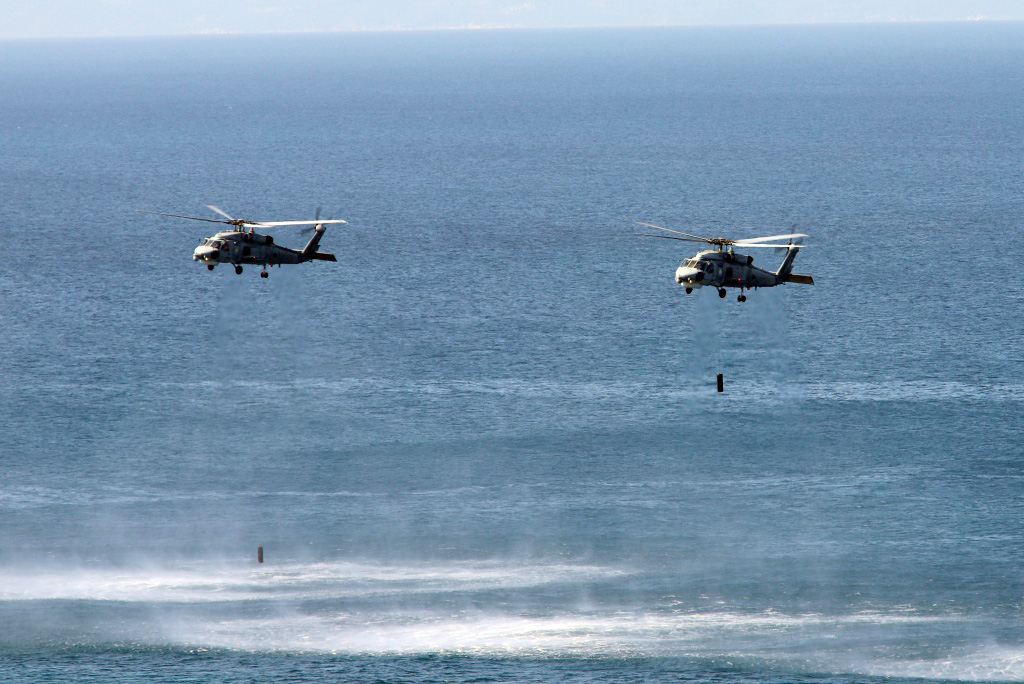
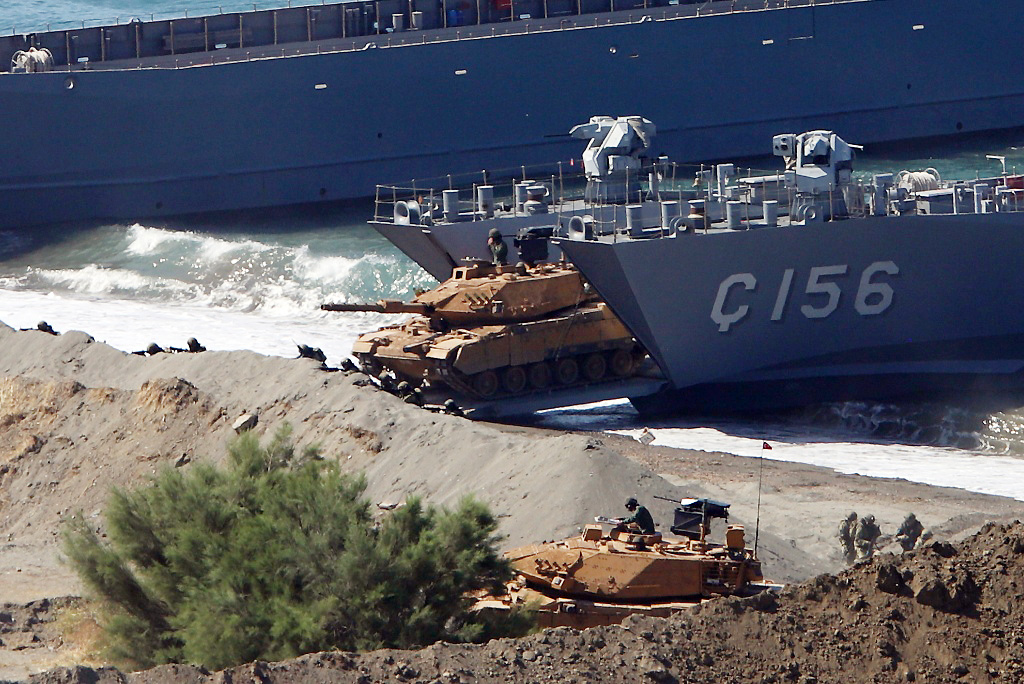
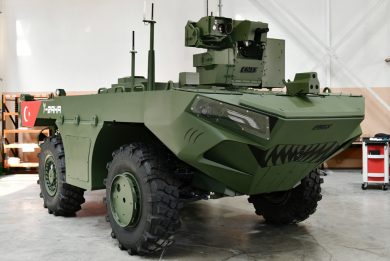
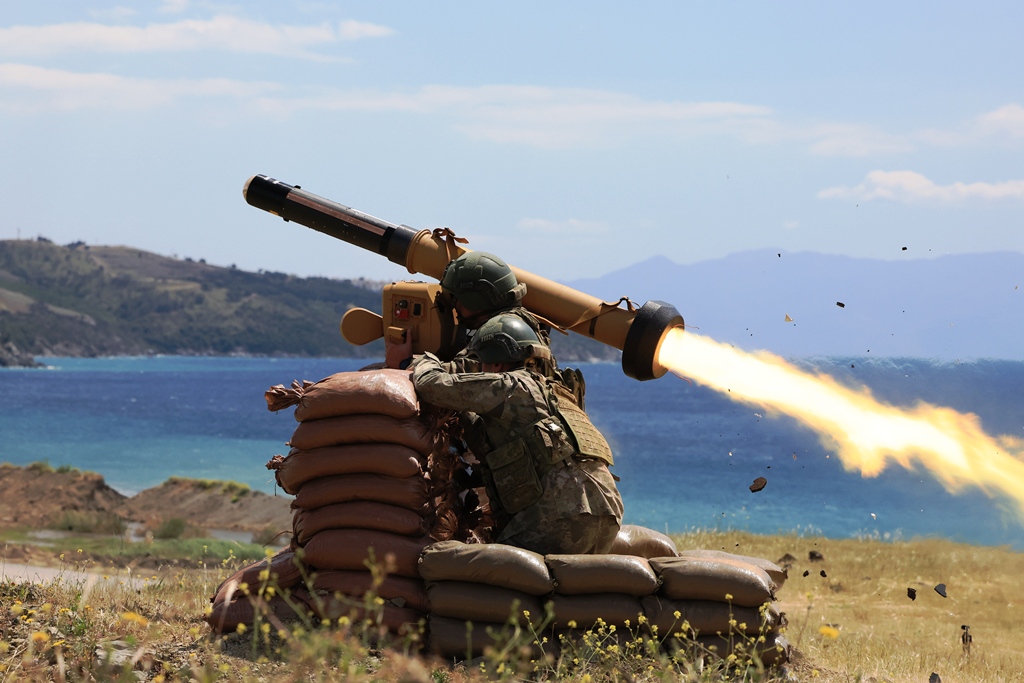
Night. Many other systems made their first at EFES-2026; among them the 105 mm Boran light howitzer by MKE deployed under an Army Blackhawk, the MEMATT (Mekanik Mayın Temizleme Teçhizatının) mechanical mine clearing system by ASFAT, the Aslan UGV fitted with the Sarp RCWS, both by Aselsan, the Karaok and UMTAS/L-UMTAS antitank missiles by Roketsan, two other systems by the Turkish missile company, the Teber and the MAM-T munitions being dropped by UAVs, such as Bayraktar Akinci UCAV, also for the first time on EFES as well as the TB-3, which took off from TCG Anadolu that was sailing at short distance from the range. On the naval side other boats participating for the first time in EFES were the 17-persion RHIB Karayel by Izmir-based Northstar and the two new landing craft tank Ç-159 and Ç-159 by Anadolu Shipyard, capable to carry three MBTs each.

click on image to enlarge
In the air first participation for the Gökbey light utility helicopter by Turkish Aerospace Industries, and for Kargu loitering munitions by STM, which neutralised an enemy communications and electronic warfare centre at the very beginning of the action. Newly deployed Counter-IED systems were the Yener 100-G by Aselsan, installed on an Otokar Arma 8×8 platform, and the Ejderha high power microwave system, also by Aselsan, integrated on an Otokar Arma 6×6. Remaining in the EW domain, the Aselsan’s Milkar-A high frequency communications jamming system was also deployed. The EFES-2026 exercise marked also the first appearance in this scenario for several network-enabled capability systems: among them the KKBS (Komuta Kontrol Bilgi Sistemi) command and control information system, the Kocatepe battlefield management system and the Aselsan Cenker soldier system by Aselsan, and the vehicles part of the ÖMTTZA (Özel Maksatli Taktik Tekerlekli Zirhli Arac, special purpose tactical wheeled armoured vehicles) programme, based on the FNSS PARS IZCI family, the 8×8 sensor reconnaissance vehicles being fitted with Aselsan’s Dragoneye 2 optronic sensor suite.
click on image to enlarge
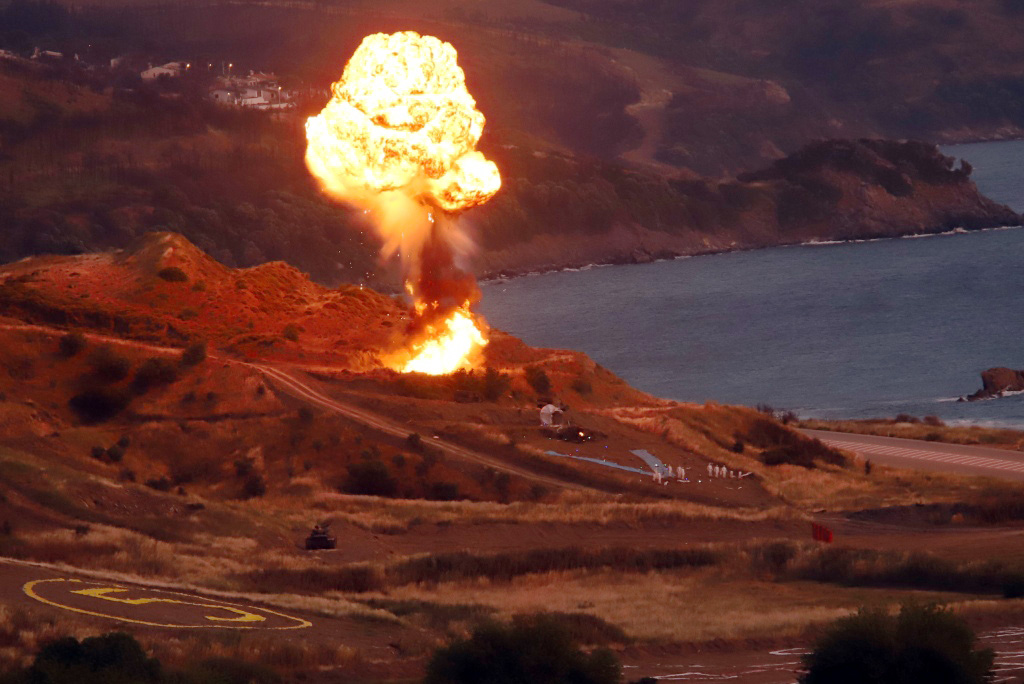
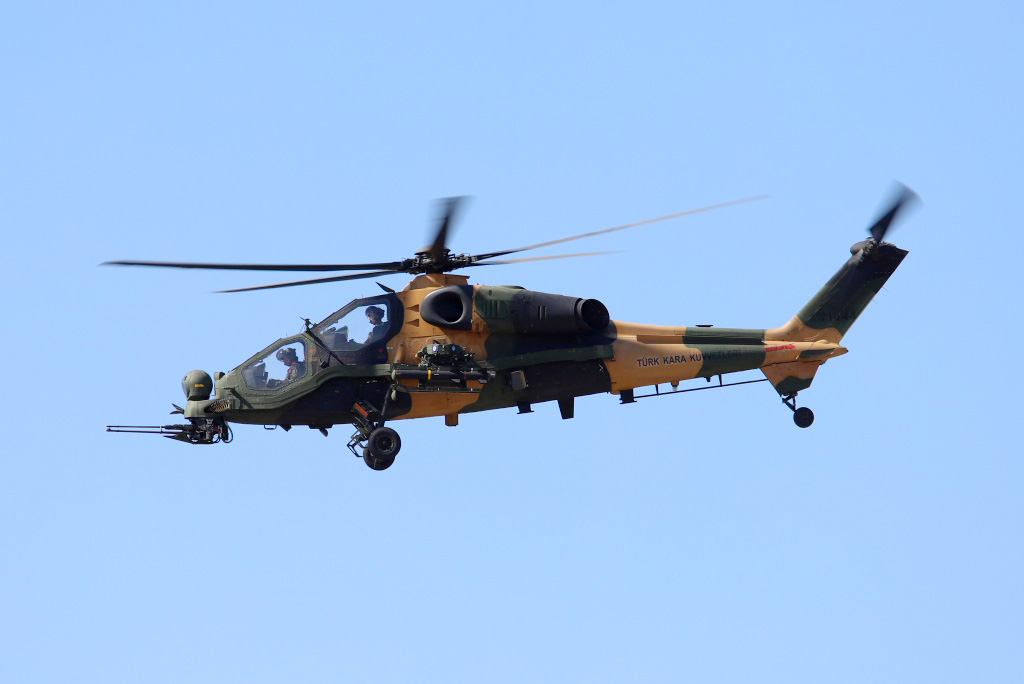
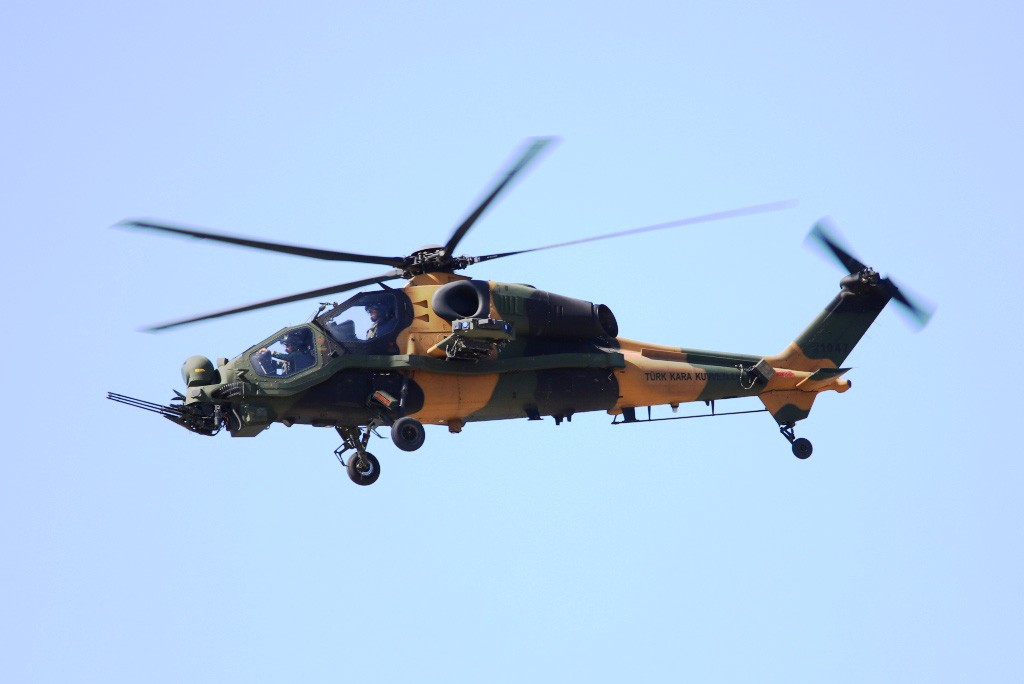
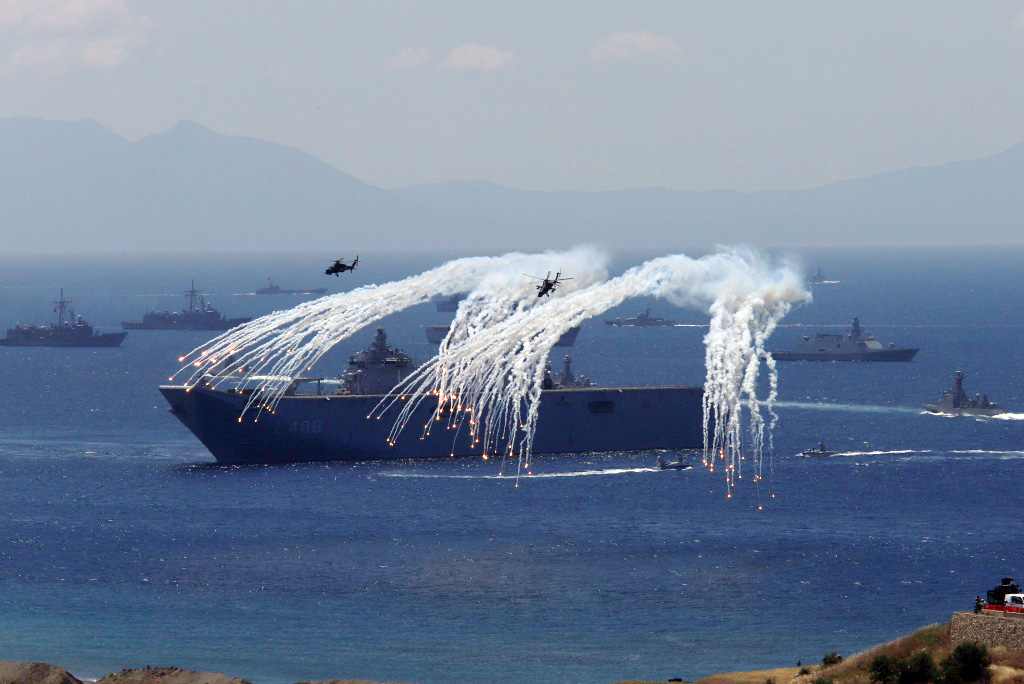
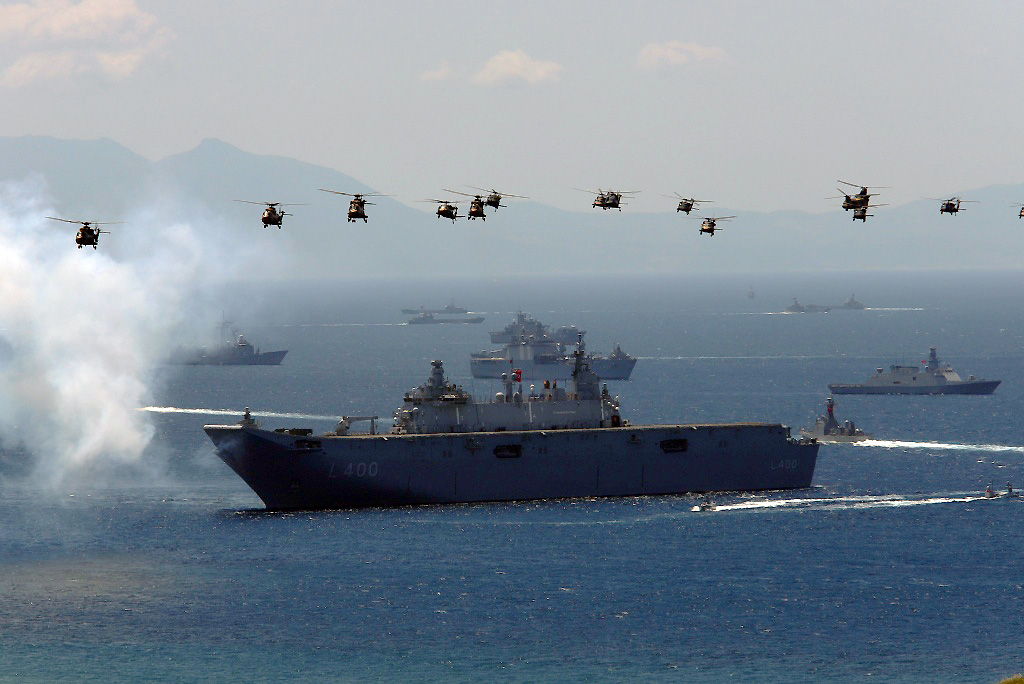
The demonstration started in the evening of Wednesday 20th May, special and amphibious forces taking the beach while helicopters conducted air assault operations in depth. Artillery and helicopters were busy in suppressing enemy defences, OMTAS medium-range antitank missiles by Roketsan neutralising some armoured threats. Artillery continued pounding targets with 155 mm HE rounds, courtesy MKE, 120 mm mortars joining fires, while Air Force F-16s dropped guided bombs on the most critical targets. Following a beach reconnaissance, and an amphibious deception operation, exploiting the dark night the first wave of the amphibious force reached the coastline, while the flight of at least 20 helicopters, including T129 Atak, Blackhawks, Super Pumas and CH-47 marked carried the second wave of the air assault. An attempt of air attack by the enemy was neutralised by air defence systems, namely the Korkut.

click on image to enlarge
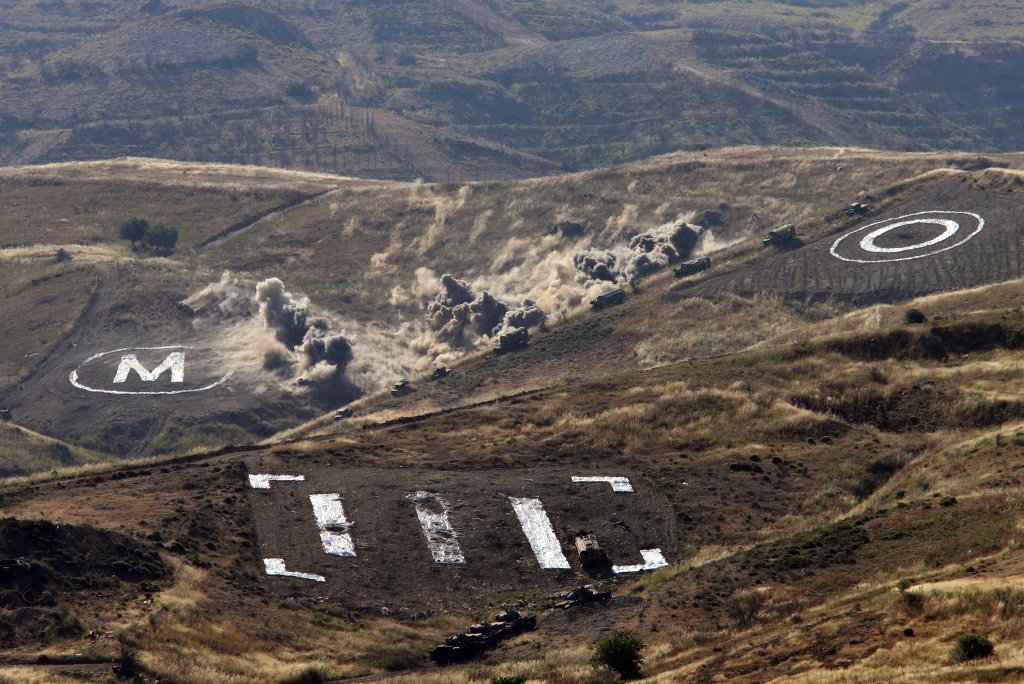
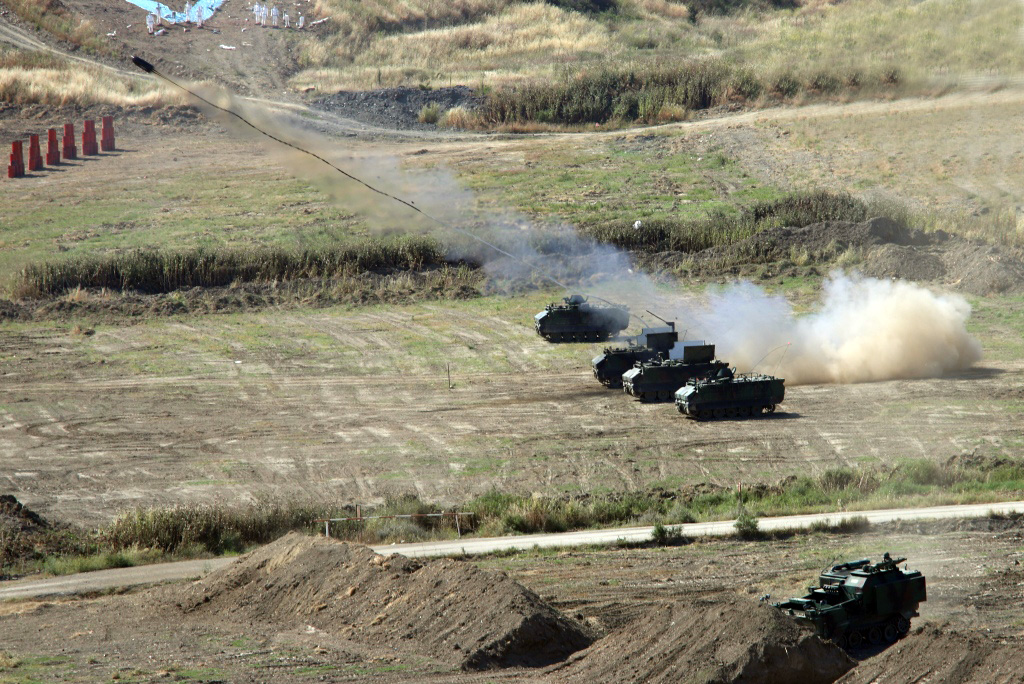
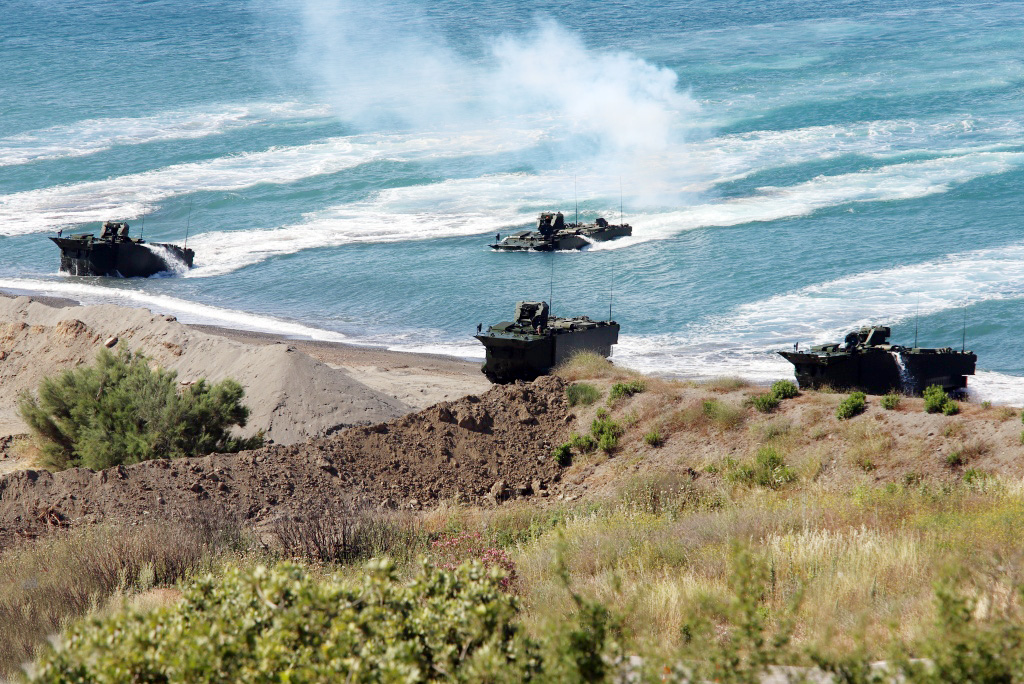
The take-off from the Anadolu flight deck of the TB-3 UCAV marked the beginning of daylight operations on Day 2. The first artilleries to open fire were the naval ones, supporting the prosecution of the amphibious operation, while a third wave of air assault joined the landing zone established during the night. At sea submarines and mines posed a threat; to allow guests to see the action this took place very close to the shore, while in real most ship would be far from the coast. The second wave of the amphibious operation landed, first with FNSS’ Zaha amphibious tracked vehicles, then with LCVPs and LCTs, engineers clearing the path through a minefield using MKE’s Alpay rocket-propelled line charge system. LCTs landed two M60Ts each, enemy in depth being taken apart by attack helicopters, Navy AH-1W Super Cobra joining their Army colleagues, while the third wave of the amphibious assault reached the beach.
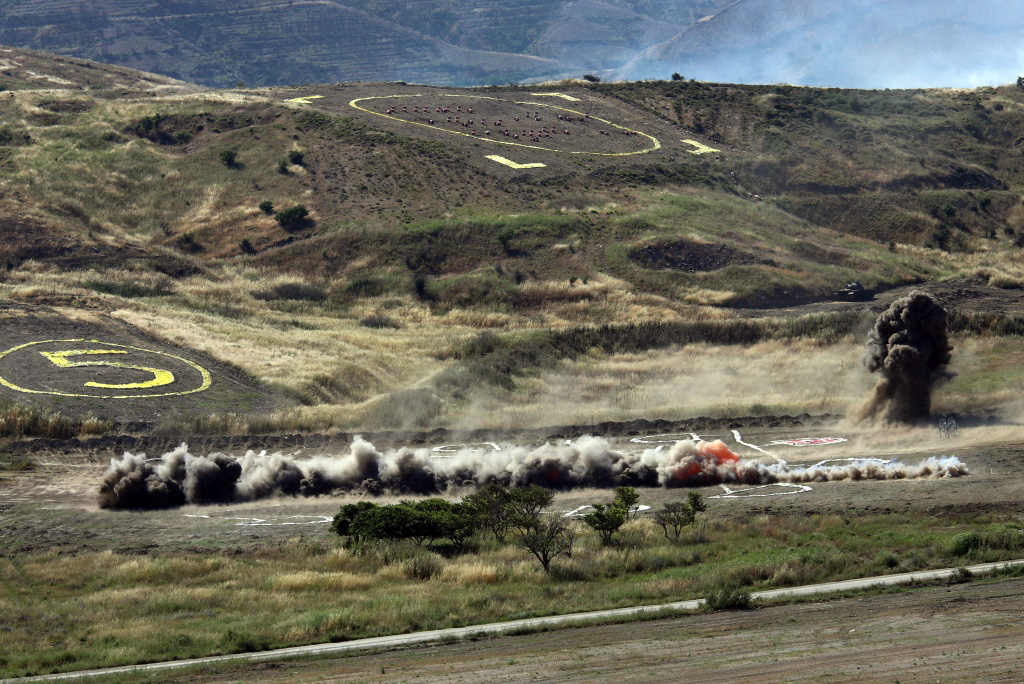
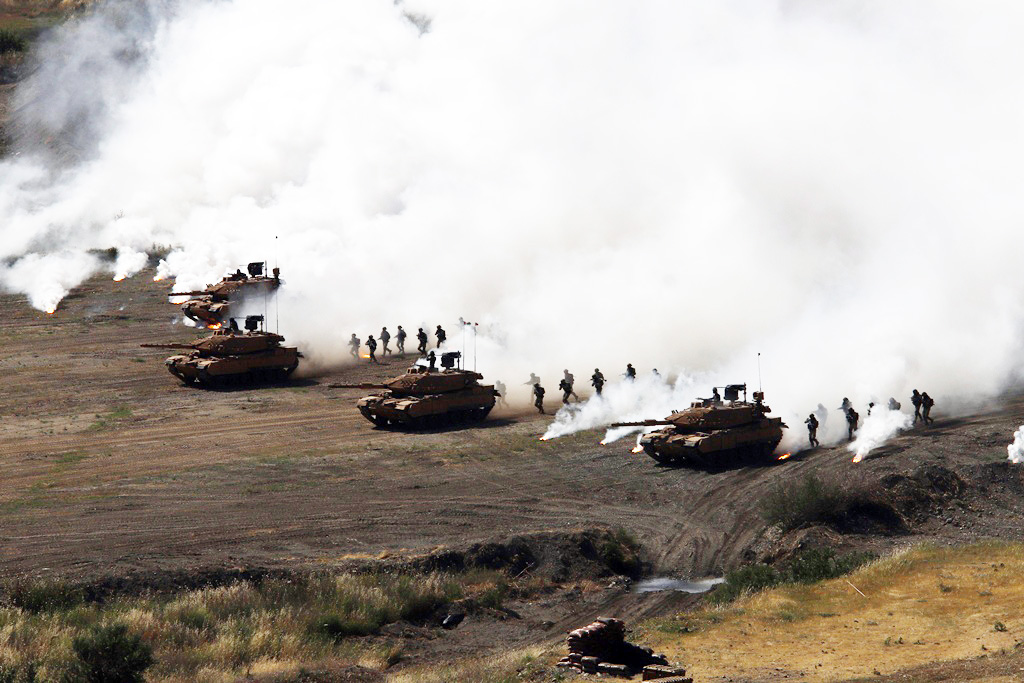
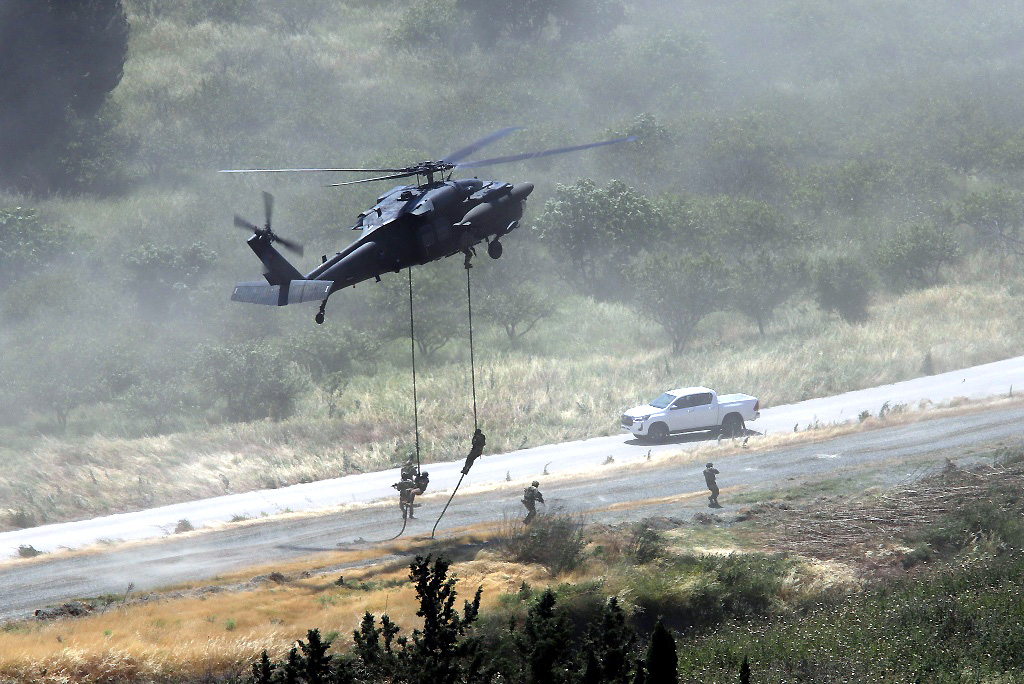
Following the arrival of President Erdogan, the third phase of the live firing exercise started. Well established ashore amphibious units manoeuvred supported by the fire coming from the air and from land, F-16s showing up to ensure close air support. Air Force Blackhawks established an airmobile checkpoint with infantry rappelling from the choppers to block two vehicles carrying a high value target, while snipers neutralised sensitive targets. A Bayraktar Akinci CUAV neutralised targets with its missiles, followed by the TB-3. Engineers neutralised some IEDs, and finally the 4th wave of the airmobile operation marked the end of EFES-2026.

The very final phase was all in the sky, staring with the demo flight by the Hürkuş training aircraft by TAI, followed by the NF-5 of the Turkish Stars, and finally by free fall paratroopers carrying the flags of the 50 participating nations, the last flag being the one with the EFES-2026 colours.
Overall EFES-2026 demonstrated the will of Turkey to play a key role in the balance of forces in its region and not only, adding to the military power the strength of diplomacy, highlighted by the 50 flags present in the various key points of the range, and by the strength of its defense industry, for which the exercise was an important showcase to demonstrate the effectiveness of its products live, and not in the aisles of a trade fair. “We are strong, we are brave, we are ready” was the motto visible on a hill in the range, under an enormous Turkish flag.
Herafter a selection of pictures taken during EFES-2026. All photos by P. Valpolini when no other copyright is mentioned