Eurosatory 2026 – IDV presents third generation engines for armoured vehicles
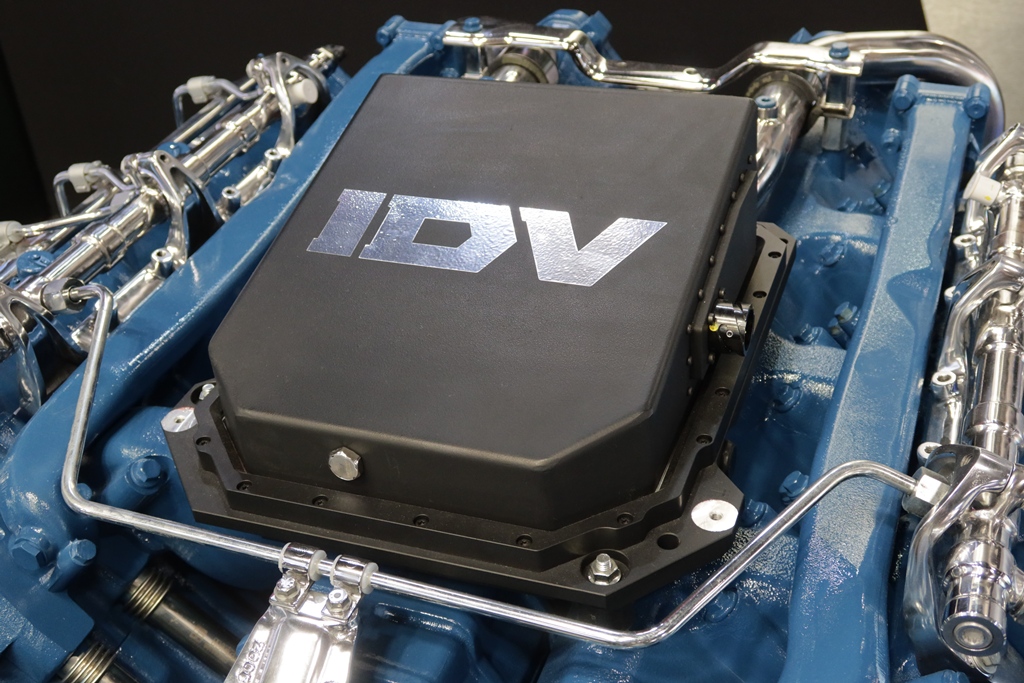
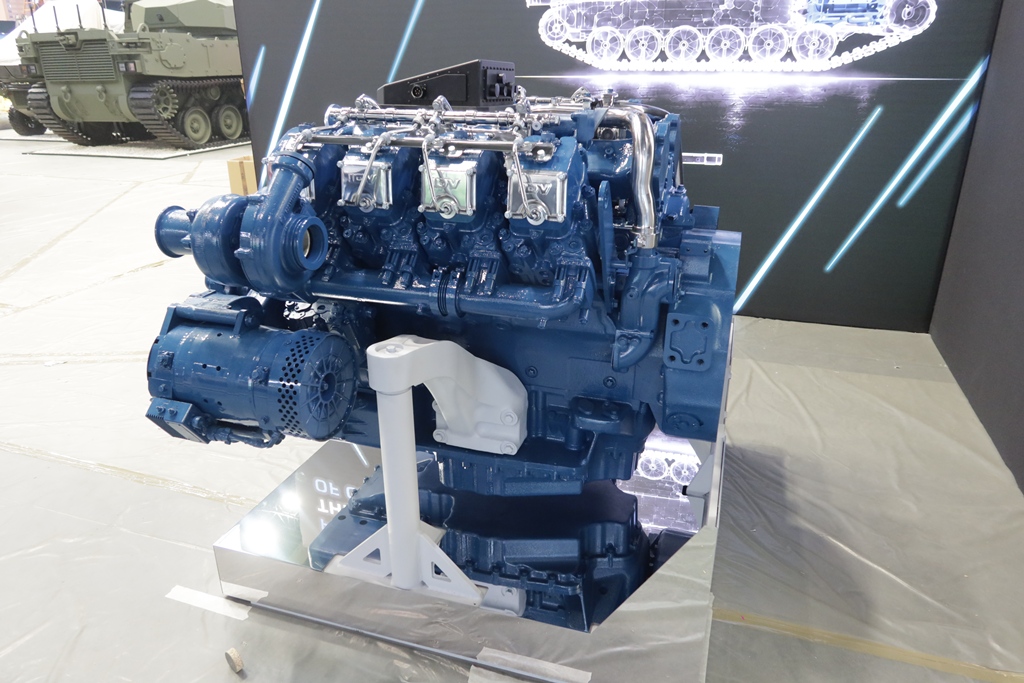
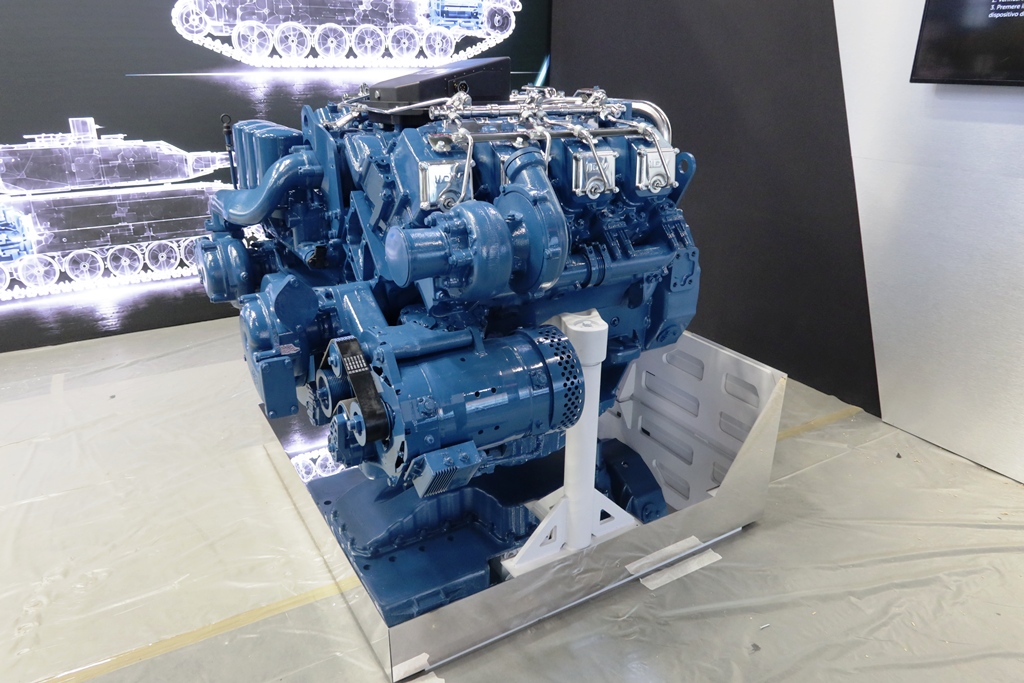
At Eurosatory, at the IDV stand, now a Leonardo company, two new engines were on display; these were the new i engines which represent the third generation of engines intended for heavy military vehicles, under development at the Bolzano-based company
With major programmes for the Italian Army ahead, IDV, now a Leonardo company, started working some years ago on a third-generation family of engines to answer the requirements of new armoured vehicles and maintain in-house a know how which is considered key for a major vehicles OEM.
Maintaining engines IP in house, aiming at short-term Italian Army contracts
The completion of the acquisition of the Iveco Group by Tata Motors is expected to be completed by Q3/2026, as already communicated by the two companies. However, as most know, this does not include IDV, the military branch of the group, which has been acquired by Leonardo. Doubts existed on the propulsion issue; in fact, the Bolzano-based company maintains the engine business related to heavy armoured vehicles, while an agreement with Iveco on engines powering light armoured vehicles and trucks was inked, making Iveco a strategic supplier.

“Since the times of Iveco Defence Vehicles, and now IDV we have considered propulsion key to our business, and a specific engineering department has been dedicated to combat vehicles engines development,” Nazario Bianchini, head of sales at IDV, told EDR On-Line. “We aim at equipping the next generation of Italian Army heavy armour, the IMBT (Italian Main Battle Tank) and the A2CS (Army Armoured Combat Systems) platform with our engines, and we have the ambition to equip the European MBT with our more powerful engine, a V12 providing up to 1,800 hp, and with the V8 which reaches 1,100 hp,” he added.
The V12 and V8 engines are designed to be completely Form, Fit and Function with the engine compartments and the electrical, electronic and mechanical interfaces of the IMBT and A2CS platforms. Of course, the tenders will see other tough European competitors aiming at obtaining those lucrative contracts, but now a new colour will add to those marking the various brands: typically, Cummins engines are red, Scania orange, MTU silver, and now the new series of IDV engines adopted the Blue Octane as its distinctive colour.
Developing the new family of engines IDV closely considered the supply chain, the result being that over 90% of the engine value will be “Made in Italy”, the company considering this an important asset in the bid for the two main Italian Army programmes, contract signature being still pending. Considering the whole powerpack, IDV has an agreement with Renk, however for the export market the configuration might change as IDV engines can be integrated with any transmission that is optimal for the specific vehicle project. The third element of the powertrain is the cooling system; it is co-designed with a supplier specialized in cooling system technology based on the IDV’s technical requirements.
With the three engines, V12, V8 and V6 in an advanced stage of development, IDV is already looking forward, and is evaluating the development of a new, more performing engine to equip the LMV2, overcoming the output of the IVECO F1C currently in use.

To allow developing engines that can provide up to 1,800 hp of power, IDV invested in testing facilities that could respond to the needs. At Bolzano a new engine test room was recently built to allow testing the engines and transmissions under realistic loads, up to the maximum output of the V12, which makes it one of the very few such facilities available in Europe.
The IDV engine business is split in two locations, all in northern Italy: Turin, within the IDV Engineering Centre, the town being historically the heart of the Italian automotive sector, Bolzano, where the engines are assembled and tested.
From Gen 1 to Gen 3 IDV engines
The engines of the Ariete MBT, the Centauro armoured car and the Dardo IFV, which programmes were launched in the early 1980s, were also designed in-house; all these the first-generation engines featured a V-90° architecture, were fitted with mechanical injection, and were providing around 35 hp/l (26 kW/l). In 2015 then Iveco Defence Vehicles started developing the second-generation, which maintained the V-90° these engines featuring a Common Rail injection.
The first one was the V8, which is equipping the Centauro II and provides 720 hp. The V12 second-generation engine was developed for the upgraded Ariete MBT, also known as Ariete C2. Here the Common Rail injection pressure is increased at 2,000-bar, and it adopts steel pistons and Westgate valve-controlled turbochargers, with a 1,500 hp output. The last of the Gen2 series to be developed was the 15-litre V6, which is installed on the VBM 30 NG, the New Generation VBM for the Italian Army, and has a 720 hp output. The V6 production will start in early 2027. It will also equip the VBM 155 howitzer, the output being increased to 750 hp to cope with the higher gross vehicle mass, this increase being obtained by optimising calibration. These Gen2 IDV engines provide around 40-50 hp/l (30-37 kW/l).
Looking at future programmes, such as the aforementioned IMBT and A2CS, IDV decided a few years ago to launch a third-generation family, two of them, the V12 and V18, being exhibited at Eurosatory 2026. These are designed around a cylinder unit, with a 145 mm bore and a 152 mm stroke, which means a 2.5 litres displacement. The V-90° configuration remains, but the specific power output is increased to 65 hp/litre. “To achieve this result, all the engine components and sub systems have been reengineered by the means of complete fluidic, fluid dynamic and thermostructural virtual analysis. Everything was recalculated and redesigned to ensure this performance was achieved,” Silvio Canale, Head of Propulsion Engineering at IDV, a whole life dedicated to engines, told EDR On-Line.

To obtain those results the structural strength of the engine had to be reconsidered to cope with the 65 hp/litre maximum power density, all key elements such as crankcases and heads, crankshafts and camshafts were redesigned, and new high-strength steel pistons were adopted; for the first time an electronically controlled variable-geometry turbocharger was adopted, as well as a 2,500-bar electronic injection system. “This new engine family will have a proprietary IDV engine electronic control system for military applications, developed and supplied by an Italian company under IDV’s intellectual property rights,” Canale said, explaining that this approach grants the perfect integration of IDV knowhow for the military engines control and the future stability of the supply chain: in case the supplier, for any reason, would no more be able to provide the system, IDV would be free to replicate it under its full control and responsibility towards the customers.
IDV third generation engines are in development. “These new engines are currently in the Alpha phase, and engine bench testing will begin in the coming weeks, fall 2026 marking the start of the Beta phase [1]. We have already carried out a Pre-Alpha phase on a V8 engine, which helped us defining some requirements regarding the dry sump lubrication system and the separate cooling of the intercoolers, which is decoupled from the engine cooling ,” the Head of Propulsion Engineering at IDV told EDR On-Line. The three engines will reach their final configuration in Q3/2027 when the Gamma phase will start, which will validate the production process for the OEM as well as for suppliers. At that time, they will be fully representative of the design, performance, and functionality, and the initial durability and reliability tests will be underway. “Pre-series production will begin in early 2028; this will allow us to finalize the production process and prepare for series production,” Silvio Canale concluded.
Some numbers
At Eurosatory IDV provided the data sheets of the three new engines. As anticipated, these are built around a standard cylinder unit with a 2.5 litres displacement, which makes the total displacement of respectively the V6, V8 and V12 15 litres, 20 litres and 30 litres. Each engine bank is fitted with a turbocharger and a water charge-air intercooler, liquid cooling using typical OAT glycol-based coolant. V6 and V8 engines are fitted with a single 9,5 kW starter, the V12 featuring two of them to grant maximum grade of operability even in case of fault on one of the two. Brake-specific fuel consumption (BSFC) for all engines in ECO mode is 195 g/kWh.
The smaller engine has a rated power of 885 hp (660 kW), with a 3,000 Nm maximum torque. It has a mass of 1,300 kg, which gives a 0.68 hp/kg power to mass ratio.
All Gen3 engines are designed with an innovative alternator providing up to 30 kW at 28 V for conventional applications, with single electrical power network at 28 V. The alternator drive train is designed so support up to 200 kW in case of application on vehicles equipped with two different electrical power network (28V and 400-800 V DC). The compact design and the favourable power-to-mass of the V6 engine make this engine the perfect candidate for hybrid applications, in serial or parallel architecture.
The Gen3 engines can be operated in four different operating modes, Boost, Normal, Eco and APU (Auxiliary Power Unit) [2], thanks to the full flexibility of the IDV Military Engine Control system.
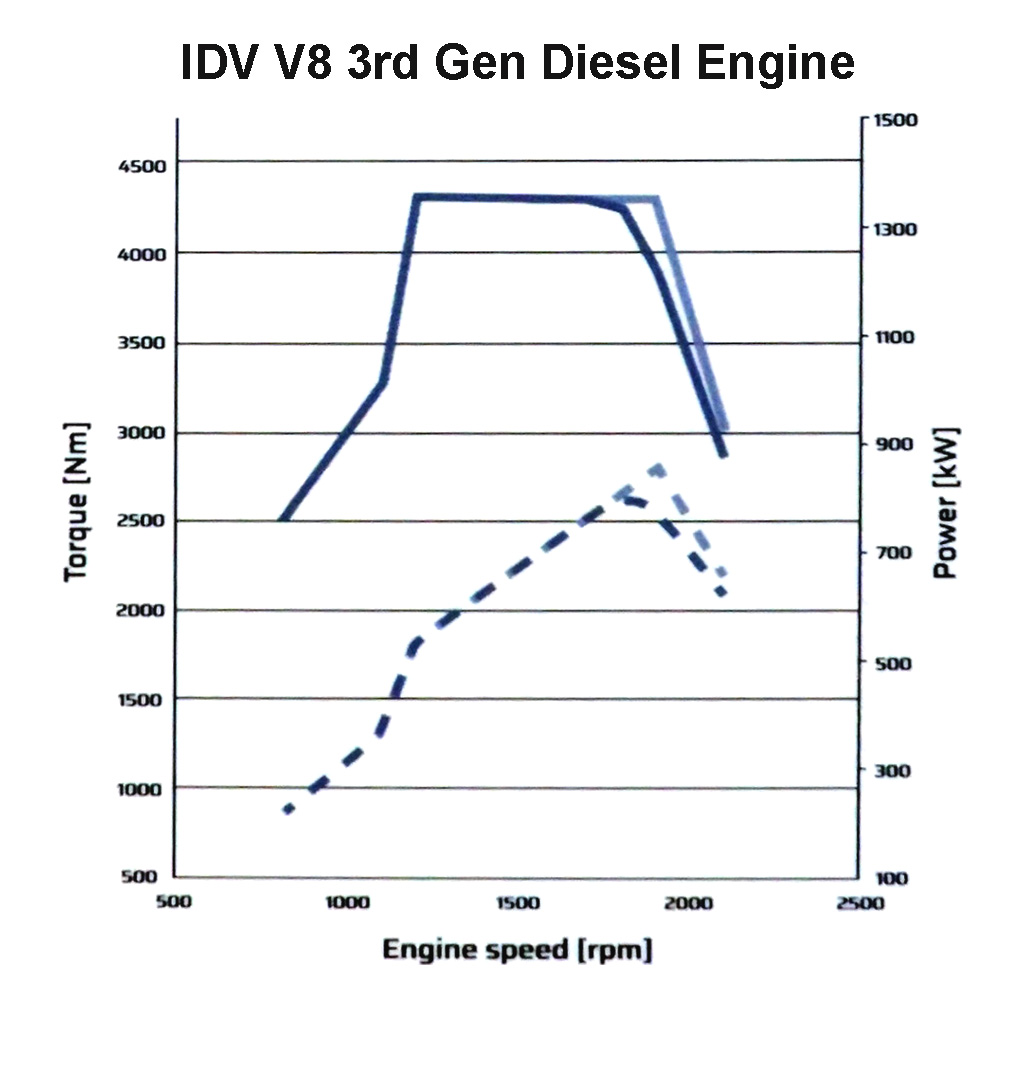
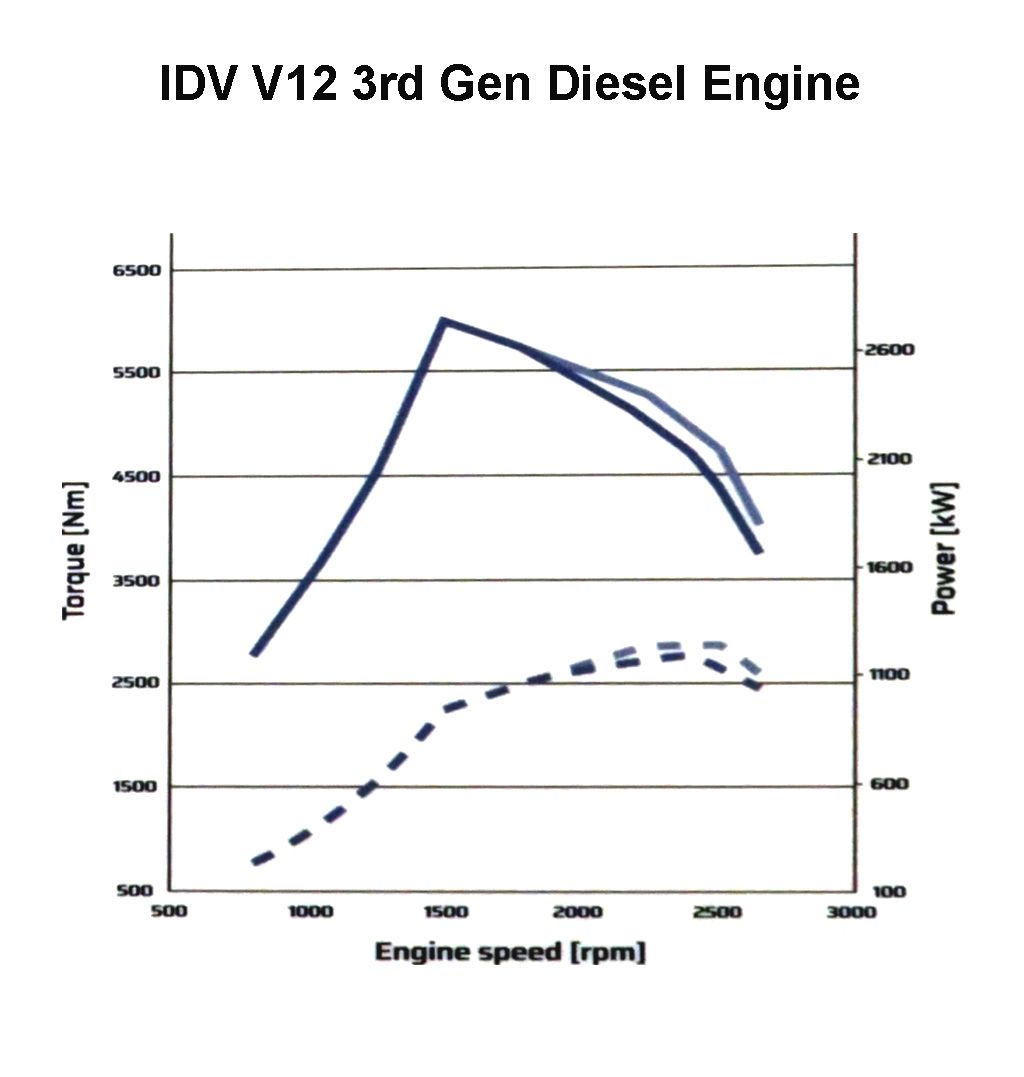
The V8 provides a rated power of 1,147 hp (855 kW) with a maximum torque of 4,300 Nm and has a 1,622 kg mass. This gives a power-to-mass ratio of 0.71 hp/kg. The bigger engine, the V12, has an output of up to 1,743 hp (1,300 kW) with a maximum torque of 6,000 Nm. Its mass is 2,183 kg, which gives a power-to-mass ratio of 0.80 hp/kg [3].
Considering engines available on the market, IDV third generation engines have an edge in terms of maximum power over most competitors; this should allow the Bolzano-based company becoming an armoured vehicles engine provider on the export market, the first challenge being however the Italian MBT and IFV contract.
Photos courtesy IDV and P. Valpolini
[1] The development of automotive propulsion systems is usually split into three phases:
- Alpha Phase: this is the Concept Phase, and serves to verify and confirm the feasibility of the project targets, and to provide the design requirements for the subsequent phases;
- Beta Phase: the Design Intent Phase, serves to verify the design resulting from the Alpha Phase, both in terms of performance, functionality, and durability, with solutions that are not entirely representative of the production process - Off Tool;
- Gamma Phase: the Process Intent phase, serves to verify the project requirements with OEM components, subsystems, and assembly processes representative of production. This is the phase in which industrial certifications and approval by the Customer (military applications) are completed - Off Process.
[2] In the BOOST mode the engine reaches the maximum sustainable power (approximately 65 hp/l) for a limited period of time in relation to the characteristics of the cooling and ventilation system of the engine compartment. This mode is typically used in combat vehicles when maximum acceleration is essential to avoid direct fire.
In the NORMAL mode the engine reaches a maximum continuous sustainable power (approximately 55÷60 hp/l) even in extreme environmental conditions.
In the ECO mode the engine reaches a maximum power calibrated to achieve the best trade-off between performance and fuel consumption. It is used in non-combat situations, such as logistic movements. The calibration will be done after the first analyses on the vehicle and in agreement with the end customer, based on the final identification of logistic use conditions.
In the APU (Auxiliary Power Unit) mode the engine reaches an optimal operating speed for generating electrical power via the alternator/generator when the vehicle is stationary. The operating speed depends on the specific electric machine used and is a value that can be calibrated in the engine control unit. This function, which can be activated when no traction is required, maximizes the efficiency and availability of electrical energy for on-board services or for recharging the batteries. It allows eliminating generator sets separate from the main engine, such as those used on some MBTs, saving space and mass and making the most of the main engine's management flexibility.
[3] The V8 and V12 engines are both designed to reach 65 hp/l. The current maximum power values are the result of choices made on the rotation speed at maximum power and on the turbocharger technology; on the V8 engine rotation speed is reduced to 1,900 rpm to make it interchangeable with the existing engine. As for turbocharger technology, the V8 engine is fitted with variable geometry turbines while the V12 features fixed geometry turbines, as currently no variable geometry turbines of the correct size are available to reach 1,800 hp with a 30 litres engine.