Eurosatory 2026 – Indra Land Vehicles ready for production
At FEINDEF 2025, the Madrid exhibition, it was clear that Indra was aiming at widening its scope, entering the military vehicles business. Its attempts to buy entities such as Santa Bárbara Sistemas and IDV did not succeeded, so in the end the Spanish group, originally focused on electronics, decided to create Indra Land Vehicles, and purchase a facility in Gijón, 200 km west of Bilbao, on the Bay of Biscay coast, in the Asturias province, where vehicles will be assembled.
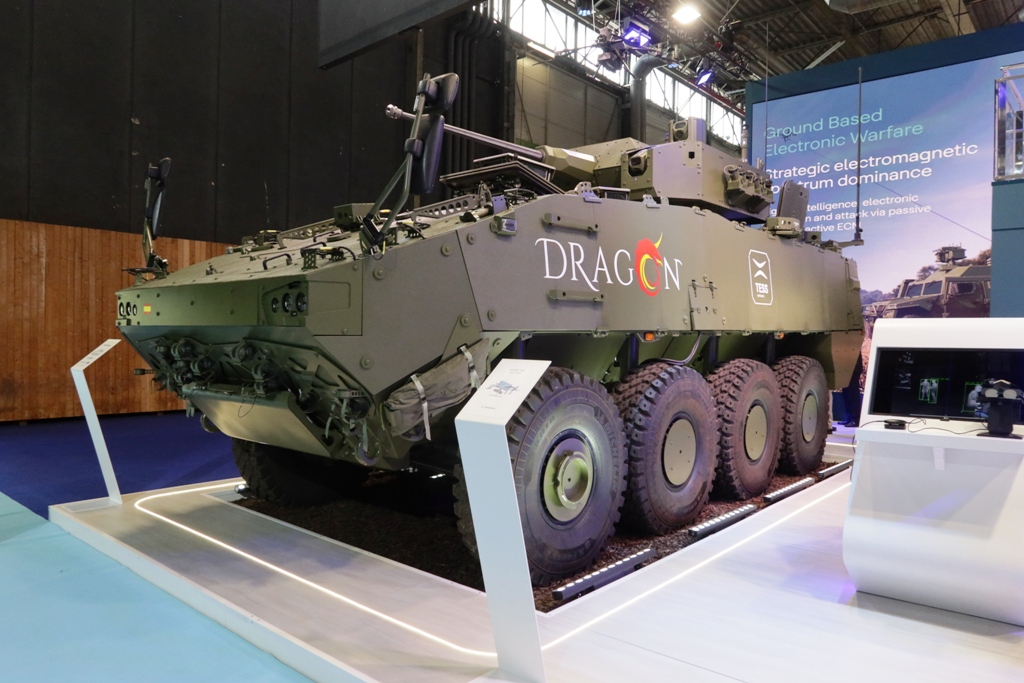
In 2024 Indra already did a move showing its increased interest in the military vehicles business; the group was one of the four companies that formed TESS Defence, born to manage the
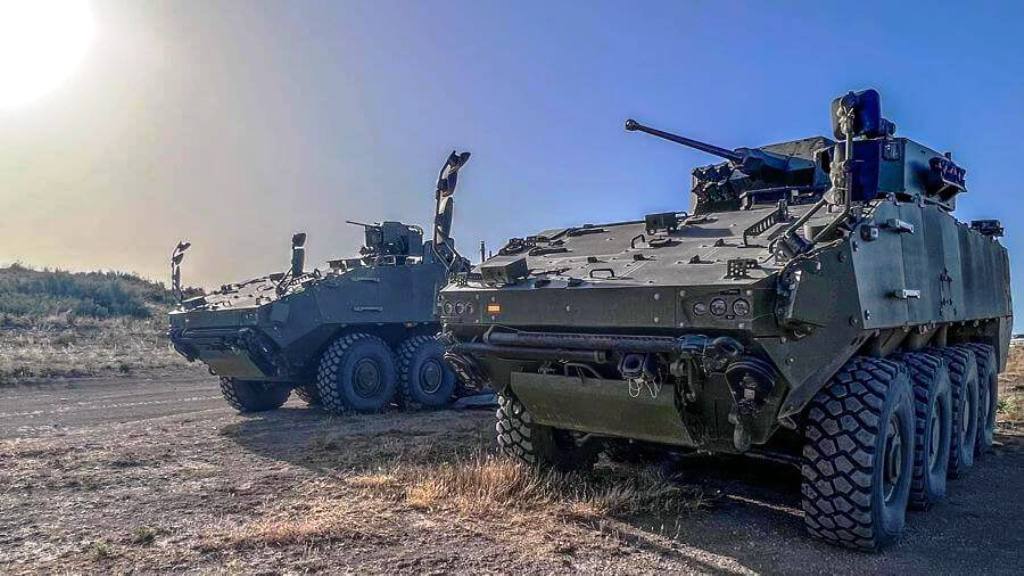
Dragón 8×8 programme, which shares were equally split between the four members, the other three being GDELS-Santa Bárbara Sistemas, SAPA and Escribano Mechanical & Engineering, now EM&E Group. In October 2024 Indra acquired 26.34% of the share capital of TESS Defence, reaching a controlling 51.01%, the other three partners retaining a 16.33% stake each. Following this deal Indra is now managing TESS, which is the prime contractor for Ejército de Tierra future armoured vehicle programmes, including the ongoing 8×8 wheeled combat vehicle, the tracked support vehicle, and their derivatives and subsequent phases. This means a potential portfolio in of over 10 billion Euro in armoured land vehicles over the next 15 years, firm orders totalling over 700 vehicles.Including maintenance, repair and operations (MRO), TESS Defence business in the next 20 years is valued at over 30 billion Euro.
Finally, in August 2025 Indra Land Vehicles was created and Frank Torres, the Indra Group Chief Programme Officer, was appointed as Chief Executive Officer of the new entity. EDR On-Line met Frank Torres at Eurosatory, the company CEO detailing the way ahead of the recently formed company.
“ Indra Land Vehicles started almost one year ago within Indra, with the main goal of managing all what is related to land vehicles platforms. We want to give Spain the full industrial capacity, sovereignty, and autonomy in the land vehicles domain, reinforcing our national supply chains, and we want to play the game in Europe. This objective is to create industrial capacity not only in manufacturing, but also in design, development, integration, and sustainability of land vehicles. We want to cover the full cycle,” Torres said.
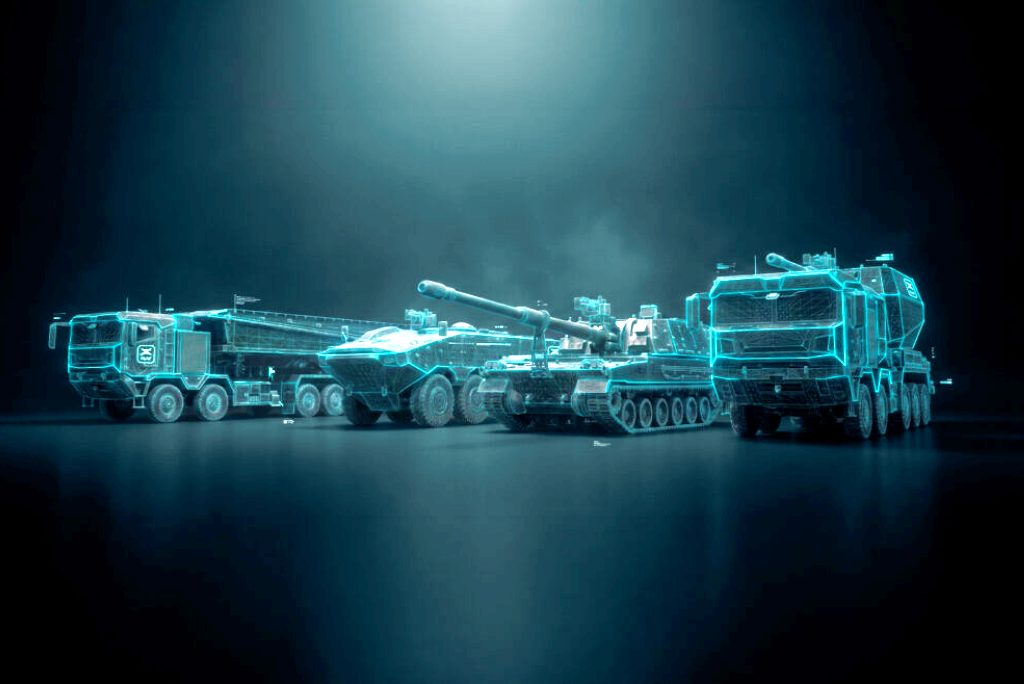
Beside the Dragón programme, which is up and running, the company has been awarded four major programmes,; two are related to artillery, a tracked and a wheeled self-propelled howitzers, one is aimed at engineers and armoured formation, a wheeled bridgelayer, and one is an amphibious combat vehicle, all of them under development.
“These four major programmes are worth around 6 billion Euro programmes, and are being carried out in partnership with other companies,” the CEO stated, underlining that the company started working in record time, the Gijón facility having already 150 employees. “We are finalising the definition of two new manufacturing sites, also in the north of Spain,” Frank Torres announced; “Their location is not yet defined, the overall investment, including the Gijón plant, amounting to 130 million Euro.” This will obviously mean a further increase in the company manpower. Beside the manpower in Gijón, within the Indra group almost 100 engineers are working in different locations in the design and development of land vehicles.
The acquisition of the majority stake in TESS Defence makes Indra responsible for engineering, manufacturing and delivery, always through TESS. This means the final assembly of the Dragón 8×8 will shift from the GDELS-Santa Bárbara Sistemas facility to the Indra Land Vehicles plant in Gijón. “As of today, General Dynamics is still responsible for the integration of the full vehicle, but this is changing during this year,” EDR On-Line was told. Seventy-five 8×8 have already been delivered to the Spanish MoD, after a difficult start for the programme.
There will be a transition phase during which some overlapping may happen, to avoid an impact on deliveries, while once stabilised GDELS will remain responsible for the automotive platform, which will be sent to Gijón where the powerpack will be installed as well as all the other components provided by the four TESS member companies. First Dragón should roll-out from the Asturias facility before year end, the production rate target being three-four vehicles per month.
In the recent past Indra Land Vehicles signed agreements with major OEMs involved in the four main programmes for the Spanish military:

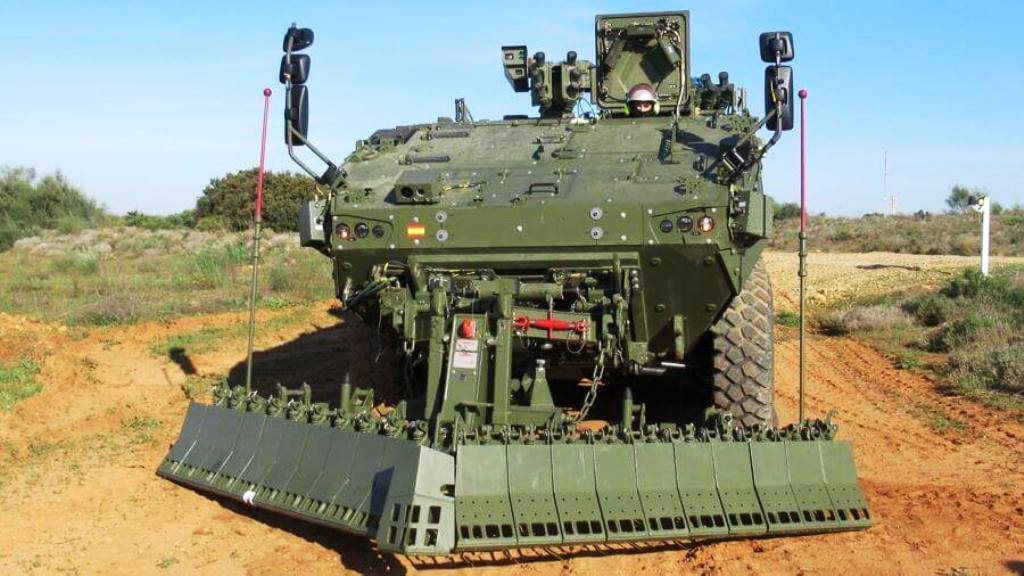
the VLP-R (Vehículo LanzaPuentes de Ruedas, wheeled bridgelayer), the VAC-IM (Vehículo Anfibio de Combate de Infantería de Marina, naval infantry amphibious combat vehicle), and the self-propelled tracked and wheeled howitzers. These Spanish content of those programmes will be pretty high: “We are committed by the contracts to have at least 70% of the value produced in Spain, however our aim is to reach 80%,” Frank Torres explained adding that “we are also committed to generate 1,000 new direct employments, and around 3,000 indirect ones, for a total of some 4,000.” These programmes will of course benefit the overall Spanish defence industrial base, including small and medium enterprises.
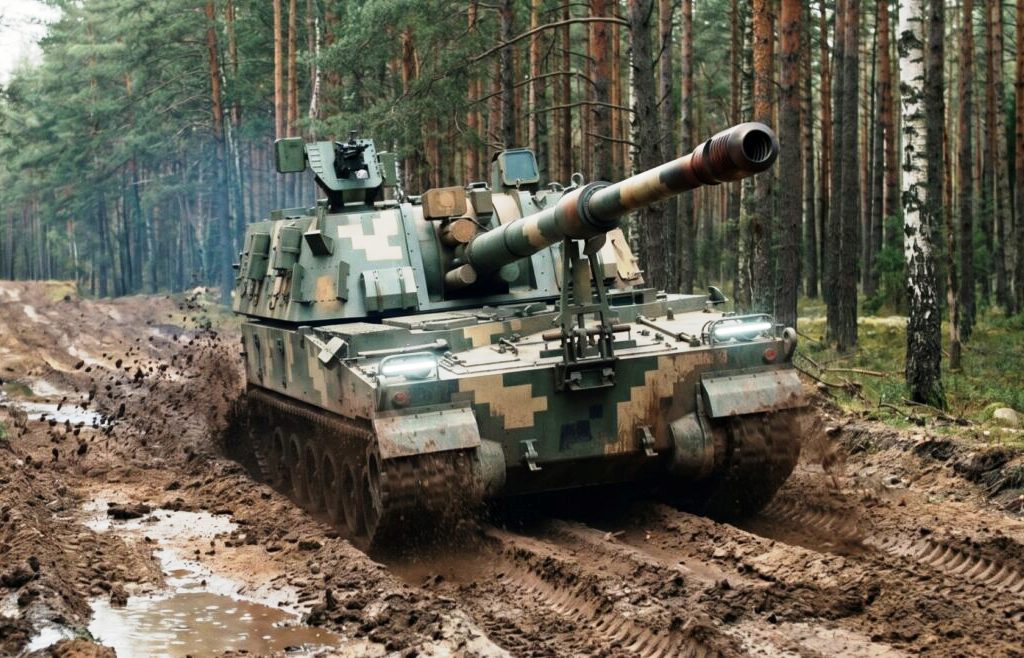
Within the Spanish military modernisation plan artillery takes an important part. Replacing the legacy M109 system is among priorities both for the Ejército de Tierra as well as for the Tercio de Armada naval infantry. To this end, in late March 2026 Indra signed with Hanwha Aerospace of South Korea an MoU for the development of an artillery tracked self-propelled 155/52 mm howitzer which platform is based on that of the proven K9 Thunder system, in use Australia, Egyp, Poland, Qatar, Romania and Vietnam, Turkey producing an extensively modified variant known as T-155 Fırtına. Also the Spanish version will be quite different from the South Korean original version, the chassis being a derivative of the K9A2 platform while the turret and the artillery elements are being developed by EM&E in Spain, Indra integrating in the howitzer its own mission control system and situation awareness sensors. The SPH-T, as it is know in the Spanish Army, will have a crew of two, a range on road of 360 km, and will be able to hit targets at 56 km distance using special ammunition. The programme includes the delivery of 128 SP howitzers, 128 automatic reloading vehicles, 11 command post vehicles and 21 recovery vehicles. The prototypes are expected to be delivered in 2029, deliveries starting in 2030 to be completed in 2032.
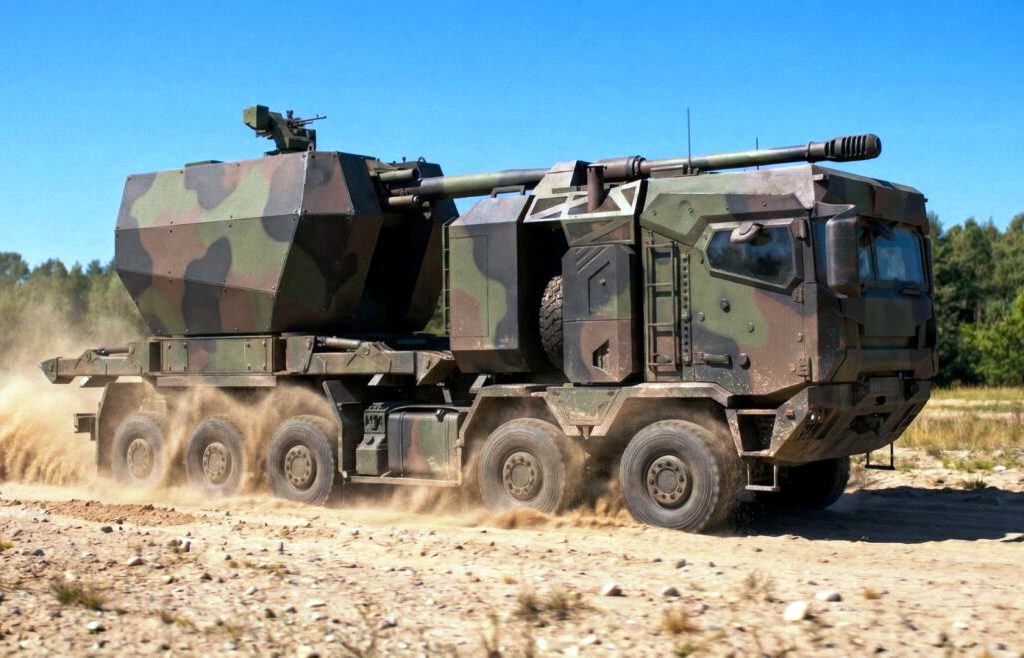
EM&E will be a key partner also in the development of the wheeled artillery system, known as SPH-W. Here the platform will be an HX3 10×10 truck provided by RMMV (Rheinmetall MAN Military Vehicles), the most modern series of trucks by the German company, while the turret is under development by EM&E, high commonality existing especially in the artillery components. Here too the crew is reduced to two people, mobility being a key issue as it will fall in the MLC 50 class, its maximum speed on road being over 70 km/h while the range on road will exceed 500 km. The contract includes 86 howitzer, the same number of automatic reloading vehicles, some truck-based recovery vehicles being also on order. The timeline of the programme is similar to that of the tracked artillery system, the first prototypes being expected within 2029.
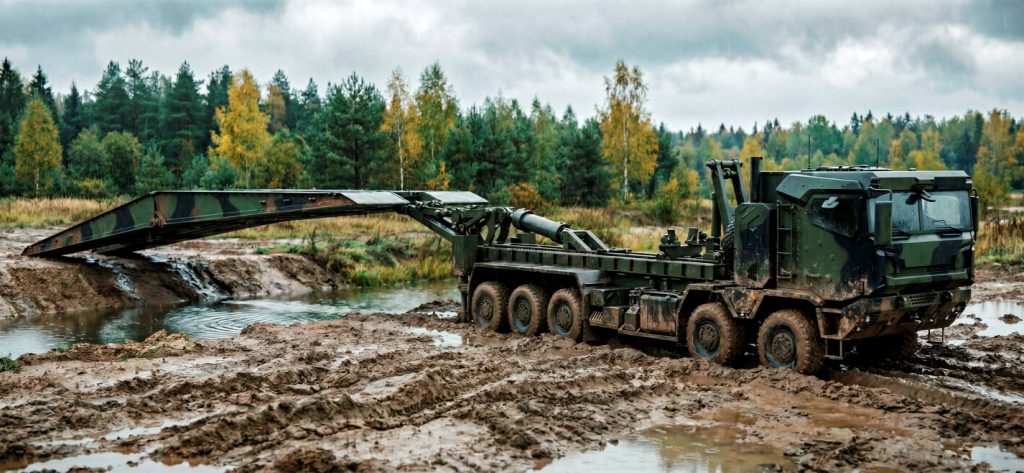
Another truck-mounted system is the VLP-R (Vehículo LanzaPuentes de Ruedas, wheeled bridgelayer vehicle). The bridgelayer element, which will allow overcoming obstacles 24 metres wide, is being developed by Indra itself, while the platform has not yet be selected. However all hints strongly indicate the RMMV HX2 10×10 platform as the most probable candidate. The system will require a crew of two to launch and recover the bridge, launching and recovery time being estimated at less than 20 minutes.
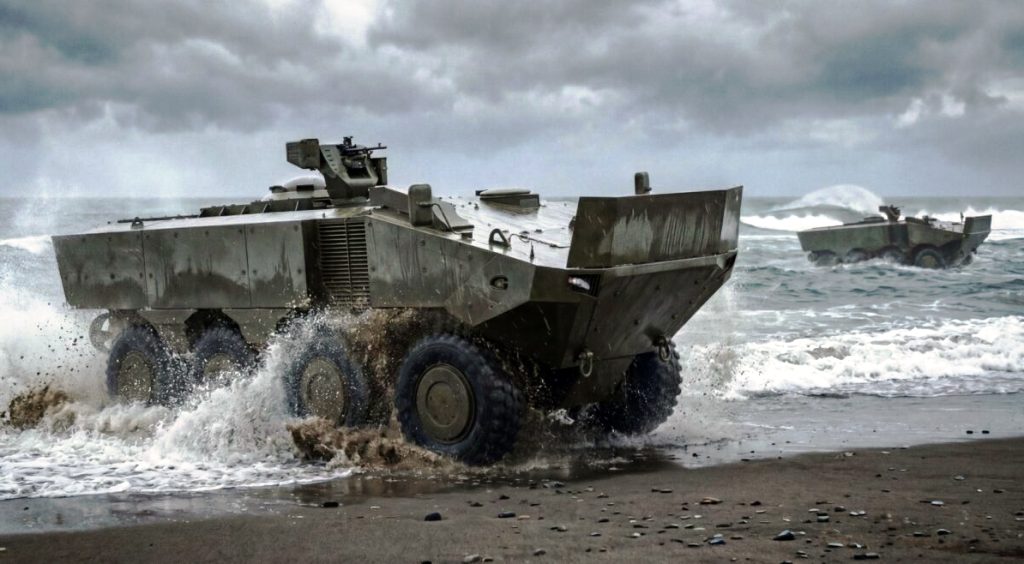
On April 17th, 2026, Indra Land Vehicles and IDV, now part of Leonardo, reached a strategic agreement that will lead to the delivery of a new 8×8 amphibious vehicle to the Tercio de Armada, the Spanish Navy amphibious component. It will be based on IDV SuperAV, acquired by the Italian Navy “San Marco” Amphibious Brigade under the name of VBA (Veicolo Blindato Anfibio, armoured amphibious vehicle), but will include numerous elements of Spanish origin. Indra will provide electronics, command and control, and communications, while the turret will be the giro stabilised Aspis 12.7 RCWS from EM&E. The contract includes 34 vehicles, of which 28 will be armoured personnel carrier, hosting a three-man crew plus 10 dismounts, as well as two command posts, two ambulances and two recovery vehicles, the latter two variants being specifically developed for Spain. With a land range of 480 km or a combined range of 12 nautical miles at Sea State 3 and 200 km on land, the VAC-IM will maintain commonality between the Spanish Naval Infantry and its two main partners in amphibious operations, the US Marine Corps, which fields the ACV (Amphibious Combat Vehicle), also heavily based on the SuperAV, and the Italian Navy, Italy and Spain having established 30 years go the SIAF, the Spanish-Italian Amphibious Force, which includes the SILF, the Spanish-Italian Landing Force. The first prototype should leave the Gijón facility in late 2027, validation to be carried out by Indra and IDV, deliveries being planned between 2028 and 2030. This programme will not include a transfer of technology, as numbers are too limited to justify it,” the Indra Land Vehicles CEO told EDR On-Line.
Indra Land Vehicles is of course looking beyond Spanish borders; at FIDAE in April this year Indra and Hanwha Aerospace signed a further MoU to jointly offer armoured vehicle solutions to the Chilean Army, extending the reach of the agreement to the rest of Latin America.
Images courtesy Indra and TESS