
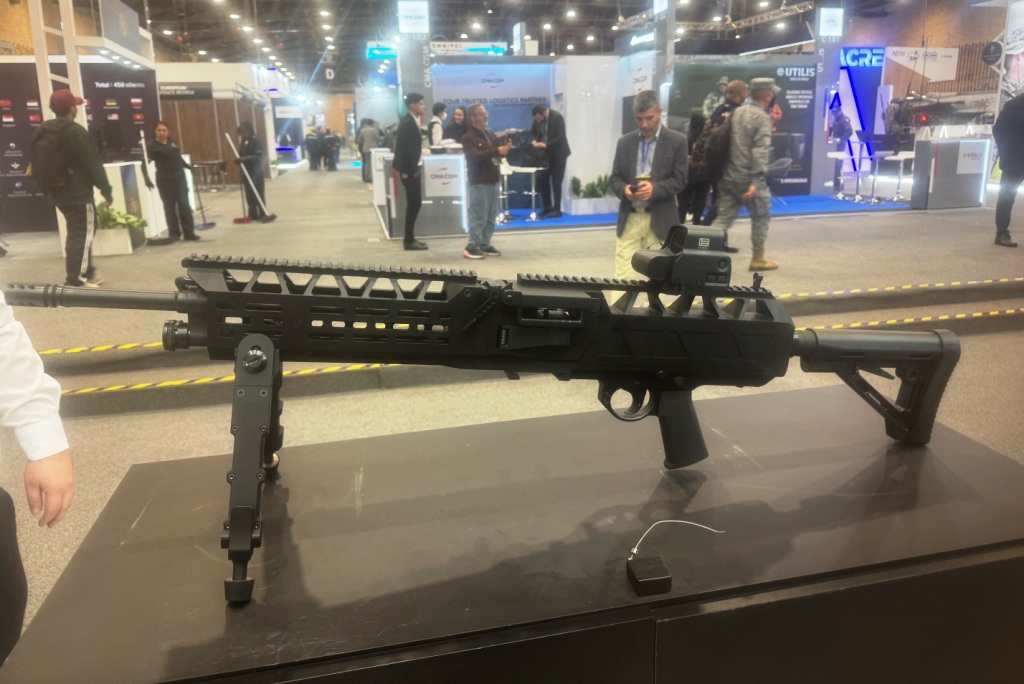
Expodefensa 2025 – DSS PZD Mk24 Czech ultra-light machine gun targets global markets
The PZD Mk24, an ultra-light 5.56 mm light machine gun developed by Czech arms manufacturer DSS, has attracted attention not only in Europe but also internationally, with its recent presentation at ExpoDefensa in Colombia. This prominent display underscores the growing ambitions of DSS to enter new markets and demonstrates the Mk24’s potential appeal to militaries beyond its region of origin.
DSS a.s. is a relatively new Czech arms manufacturer based near Prague, equipped with modern CNC machining, welding and assembly facilities and originally known for manufacturing high‑quality Minimi‑type light machine guns. As the second‑largest small‑arms company of its kind in the Czech Republic, DSS has leveraged this industrial base to develop the PZD Mk24, presented as the company’s first fully original design and the flagship of a new PZD family, intended to position DSS as a serious player in the international small‑arms market.
The weapon was publicly unveiled at events such as Vietnam Defence Expo (VIDEX) 2024 and later shown at other international exhibitions, where DSS highlighted its combination of reduced weight, controllable recoil and modern ergonomics. This marketing strategy clearly targets both domestic and export customers looking to replace older 5.56 mm machine guns with a lighter yet still durable system.
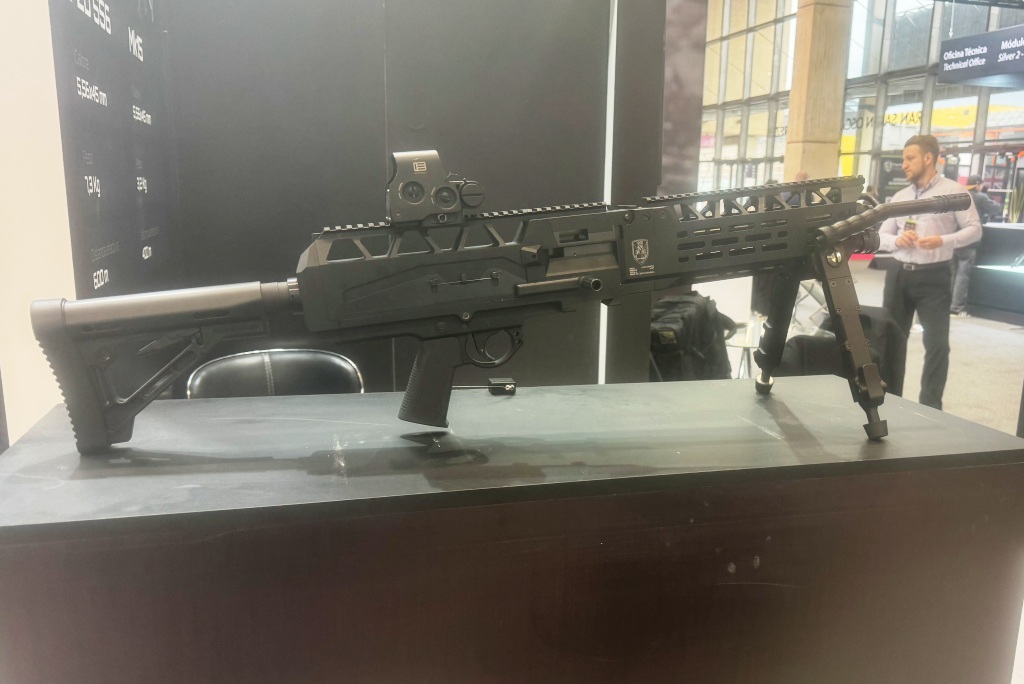
The PZD Mk24 is chambered for the NATO standard 5.56×45 mm cartridge and uses a long stroke gas piston system with an adjustable gas regulator to maintain reliability across different ammunition types and environmental conditions. Compared with typical 5.56 mm light machine guns, its mass has been reduced by about 30%, with sources indicating a combat mass of around 5.2–6.2 kg depending on configuration.
The weapon offers both semi-automatic and fully automatic fire through a select fire trigger, giving gunners the option of precise single shots or sustained bursts as the tactical situation requires. It features quick change barrels of approximately 14 and 16 inches, with overall length varying roughly between 868 and 1,001 mm, allowing units to tailor the weapon to close quarters or longer-range roles.
A continuous Picatinny rail runs along the upper receiver is designed as a free-floating structure in the barrel area to improve heat dissipation and maintain zero for mounted optics and accessories. The minimalist belt feed system is intended to reduce bulk and helps the weapon maintain its point of aim after reloading, while integrated folding iron sights provide a back-up to optical sights.
In terms of performance, DSS and open sources quote an effective range of about 600 metres and a maximum range of up to 1,200 metres for suppressive fire. The combination of light weight, tuned gas system and recoil reducing design is advertised as enabling accurate, controllable automatic fire compared with older 5.56 mm designs.
The PZD Mk24 is designed to give infantry sections a high-volume suppressive fire weapon without the usual mass penalty of legacy “light” machine guns, improving mobility on foot or from vehicles. Its assault rifle like ergonomics and compact dimensions make it particularly suitable for Special Forces, mechanised infantry and marines operating in urban or complex terrain where agility is critical.
Beyond the standard squad automatic weapon role, the Mk24’s modular barrels and accessory rail allow it to be configured for patrol, defensive overwatch or vehicle mounted roles, using optics, night vision devices and grips as required. By combining precision semi- automatic fire with the option of sustained bursts out to several hundred metres, it seeks to bridge the gap between an individual rifle and a traditional machine gun in modern small unit tactics.
DSS has actively promoted the PZD Mk24 at international defence exhibitions in Asia and elsewhere, aiming to build an export customer base beyond Central Europe. Open-source reporting indicate that the weapon has been supplied to Ukrainian forces, including Special Forces and marines units, where it has been tested operationally in combat conditions.
At present, there is no public evidence of large-scale adoption by NATO armies, and exports appear to be limited to early adopters and evaluation quantities rather than full re-equipment programmes. However, ongoing trials, the introduction of an even lighter aluminium receiver version, and continued exposure at trade shows suggest that DSS intends to pursue wider export contracts in the coming years.
Photos by J. Roukoz