ILA 2026 – Germany pulls plug on FCAS
On the eve of the ILA airshow (June 10-14), Germany announced it was withdrawing from the Franco-German-Spanish Future Combat Aircraft Collaboration
Continuous disagreements over the level of industrial co-operation on the € 100 billion ($ 116 billion) project, saw German Defence Minister tell reporters “We could not come to agreement [on FCAS].”
The main industry partners Airbus, which represents both Germany and Spain, and Dassault from France could not agree on several fronts. Last year, Dassault’s CEO, Eric Trappier demanded that Dassault lead the programme, and naturally Airbus disagreed. Trappier argued that an arrangement focussing on sharing work, based on the investment by the three governments would not work, that FCAS would be technologically inferior – a view the other main partner, Airbus (Germany and Spain) found offensive.
Dassault was not prepared to accept a sub-standard fighter incapable of taking on Russians and Chinese because of financial and other considerations.
Jean-Brice Dumont, head of Air Power at Airbus had a more practical view on the situation back then. “We all have problems with very detailed work shares, which makes life complicated.
“We have two competitors, because this is what the two companies (Airbus and Dassault) are, but they are poised to marry. And that creates a natural ambiguity. “
French President Emmanuel Macron launched the FCAS project with former German Chancellor Angela Merkel in 2017. He believed Franco-German defence cooperation remained a necessity for both countries and their European partners.
Both companies would need to show political will to work together but, in the end, it wasn’t to be and underscores the struggles Europe has faced in rebuilding its military capacity after decades of underinvestment.
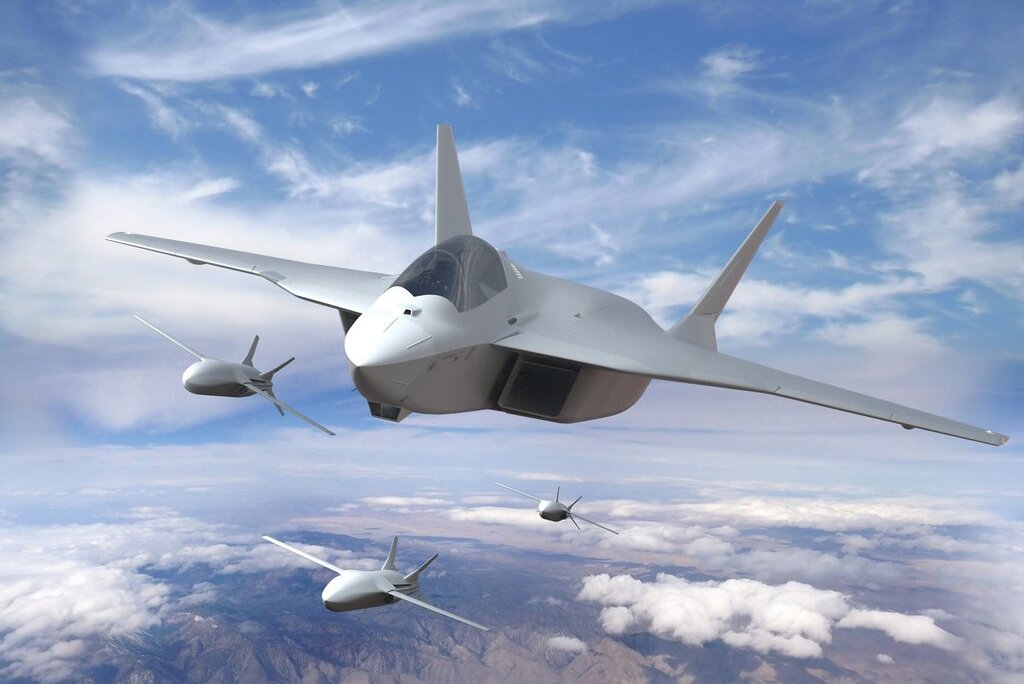
The three FCAS partner companies were working on several systems of a system – a future manned fighter, collaborative combat aircraft (CCA) and a network that binds it altogether by 2040. Undoubtedly the work they have done so far, will count for whatever project they pursue. Clearly all three countries need to build a sixth-generation fighter solution, not just for the respective nations’ own military, but to continue the evolution of new aerospace technologies. Dassault coupled with Thales, will probably go alone, flushed with funding from the sale of over 500 Rafale.
Germany and Spain could join the UK, Japan, and Italy on GCAP (Global Combat Air Programme) or even Saab on a completely different sixth generation programme. Saab is actively working on a $276 million contract awarded by the Swedish Defence Materiel Administration (FMV) to develop technology demonstrators for a future fighter jet and its associated “loyal wingman” drones.