
Netline introduces SonicScan, adding a passive acoustic layer to counter-UAS operations
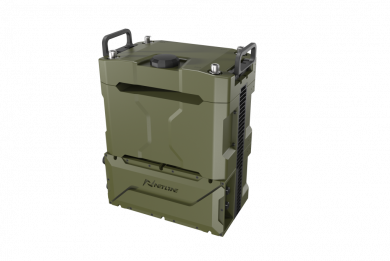
10 June, 2026 – Netline Communications Technologies, a leading developer and manufacturer of high-end electronic warfare and tactical spectrum dominance systems for defense forces and homeland security agencies, introduces SonicScan, a passive acoustic detection system designed to provide an additional detection layer for unmanned aerial threats.
As part of its strategy to expand its operational suite, Netline is stepping beyond the RF spectrum domain for the first time, introducing a complementary passive detection technology.
Already operationally deployed, SonicScan detects aerial threats by analyzing their unique acoustic signatures. The system identifies a wide range of drone types based on user-defined needs. By operating independently of RF signals, it enables detection of drones controlled not only via radio frequency, but also through alternative means such as fiber-optic links or autonomous flight.
Operating passively, SonicScan requires no transmissions, enabling continuous monitoring without exposing its position.
“The SonicScan has proven to be an effective detection solution for fiber-optic controlled FPV drones in challenging battlefield environments, enabling timely defensive and mitigation actions”, said Mr. Shai Palti, Netline’s CEO.
Adaptive AI for Accurate Detection in Complex Environments
Powered by advanced AI-driven signal processing, SonicScan continuously analyzes the acoustic environment, improving detection accuracy and distinguishing drone signatures from background noise while reducing false positives. The system adapts and is calibrated for optimal performance across environments.
Designed for flexible deployment, SonicScan is integrated with tracking and command & control systems. Equipped with Direction Finding (DF) capabilities, the system provides precise bearing to detected drones for continuous tracking. When deployed across multiple locations, it enables threat geolocation and clear visualization on a map.
Its architecture allows users to expand coverage and enhance detection capabilities, supporting full 360-degree coverage of the operational area. This flexibility supports military bases, border protection missions, critical infrastructure sites, and other sensitive environments.
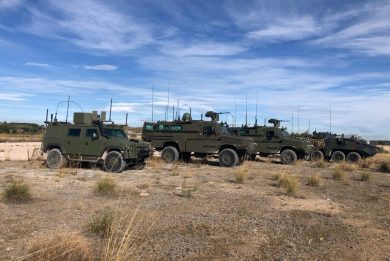
photo courtesy Netline