Saab Bolide 2, more punch for the RBS 70 NG
Adapting the system to new emerging threats is a must in a time of rapid technological evolution. Saab Dynamics has unveiled the new missile that will further increase the lethality of its RBS 70 NG, the Bolide 2, which not only improves performances but thanks to its modularity will simplify future upgrades
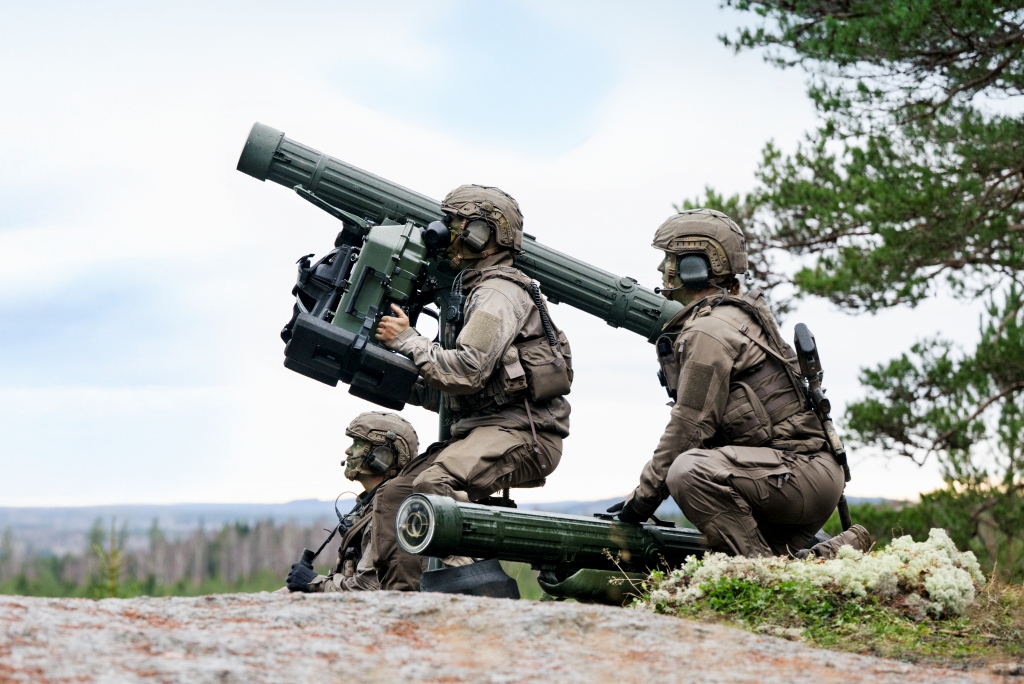
In 2027 the RBS 70 will celebrate its 50th anniversary, as it entered service with the Swedish forces in 1977. A laser beam-riding missile system, it is basically immune from jamming as all the “intelligence” is in the system sight, which emits the laser beam aimed at the target, the missile riding over it. Another advantage is that it keeps the man-in-the-loop, which allows to abort the mission until the last moment, on the other hand the operator must keep the sight on the target; until 2011 this was done manually by the air defender, but since that date the RBS 70 NG, for New Generation, featured an automatic target tracker, as well as a built-in night capability. Improvements on the missile started much earlier, 1982 marking the arrival of the Mk1, followed nine years later by the Mk2, and in 2003 by the Bolide missile, each time increasing range and altitude as well as lethality. The Bolide is the missile type that lasted the most, 15 years, before being joined by the Bolide 2. This time range and altitude coverage remained the same, respectively 9 km and 5,000 metres, however numerous other features have changed, further improving lethality.
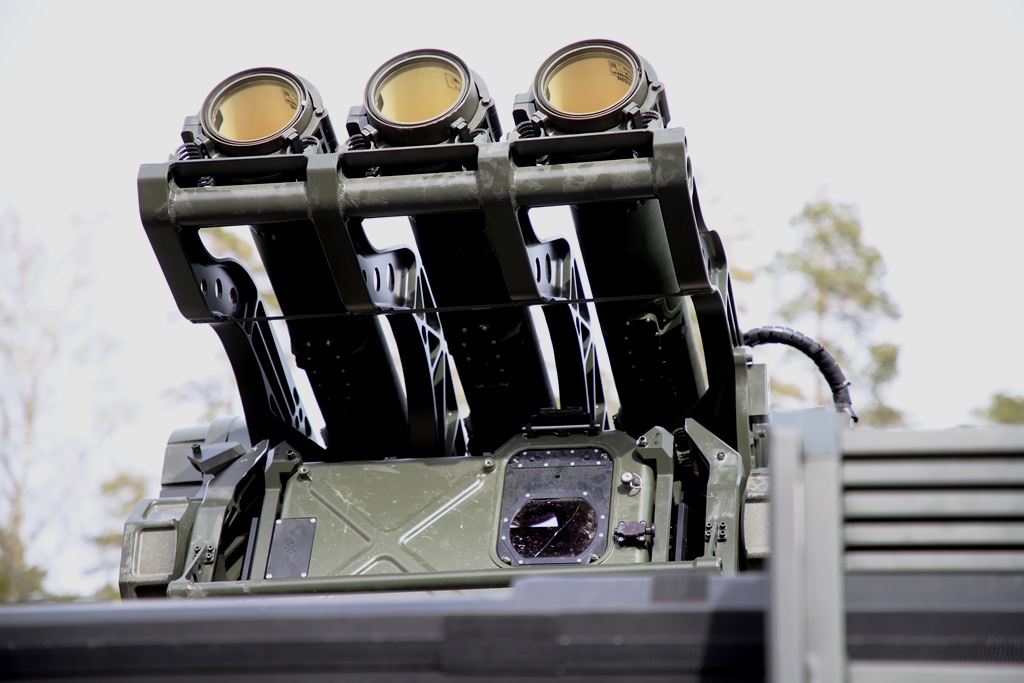
Born as a manportable system, three soldiers forming the team, one carrying the sight, one the missile and one the tripod. In May 2022 Saab unveiled its MSHORAD solution, for Mobile Short Range Air Defence System, a remotely controlled turret installed on a light armoured vehicle, carrying three ready to fire missiles plus more inside the vehicle. Clearly the Bolide 2 will benefit both the MANPAD and the mobile versions. Currently the RBS 70 is in service with 20 customers, the RBS 70 MG with seven customers, while the MSHORAD has been ordered by two nations, Sweden and the Czech Republic.
In 2003 the Bolide was already aiming at solving some issues related to new threats, as it was fitted with a new proximity fuse better suited for rapid and small targets, such as cruise missiles and UAVs. These capacities are maintained and further improved in the Bolide 2.
The new missile guidance system is fitted with an IMU (Inertial Measurement Unit). “This gives us more control over how the missile performs while in air, allowing us to conserve some more energy in the missile throughout the flight, due to a more effective guidance principle. That leads to an improved endgame performance,” Johan Stjärnlöv, Head of Marketing and Sales, GBAD, told EDR On-Line. This should mean the missile should be able to pull more Gs in the final attack phase, avoiding the target to outmanoeuvre it to escape the kill, EDR On-Line understood. When the missile reaches its target, it is time to detonate the warhead. The Bolide 2 has seen a complete overhaul of its electronics hardware, and thanks to continuous progress and consequent miniaturization, this operation has freed up a significant amount of space inside the missile.
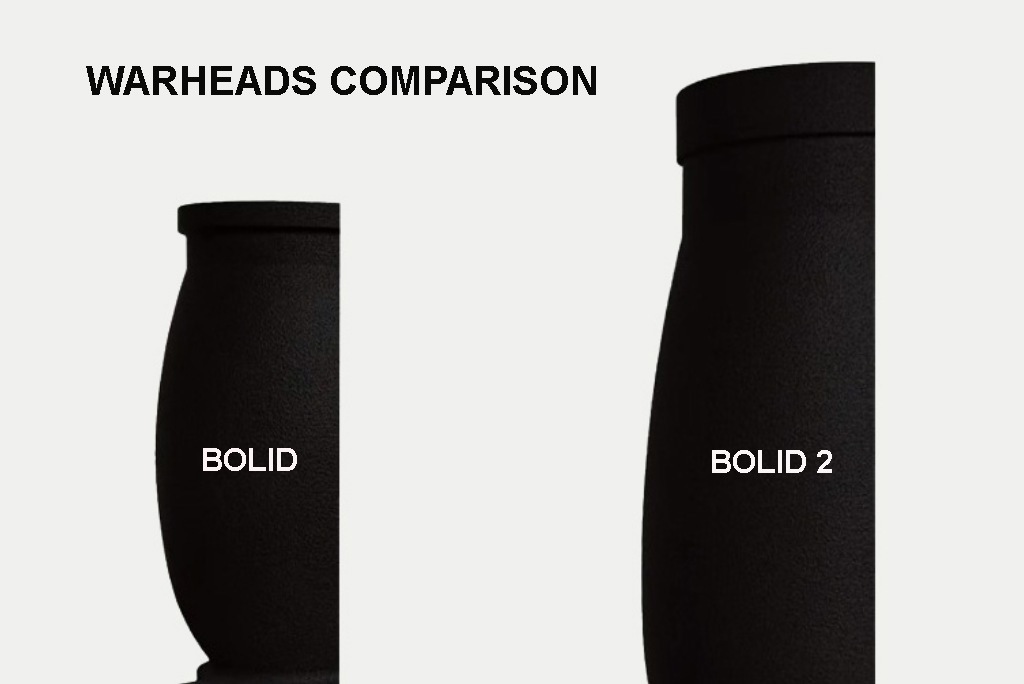
This allowed Saab to increase the size of the warhead. “The new warhead contains around 50% more explosive and 40% more fragments compared to the old one,” Johan Stjärnlöv explains. The increased fragment density at a given distance means a higher kill probability against small targets, although the RBS 70 is not born as a C-UAS system; it definitely represents one layer of the air defence onion, but certainly not the shortest range one, the responsibility of killing small UAVs falling on shorter range and less expensive systems. The bigger warhead can play a role in defeating bigger or harder flying targets, as well as more manoeuvrable ones, as the missile warhead might be detonated at a greater distance while producing the same fragment density than the Bolide warhead at a shorter distance. Videos of detonations against the same target with the former and the current missile highlighted visually the much greater energy delivered to the target. The warhead architecture is similar, with a shaped charge, which was first introduced in the Mk2 missile, and a fragmentation charge, but what considerably varies is the size.
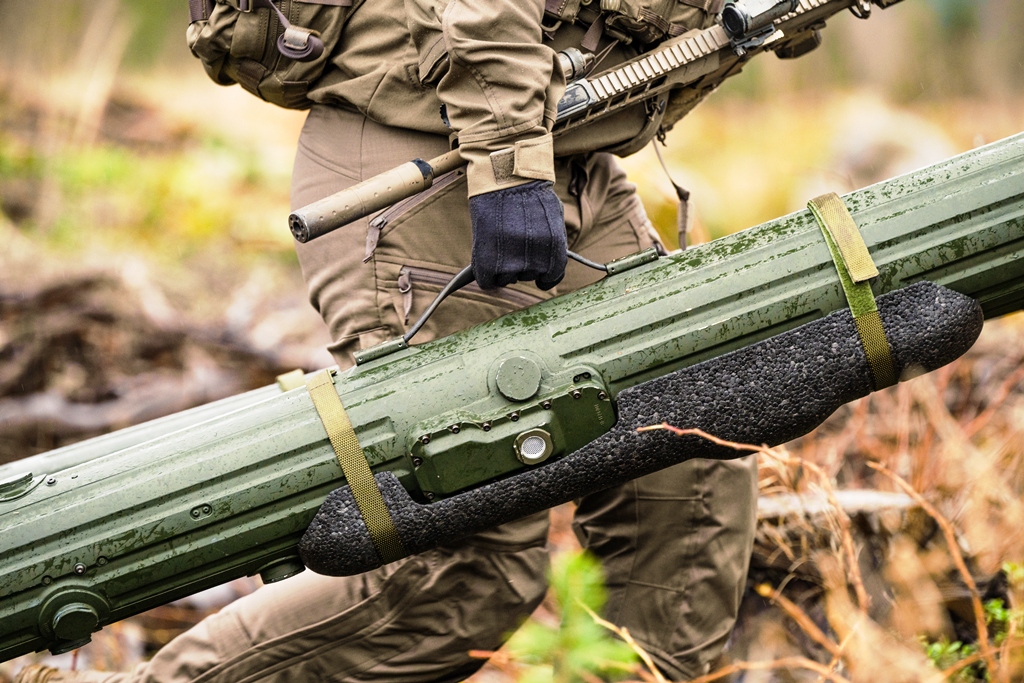
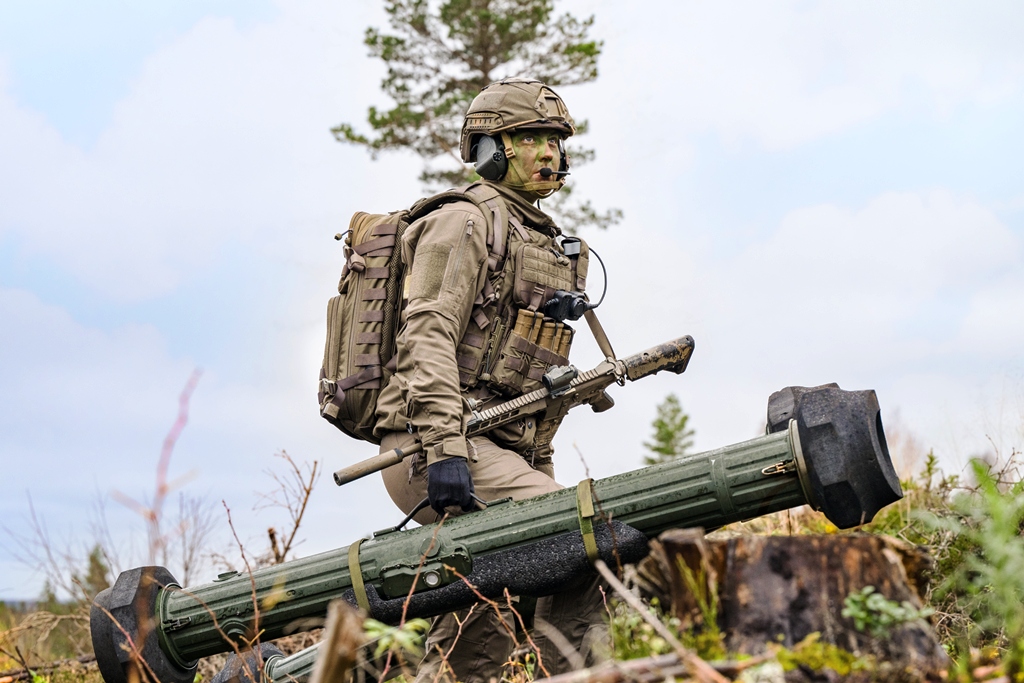
This, adding the previously mentioned higher residual energy, makes the Bolide 2 considerably more lethal than its predecessor. As anticipated, a greater modularity will allow a smoother spiral upgrade process; this will allow new technologies to be introduced more easily, without having to revolutionize the missile’s architecture. The evolution did not only concern the missile; the launch tube is completely new, while maintaining its characteristics; the Bolide launch tube was produced in glass fibre while that of the Bolide 2 is in carbon fibre. “This allowed us to automate production a lot more and reduce the need for manual labour,” Johan Stjärnlöv said. This should improve production capacity, a key factor when mass production has become an issue. A side effect was a slight decrease in the overall missile mass; however, this is marginal as most of it is due to the missile.
The Bolide 2 is in the very final stage of development, Saab Dynamics stating that deliveries will start in 2027.
Photos and graphics courtesy Saab