UMEX 2026 – System Electronic Export unveils SEEDIS interceptor drone
Several Ukrainian interceptor drones were on display at the NAUDI association at the UMEX 2026 exhibition in Abu Dhabi, including the SEEDIS (sensor-enabled enemy drone interceptor) from SEE (System Electronic Export), designed to protect critical airspace from hostile UAVs
Recently, a steady trend has emerged in the development of interceptor drones, which have become widespread during the Russia-Ukraine conflict. Many countries at the exhibition in Abu-Dhabi showcased interceptor drones of various aerodynamic configurations, including fixed-wing and cruciform-wing configurations, as well as copter-type drones. Although these drones are designed to intercept air targets, they do not replace traditional air defence systems but occupy a relatively limited but critically important echelon within them. In Ukraine, this is the lower, least resource-intensive echelon, above which are mobile fire teams on pickup trucks, electronic warfare (EW) systems, medium- and long-range ADS, and army and fighter aircraft. Interceptor drones provide a low-cost and mass-scale countermeasure against low-speed aerial targets, primarily strike loitering munitions such as the Geran, Lancet, and Molniya, as well as aircraft-type reconnaissance drones. In 2025-2026, they will be increasingly used in both operational and strategic rear areas to intercept Russian long-range attack unmanned aerial vehicles (UAVs).
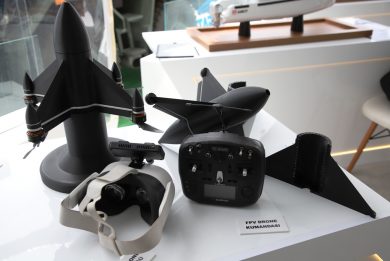
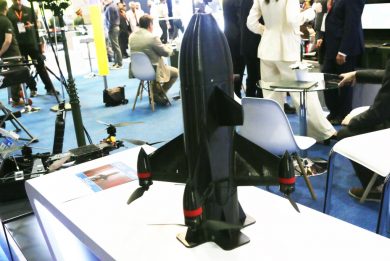
In the NAUDI association stand at UMEX several Ukrainian interceptor drones were exhibited. SEE (System Electronic Export) was showcasing its SEEDIS (Sensor-Enabled Enemy Drone Interceptor), a system designed to protect critical airspace from hostile UAVs.
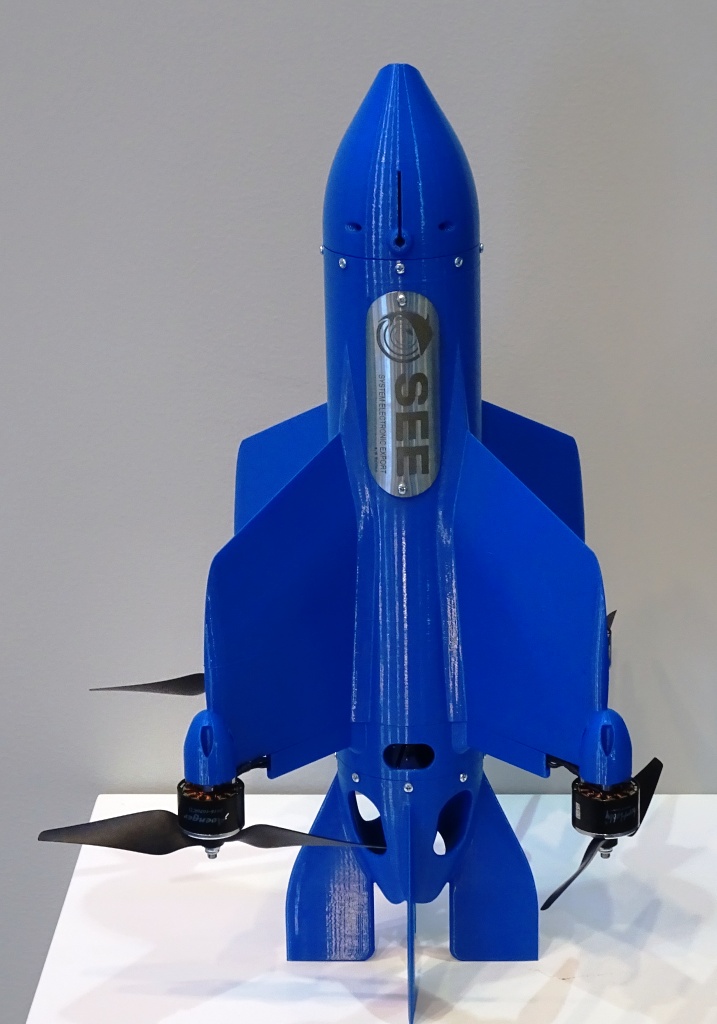
As part of an integrated counter-UAV architecture, SEEDIS combines advanced onboard sensors, real-time data fusion, and autonomous guidance to detect, track, and neutralize enemy UAVs with high precision. The interceptor operates as a networked effector within a broader air defence command-and-control (C2) environment.
When integrated with the Krechet Air Defence C2 system, SEEDIS enables coordinated multi-interceptor operations. Krechet allows simultaneous employment of multiple interceptor drones, providing centralized air target detection, threat prioritization and intelligent target allocation across available assets. The system supports automated and operator-assisted target designation, ensuring optimal interceptor-to-target assignment based on threat level, geometry, and engagement status.
Throughout the engagement, Krechet maintains continuous control and situational awareness, enabling monitoring of interceptor performance and confirmation of target neutralization. This integrated approach significantly reduces reaction time, increases interception probability, and ensures effective management of complex, multi-target aerial threats.
SEEDIS is optimized for short-reaction interception scenarios where speed, accuracy, and coordinated control are critical. Its modular design allows adaptation to various mission profiles, including point defence, area protection, and layered air defence configurations. The system can operate autonomously or as part of a multi-sensor, multi-effect air defence network.
Typical combat missions for SEEDIS include counter-UAVs (Class 1 and 2), point and area defence, layered air defence solutions, and critical infrastructure protection.
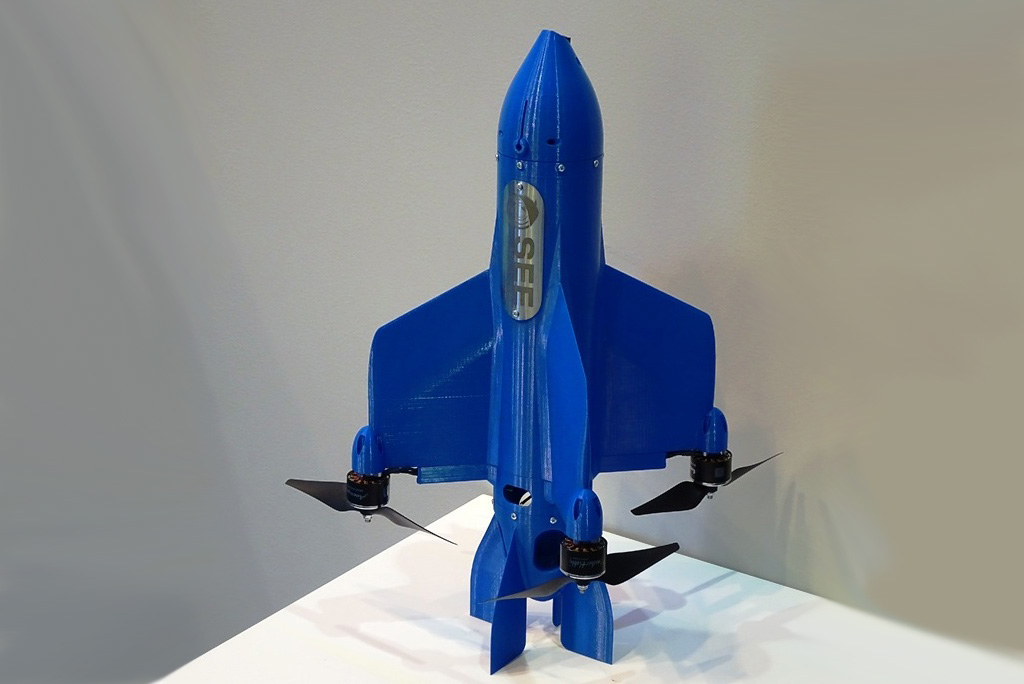
SEEDIS has a maximum take-off mass of 4.5 kg, a warhead mass of 0.8-1.2 kg, and dimensions of 295 x 295 x 640 mm. Its maximum range is 36 km while its tactical operational radius is 18 km. At a 190 km/h cruise speed its flight endurance is 16 minutes, which is reduced to 8 minutes when flying at 320 km/h maximum speed. The SEEDIS maximum flight altitude is 5,000 metres while its operational altitude is 3,000 metres.
The drone’s nose is equipped with day and night cameras. The target detection range is 500-1,000 meters. The warhead is detonated by the operator and can be supplemented by artificial intelligence (AI) elements integrated into the control system. The video transmission range from the nose camera is 12-25 km.
The X-shaped configuration of the SEEDIS interceptor drone is essentially like that of many other effectors of that type, including that of General Cherry’s Bullet interceptor drone, which was unveiled at the same UMEX 2026 exhibition. This configuration provides the drone with increased manoeuvrability against agile targets in various UAV interception scenarios, such as curved chase or parallel approach. Four electric motors with two-bladed propellers are mounted at the tips of the four delta wings, generating the X-shaped architecture.
SEEDIS is compatible with existing air defence and C2 systems and can operate in a networked environment in the presence of EW systems and without GNSS signals.
The Russian-Ukrainian conflict has effectively become a global testing ground for counter-drone defence. Over several years of combat, numerous interception schemes have been tested, numerous interceptor drone models have been developed and deployed, and practical experience in their combat use has been accumulated. The emergence of interceptor drones was a response to several structural challenges: the dramatic reduction in the cost and the widespread proliferation of UAVs among the two parties in conflict, the lack of equivalent countermeasures, and the limited survivability of traditional anti-aircraft missile systems near the line of contact.
However, it is already clear that interceptor drones are not a universal solution. Even propeller-driven aircraft optimized for altitude and maximum speed, with their limited battery life, are virtually ineffective against jet-powered drones and cruise missiles. The transition to high-speed systems will inevitably lead to a significant increase in cost and operational complexity, which contradicts the principle of mass production.
The current generation of interceptor drones has proven its combat effectiveness and has become one of the means of monitoring low- and medium-level airspace. However, this likely represents an intermediate stage of technological development rather than a fully formed class of air defence weapons. Further evolution, particularly in the area of countering operational and strategic fixed-wing UAVs, will be determined not by individual successful examples, but by the ability to integrate such systems into a unified air defence architecture.
Photos by N. Novichkov