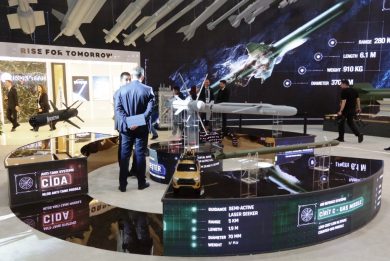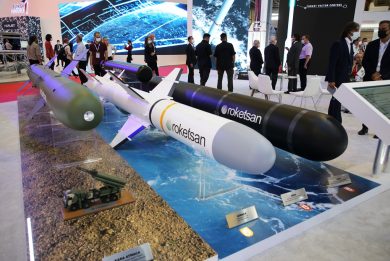
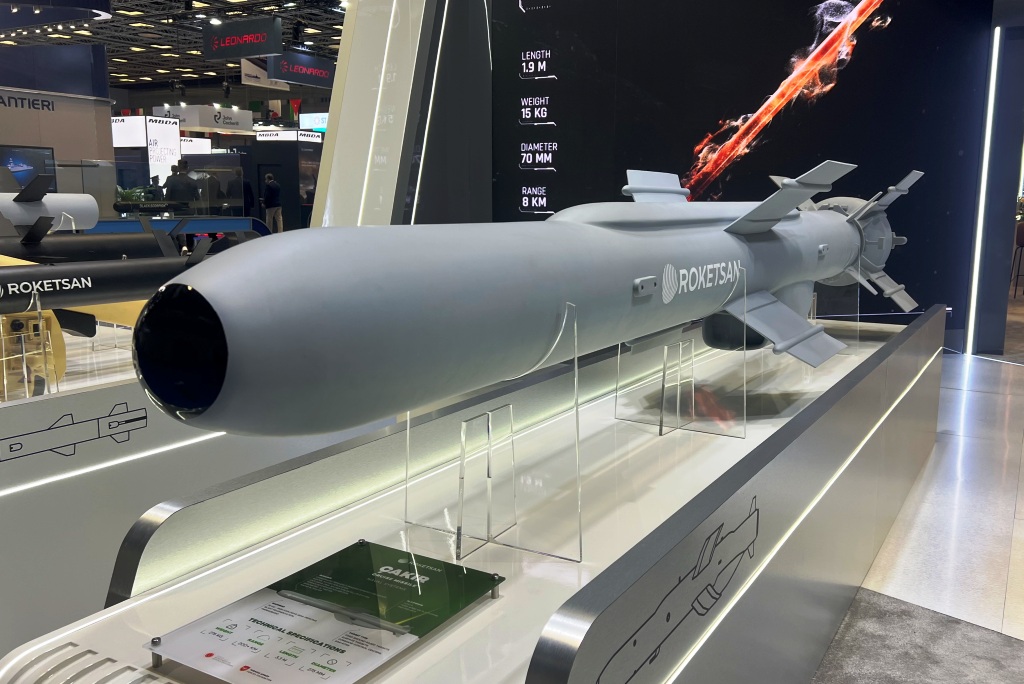
DIMDEX 2026 – Çakir: Roketsan’s compact strike cruise missile takes centre stage
Roketsan’s Çakir cruise missile is emerging as one of Türkiye’s most versatile tactical strike weapons, and its presence today at the Doha International Maritime Defence Exhibition and Conference (DIMDEX) in Qatar underlines the system’s growing export ambitions and operational relevance. Designed as a compact, multi platform cruise missile, Çakir brings a blend of long‑range precision, low observability and flexible warhead options that directly target the needs of modern naval and joint forces operating in complex littoral and land environments
At DIMDEX, Çakir is presented as part of a wider Turkish offering that spans air, land and maritime capabilities, but the missile stands out as a core enabler of stand‑off strike for a broad range of platforms. Roketsan positions the system as a force multiplier that can be integrated on fast attack crafts, corvettes, coastal defence batteries, manned aircraft and unmanned combat aerial vehicles, giving commanders a common strike effector across domains. This multi‑platform approach is particularly attractive in the Gulf, where navies and air forces seek to counter both traditional naval threats and more diffuse challenges such as asymmetric surface craft and land‑based missile batteries.
Technically, ÇAKIR is a subsonic cruise missile built around a compact airframe with a length of approximately 3.3 metres in its air‑launched configuration, increasing to about 3.8–4.1 metres when fitted with a booster for surface launch. Depending on the variant, overall launch mass is in the 275–350 kg class, making it small enough for carriage by tactical aircraft and large unmanned systems while still carrying a substantial warhead. The missile’s maximum body diameter remains under 300 millimetres, a key factor for fitting multiple rounds under a wing or on deck launchers without heavily penalising platform payload capacity.
Propulsion is provided by a compact turbojet engine fed by an integral fuel system, giving Çakir a high subsonic cruise speed typically quoted between Mach 0.75 and Mach 0.85. Surface‑launched versions use a solid‑fuel booster to accelerate the missile out of the canister before the turbojet takes over for the main cruise phase, a classic solution that simplifies integration on ships, trucks or coastal defence launchers. With this arrangement, the missile offers a range in excess of 175+ km for air‑launched missions and over 150 km from surface platforms, allowing stand‑off engagements well outside the reach of many short‑ and medium‑range air defences.
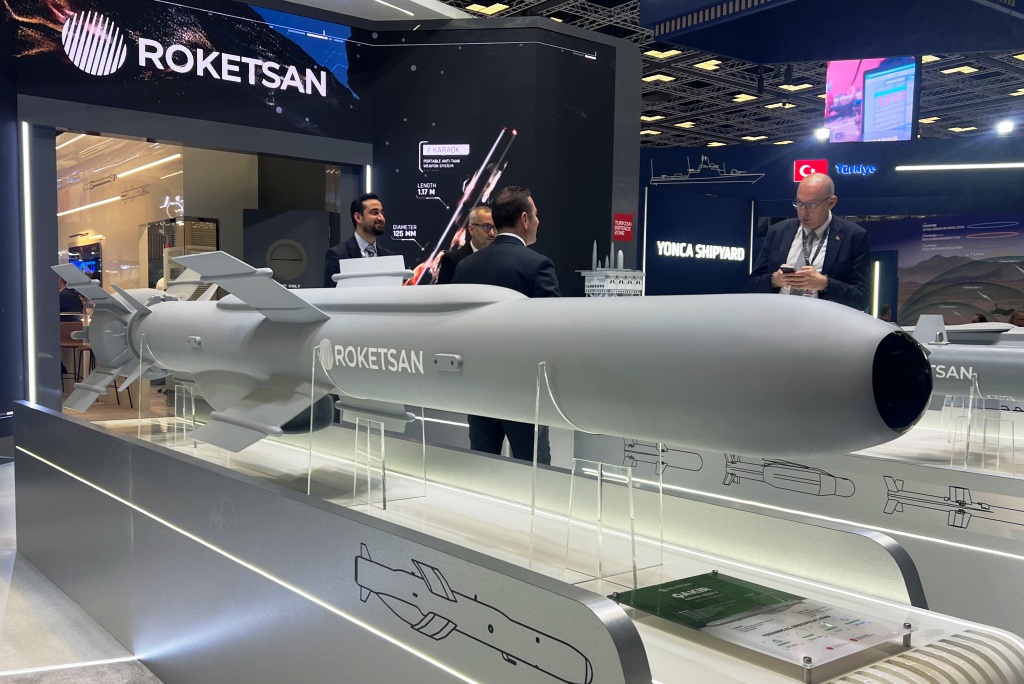
Roketsan has placed particular emphasis on guidance, navigation and survivability. Çakir combines an inertial navigation system with an anti‑jam global navigation satellite system, backed by radar and barometric altimeters and, in some configurations, terrain‑referenced navigation. This suite allows the missile to execute low‑altitude sea‑skimming or terrain‑following profiles, minimising radar line‑of‑sight and exploiting coastal clutter to delay detection and engagement by shipborne or land‑based radars. In the terminal phase, the missile can be fitted with a selection of seekers, including imaging infrared (IIR), radio‑frequency (RF) or a hybrid IIR+RF head, giving flexibility against different target sets and levels of electronic counter‑measures.
The warhead is another area of modularity. ÇAKIR carries a payload of around 70 kg, but ROKETSAN offers several effects within that envelope, including high‑explosive blast‑fragmentation, semi‑armour‑piercing and thermobaric options. This allows operators to tailor the missile to roles ranging from the neutralisation of small surface combatants and fast attack craft to the destruction of coastal infrastructure, hardened positions or critical nodes ashore. In practice, a navy equipping a fast attack craft with multiple rounds can mix warhead and seeker configurations in a single salvo, complicating the defender’s calculations and improving overall mission lethality.
A defining element of the Çakir concept is its network‑enabled and cooperative engagement capability. Roketsan has highlighted the missile’s potential for swarm employment, in which several weapons share data, coordinate their approach and deconflict aim points in flight. Such behaviour enables complex attack profiles, including sequential or multi‑axis strikes designed to saturate hard‑kill defences and exploit gaps in a ship’s sensor coverage. When linked to off‑board targeting from UAVs or maritime patrol aircraft, Çakir can thus form part of a broader kill‑web, rather than functioning as an isolated, fire‑and‑forget weapon.
For Qatar and other Gulf states attending DIMDEX, the Çakir missile aligns closely with current procurement trends towards compact, exportable cruise missiles that can be integrated on a variety of indigenous and foreign‑built platforms. In Qatari service, the missile has already been associated with fast attack craft projects, where it provides a long‑range anti‑ship and land‑attack punch on relatively small hulls optimised for operations in the confined waters of the Gulf. The ability to deploy the same missile family from coastal batteries or airborne platforms further increases deterrence by complicating an adversary’s assessment of where a threat may originate.
By showcasing Çakir prominently at DIMDEX in Doha, Roketsan is not only courting potential customers in the Gulf and beyond but also signalling the maturity of Türkiye’s domestic cruise‑missile industrial base. With serial production underway and flight‑test campaigns already demonstrating successful hits from UCAVs against maritime targets, the missile, which was unveiled at Farnborough International Airshow 2022, is transitioning from brochure concept to operational reality. In the crowded tactical cruise missile market, Çakir’s blend of compact dimensions, multi‑platform integration, modular seekers and warheads, and cooperative engagement features ensures it will remain a system to watch on the DIMDEX show floor and in future regional inventories.
Photos by J. Roukoz