EFES 2026 – ASFAT Karavu, a new interceptor drone to chase enemy UAVs
At the Turkish defence industry exhibition linked to EFES 2026, the largest exercise of the Turkish Armed Forces, ASFAT, the company controlled by the Turkish Ministry of National Defence that was established in January 2018 with the aim of improving operational excellence by simultaneously enhancing the capabilities and capacities of military factories and shipyards, unveiled a new product, the Karavu interceptor drone
The increasing threat posed by UAVs and FPVs is generating a series of soft- and hard-kill defensive systems. The Karavu, unveiled by ASFAT at EFES 2026, adds to the systems of that category recently unveiled by the Turkish defence industry at SAHA Expo, which closed its doors only 10 days ago.
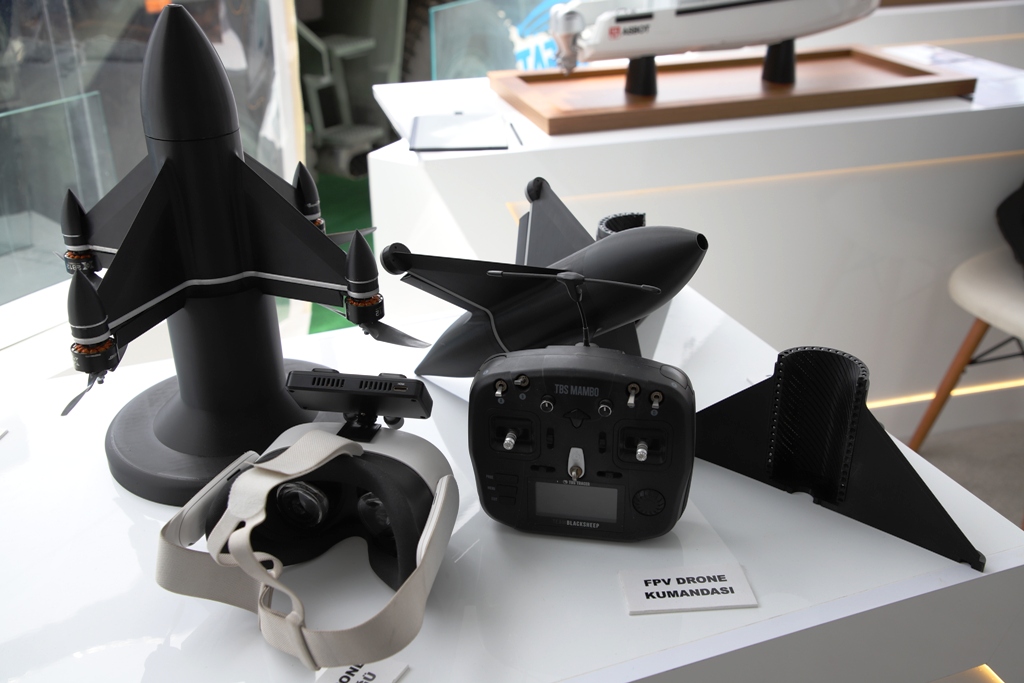
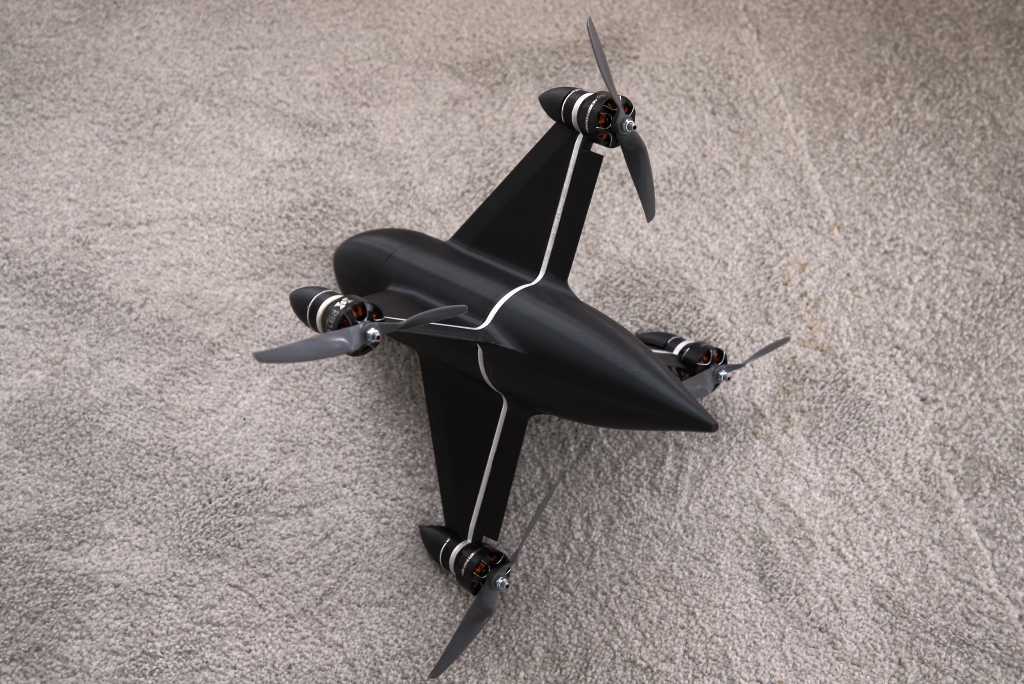
The Karavu has the architecture that characterises most of today interceptor drones, with an aerodynamic fuselage, short delta wings in an X-configuration, each carrying at its tip a nacelle containing an electric motor that activates a two-blade pushing propeller.

ASFAT underlined that the motors are made by the company itself, while for the time being propellers are acquired from a third party, a three-blade propeller produced in house used on another ASFAT UAV was visible, the company aiming at extending its capacity to produce nearly the whole components in house. The front of the system hosts the sensor, which can be either a daylight camera or an uncooled thermal imager. Instead of installing both sensors, ASFAT chose to provide the user with both systems, the front section being quickly interchangeable, depending on the situation.

The central section, which carries the wings, is in fact also the warhead; ASFAT adopted a peculiar architecture, where the carbon fibre structure of the fuselage contains small metallic spheres, which represent the fragments that will be launched in a 360° pattern when the explosive charge is detonated. According to ASFAT representatives, the special design adopted requires only 25 grams of C4 explosive to guarantee the sufficient kill capability. The rear of the fuselage is aerodynamically shaped, and to keep the Karavu vertically before launch a light base is used.
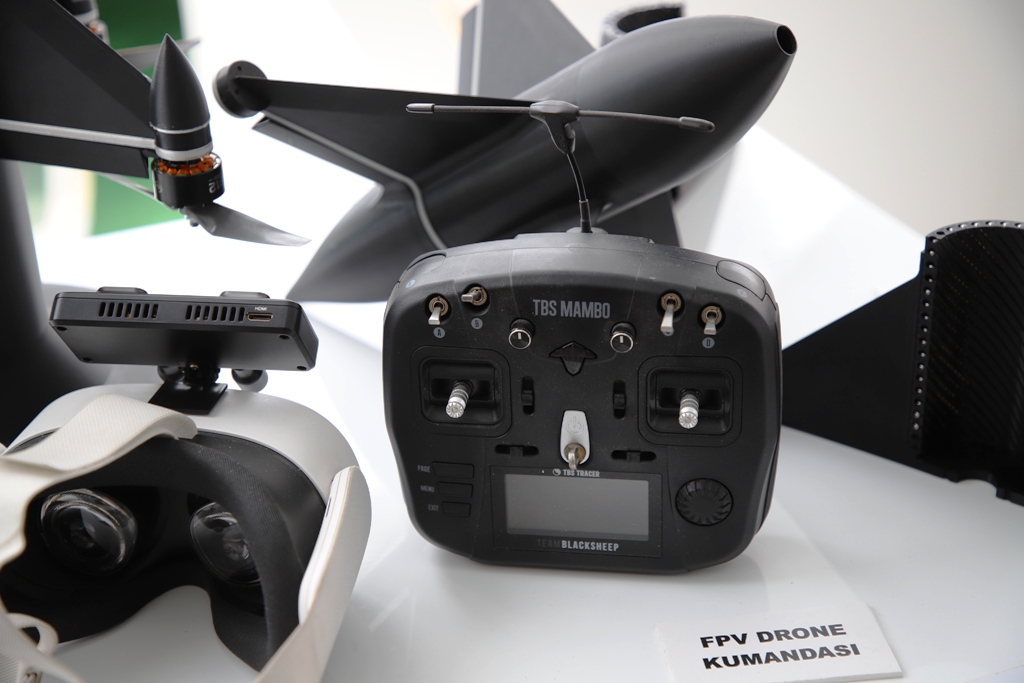
The Karavu has a mass of 1.55 kg, a15 minutes endurance, and can reach a target at 7 km distance, which is the maximum range of the ground control station. It can reach a maximum speed of 400 km/h. The light remote control is complemented by virtual reality goggles that allow the operator to follow the action. It can be used either in FPV-mode or it can lock-on to the target. The Karavu is produced at the 44th Main Maintenance Factory Directorate (MMFD) facility which is located in Izmir.

EDR On-Line understood that two new systems are in advanced development phase at ASFAT. One is a scaled-up version of the Karavu, which will have a mass around the double of the current system but a speed around half of it. The second new interceptor will be powered by a turbojet rather than by propellers, and should have a maximum speed around Mach 1. The first flight is forecasted within three months.
Photos by P. Valpolini