Irish Air Corps expansion into an Air Force
The core mission of Ireland’s Armed Forces is the defence of the State from armed aggression. In February 2025, the government pledged to increase defence spending to € 1.5 billion by 2028 and increase personnel numbers. Ahead of Ireland’s presidency of the Council of the European Union in the second half of 2026, the government has signalled that strengthening air surveillance capabilities will be early priorities. The main beneficiary of these increases will be the Irish Air Corps, established as an Army Air Corps in the 1920s, its today’s role under the Irish Defence Act is to contribute to the security of the State by providing for the military air defence of its airspace
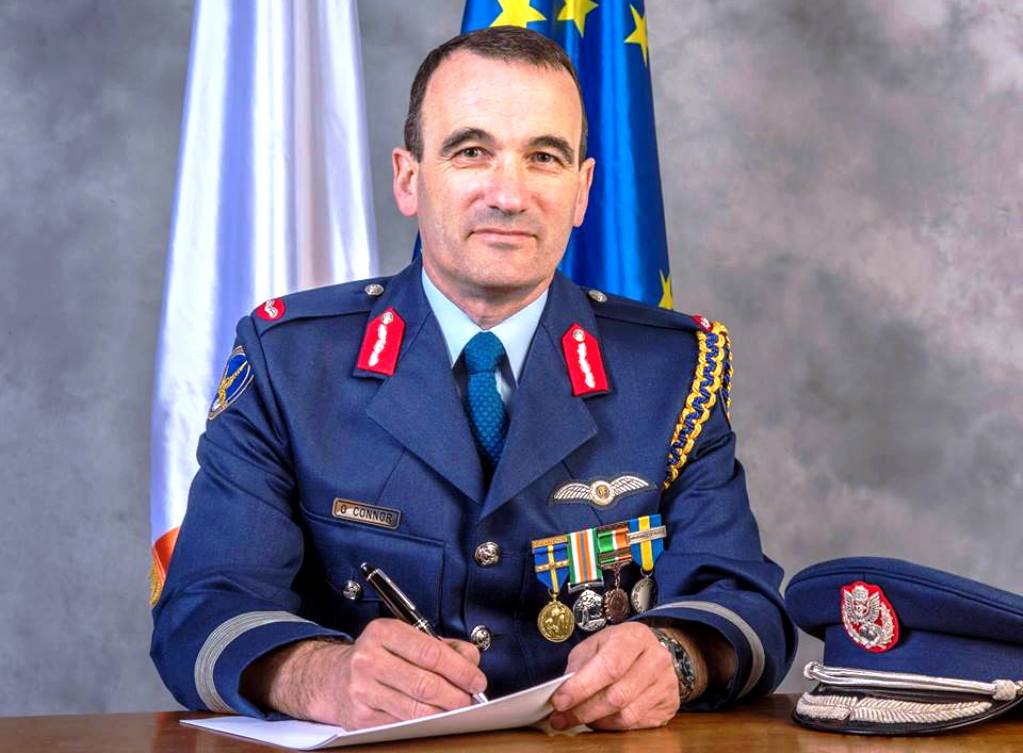
Its current General Officer Commanding (GOC) is Brigadier General Rory O’Connor who enlisted in the Air Corps as an Apprentice in 1982 and completed his pilot’s training in 1989. He was appointed GOC in April 219 having logged in excess of 5,500 flying hours.
When asked to describe the current state of the Air Corps Brigadier O’Connor told EDR On-Line that although defence spending has improved, one of its challenges is retention, especially of experienced personnel. “These include instructors as well as engineering staff. We are looking at various ways of improving this situation, including asking those who have left the service, to reapply for short term postings. We are also looking to develop an Air Corps reserve.”
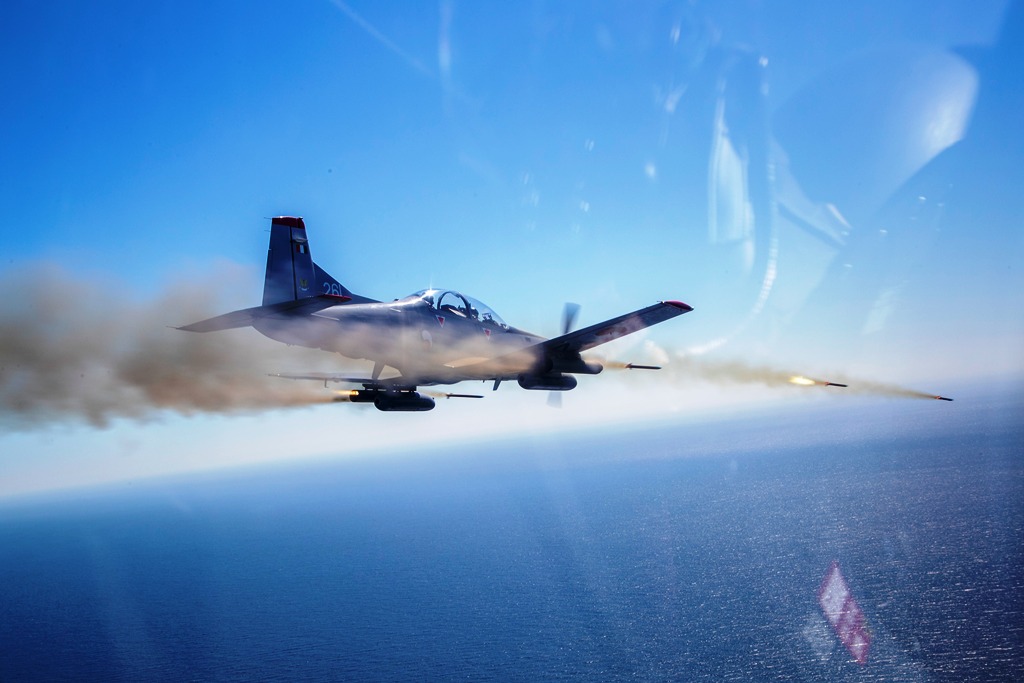
With regard to Air Corps pilot training, he said that eight to 10 cadets a year are trained to fly at Baldonnel. After ground school they all undertake 150 hours training on the Pilatus PC-9M as well as time on the simulator. Pilots have also received training with the Royal Australian Air Force on the King Air.
“On completion of the ‘Wings’ course, students will be streamed into either fixed wing or rotary wing operations. The EC135P2+ is utilised as the main ab initio rotary wing training aircraft and the six-month rotary wing conversion course consisting of between 90 and 100 hours during which students will complete a variety of military rotary wing operations such as abseiling drills, cargo slinging, mountain flying and tactical formation.
“In 2025 Royal Air Force wings were presented to four Air Corps trainee pilots who passed their basic helicopter training at RAF Shawbury. The cadets began their 15 months training course of 140 hours, having never flown a helicopter.
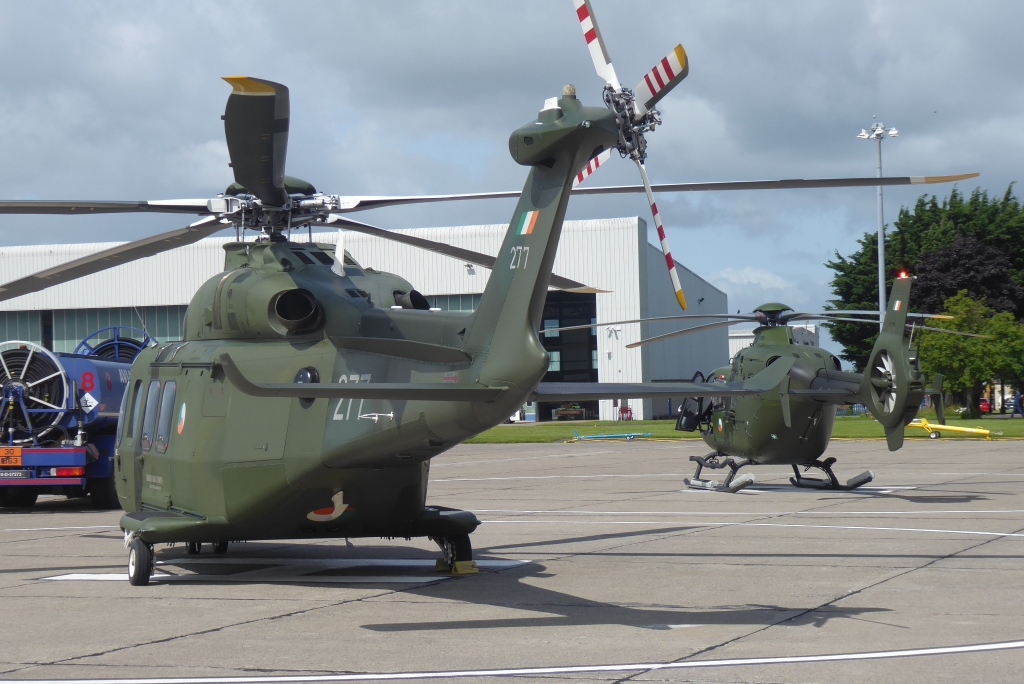
AW139 helicopter pilots and maintenance engineers undergo training at the Leonardo Helicopter Training Academy at Sesto Calende in Italy and have also attended the US Air Force 53-hour High Alpine Advanced Flying Technique (HAAFT) course at Malmstrom Air Force Base in the United States. There is also a AW139 Search and Rescue Rear Crew Trainer supplied by VRAI. However, under the 2025 Detailed Implementation Plan, the Super Medium replacement plan for the AW139 is already underway.
EC135 instructor pilots receive regular flight and simulator training with Airbus Helicopters at Donauwörth in Germany. O’Connor told EDR On-Line that Air Corps personnel also pilot the Garda Air Support Unit’s two EC135T2+ helicopters, soon to be replaced by H145s, on a 2–3-year tour and it provides maintenance facilities at Casement on behalf of the Department of Justice.
Four Airbus Helicopter H145Ms have been ordered to replace the EC135s in early 2027 configured for multi-role operations including light attack, intelligence and surveillance, maritime security, and utility roles,
Following recent reports of Russian naval activity near fibre-optic cables off Ireland’s southwest coast EDR On-Line asked the Brigadier how the Air Corps is adapting to the changing geo-strategic circumstances.
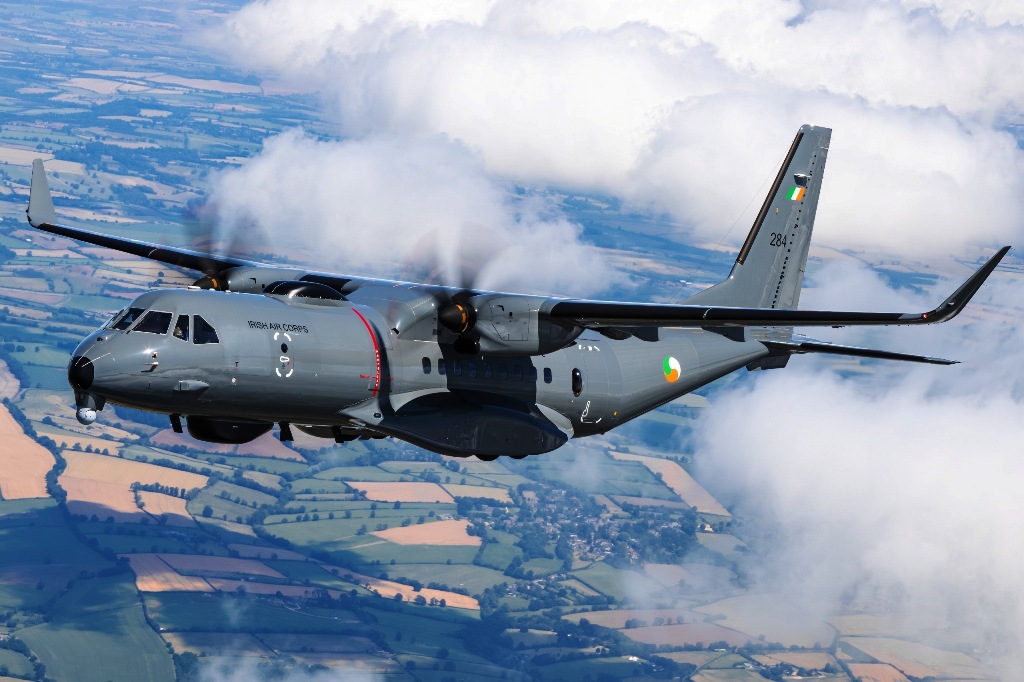
“The maritime domain is now our biggest challenge. Approximately 450,000 km2 of this area falls within 200 nautical miles of Ireland’s shores making it part of our Exclusive Economic Zone (EEZ) which is the third largest in Europe. We have two Airbus C295 maritime reconnaissance aircraft that were delivered in 2023.
They are configured with Airbus’s Fully Integrated Tactical System (FITS) mission equipment optimised for maritime surveillance and fisheries protection tasks. They also feature Collins Aerospace Pro Line Fusion avionics.
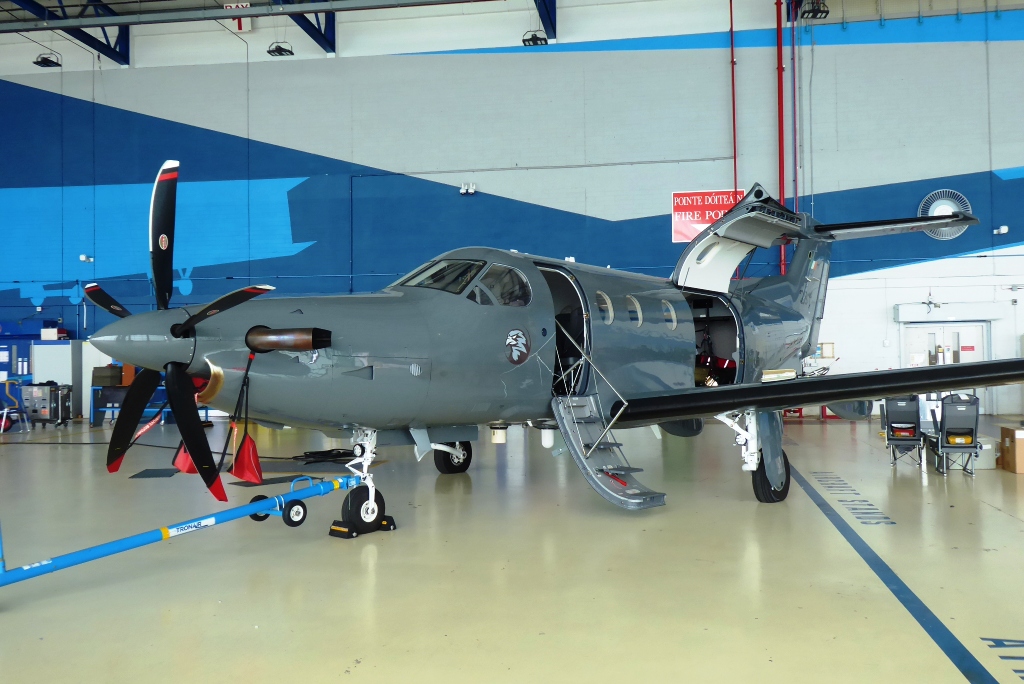
“Coastal surveillance is also one of the Air Corps’ three Pilatus PC-12NG Spectra’s roles equipped with a deployable electro-optical and infrared sensor suite. A fourth PC-12 is used in the transport role.”
He added that maritime MALE drones may be acquired which could be part of an embryonic space defence unit as part of a future Air Corps structure.
On 12 January 2026, the UK Minister for the Armed Forces Al Carns confirmed that RAF combat aircraft access to Irish airspace “is managed through extant diplomatic channels as per international norms with clearance being requested and granted for state aircraft under set conditions. UK military aircraft do not enter the sovereign airspace of Ireland for operational purposes, without the express prior agreement of the Irish Government”.
The Air Corps has not operated combat capable aircraft since 1998, when its Fouga CM170 Magisters were retired. As tensions rise on Europe’s borders with Russia whose traffic across the North Atlantic continues to increase, Brigadier O’Connor was asked if Ireland was closer to purchasing modern combat capable aircraft, something that was first proposed in a 2015 White Paper. He said, “It is something that may happen in the next decade. Fighter aircraft such as the Saab Gripen or FA-50 could be options if funding is available. However, it would have to involve a new advanced training programme. The PC-9N needs replacing and options could include a new fleet of jet trainers, using the International Flight Training School in Italy, or via a training package included in a contract for a new combat aircraft.”
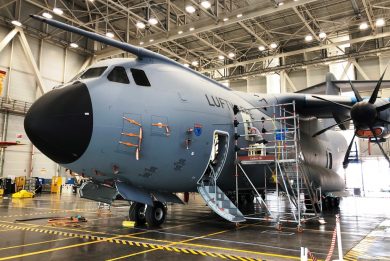
Meanwhile in October 2025, the Air Corps took delivery of its third Airbus C295, completing a € 300 million programme to strengthen both its maritime patrol and transport capacity and in December it was joined by a € 53 million Dassault Falcon 6X for VIP government transportation or repatriation of Irish Defence Forces personnel deployed on its overseas missions.
As part of Dublin’s comprehensive plans to transform its defence forces, the Air Corps will become a fully-fledged Air Force as early as 2027.
Photos courtesy Irish Air Corps and D. Oliver