
Leonardo Hystrix 76 ADS, a land-based air defence and C-UAS based on the 76/62 naval gun
The increasing importance of air defence assets led Leonardo to launch the Michelangelo Dome modular, open, scalable and multidomain advanced integrated defence system, which was unveiled in late November 2025. Based on a strong C5 system and multiple sensors and effectors, creating a first modular defensive barrier defined as the “Dead Zone” where the enemy threat is neutralised by point defence effectors. During a presentation at its facility in Brescia, northern Italy, Leonardo unveiled how it intends exploiting its naval artillery systems to generate land-based effectors, which can be static, relocatable, or mobile, this new family of systems being named Hystrix, hedgehog in Latin language. The first layer of the land artillery component derived from naval guns is the Hystrix 76 ADS, for air defence system
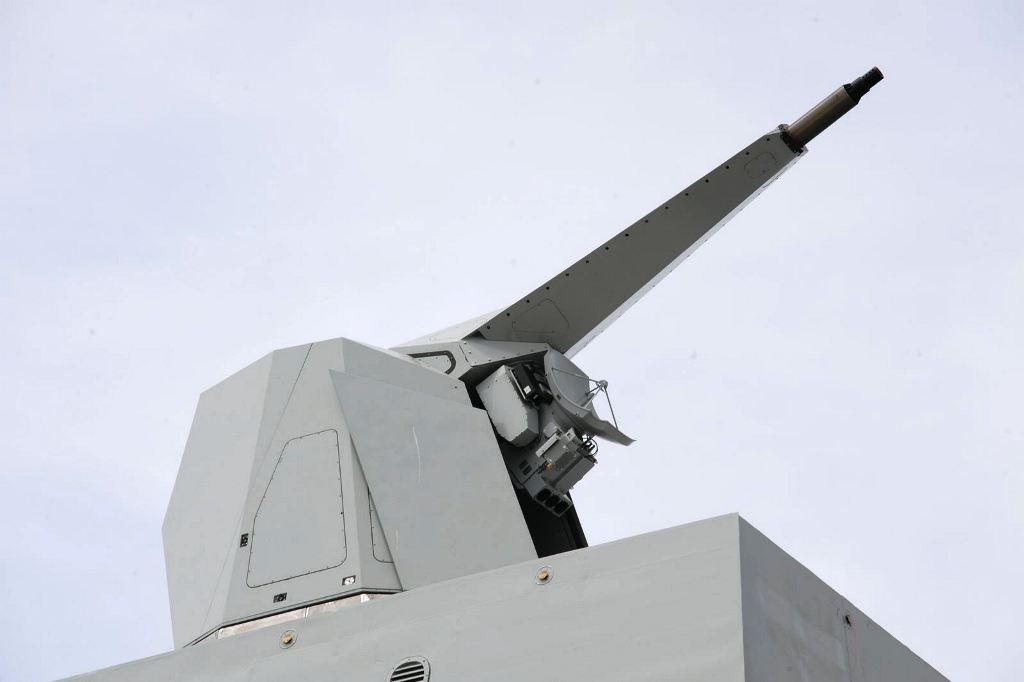
The longer-range Hystrix effector is based on its worldwide used 76/62 mm, more specifically the “SP” version, for SovraPonte, the variant that does not intrude below deck and is therefore easily installable for example on a trailer. This is exactly what Leonardo is doing, announcing that a prototype will be available before year end, the system being known as Hystrix 76 ADS, for air defence system.
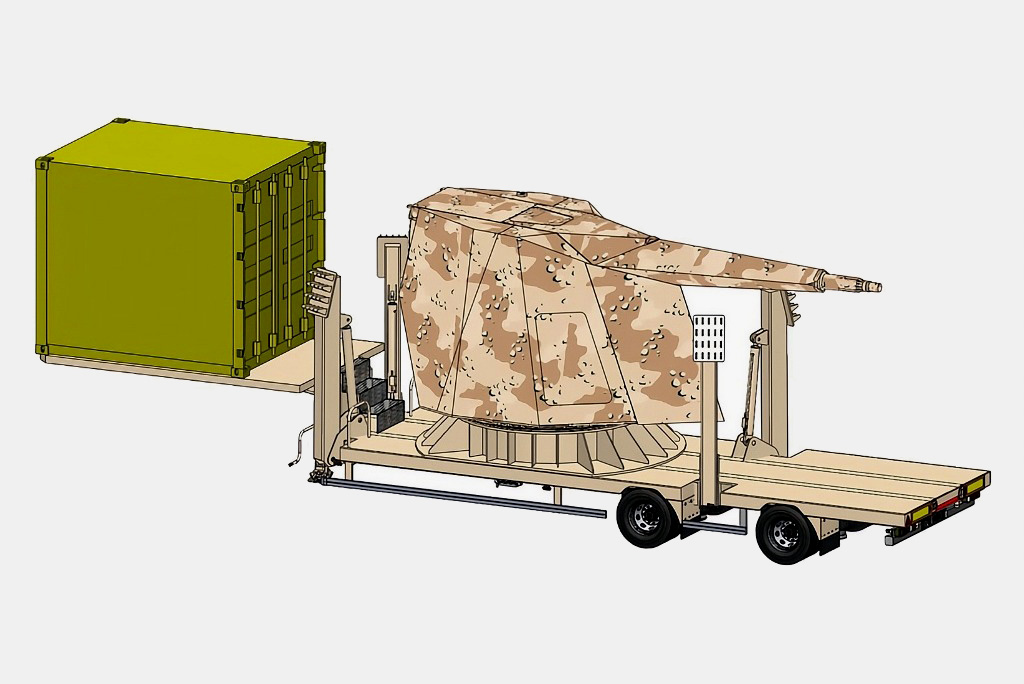
Development activity is ongoing, the project being self-financed by the company; renderings show a flatbed trailer with two axles, fitted with four hydraulic outriggers, with a platform over the towbar. The gun is located on the flatbed, slightly ahead of the front axle, while the platform hosts a container that houses electronics controlling the gun, communication systems ensuring data link connection to command-and-control systems, and a generator powering the whole system. Currently the system is using a 10-foot standard container, but Leonardo engineers aim at reducing its size, volume, and mass.
The gun is remotely controlled, a two-way data link sending firing mission data to the Hystrix 76 ADS, while the latter sends back to the command post all information concerning the system status, allowing the C2 system to assign fire missions also considering, for example, remaining ammunition on each effector. This means that it is possible to leave the guns on the field and remotely control them
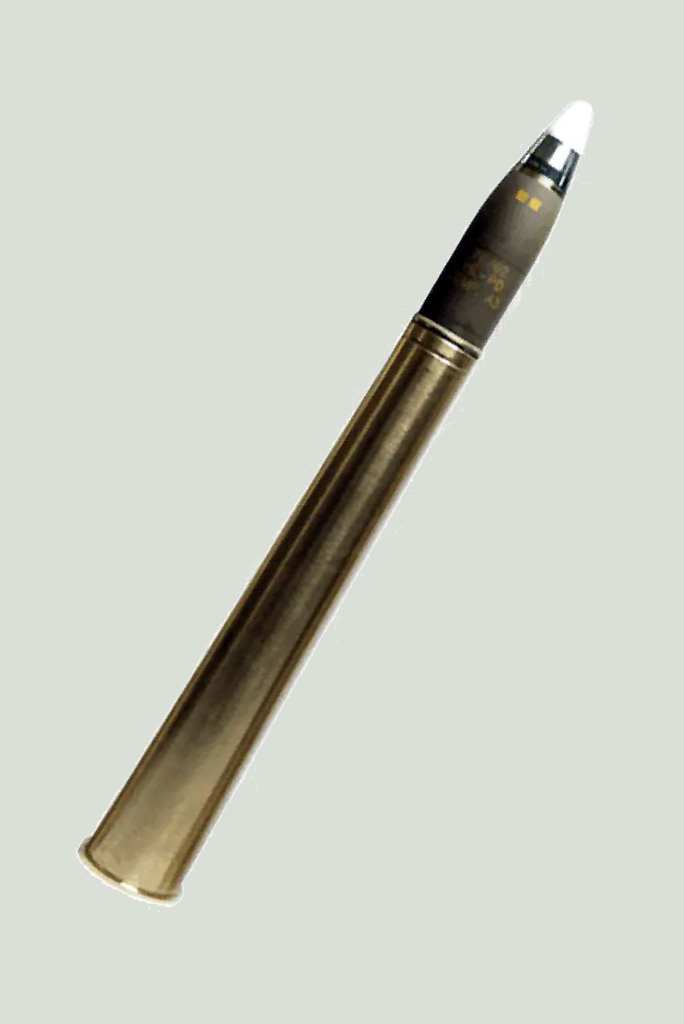
Capable to fire over 360° continuously, with an elevation arc of -5°/+85°, it has a dual feed capacity with 36 rounds per magazine. The 76/62 mm gun can use a wide variety of ammunition, among those the rounds considered more suitable for air defence purposes are the HE-PF-IM6-OES fitted with the 3AP multifunctional programmable fuse [1], the HE-MOMA1 (MOM standing for Multirole OTO Munition) with the 4AP fuse [2], the Vulcano 76 BER with the MFF BER fuse [3], and the DART guided munition with the MFF DART multi-function programmable in-flight fuse [4]. Two more rounds will be soon available, their development being in an advanced stage, the Vulcano 76 GL IR and the Vulcano 76 GLR SAL, respectively with an infrared and a semi-active laser seeker. When using DART ammunition the gun must be equipped with the corresponding Davide guidance kit; EDR On-Line understood that Leonardo is developing a new guidance kit, named Davide Plus, which will ensure not only the projectile guidance but also tracking, making the gun working as a stand-alone system once it has received the firing data from the command centre.
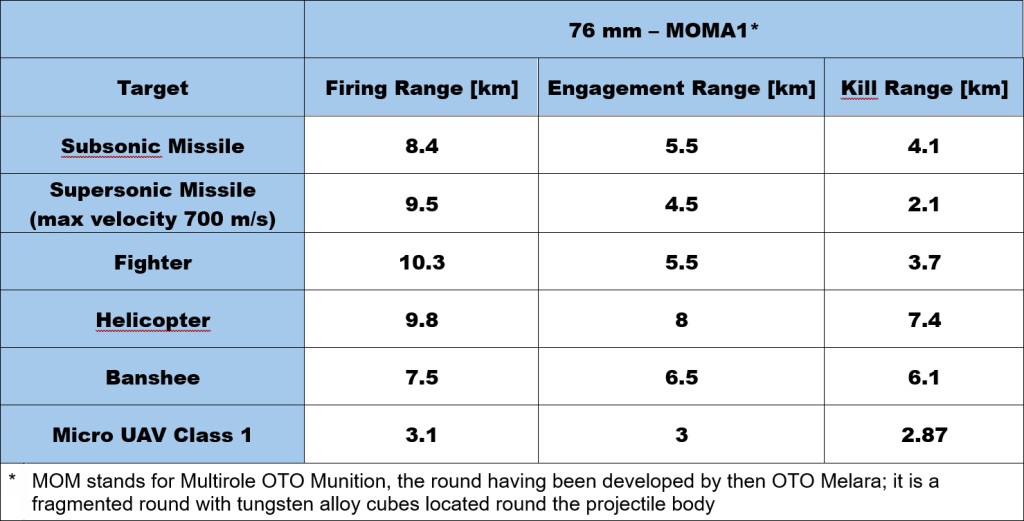
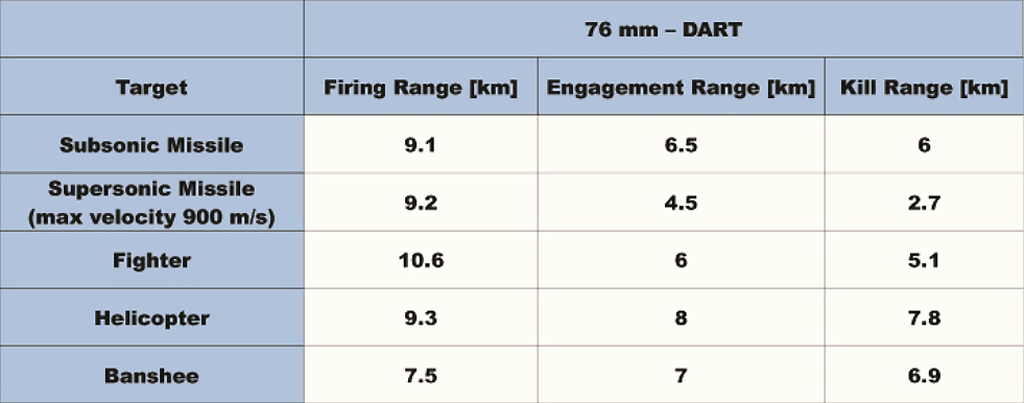
According to Leonardo, existing ammunition have proved to be fully efficient against drones; during the presentation the company provided range data against different types of targets for two of them, the 76 mm MOMA1 and the 76 mm DART (click on link to see table). While some doubts exist about the capacity of a proximity fuse to detonate the round passing close to a small drone, Leonardo demonstrated this ability in the La Spezia Navy range, where the 4AP fuse set in proximity mode initiated the kill chain while passing at 2-3 metres from a Class 1. According to the company the main difficulty is not so much to kill these drones, but rather to see it, and under that aspect Leonardo representatives told EDR On-Line that the company C-band Tactical Multi Mission Radar (TMMR) performed very well during a demonstration, the blast of a 76 mm round destroying multiple drones should a swarm be targeted, such calibre being even an overkill against some types of UAVs.
The Hystrix 76 ADS is being considered for fixed installations or as a relocatable system, either mounted on a truck flatbed or on a trailer. With a dry mass of 7,000 kg, considering 12.5 kg an average mass for a 76 mm round this adds 900 kg, it is not deemed suitable for mobile applications. To add a lighter 76/62 mm gun capable to be installed on 8×8 or tracked platforms Leonardo decided to develop a wholly new system, however obtained reusing several sub-assembles already available. The result is a less than 4,000 kg system named Hystrix 76 ADS Light, which maintains the elevation arc of the heavier gun, but with a slightly reduced rate of fire, 100 rounds per minute, and fewer rounds, slightly over 40 for an around 500 kg mass, the exact number of rounds being not yet available. The company engineers exploited as much as possible existing components: the loading tray, the breech block, the transfer tray assemblies and the cradle interfaces come from the 76/62 Compact; the barrel assembly and recoil brakes come from the 76/62 SP; the ammunition handling system architecture is derived from that used in the 76/62 SR (Super Rapido) DF/MF (Dual Feeding/Multi Feeding), while the training bear is taken from the HITFACT MkII, the land turret armed with a 105/120 mm gun.
As said, Leonardo intends starting first trials of the Hystrix 76 ADS before year end, while a Hystrix 76 ADS Light prototype will be available at a later date, no timeframe being declared by the company.
Graphics courtesy Leonardo, photos courtesy KNDS Ammo Italy and L. Peruzzi
[1] This fuse provides the following modes: proximity, impact, delayed impact, time.
[2] This fuse provides the following modes: proximity, impact, delayed impact, time, height of burst.
[3] This fuse provides the following modes: proximity, impact, delayed impact, time, height of burst.
[4] This fuse provides the following modes: proximity, impact, delayed impact, time self-destruction.