UMEX 2026 – Kalashnikov unveils upgraded Goliath and Karakurt mini-UAVs
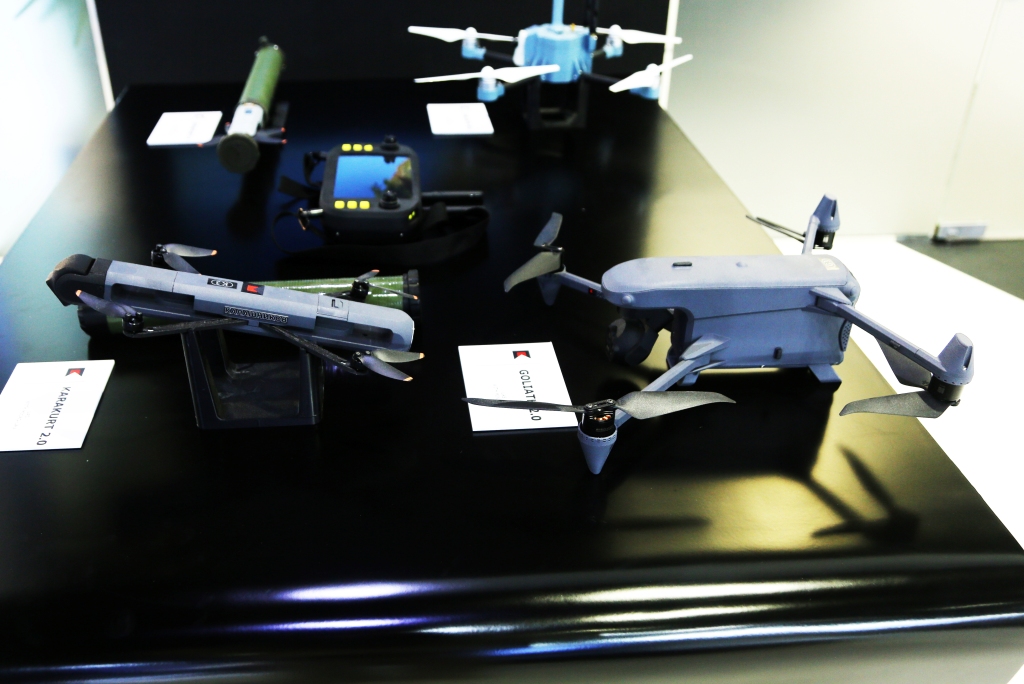
At the Abu Dhabi exhibition dedicate to unmanned systems the Kalashnikov Concern unveiled its extensively upgraded Goliath 2.0 and Karakurt 2.0 small, rotary wing unmanned aerial vehicles (mini-UAVs). EDR On-Line previously reported on the initial versions of these mini-UAVs, but at UMEX 2026 the vehicles presented were upgraded based on combat performance in Ukraine
The Goliath 2.0 and Karakurt 2.0 mini-UAVs are designed for reconnaissance. Both systems can search, detect, identify, and track static and moving targets. They are equipped with a jam-resistant radio communication system with integrated encryption algorithms and pseudo-random frequency hopping, enabling reconnaissance missions in the presence of electronic warfare (EW) systems. The mini-UAVs are equipped with various operator assistance systems, including optical positioning, target acquisition, holding, and tracking, emergency alerting, and others. Furthermore, the Goliath 2.0 and Karakurt 2.0 are integrated into the joint information exchange system for transmitting data to the command post.
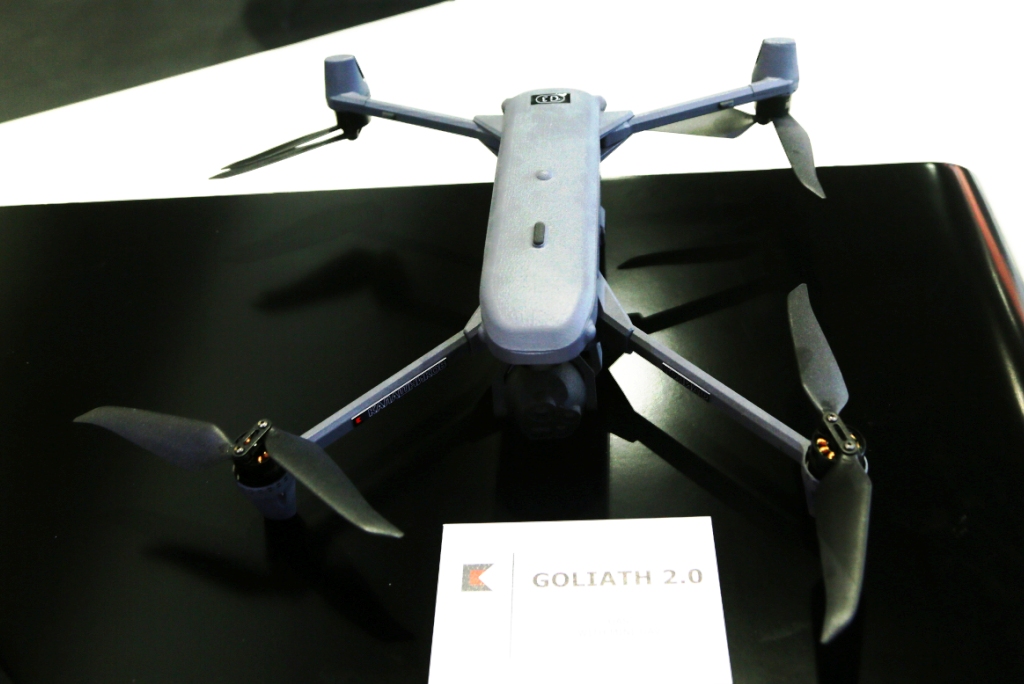
The Goliath 2.0 mini-UAV’s optical-electronic reconnaissance module features a high-resolution three-axis stabilized daytime camera with a telephoto and wide-angle lens, 30x zoom, a thermal imaging camera with high sensitivity, all fitted into a gyrostabilized gimbal. The thermal imaging camera has a 640 x 480 pixels resolution and is fitted with a 4x digital zoom. The drone is equipped with obstacle avoidance and threat warning systems to avoid other UAVs. The maximum takeoff mass is 1,500 grams, the maximum flight time is up to 40 minutes, the maximum range is 10 km, and the maximum flight altitude is up to 500 metres.
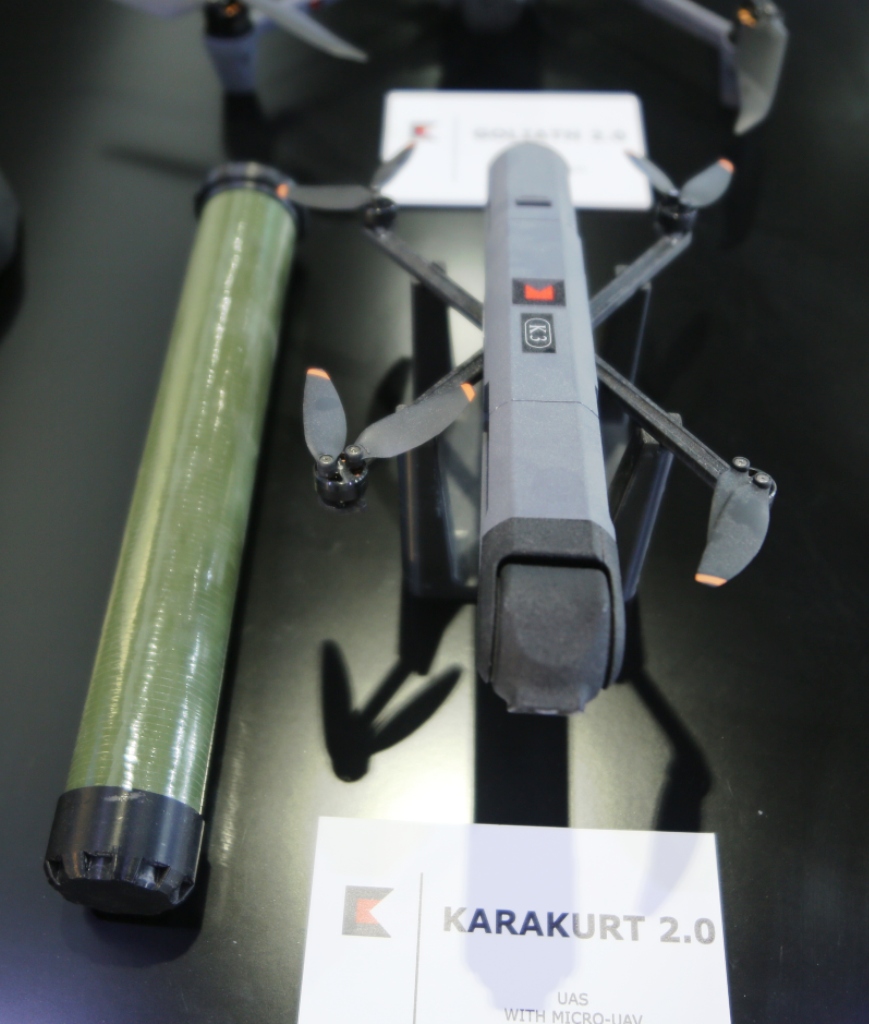
The Karakurt 2.0 mini-UAV’s dimensions allow it to be mounted on a soldier’s equipment or backpack. The UAV is fitted with an optronic reconnaissance module with a high-resolution daytime camera (1920 x 1080 pixels) and 10x zoom, as well as a thermal imaging camera with high thermal sensitivity, a 640 x 480 pixels resolution and 4x digital zoom, mounted on a gyrostabilized gimbal. Thanks to the Karakurt 2.0 quick-change lithium polymer 2S battery, the combat crew can conduct aerial reconnaissance continuously throughout the mission. The Karakurt 2.0 has a takeoff mass of 500 grams and is launched directly from a transport and launch container, which protects the drone from water, dirt, and damage during transport. The operator can launch the drone in seconds while walking, running, or from a moving vehicle. This mini-UAV has a maximum flight time of up to 20 minutes, a maximum range of 2,500 metres, and a maximum flight altitude of up to 250 metres.
Photos by N. Novichkov at UMEX 2026