
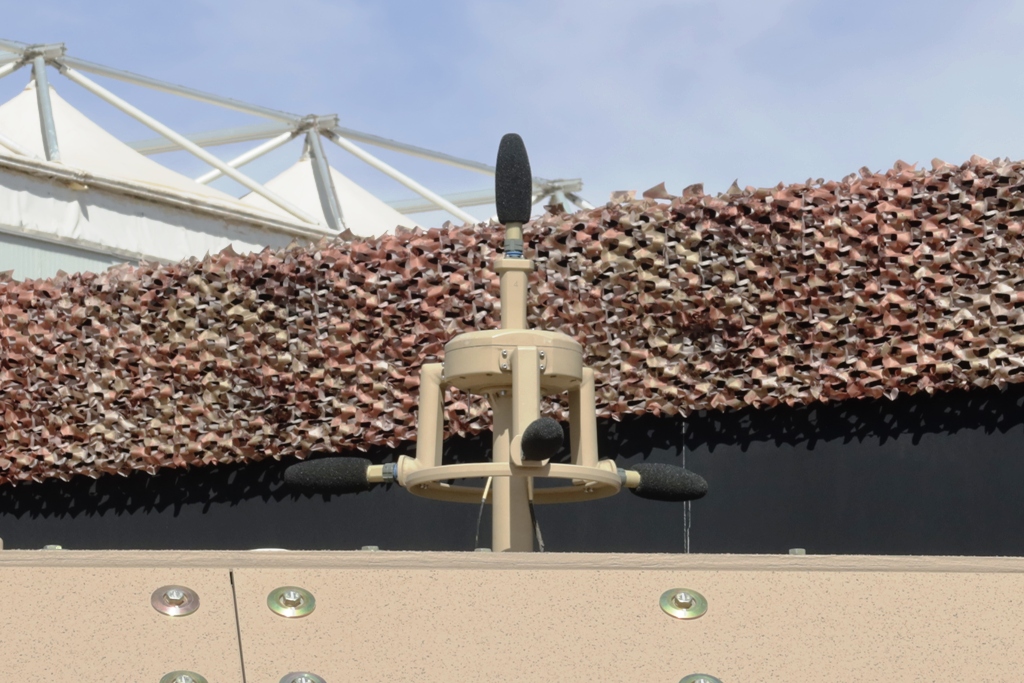
WDS 2026 – Aselsan SEDA 100, a new generation acoustic sensor for modern warfare
Developed by Aselsan, one of Turkey’s leading defence technology companies, SEDA 100 (Shot and Explosion Detection and Analysis system) stands out as one of the most advanced acoustic gunfire and explosion detection systems currently available on the market. Designed as a direct evolution of the original SEDA system, it exemplifies the growing sophistication of Turkey’s defence industry in the field of intelligent land-based sensors.
SEDA 100 is based on a multi-sensor architecture employing several high-sensitivity microphones capable of capturing distinct acoustic signatures generated by small-arms fire, artillery, and explosions. The data are processed in real time by an on-board computer running advanced correlation and spectral analysis algorithms.
By comparing the Time Difference Of Arrival (TDOA) between sound waves reaching each microphone, the system can accurately determine the direction, distance, and type of threat, be it a gunshot, cannon fire, or an explosive detonation. This capability is vital for crew survivability, particularly in constrained or complex environments such as dense urban areas where the risk of crossfire is high.
Aselsan engineers have paid special attention to signal processing and noise discrimination, often problematic on mobile platforms. SEDA 100 effectively differentiates between man-made noise and environmental interference (such as vehicle engines or wind), resulting in a dramatic reduction of false alarms while maintaining rapid system responsiveness.
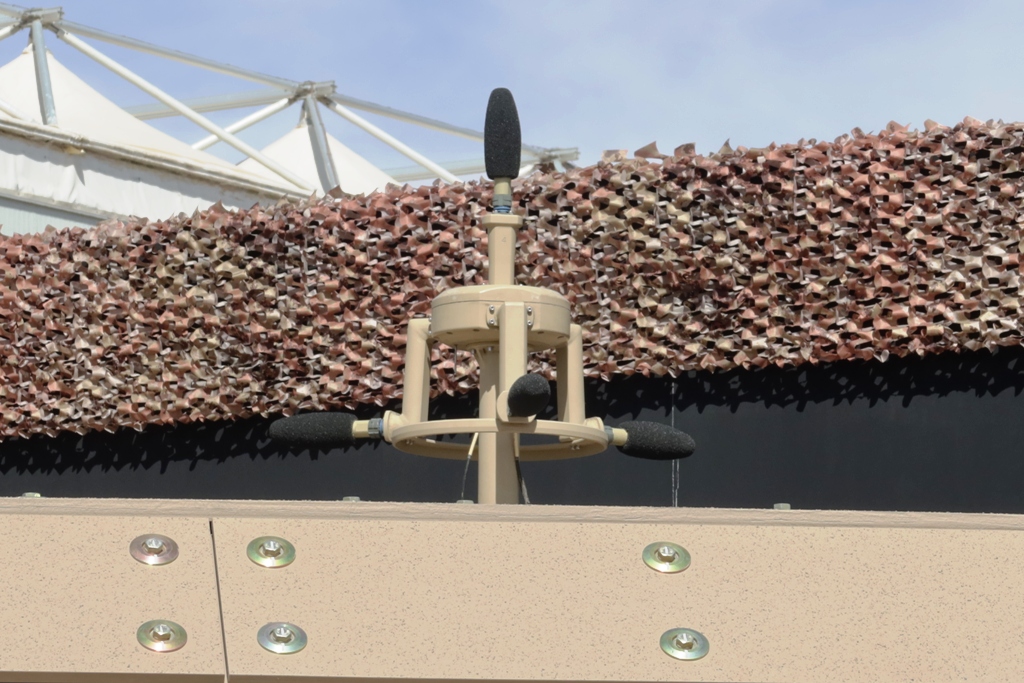
The system’s design follows a modular, network-capable philosophy, allowing seamless integration onto various platforms such as armoured vehicles, reconnaissance platforms, surveillance towers, or static installations. The core processing unit, compact and ruggedised, complies with MIL-STD-810 environmental and MIL-STD-461 electromagnetic standards.
A dedicated control and display unit enables the operator to view threat locations on a digital tactical map or vehicle fire control display. SEDA 100 can connect with battle management and C2 systems, allowing multiple nodes to share acoustic data and triangulate the shooter’s position with greater accuracy and speed.
The system can also be linked to a remote-controlled weapon station (RCWS) or automatic grenade launcher. Once a shot is detected and localised, the turret can be slewed automatically towards the threat bearing, pending human operator confirmation, providing a near-instantaneous response.
In field operation, SEDA 100 achieves an angular accuracy of approximately ±2.5°, according to Aselsan, with a detection range of several hundred metres for small-arms fire and up to several kilometres for artillery or explosion events.
Detection latency is under 1.5 seconds, resulting in near-real-time threat alerts being displayed on tactical screens. For vehicle crews or logistics convoys exposed to ambushes, this prompt warning can significantly enhance situational awareness and battlefield survivability.
The device features low power consumption and standardised communication interfaces (Ethernet, CAN Bus, RS-422), enabling both stand-alone operation and integration within larger sensor suites or vehicle electronic architectures.
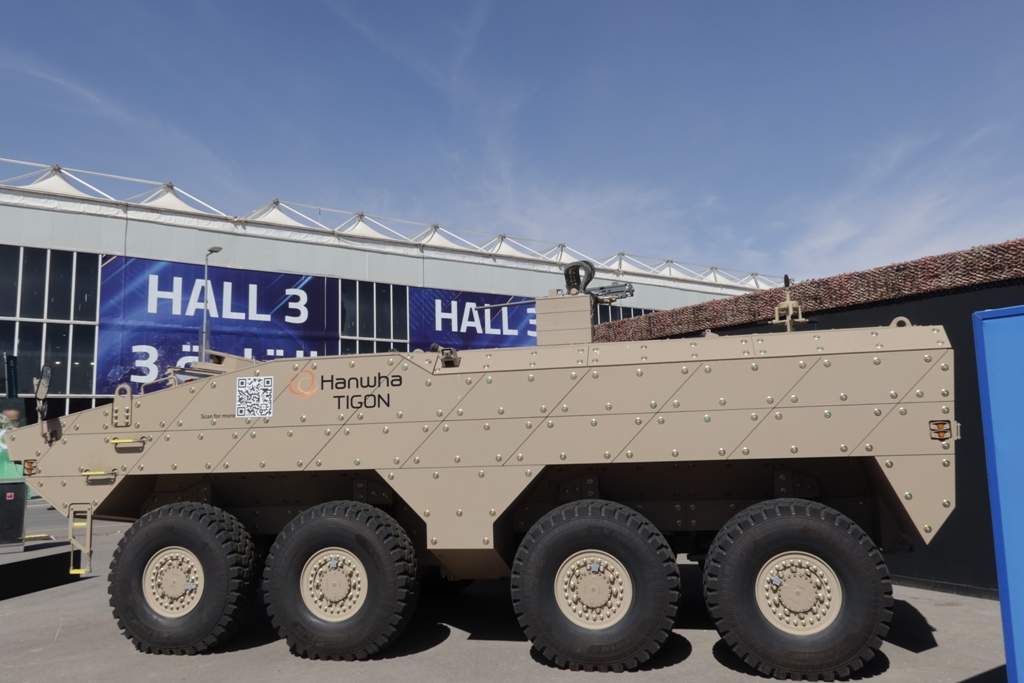
Already in service on several Turkish armoured platforms, such as Ejder and Kirpi families, SEDA 100 continues to expand its international presence. Notably, the South Korean company Hanwha has recently selected Aselsan’s acoustic detection system for integration and testing on its future-generation vehicles, marking an important export success for the Turkish manufacturer.
To underline the increasing cooperation between Aselsan and Hanwha, SEDA 100 was displayed for the first time at the World Defense Show as an integrated solution on the Hanwha Tigon 8×8 armoured vehicle, presented on the South Korean company outdoor stand Field trials are scheduled to commence in March, intended to validate operational performance in diverse terrain and climatic conditions. This highlights the growing international cooperation and platform integration capabilities of Aselsan’s sensor and survivability technologies.
Beyond traditional battlefield use, the company envisions extended applications for convoy protection, base security, and critical infrastructure defence. Future SEDA variants are expected to integrate multi-sensor fusion, combining acoustic, optical, and infrared detectors to enhance automatic threat classification and increase reliability.
In conclusion, SEDA 100 embodies Aselsan’s drive towards real-time situational awareness and advanced data fusion systems. More than a gunfire detector, it represents a force multiplier for the modern digitised battlespace, an intelligent active protection element that strengthens both the survivability and effectiveness of armoured vehicles in tomorrow’s conflicts.
Photos by P. Valpolini

