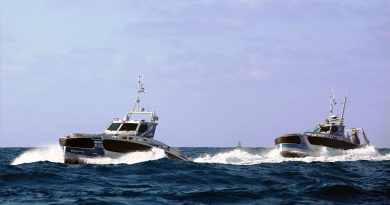
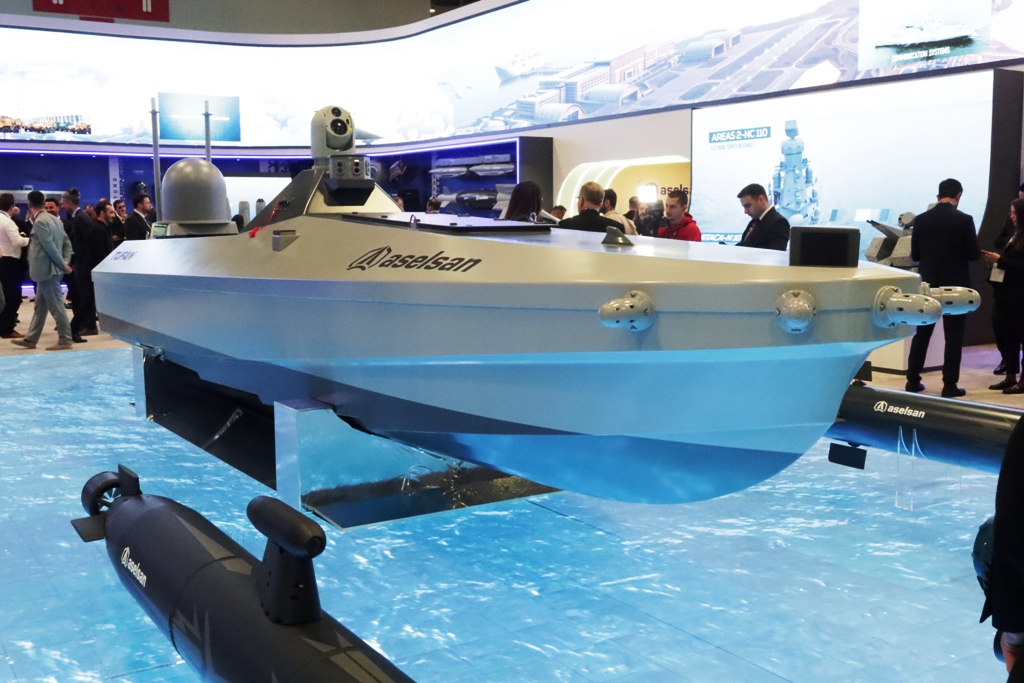
Saha Expo 2026 – Aselsan kamikaze USV, the Tufan
The successes of Ukrainian suicide unmanned surface vessels (USVs) against the Russian fleet in the Black Sea, where they damaged or destroyed a dozen of Moscow’s ships, is increasing the interest in such systems. On Day 1 of the Istanbul exhibition Aselsan unveiled its new KUSV, for kamikaze USV, the Tufan
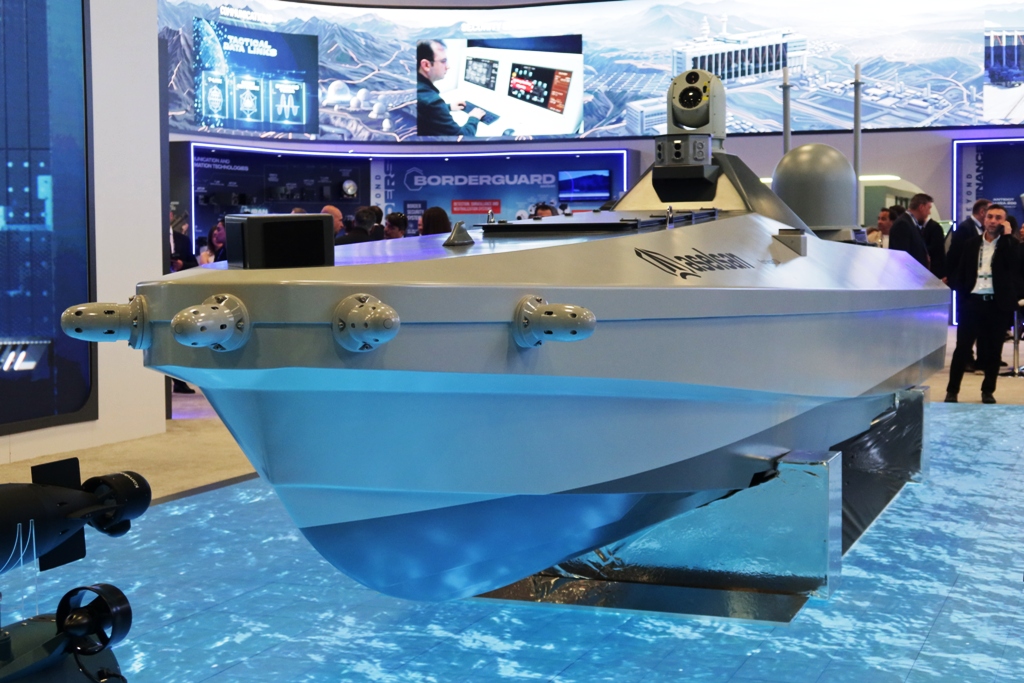
The unveiling ceremony saw the appearance of three naval unmanned systems, two belonging to the Kilic family of UUVs, presented alongside the Tufan, showing how much the leading Turkish defence electronic company is getting involved in the unmanned naval field.
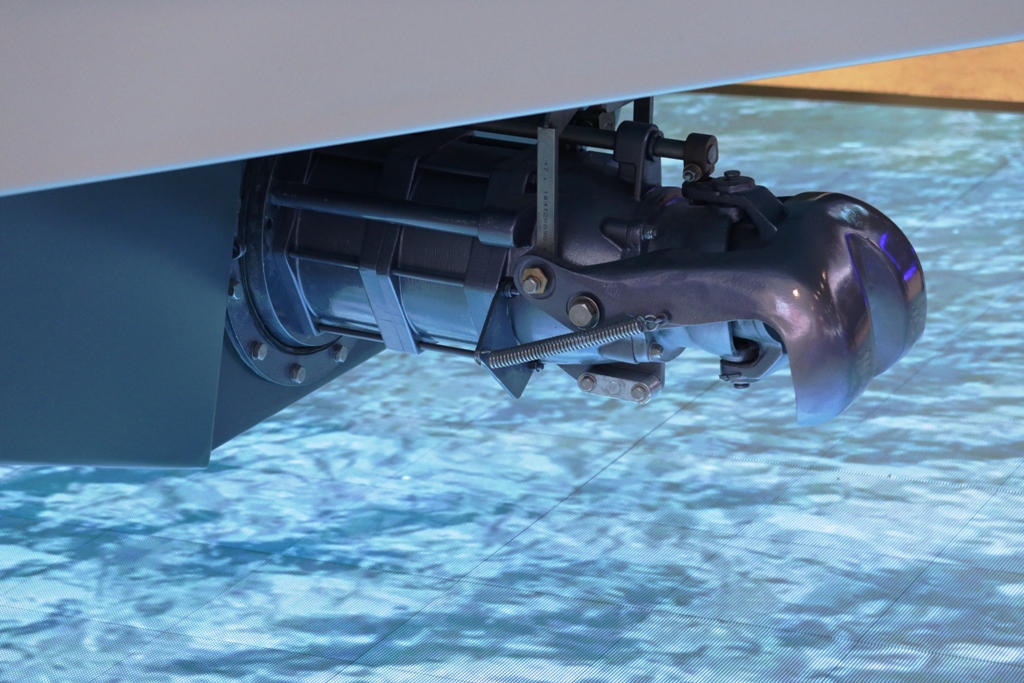
The Tufan is based on a planning hull and the prototype is powered by a gasoline engine driving a waterjet. Aselsan representatives told EDR On-Line that a version with a diesel engine in place of the gasoline one will be available soon. Highly manoeuvrable, the Tufan can reach a maximum speed of 50 knots in Sea State 4. The boat is 8 metres long with a 1.8 metres beam, and has a range of 200 Nautical Miles; according to Aselsan the Tufan has a low radar cross section and thermal signature.
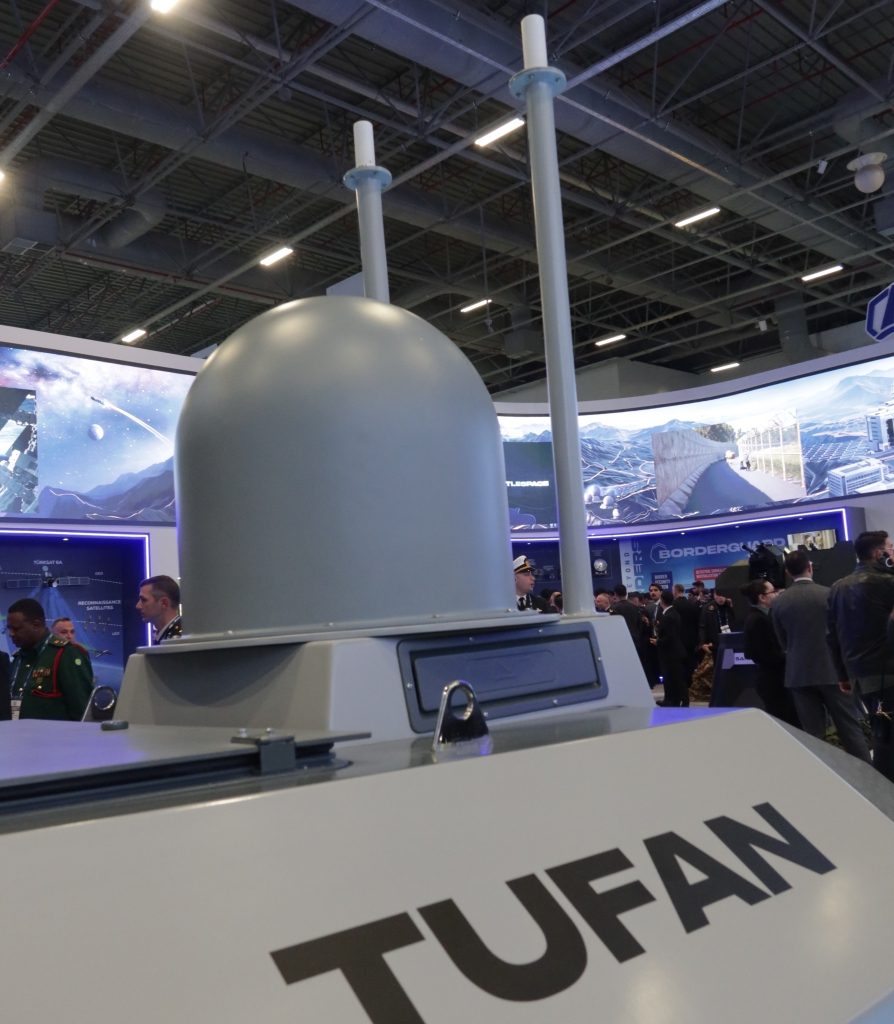
The link between the boats and the portable control station, which can be installed either ashore or on board a naval vessel, the Tufan is designed for operating from the coast as well as for being launched from a ship, is ensured by a suite of communication systems, which include SATCOM, radio frequency line-of-sight in the L/S bands, (1-2 GHz and 2-4 GHz) with mesh network capability when multiple Tufans are used, as well as 4G/LTE. The SATCOM radome and the other antennas are installed astern.

Amidships we find optronic sensors; the Tufan is fitted with a fixed day/night suite used mostly for navigation and obstacle avoidance, a gimbal being mounted on top of the superstructure, which is used for target acquisition and navigation in the attack phase as well as in GNSS-denied scenarios. It allows keeping the man-in-the-loop, but even more important it provides situational awareness and allows fully autonomous operations thanks to AI-based algorithms. The Tufan is also able to carry out swarm operations, a key factor that allows to saturate a ship defensive capability, thus increasing success probability. The Tufan is STANAG 4817 compatible, this NATO standardization agreement establishing an open standard for the multi-domain command and control of unmanned systems. Aselsan underlines that the Tufan is capable of autonomous mission planning and task distribution which allows operating in flexible and enlarged swarm formations.
The Tufan can carry a 250 kg payload; the choice of the warhead was probably among design priorities, and the Mk 82 bomb with its 230 kg and its dimensions should have been considered since inception, allowing cost savings and good availability. Aselsan underlined that the ordnance used is the insensitive type, loaded with PBX-10 polymer-bonded explosive. Six sensors capable to trigger the explosion are visible at the bow.
Trials at sea are planned for June 2026; the key target is to qualify the Tufan with its autonomy suite. Aselsan already bagged a contract for 40 USVs, that will be delivered from the beginning with full autonomy capability, the aim being to see the Tufan becoming part of the Turkish Armed Forces inventory in 2027.
Photos by P. Valpolini